Loading cart…
No products in the cart.

Original price was: $518.00.$259.00Current price is: $259.00.
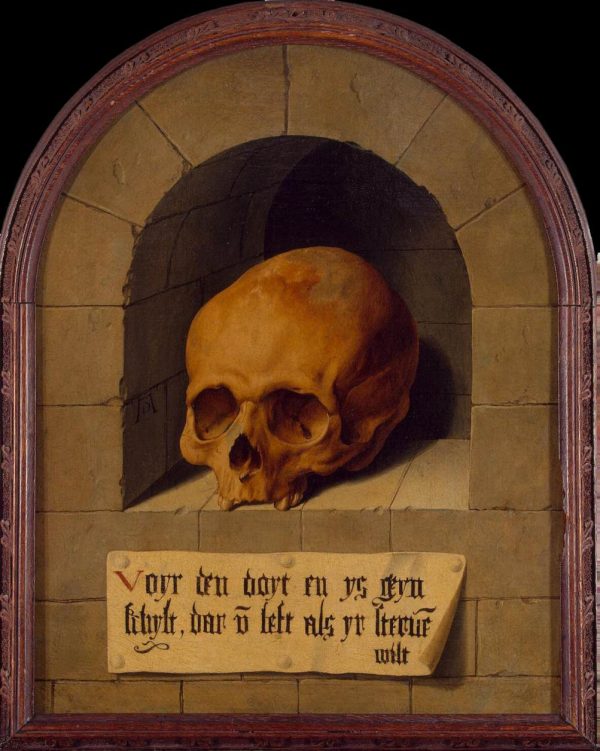
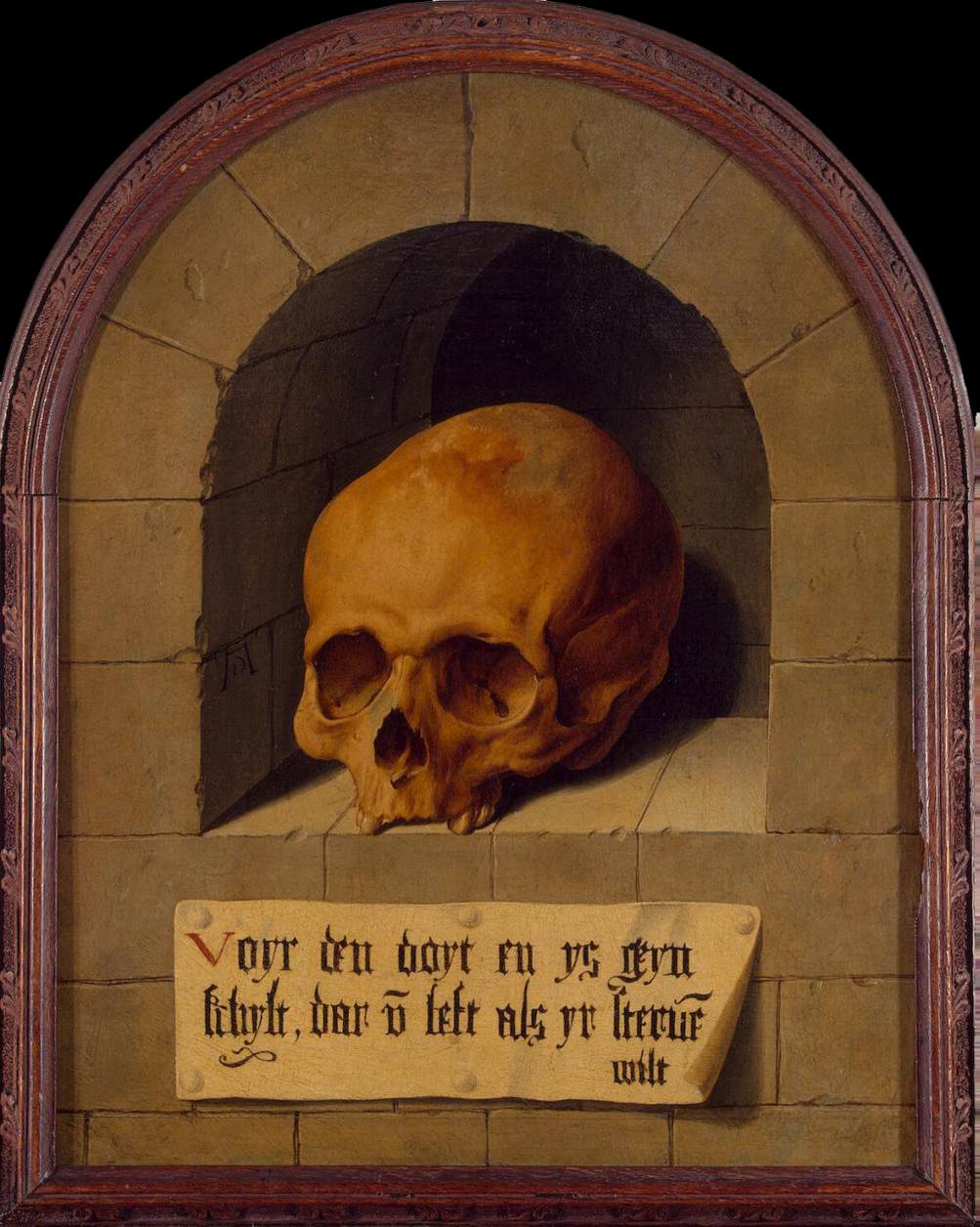
A hand-painted replica of Skull in a Niche by Barthel Bruyn, an early memento mori rendered in oil on canvas with the same restrained tone as the original panel.
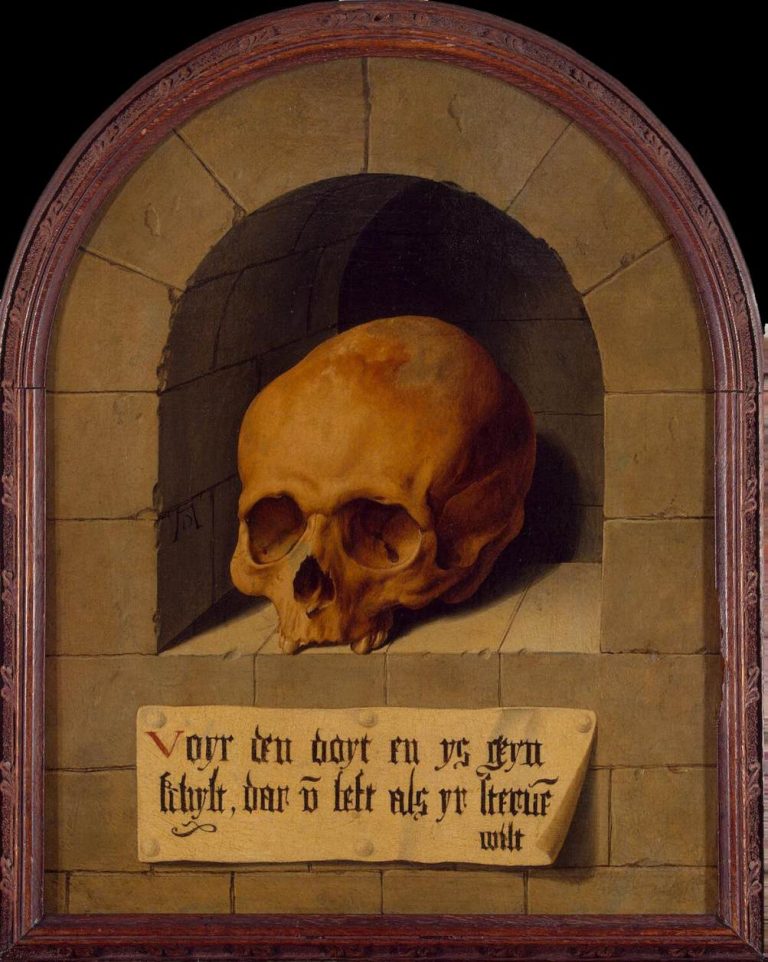
By the early sixteenth century, the reverse sides of portrait panels in Cologne workshops were often given over to a single sobering image: a skull set within a shallow stone niche, painted as a private meditation for the sitter whose likeness appeared on the front. Barthel Bruyn, the leading portraitist of the city in his generation, worked within exactly this convention, and Skull in a Niche belongs to the tradition of memento mori that circulated alongside his commissioned likenesses of merchants, clergy, and civic patrons.
The composition is spare by design. A single skull rests within a carved recess, lit from one side so that the hollows of the eye sockets and the ridge of the brow fall into deep shadow while the crown of bone catches a cool, even light. Bruyn handles the stone surround with the same discipline he brought to drapery and armor in his portrait work, using close tonal gradation rather than line to suggest the curve of the niche and the weight of the object it holds. The palette stays restricted to ochres, greys, and warm off-whites, a narrowness that concentrates the eye and gives the image its unusual stillness.
This restraint reflects Bruyn practice more broadly. Trained in the Netherlandish manner and settled in Cologne, he built his career on portraits of exacting likeness, and the memento mori panels he produced alongside them share that same close observation, applied here to bone and shadow instead of a living face. The niche format, borrowed from sculpture, lets him treat the skull almost as a carved relief, an object to be studied rather than a symbol merely stated.
ByMuseum artists recreate this image as a hand-painted oil painting reproduction, working in oil on artist-grade canvas to match the tonal restraint and the particular cool light of the original panel. Every reproduction is painted by hand rather than printed, so the brushwork that models the curve of the skull and the depth of the niche remains visible on the finished canvas, and no two examples are ever quite identical. Buyers looking for a hand-painted replica of this quiet, exacting image will find the same close attention to tone and edge that made Bruyn work distinctive five centuries ago.
Five hundred years on, the image still holds attention precisely because it asks so little of the viewer beyond looking closely, a discipline that outlasts the fashions of its own century. Owning a painted version of it keeps that discipline in the room, not as a printed facsimile but as an object built the same way the original was: layer by layer, in oil, by hand.
Empty walls flatten a room. A classical artwork restores structure and visual hierarchy. One painting defines the space, anchors furniture, and establishes identity.
Worldwide shipping included. Each painting is produced to order and safely packed for international transport.
All payments are encrypted and processed through trusted payment providers.
Real brushwork, layered oil paint, and durable pigments on museum-quality canvas.
If the result does not meet expectations, return it for a full refund.


Your artwork is painted on premium cotton canvas, then shipped safely rolled in a rigid tube with extra blank canvas border — ready for stretching or framing locally.
Select a handcrafted frame and we’ll deliver your painting fully assembled, protected, and ready to hang.
For safe shipping, framing is available up to a maximum size. Larger sizes will automatically disable the frame option.


Choose “Stretched” to receive your canvas mounted on wooden stretcher bars — perfect if you’ll frame it later or display it as-is.
Gallery Wrap is a deeper, 1.5" style stretcher. The canvas wraps around the sides and is stapled on the back for a clean, modern, frameless look.
We ship with UPS, FedEx, or DHL straight to your door. You’ll receive a tracking number as soon as your order leaves our studio. Typical delivery is 5 to 7 days after dispatch; large, framed, or stretched pieces may take longer depending on the safest shipping route.


Unframed canvases are protected with a film, carefully rolled, and secured inside a rigid shipping tube.

Stretched, Gallery Wrapped, and Framed paintings are wrapped, cushioned with foam protection, and boxed for safe transit.