Loading cart…
No products in the cart.

Original price was: $599.00.$299.00Current price is: $299.00.
A hand-painted replica of Sunset in the steppes 1900 by Arhip Kuindzhi, its broad sky and glowing horizon rebuilt in layered oil on canvas.
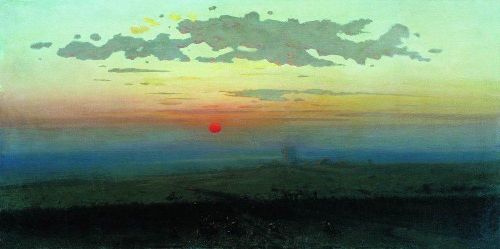
A wide horizontal format governs how this picture wants to be seen: the low, level horizon and broad expanse of open steppe ask the viewer to stand back and let the eye travel slowly across the width of the canvas rather than settle on a single point. That proportion, closer to a panorama than a portrait view, is itself part of the composition, built to hold a room and to reward a certain distance the way the original does on a gallery wall.
Within that format, Kuindzhi sets down a landscape reduced to its essentials: an immense sky, a thin band of earth, and the last light of a setting sun spreading in bands of colour across both. Painted around 1900, the work belongs to the later, more experimental phase of a career that had already made Kuindzhi known for pushing the observation of light in landscape further than most of his Russian contemporaries attempted, favouring saturated colour and dramatic tonal contrast over conventional realist detail.
The handling of tone carries the picture. Warm oranges and deep violets are laid in broad passages rather than fine transitions, and the density of paint shifts across the surface to separate the glowing sky from the darker plain beneath it, giving the whole a unified structure even as its parts pull the eye in different directions. Seen up close, that structure resolves into visible variation in the paint itself, changes an attentive viewer would look for in any painted surface as a sign of genuine handwork rather than a flat, uniform image.
ByMuseum artists rebuild that surface by hand, working in oil on artist-grade canvas and matching the palette, the density of the sky, and the broad, confident brushwork of the original passage by passage. This is a hand-painted oil painting reproduction rather than a printed one, so the raised texture of impasto and the layered depth of colour are physically present in the paint, and a hand-painted replica of this kind carries the same surface presence a collector would expect to examine in person, not simulate on a screen. Hung where evening light reaches it, on a long wall in a study or above a low sideboard, it settles into a room the way a landscape should, quietly, and changes character as the light around it does through the day.
Empty walls flatten a room. A classical artwork restores structure and visual hierarchy. One painting defines the space, anchors furniture, and establishes identity.
Worldwide shipping included. Each painting is produced to order and safely packed for international transport.
All payments are encrypted and processed through trusted payment providers.
Real brushwork, layered oil paint, and durable pigments on museum-quality canvas.
If the result does not meet expectations, return it for a full refund.


Your artwork is painted on premium cotton canvas, then shipped safely rolled in a rigid tube with extra blank canvas border — ready for stretching or framing locally.
Select a handcrafted frame and we’ll deliver your painting fully assembled, protected, and ready to hang.
For safe shipping, framing is available up to a maximum size. Larger sizes will automatically disable the frame option.


Choose “Stretched” to receive your canvas mounted on wooden stretcher bars — perfect if you’ll frame it later or display it as-is.
Gallery Wrap is a deeper, 1.5" style stretcher. The canvas wraps around the sides and is stapled on the back for a clean, modern, frameless look.
We ship with UPS, FedEx, or DHL straight to your door. You’ll receive a tracking number as soon as your order leaves our studio. Typical delivery is 5 to 7 days after dispatch; large, framed, or stretched pieces may take longer depending on the safest shipping route.


Unframed canvases are protected with a film, carefully rolled, and secured inside a rigid shipping tube.

Stretched, Gallery Wrapped, and Framed paintings are wrapped, cushioned with foam protection, and boxed for safe transit.
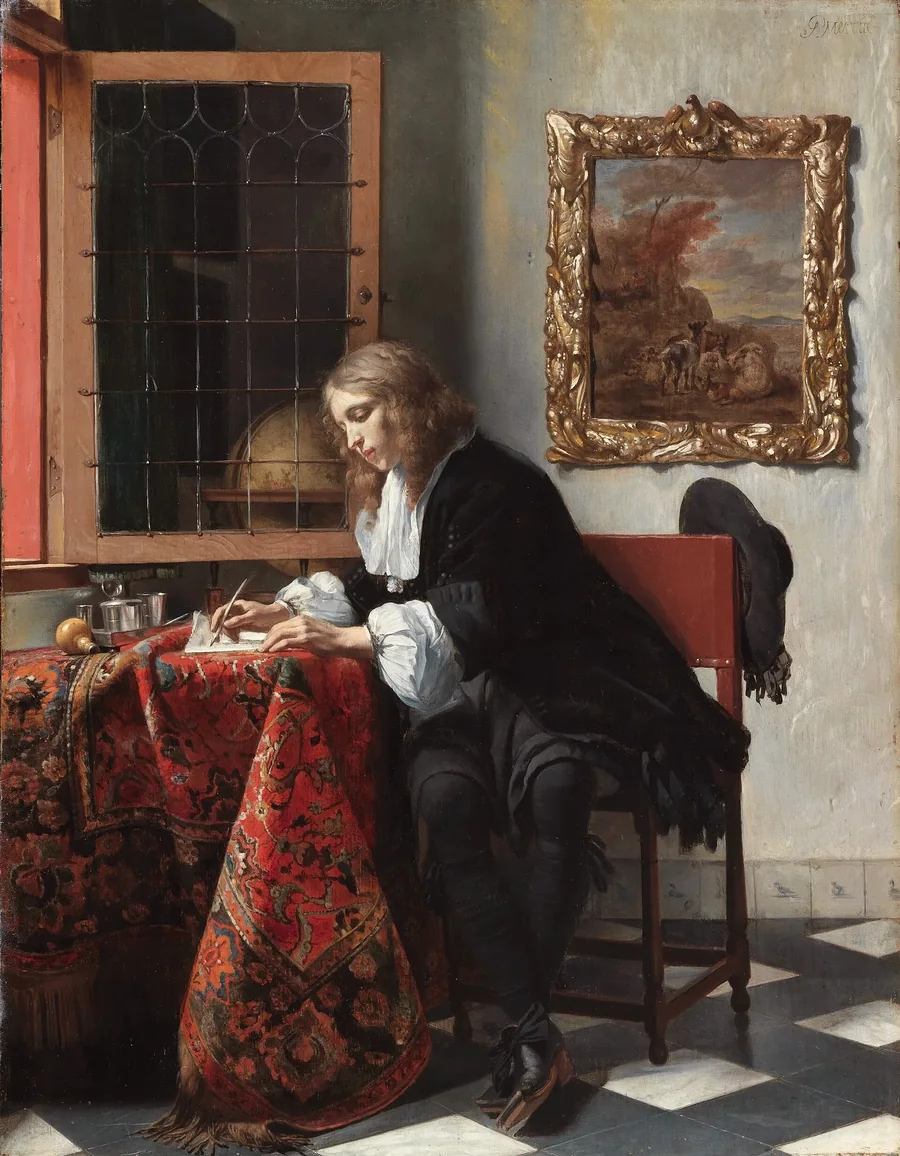
Man Writing a Letter
Gabriel Metsu, c. 1664
The gallery list
Every painting is already 50% off. Join the list and we will send you an extra $15 code, plus first access to new collections.
No spam. Unsubscribe anytime. · Privacy Policy
Welcome
Your $15 code is on its way. Explore the gallery while you wait.