Loading cart…
No products in the cart.

Original price was: $599.00.$299.00Current price is: $299.00.
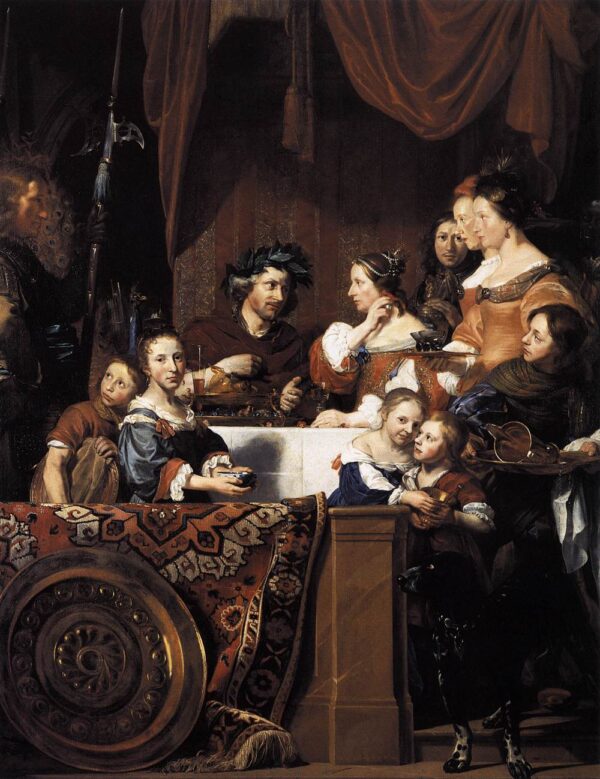
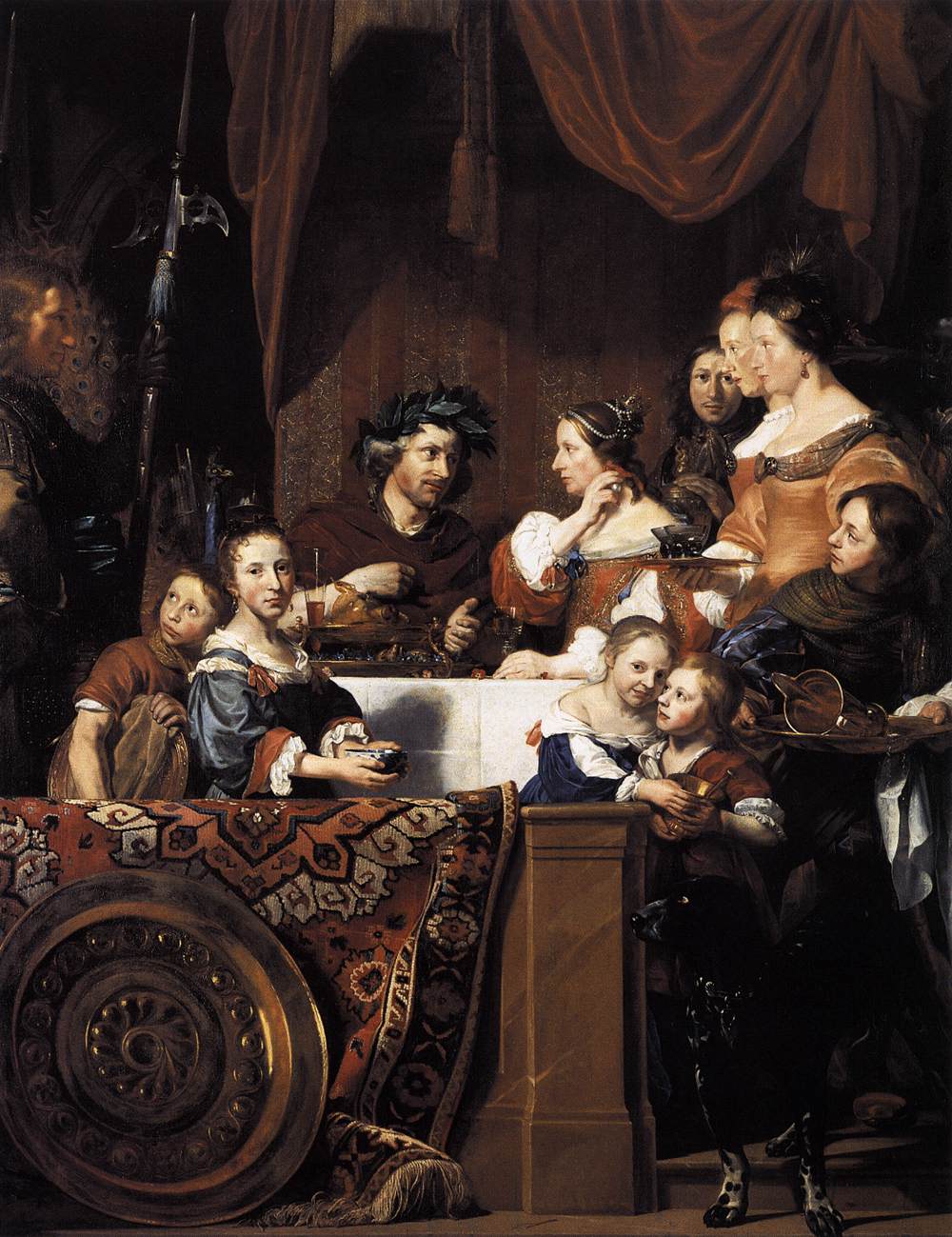
A hand-painted replica of The de Bray Family by Jan De Bray, built in oil on canvas to preserve the tonal depth and brushwork of the original Dutch group portrait.
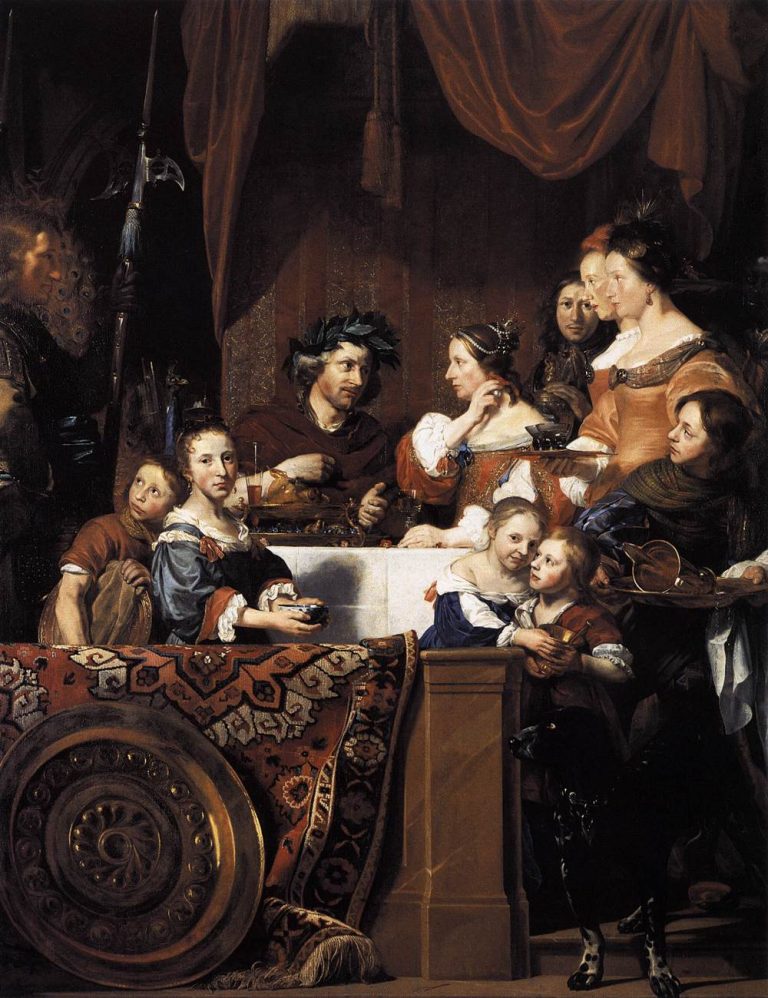
Dutch group portraiture of the seventeenth century found some of its most inventive practitioners in Haarlem, where painters worked out how to arrange large families without the composition collapsing into a row of stiff faces. The de Bray Family belongs to that tradition and pushes against its conventions, building a household scene that reads as both a formal record and a lived moment shared around the canvas.
The picture organises its many sitters through a careful choreography of pose and glance, with figures turned toward one another in a way that binds the group without flattening any single presence. Bray works the composition in measured stages, letting the eye travel from the central figures outward to those placed in shadow or at the margins, so that no one sitter dominates at the expense of the whole. Costume and fabric are rendered with close attention, the fall of collars and sleeves picked out in a controlled range of dark reds, blacks, and warm flesh tones that give the group a coherent, slightly sombre dignity.
Light in the painting is handled with restraint rather than drama, settling on faces and hands while letting the surrounding space recede into a soft brown penumbra typical of Dutch interiors of the period. That tonal discipline, paired with a confident touch in the modelling of features, places the work within a mature phase of Bray own development as a painter of families and civic groups, a genre in which he was among the more accomplished practitioners of his generation. The quieter passages of drapery and background give the eye somewhere to rest between the more animated exchanges of gesture and expression.
ByMuseum reproduces this canvas as a hand-painted replica rather than a printed copy, with a trained painter working directly in oil to match the palette Bray built from dark grounds and warm highlights. The oil painting reproduction is developed layer by layer on canvas, so the paint carries genuine thickness and the brushwork remains visible under raking light, much as it would on an original seventeenth century canvas. Collectors who look closely at surface and build will find the same attention to material presence that distinguishes a painted object from a flat print.
Empty walls flatten a room. A classical artwork restores structure and visual hierarchy. One painting defines the space, anchors furniture, and establishes identity.
Worldwide shipping included. Each painting is produced to order and safely packed for international transport.
All payments are encrypted and processed through trusted payment providers.
Real brushwork, layered oil paint, and durable pigments on museum-quality canvas.
If the result does not meet expectations, return it for a full refund.


Your artwork is painted on premium cotton canvas, then shipped safely rolled in a rigid tube with extra blank canvas border — ready for stretching or framing locally.
Select a handcrafted frame and we’ll deliver your painting fully assembled, protected, and ready to hang.
For safe shipping, framing is available up to a maximum size. Larger sizes will automatically disable the frame option.


Choose “Stretched” to receive your canvas mounted on wooden stretcher bars — perfect if you’ll frame it later or display it as-is.
Gallery Wrap is a deeper, 1.5" style stretcher. The canvas wraps around the sides and is stapled on the back for a clean, modern, frameless look.
We ship with UPS, FedEx, or DHL straight to your door. You’ll receive a tracking number as soon as your order leaves our studio. Typical delivery is 5 to 7 days after dispatch; large, framed, or stretched pieces may take longer depending on the safest shipping route.


Unframed canvases are protected with a film, carefully rolled, and secured inside a rigid shipping tube.

Stretched, Gallery Wrapped, and Framed paintings are wrapped, cushioned with foam protection, and boxed for safe transit.