Loading cart…
No products in the cart.

Original price was: $599.00.$299.00Current price is: $299.00.
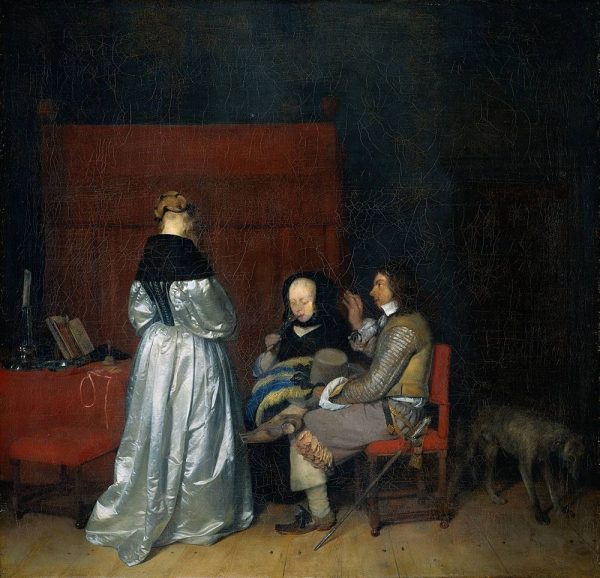
A hand-painted oil reproduction of The Fatherly Admonition by Borch, matching the original satin light and tonal restraint on real oil-painted canvas.
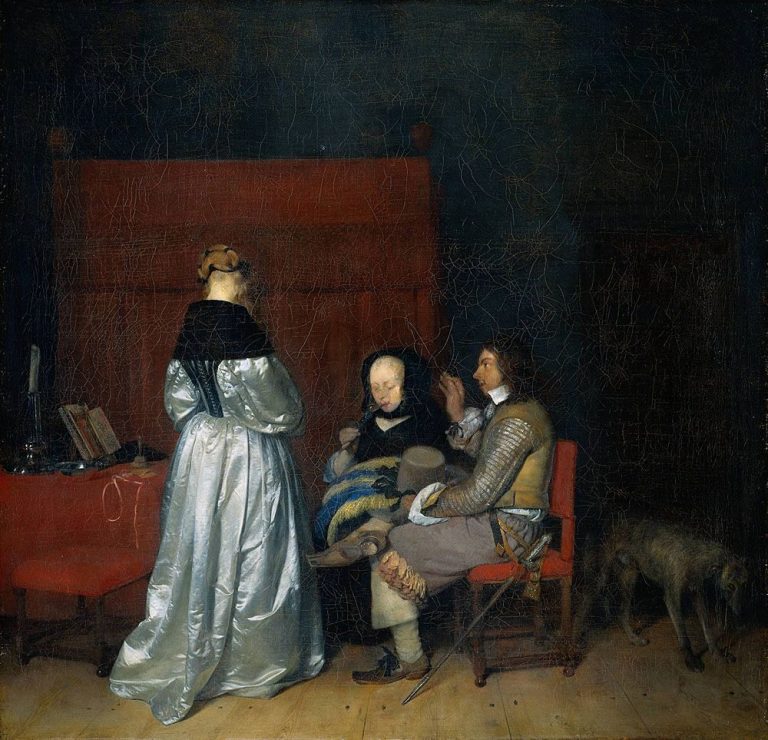
For generations, viewers have returned to this quiet domestic scene looking for a clear moral story and finding instead something more ambiguous, a composition that resists easy reading even as it rewards close attention. That tension between apparent subject and actual intention is part of what has kept the picture under discussion since the seventeenth century, and it begins with the way Gerard ter Borch organised the canvas itself.
The scene unfolds in a shallow, softly lit interior where a seated woman in satin, a standing man, and an older figure occupy a triangular arrangement that guides the eye without ever settling it. Borch was a master of surface, particularly the specific gleam of silk and satin under indoor light, and here that skill does real work: the fall of fabric catches attention before the narrative does, and the ambiguity of gesture between the figures has long invited more than one interpretation of what is actually taking place. Light is handled with restraint, pooling on the satin dress and the tablecloth while the background recedes into a warm, undemonstrative dark, a technique typical of Dutch genre painting at its most refined.
This period of the career of Borch shows him moving away from anecdote toward psychological suggestion, using tonal control rather than incident to hold the viewer in place. The brushwork is fine and largely concealed, built up in thin, controlled layers that let colour do the describing rather than visible mark-making, a technique that rewards close and repeated looking over a quick glance. Reproducing that requires more than copying shapes; it asks a painter to understand how each layer of oil colour was built toward that final, quiet luminosity, which is exactly the discipline behind a hand-painted oil painting reproduction of this kind.
What is carried across into the ByMuseum version is not a flattened likeness but the structure beneath it: the same palette, the same gradation from lit satin to shadowed corner, the same restraint in the brushwork that keeps the surface calm rather than busy. Each canvas is painted by hand by a trained artist working in oil, so the texture of the paint itself, not a printed simulation of it, is what reaches the wall, matching the tonal logic of the original rather than merely its outline. That fidelity is the point of a museum quality reproduction: it lets the picture continue doing, in a private room, the same quiet work it has always done.
Empty walls flatten a room. A classical artwork restores structure and visual hierarchy. One painting defines the space, anchors furniture, and establishes identity.
Worldwide shipping included. Each painting is produced to order and safely packed for international transport.
All payments are encrypted and processed through trusted payment providers.
Real brushwork, layered oil paint, and durable pigments on museum-quality canvas.
If the result does not meet expectations, return it for a full refund.


Your artwork is painted on premium cotton canvas, then shipped safely rolled in a rigid tube with extra blank canvas border — ready for stretching or framing locally.
Select a handcrafted frame and we’ll deliver your painting fully assembled, protected, and ready to hang.
For safe shipping, framing is available up to a maximum size. Larger sizes will automatically disable the frame option.


Choose “Stretched” to receive your canvas mounted on wooden stretcher bars — perfect if you’ll frame it later or display it as-is.
Gallery Wrap is a deeper, 1.5" style stretcher. The canvas wraps around the sides and is stapled on the back for a clean, modern, frameless look.
We ship with UPS, FedEx, or DHL straight to your door. You’ll receive a tracking number as soon as your order leaves our studio. Typical delivery is 5 to 7 days after dispatch; large, framed, or stretched pieces may take longer depending on the safest shipping route.


Unframed canvases are protected with a film, carefully rolled, and secured inside a rigid shipping tube.

Stretched, Gallery Wrapped, and Framed paintings are wrapped, cushioned with foam protection, and boxed for safe transit.