Loading cart…
No products in the cart.

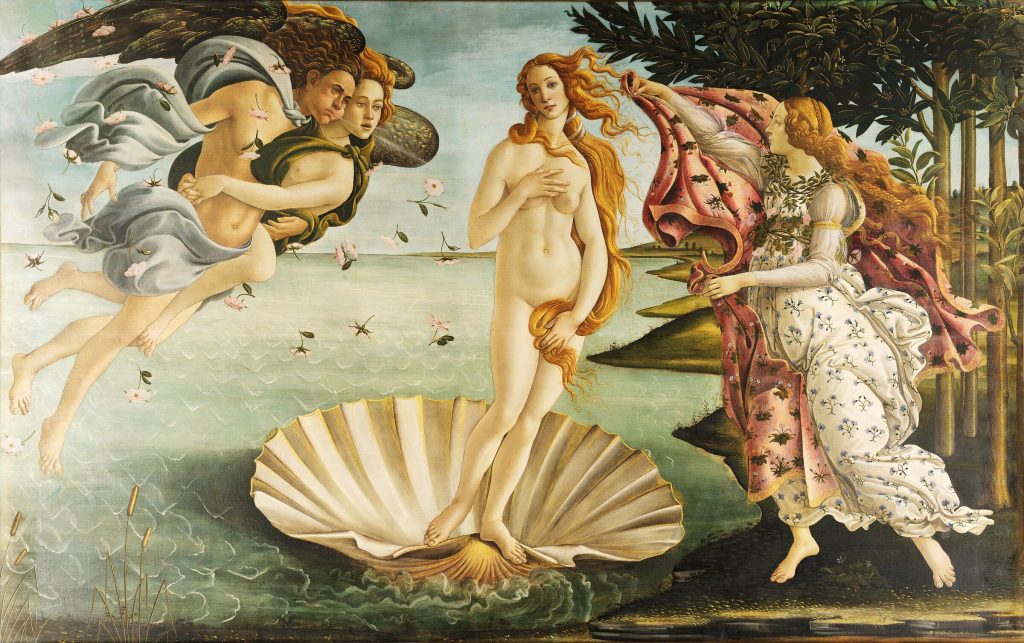
c. 1485 · Tempera on canvas · Uffizi Gallery, Florence
Save articles to your collection
Log in or create a free account, and this article will be waiting in your Private Collection.
Log in or sign upThe Birth of Venus is one of the most famous paintings in the world, and most people who know it could not tell you who the other three people in it are. They are not decoration. Each one has a job in the story, and Botticelli placed them so that you read the picture from left to right, the way the goddess travels: blown in from the sea by the wind, arriving on the shell, received on the land.
Here is the cast, in order of appearance.
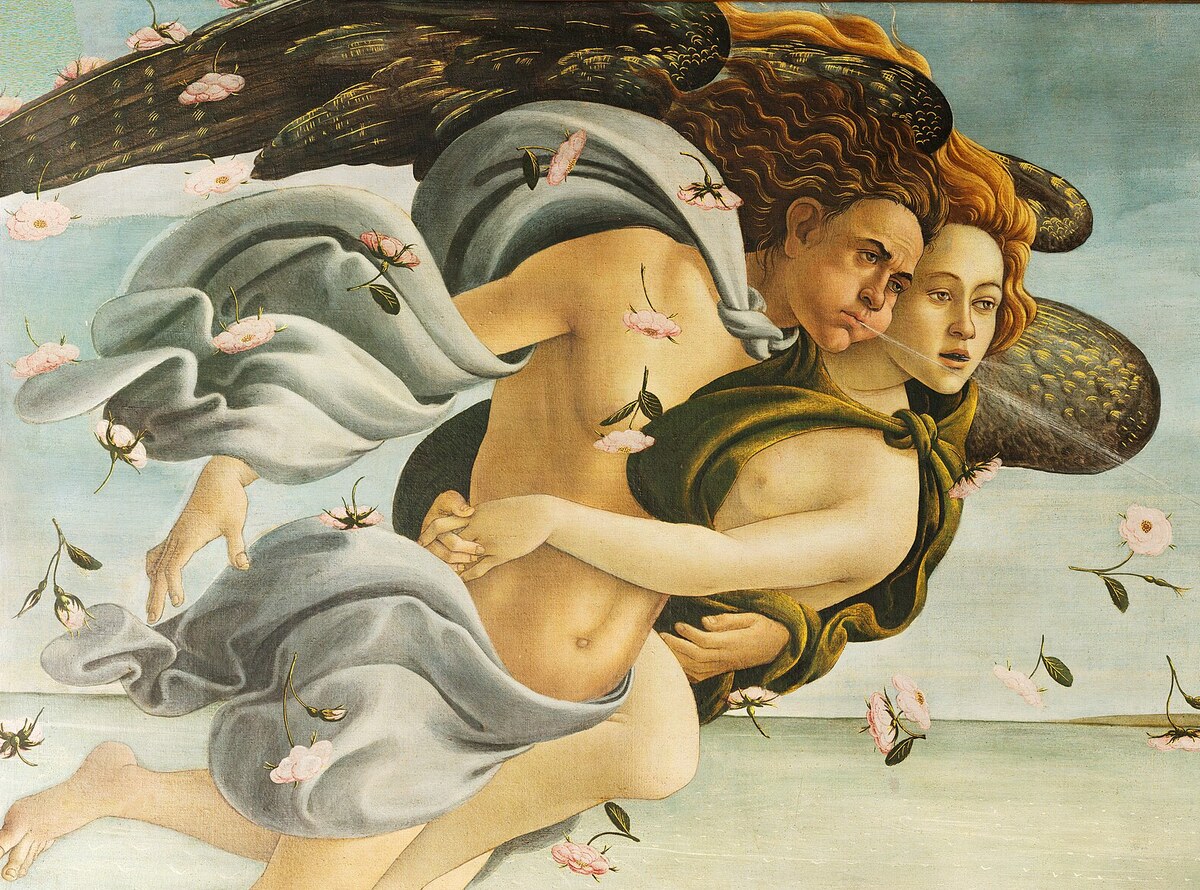
1. Zephyrus. The winged man at the left with his cheeks puffed out is Zephyrus, the west wind, the gentle wind of spring. He is doing the work of the picture: blowing the shell across the sea to the shore. You can see his breath in the lines on the water and in Venus's hair, which streams to the right.
2. His companion. Wrapped around him, also blowing, is a woman. The Uffizi identifies her as Aura, the breeze. Some scholars prefer Chloris, the nymph Zephyrus loved and who became Flora, the goddess of flowers, whom Botticelli painted in his other great mythology, the Primavera.
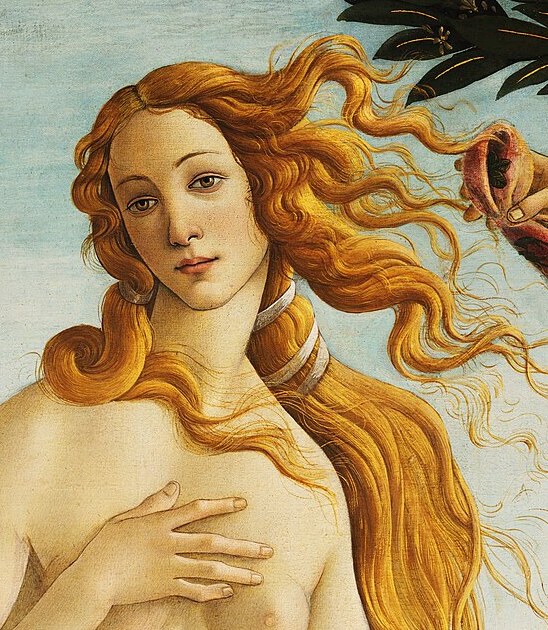
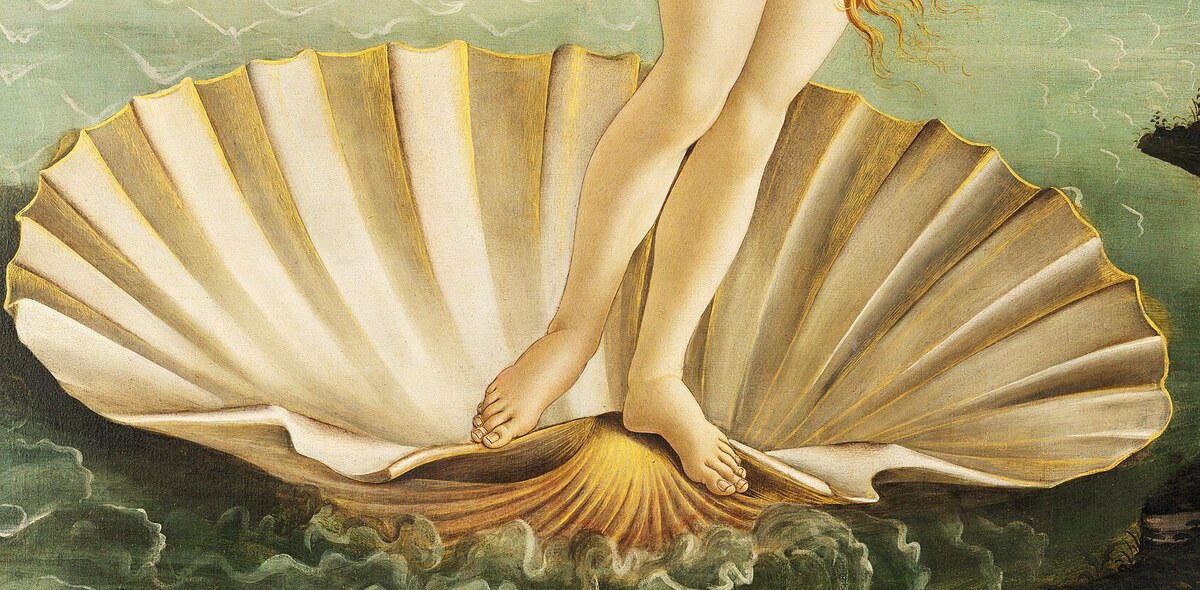
3. Venus. In the old myth, Venus was born from the sea foam, fully grown, and came ashore at Cyprus. Botticelli shows the arrival, not the birth: she stands on a scallop shell as it touches the shore, still, weightless, looking slightly past you. Her long red-gold hair, picked out with real gold, is lifted by the wind.
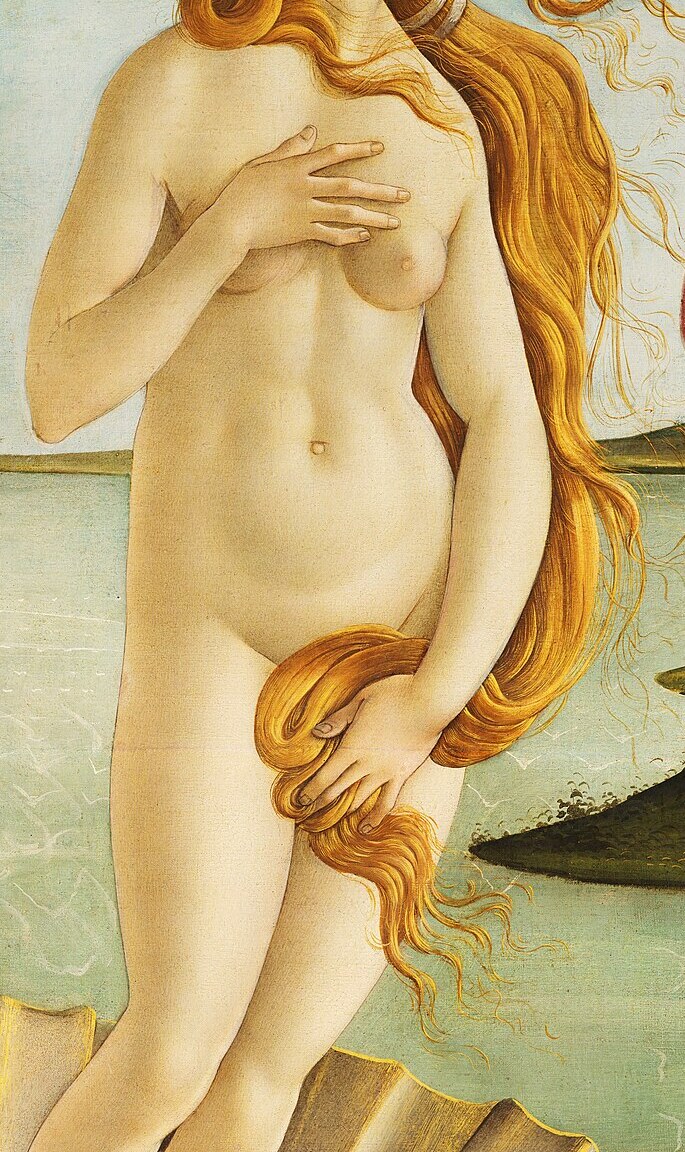
Her pose is borrowed. It is the Venus pudica, the modest Venus, one hand at her breast and the other gathering her hair, taken from ancient marble statues of the goddess that the Medici collected. Look closer and her body is impossible: the neck too long, the shoulders sloping, her weight on one leg in a way that would topple her. Botticelli did not care. He was painting a goddess, not a woman.
The legend that the face is Simonetta Vespucci, the most celebrated beauty in Florence, is repeated everywhere and proved nowhere: Simonetta died in 1476, years before the picture was painted. It is a good story. It is only a story.
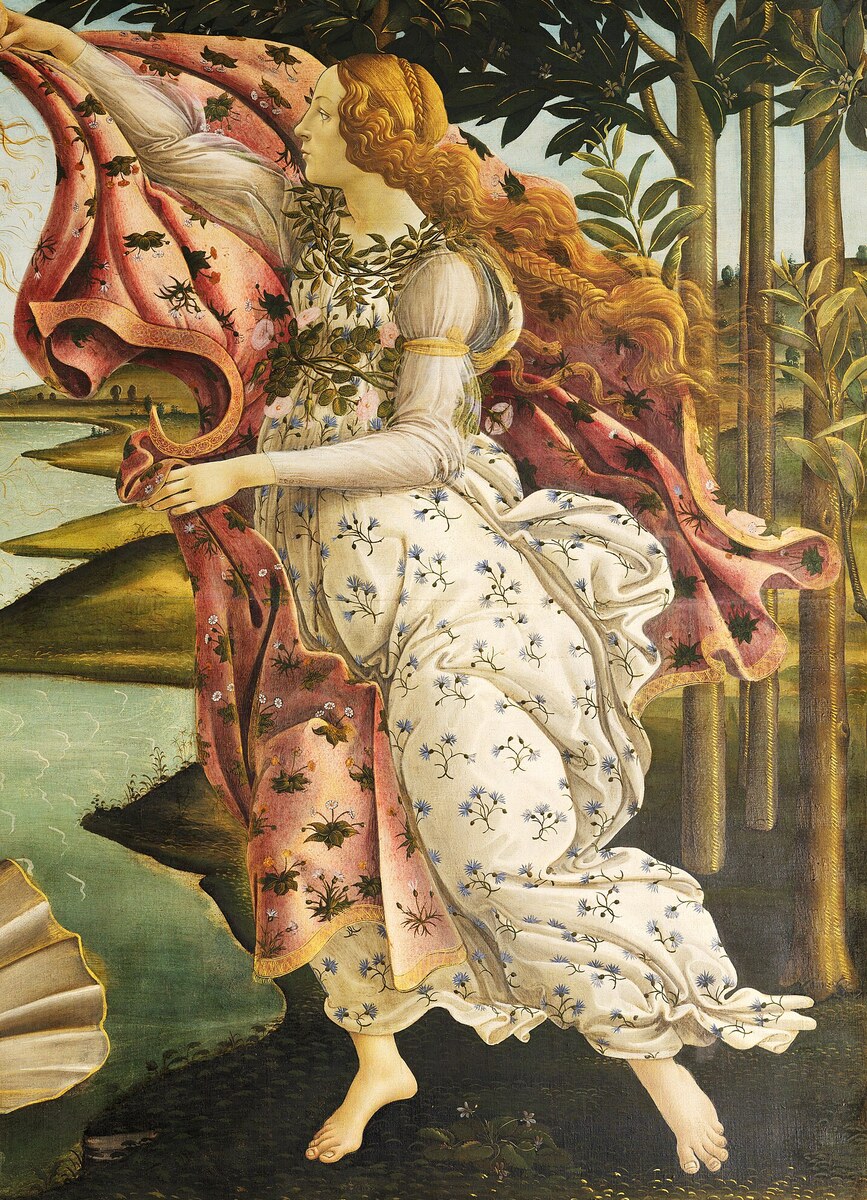
4. The Hora. On the shore a young woman runs to meet the goddess, holding out a cloak to cover her. She is usually identified as one of the Horae, the goddesses of the seasons, the Hora of spring; the Uffizi allows that she may be one of the Graces. The ancient hymn to Aphrodite describes exactly this welcome:
The moist breath of the west wind carried her over the waves of the loud sea in soft foam, and the gold-crowned Hours received her gladly and clothed her in heavenly garments.
Homeric Hymn to Aphrodite (6), translated for this article
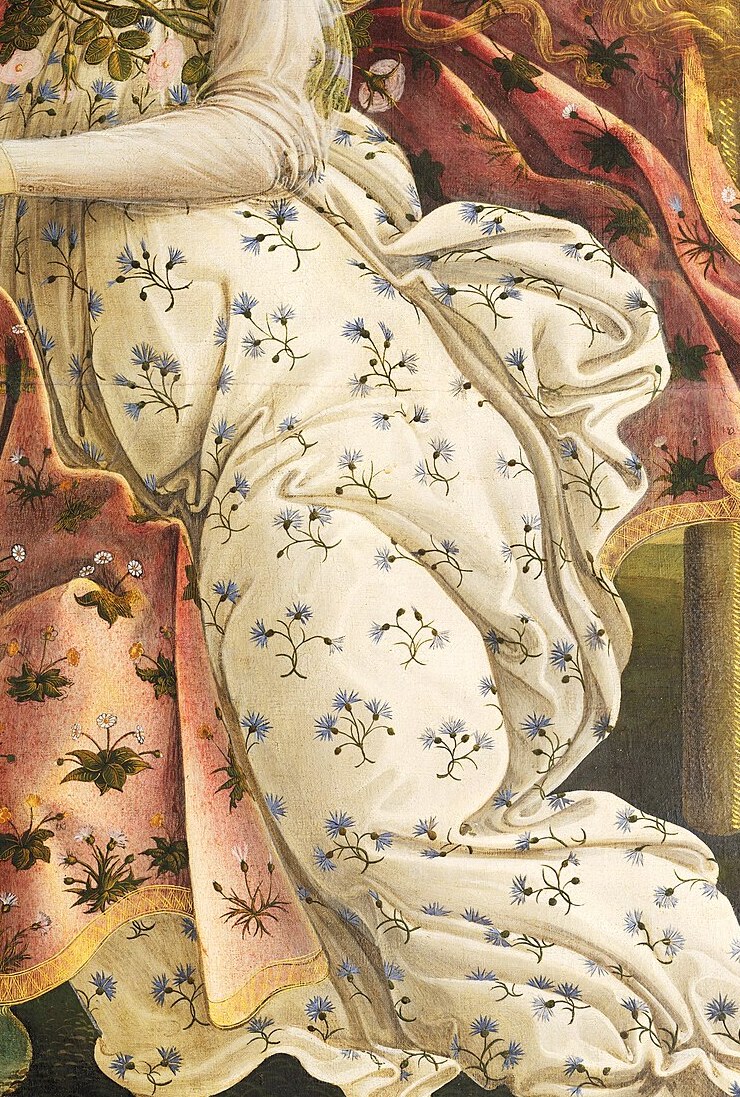
Everything she wears is a flower of spring and of love: a white dress embroidered with cornflowers, a garland of myrtle, the plant sacred to Venus, round her neck, and a belt of roses. Her cloak is embroidered with daisies. She is the land welcoming the goddess.
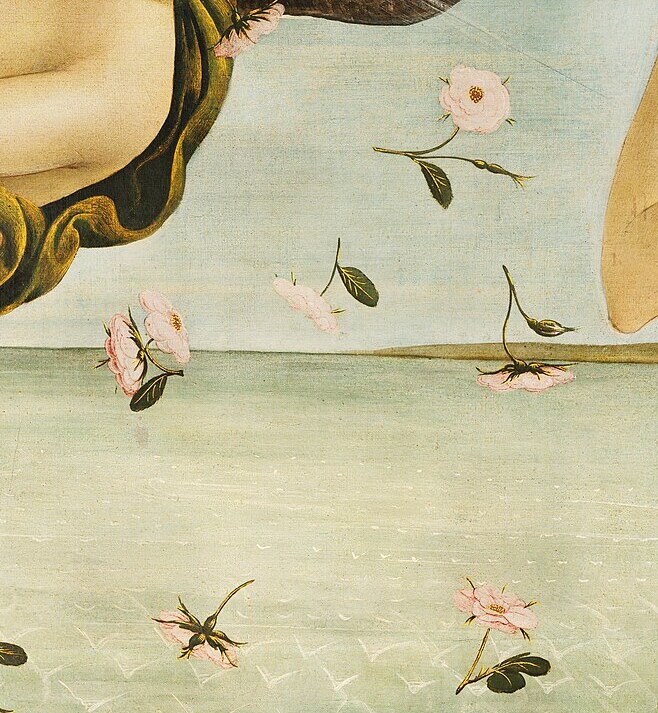
The roses. Pink roses tumble through the air around the winds. The ancient poets said the rose came into the world at the same moment as Venus, so these are the first roses.
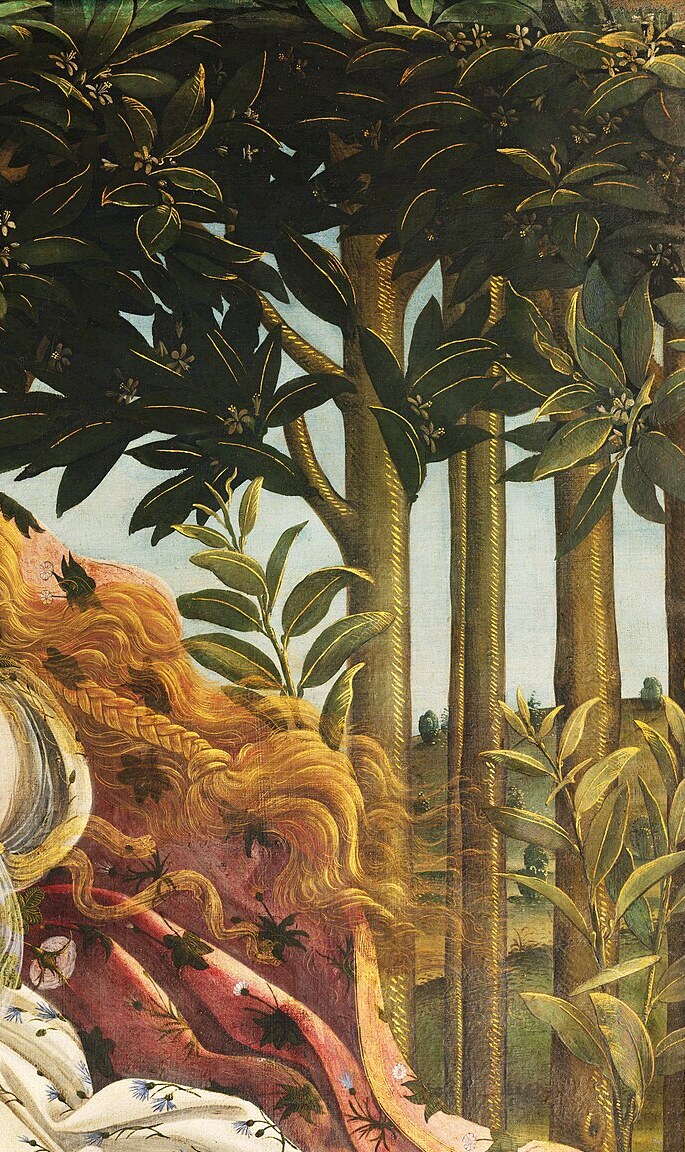
The orange trees. On the right, a grove of orange trees, their blossoms picked out in gold leaf. Oranges were mala medica, a pun on the name of the Medici, the family in whose villa the painting was first recorded.
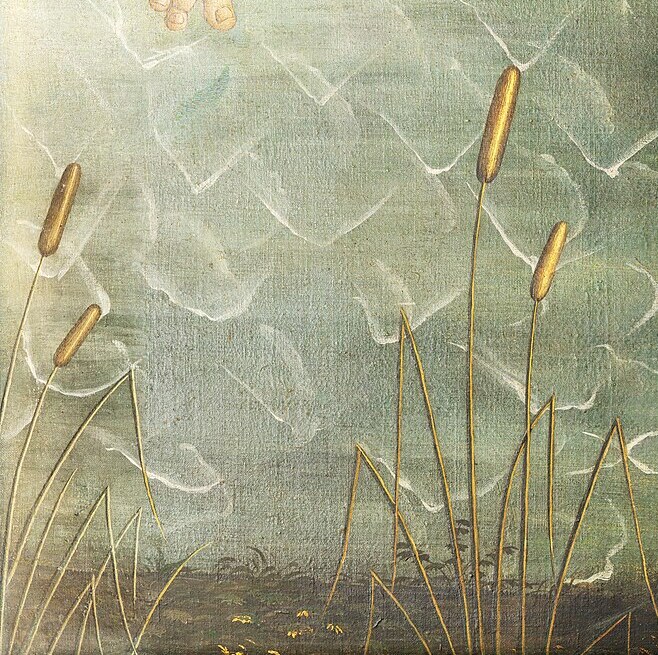
The sea. The water is not painted as water but as a pattern of small V-shaped waves, like a textile. Botticelli was not interested in realism, which is why the painting still looks new.
Sandro Botticelli painted it in Florence in the mid-1480s, in tempera on canvas, which was unusual for so large a picture at the time; canvas was cheaper and lighter than wood, and suited a painting for a villa rather than a church. It was probably made for a member of the Medici family, and it is first recorded, in the 1550s, by Giorgio Vasari at the Medici villa of Castello outside Florence, hanging near the Primavera.
It was one of the first large paintings since antiquity of a nude goddess from pagan myth, and it survived the bonfires of Savonarola, the preacher who persuaded Florence to burn its vanities in the 1490s, and, according to a persistent story, Botticelli's own guilty conscience. It has been in the Uffizi for two hundred years.
In the Uffizi Gallery in Florence, in the Botticelli rooms, with the Primavera. It is tempera on canvas, 172.5 by 278.5 centimetres, much larger than most reproductions suggest, and it is one of the most visited paintings in Italy.
It is a picture for a large, light wall. Our hand-painted reproduction of The Birth of Venus is painted in oil on canvas from the Uffizi original, with the gold highlights in the hair and the trees laid in by hand. More Botticelli in our Sandro Botticelli collection.
Enjoyed this story?
Save articles to your collection
Log in or create a free account, and this article will be waiting in your Private Collection.
Log in or sign upThe identification of Zephyrus's companion (Aura, per the Uffizi, or Chloris) and of the Hora (or a Grace), and of the face as Simonetta Vespucci, are reported as the proposals they are.