Loading cart…
No products in the cart.

1607 · Oil on panel · Royal Museum of Fine Arts Antwerp (KMSKA), Belgium
Save articles to your collection
Log in or create a free account, and this article will be waiting in your Private Collection.
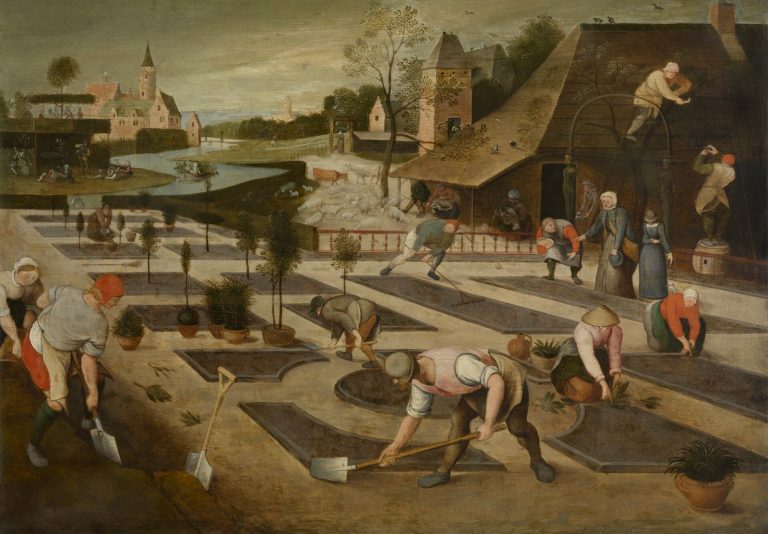
Log in or sign upIn a large walled garden beside a farmhouse, men and women dig, rake and plant neat geometric beds. Small trees in pots wait to be set out. Abel Grimmer painted Spring in 1607 as part of a series of the four seasons. His composition follows a design by Pieter Bruegel the Elder, known from a print.
The panel belongs to the Royal Museum of Fine Arts Antwerp (KMSKA).
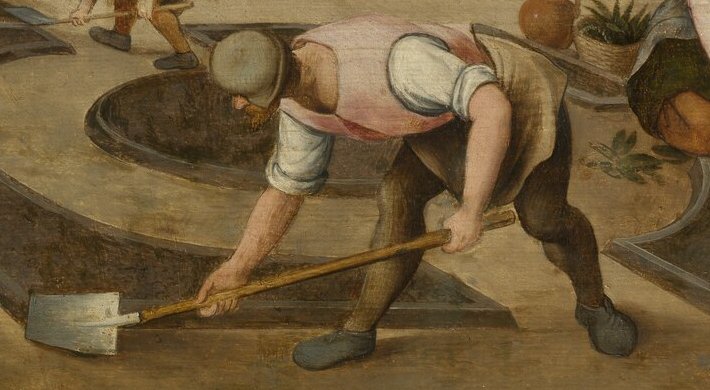
In the foreground, a man bends to turn the soil with a spade while a woman beside him sets young plants into a bed. The gardeners work in pairs and small groups, each busy with a different task.
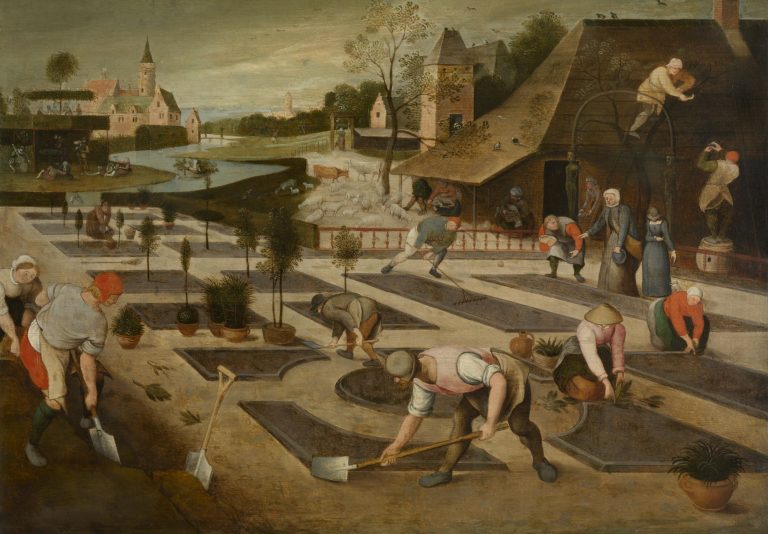
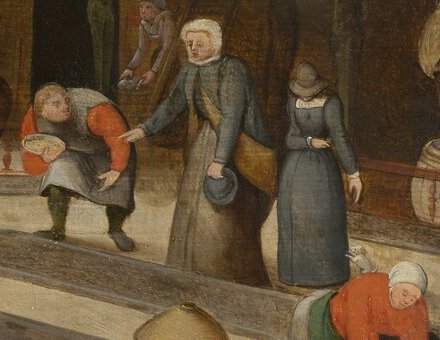
By the farmhouse, a well-dressed lady and her companions seem to inspect the work, while women kneel to plant.
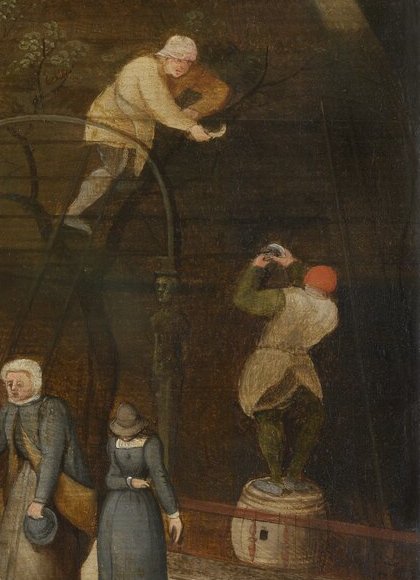
Higher up, a man on a ladder trims the arbour, and another works at the far end of the garden.
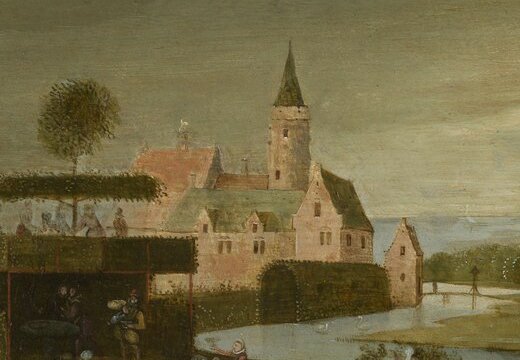
Beyond the garden, a castle and a church rise across the water. Near the riverbank, small figures rest on the grass, and a flock of sheep is driven along in the meadow.
Abel Grimmer (about 1570 to about 1619) was the son of Jacob Grimmer, a landscape painter in Antwerp. Both specialised in landscapes, seasons and village scenes. Abel was known for his precise, colourful style and his series of the months and seasons, which were popular decorations for Antwerp homes.
Pieter Bruegel the Elder painted a famous series of the seasons in 1565, including The Hunters in the Snow. He also designed drawings of the seasons that were engraved and widely sold. After his death, many Antwerp painters, including his sons and Abel Grimmer, copied and adapted his compositions. Grimmer’s Spring follows one of these engraved designs.
The Bruegel tradition celebrated the cycle of the year and the work of ordinary people.
The geometric beds, with their curved and straight edges, show the fashion for formal gardens in the Low Countries around 1600. Potted plants, including small trees, were set out in spring after spending the winter indoors. The garden belongs to a wealthy house, and the workers are preparing it for the season.
Series of the seasons or months were popular because they reflected the rhythm of rural life and the order of creation. Each season had its typical activities: planting in spring, harvest in summer, slaughter and wine-making in autumn, hunting and feasting in winter. Spring shows renewal and hope after the winter.
Spring belongs to the Royal Museum of Fine Arts Antwerp (KMSKA). Our hand-painted oil reproduction follows this composition. You can also read about Bruegel’s Hunters in the Snow, or explore our famous landscape paintings.
Abel Grimmer (about 1570 to about 1619), a painter from Antwerp.
Royal Museum of Fine Arts Antwerp (KMSKA).
Yes. It follows a design by Pieter Bruegel the Elder for the season of spring.
Yes, a series of the four seasons.
Jacob Grimmer, also a landscape painter in Antwerp.
They were set out in spring after spending the winter indoors.
Public-domain reproduction of Spring (1607), via Wikimedia Commons. Detail images are crops of the same image; no reconstruction or upscaling.
Enjoyed this story?
Save articles to your collection
Log in or create a free account, and this article will be waiting in your Private Collection.
Log in or sign up
Man Writing a Letter
Gabriel Metsu, c. 1664
The gallery list
Every painting is already 50% off. Join the list and we will send you an extra $15 code, plus first access to new collections.
No spam. Unsubscribe anytime. · Privacy Policy
Welcome
Your $15 code is on its way. Explore the gallery while you wait.