Loading cart…
No products in the cart.

1857–1859 · Oil on canvas · Musée d’Orsay, Paris
Save articles to your collection
Log in or create a free account, and this article will be waiting in your Private Collection.
Log in or sign up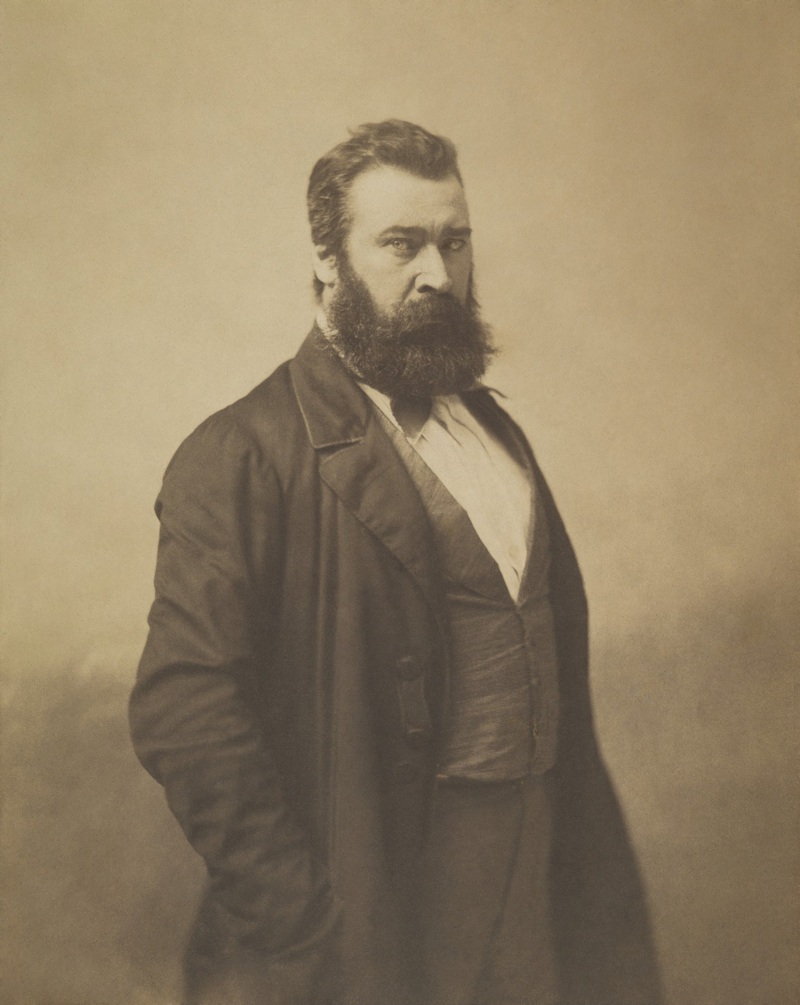 Explore the artistJean-François Millet →
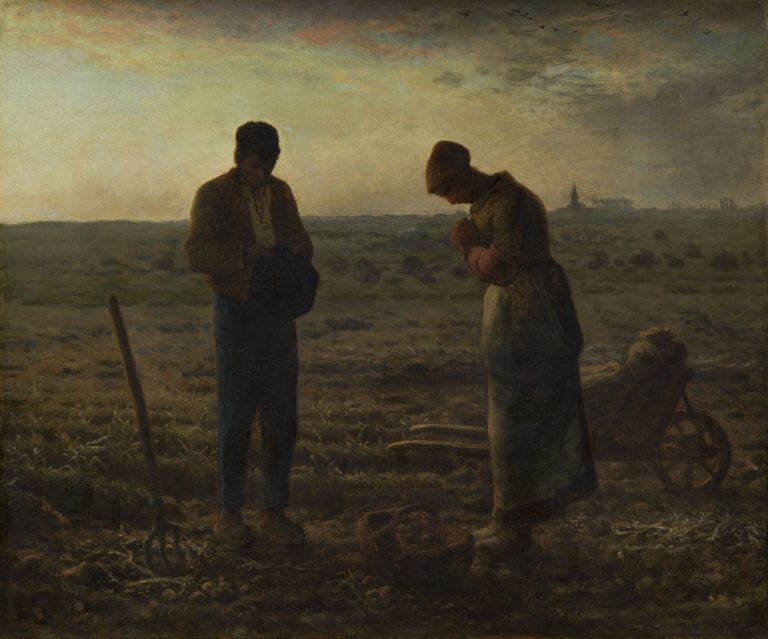
The man holds his hat. The woman joins her hands. Their tools remain in the field, but the work has stopped. Far away, a church tower rises above the horizon.
Jean-François Millet's The Angelus asks us to understand a pause through its visible effects. No painted sound reaches across the plain. The workers' stillness makes the imagined bell present.
Millet painted the canvas between 1857 and 1859. It is now in the Musée d'Orsay in Paris. Its physical size is modest, yet the two figures can feel monumental because of how completely their quiet action occupies the open ground.
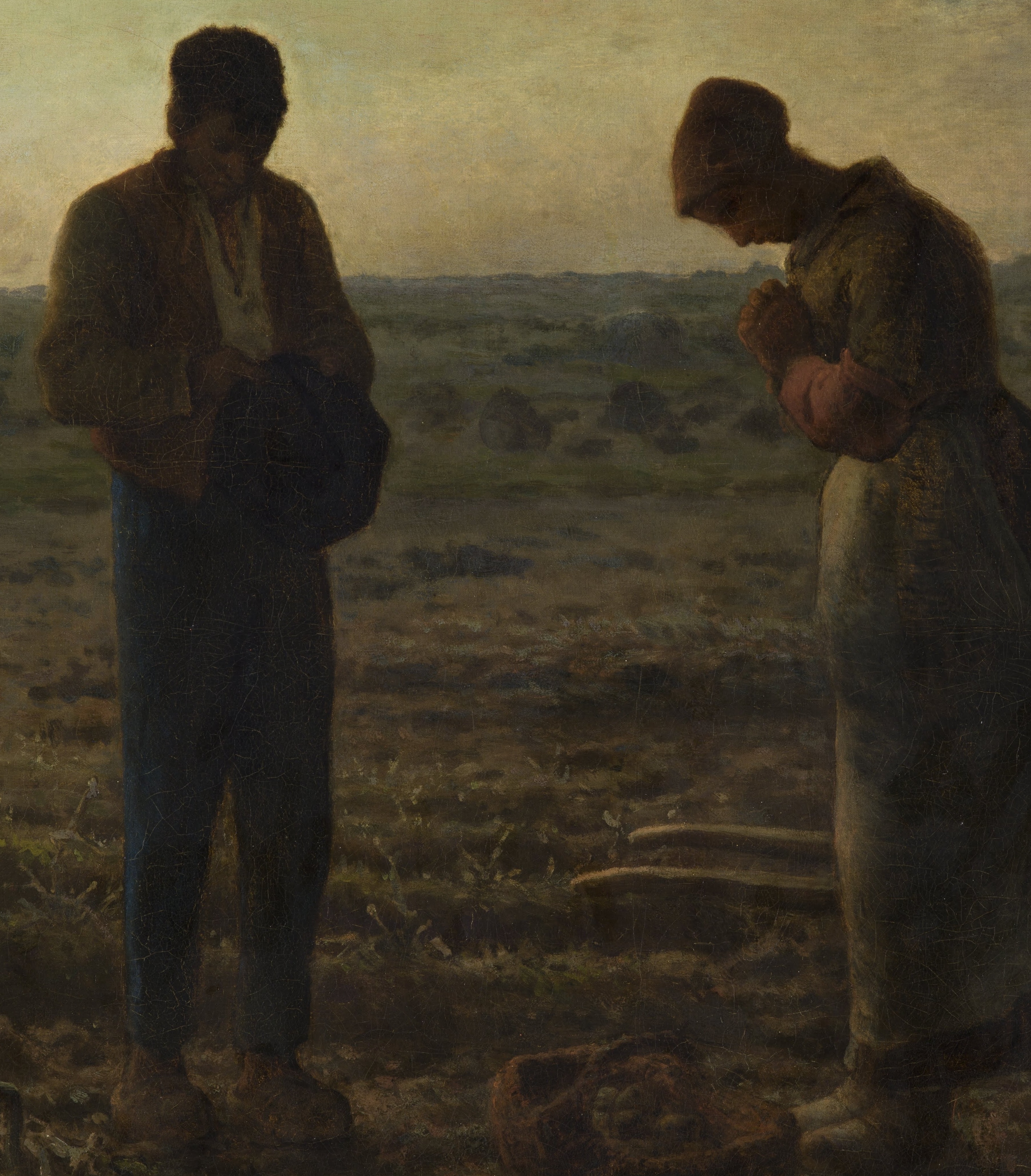
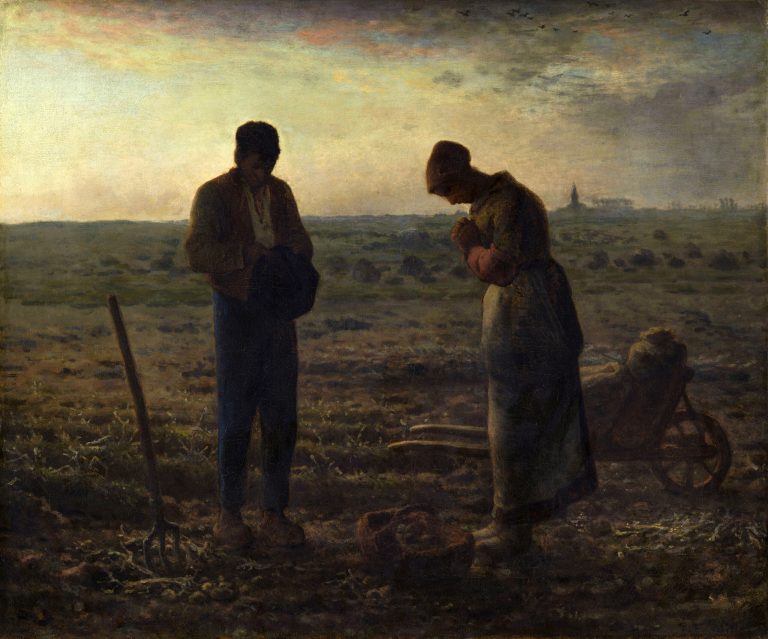
They are reciting the Angelus, a Christian prayer commemorating the Annunciation. The Musée d'Orsay identifies the work they have interrupted as potato digging. A fork, basket, sacks and wheelbarrow keep that activity visible around them.
The man lowers his head, holding the removed hat in front of his body. The woman inclines hers more deeply. Their gestures belong to the same pause, but they are not identical.
They do not turn toward each other to make a conversation visible. Their attention is directed elsewhere. The space between them remains occupied by the practical things of the working day.
Their faces are largely shadowed. Millet does not ask us to identify a precise expression in each pair of eyes. The placement of the heads, hands and bodies carries the action.
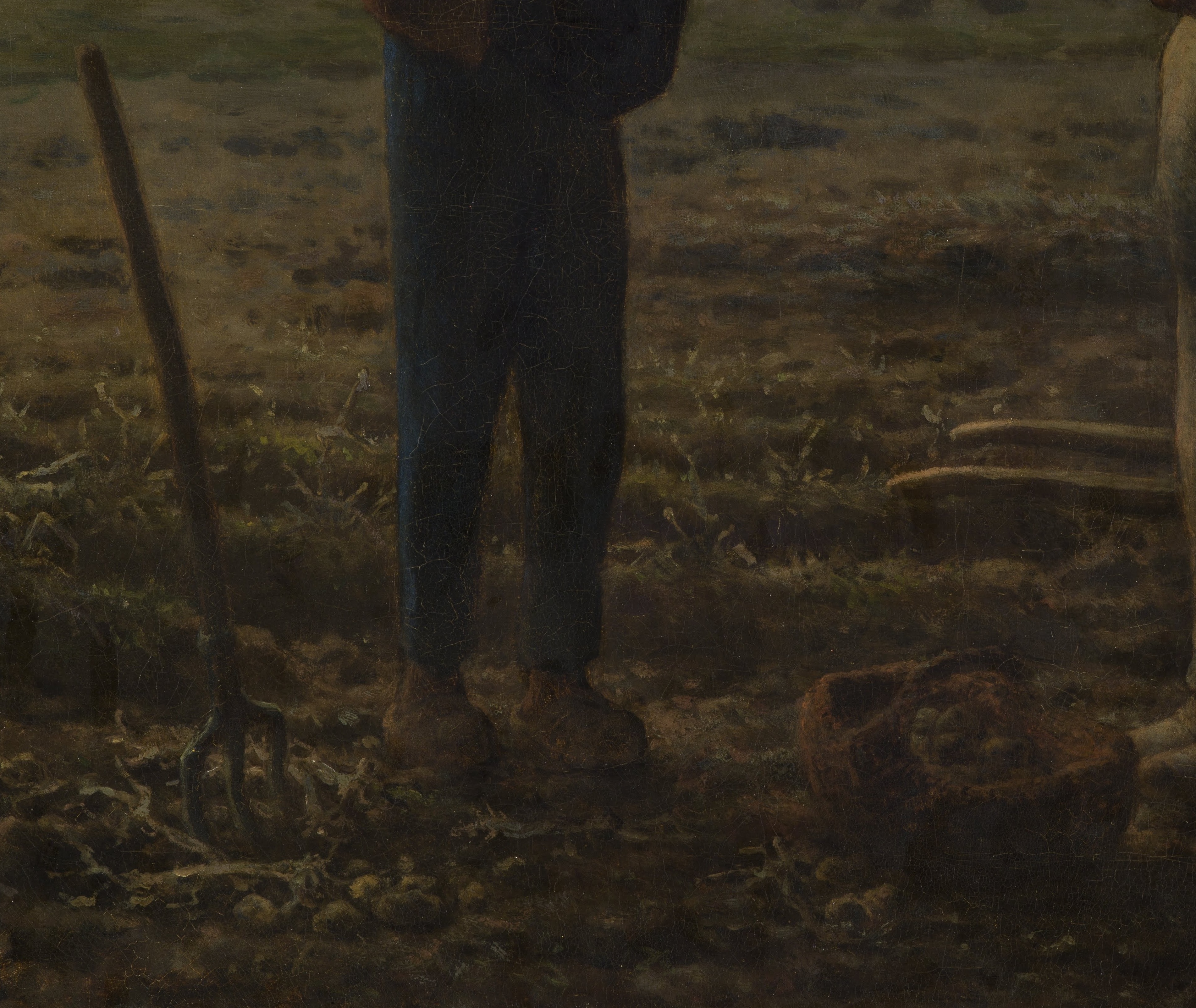
The fork remains planted in the ground at the left. A basket of potatoes lies between the workers' feet. These objects tell us that the pause is an interruption rather than a permanent state.
The day has activity before this moment and will presumably have activity after it. Millet makes a short cessation of movement worthy of the same attention that another painter might give to a dramatic action.
The uneven ground matters too. The people are not standing on a formal platform prepared for devotion. Their clothing and footwear remain within the field where they have been working.
It is easy to turn the basket into an object that must conceal a sensational secret. Begin instead with the interpretation grounded in the museum's account: the visible setting is a potato harvest interrupted by prayer. A claim about something else hidden in the scene requires separate evidence.
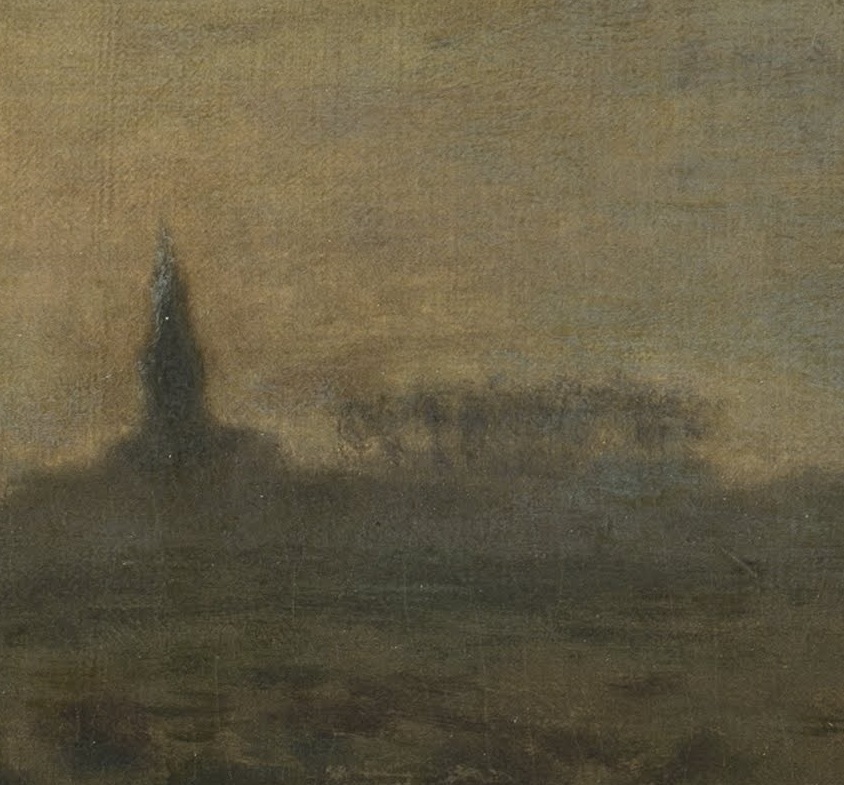
The church tower is far smaller than either foreground figure. Its relation to them is not one of physical proximity. The open plain separates the place of worship from the place of work.
That separation gives the imagined bell its reach. The painting connects a distant building to an action in the foreground without needing a procession, a road full of people or an enlarged religious emblem.
The horizon also cuts behind the figures at a carefully chosen height. Their upper bodies stand against the sky, making simple changes of posture readable from a distance.
The air contains movement that the people have suspended. Small birds cross the upper sky. Their scattered dark marks make the workers' stillness more apparent without turning the landscape into an empty backdrop.
The Musée d'Orsay records Millet's later recollection of working in the fields as a child. When the church bell sounded, his grandmother made the family stop to pray for the dead.
That memory gives the picture a particular source without making it a literal portrait of his own family at one documented hour. A remembered practice can become the basis for a scene whose figures are not named.
The museum's interpretation stresses the recurring rhythms of rural life. Prayer is part of the subject, but so are labour, habit and a brief release from work. The painting's quietness comes from their relationship.
The moment is not free of effort simply because the workers have stopped. Their tools and the gathered potatoes keep the preceding activity in view. Rest and labour remain close enough to define one another.
The painted canvas measures 55.5 by 66 centimetres. That is much smaller than the ambitious history paintings associated with public spectacle.
Millet's figures nevertheless acquire weight. The broad ground, low distance and relatively simple silhouettes allow them to dominate the immediate view. We encounter two people whose action appears important without being loud.
The palette does not separate them from the land through bright costume. Their colours remain close to the field around them. The body of the woman is particularly solid against the lighter strip of distance.
This is a different effect from treating peasants as tiny staffage within a picturesque panorama. The land extends beyond them, but their interruption determines how we understand its apparent silence.
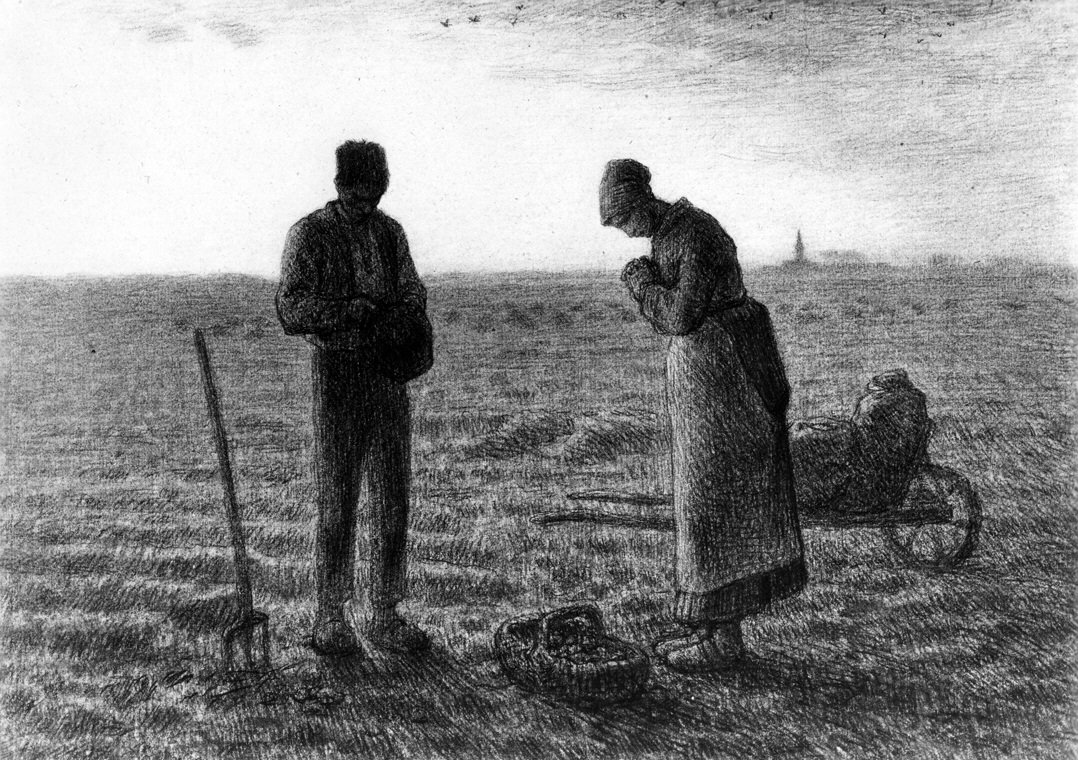
A later version at the Walters Art Museum, made about 1860, translates the subject into black conté crayon on paper. It is a separate work, not a black-and-white photograph of the oil painting.
The Walters connects the image to Millet's wish to evoke the distant church bells. In the drawing, contrasts between the light horizon and dark forms carry effects that the painting distributes through colour.
Comparing the two makes the subject's economy clearer. The scene can survive a substantial change of medium because the pause is organised through posture, distance and a small set of objects.
Details shift, but the event remains legible: people stop working and direct their attention toward something outside the immediate task. The visible world gives shape to an action that includes listening.
The Angelus became a widely reproduced image. That familiarity can encourage a quick response: two rural figures praying, a quiet field, a sentimental scene.
Slower looking reveals how much the picture does without offering a large event. The hat has been removed. The fork has been set aside. One head bends farther than the other. The tower remains almost at the limit of visibility.
None of those details is a decorative addition to a completed story. Together they make the interruption understandable. A painter has given duration to a moment that might otherwise have passed without notice.
For another view of Millet's attention to rural labour, explore his paintings and collection. His subjects do not all ask the same thing of the viewer. Here, the action most worth watching is the decision to stop.
Jean-François Millet painted the oil canvas between 1857 and 1859.
It belongs to the Musée d'Orsay, Paris, inventory RF 1877. The later drawing discussed here belongs to the Walters Art Museum in Baltimore.
It names the prayer the workers are reciting. The prayer commemorates the Annunciation, and church bells traditionally marked its recitation.
The Musée d'Orsay identifies their task as potato digging. The basket, fork and other equipment keep that work present during the pause.
Their silhouettes stand prominently against the open landscape. The impression of monumentality comes from the composition rather than from the physical size of the canvas.
Jean-François Millet, The Angelus, 1857–1859, Musée d’Orsay, Paris. Public-domain painting and faithful reproduction via Google Art Project/Wikimedia Commons. Details cropped from this source.
Enjoyed this story?
Save articles to your collection
Log in or create a free account, and this article will be waiting in your Private Collection.
Log in or sign up
Man Writing a Letter
Gabriel Metsu, c. 1664
The gallery list
Every painting is already 50% off. Join the list and we will send you an extra $15 code, plus first access to new collections.
No spam. Unsubscribe anytime. · Privacy Policy
Welcome
Your $15 code is on its way. Explore the gallery while you wait.