Loading cart…
No products in the cart.

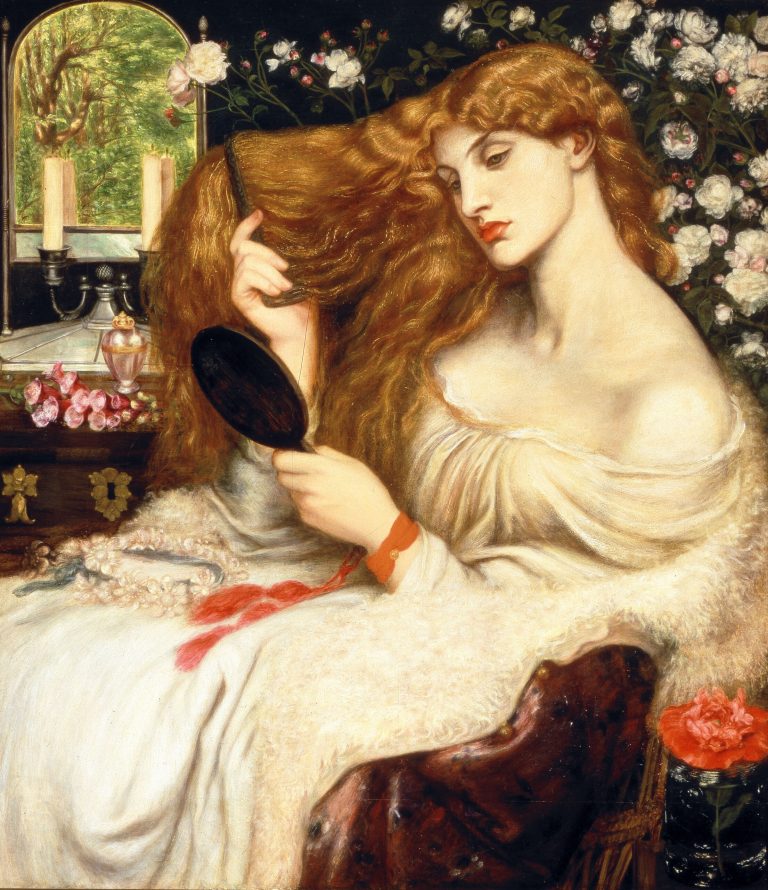
1866–1868, altered 1872–1873 · Oil on canvas · Delaware Art Museum, Wilmington
Save articles to your collection
Log in or create a free account, and this article will be waiting in your Private Collection.
Log in or sign up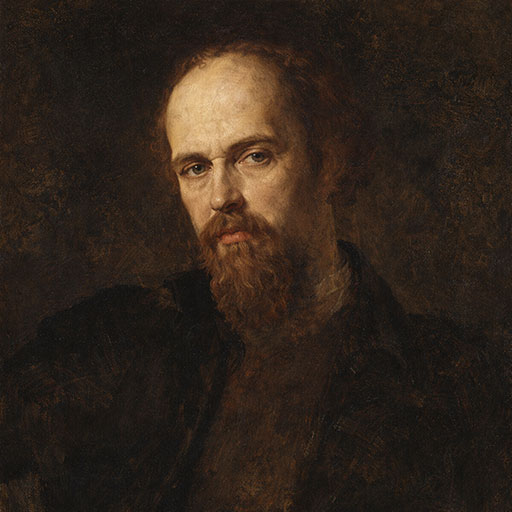 Explore the artistDante Gabriel Rossetti →
We see the dark back of the hand mirror. The woman sees whatever catches the glass. She holds it close while drawing a black comb through a thick wave of copper-coloured hair. Her eyes are lowered and her hands are busy. Dante Gabriel Rossetti lets us watch without opening up the private view she has of herself.
This is Lady Lilith, the oil painting Rossetti made in 1866–1868 and altered in 1872–1873. It belongs to the Delaware Art Museum. Lilith comes from legend, yet Rossetti places her at a dressing table with a ribbon at her wrist and a small glass bottle close at hand.
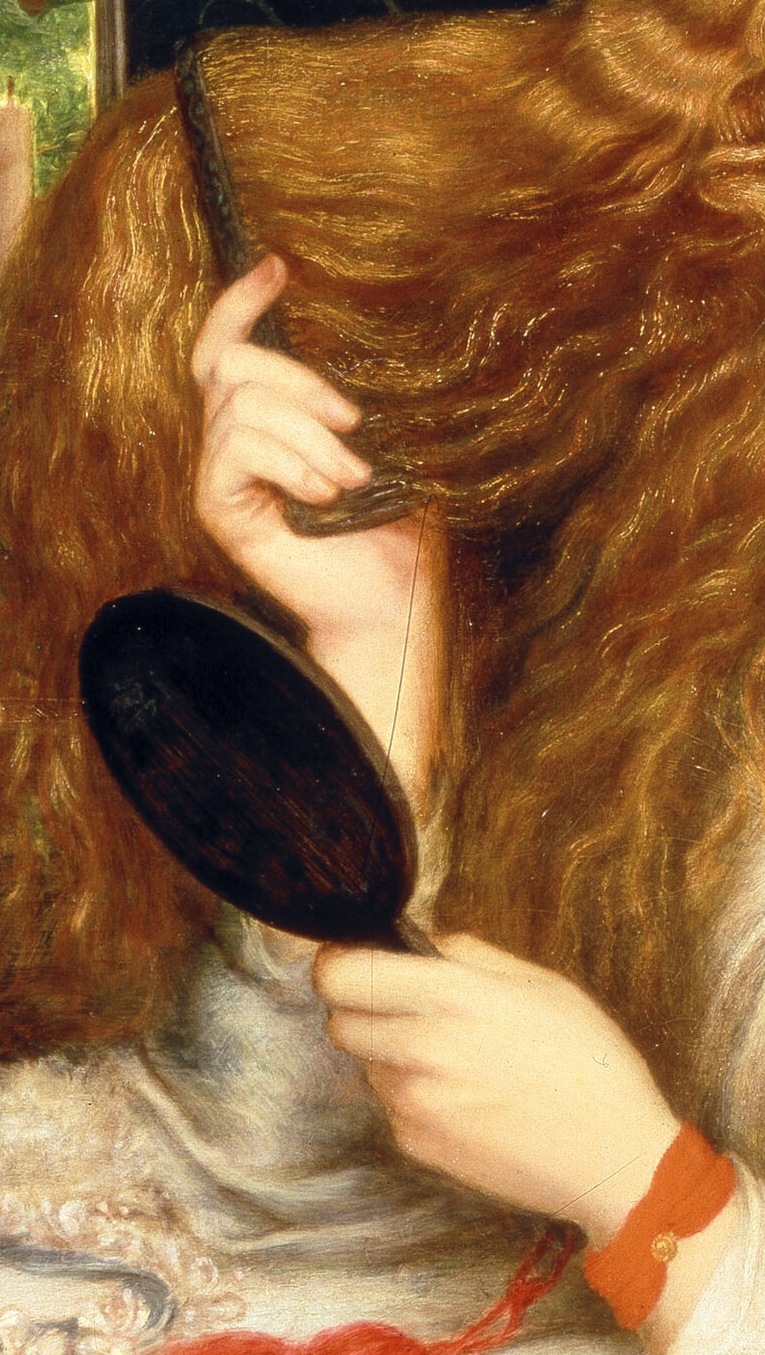
Both hands are occupied. One lifts the comb against her hair. The other holds the mirror at an angle. The pose makes her absorption in the act of dressing as important as her appearance.
The larger, arched mirror at the upper left holds a patch of green. A tree and bright foliage appear in its glass, with two tall candles in front of it. The leafy reflection brings daylight into a corner already crowded with objects. Trace the roses above it and the flowers continue behind Lilith’s head.
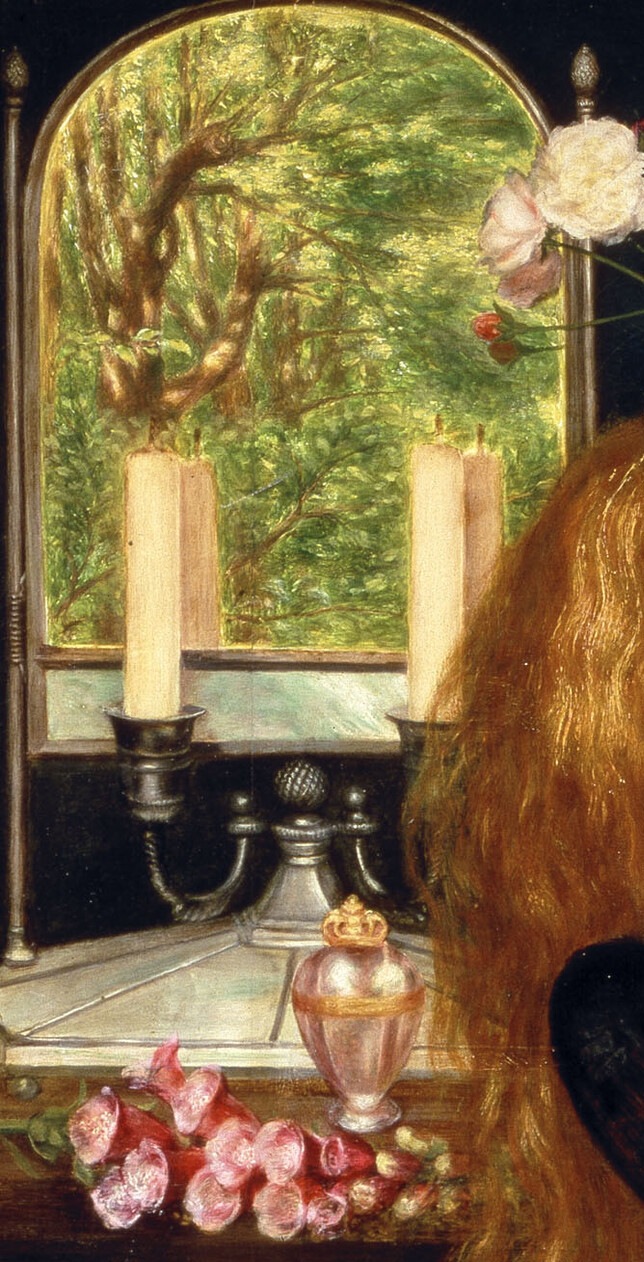
The painting leaves the arrangement of the room to our imagination. The greenery appears where we might expect the mirror to reflect the sitter. The small mirror keeps the sitter’s view private, while the big one shows a place beyond the dressing table. The two mirrors give us two very different kinds of access to the scene.
In a later strand of Jewish tradition, Lilith is Adam’s first wife. Rossetti made her a contemporary figure and paired the painting with a sonnet, later called Body’s Beauty. The poem makes her hair a source of enchantment. Its final line describes a single strand with the force of a cord.
“And round his heart one strangling golden hair.”
Dante Gabriel Rossetti, Body’s Beauty, 1881 author-corrected proof
The sonnet supplies a young man who is absent from the canvas. Here we see the hours it might take to arrange all that hair, the wrists that bear its weight and the comb poised against it. The two works give the same detail different roles. In the poem a strand binds someone else. In the painting her hair is still in her own hands.
Fanny Cornforth sat for the original oil. Years later Rossetti repainted its face using Alexa Wilding, whose features appear in the Delaware version today. The Rossetti Archive traces the commission to Frederick Leyland in 1866 and documents the later alteration through their correspondence.
A watercolour and gouache version from 1867, credited by the Met to Rossetti and Henry Treffry Dunn, preserves Cornforth’s features. Compare the two images at the same point in the composition. The bent head, comb and raised hand recur, while the face changes.
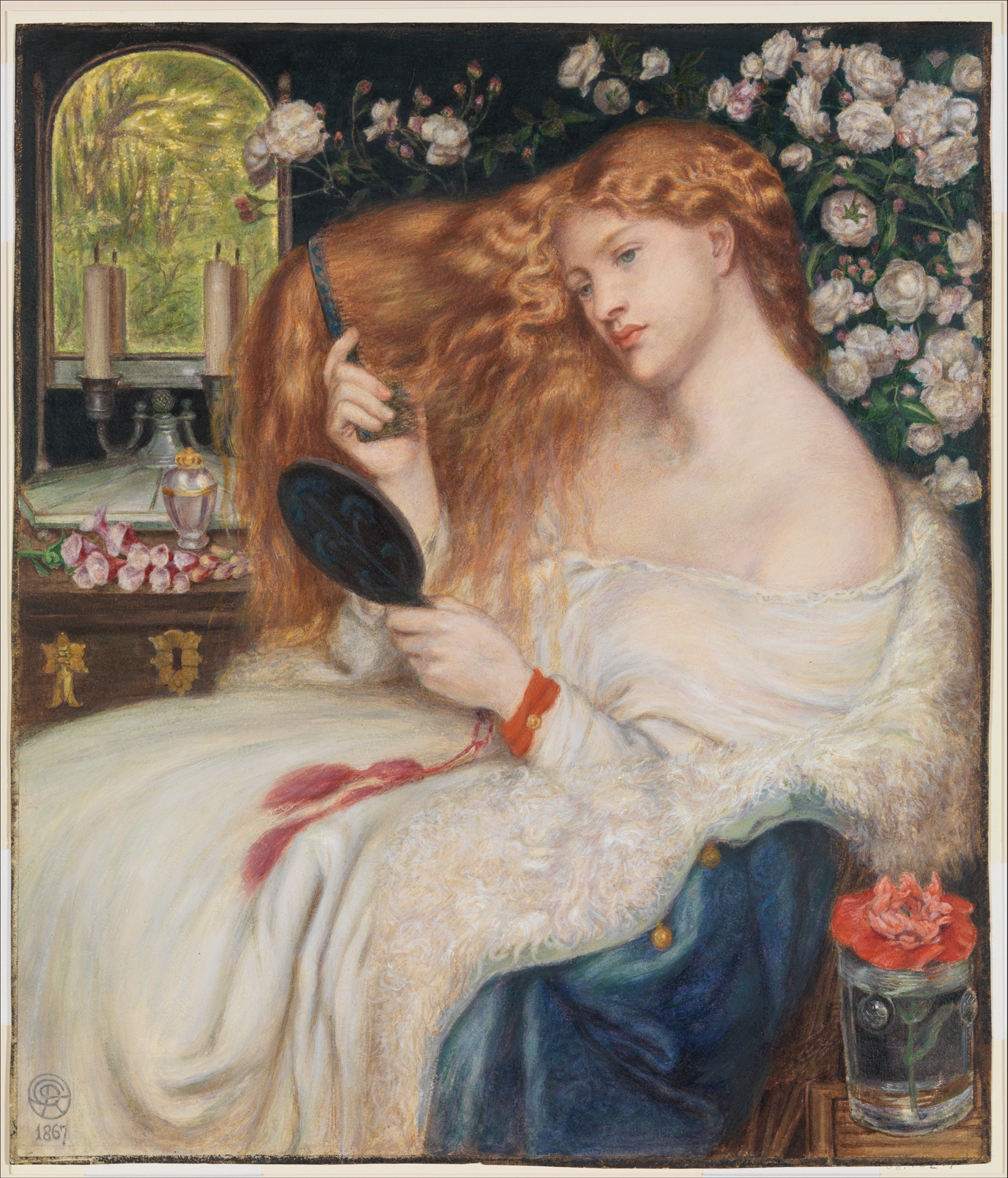
The watercolour has its own details, including a cooler blue beside the chair. It offers a separate record of the earlier model, rather than a precise record of every passage of the oil before Rossetti altered it.
The Delaware Art Museum in Wilmington owns the oil on canvas, made in 1866–1868 and altered in 1872–1873. The 1867 work on paper pictured above belongs to the Metropolitan Museum of Art in New York. Both use the title Lady Lilith. The collection, medium and model help tell them apart.
Return to the oil and look once more at the back of that hand mirror. The change of model is documented. What Lilith sees in the glass remains hers alone. Explore more work in the Pre-Raphaelite collection.
Dante Gabriel Rossetti, Lady Lilith, 1866–1868, altered 1872–1873. Delaware Art Museum, Samuel and Mary R. Bancroft Memorial. Oil painting image via Wikimedia Commons, Public Domain Mark. Canvas image source.
Enjoyed this story?
Save articles to your collection
Log in or create a free account, and this article will be waiting in your Private Collection.
Log in or sign up
Man Writing a Letter
Gabriel Metsu, c. 1664
The gallery list
Every painting is already 50% off. Join the list and we will send you an extra $15 code, plus first access to new collections.
No spam. Unsubscribe anytime. · Privacy Policy
Welcome
Your $15 code is on its way. Explore the gallery while you wait.