Loading cart…
No products in the cart.

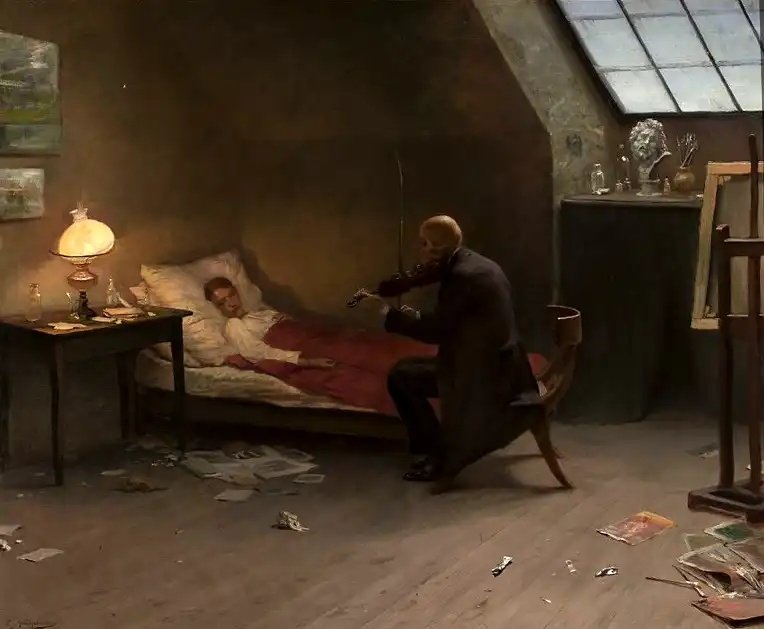
1901 · Oil on canvas · National Museum in Warsaw
Save articles to your collection
Log in or create a free account, and this article will be waiting in your Private Collection.
Log in or sign up Explore the artistZygmunt Andrychiewicz →
In a cold attic studio, a young artist lies dying in bed. Beside him, a dark figure sits on a chair, playing the violin. The figure is Death, his last friend. The Polish painter Zygmunt Andrychiewicz painted the scene in 1901. It belongs to the National Museum in Warsaw.
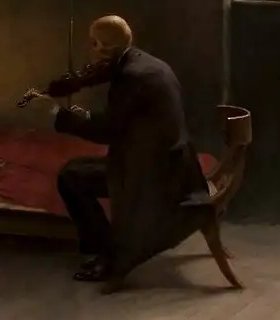
Death, with a bald, skull-like head, wears a long coat and plays gently. The scene recalls the old theme of the Dance of Death, but here Death comes quietly, almost kindly.

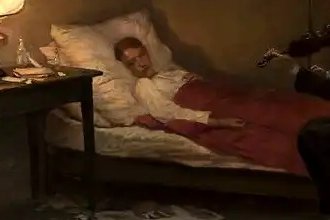
The artist lies pale under a red blanket, listening. Papers and drawings are scattered on the floor.
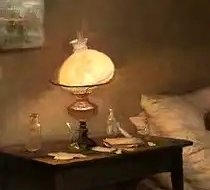
A lamp glows on the bedside table, the only warm light in the room.
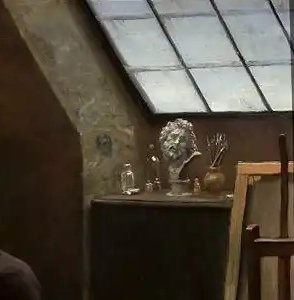
A skylight, an easel and a plaster bust show that this is a painter’s studio, the poor artist’s garret of nineteenth-century legend.
Zygmunt Andrychiewicz (1861 to 1943) was a Polish painter who worked mainly in Warsaw. He painted genre scenes, portraits and symbolic subjects, and was active in Warsaw’s artistic life around 1900. His work reflects the Young Poland movement, which combined Symbolism, emotion and an interest in death, dreams and the inner life.
Around 1900, artists across Europe were fascinated by death, often shown as a figure who visits the living. Arnold Böcklin painted himself with Death playing a fiddle in 1872, a famous image that may have inspired Andrychiewicz. In Andrychiewicz’s painting, Death is not terrifying but gentle, a friend who accompanies the dying artist in his last moments.
The image of the starving artist in a garret was a powerful myth in the nineteenth century, popularised by novels and operas such as La Bohème. The artist sacrifices comfort for his art and dies young, unrecognised. Andrychiewicz’s painting draws on this romantic idea, giving it a moving, melancholy form.
The violin connects the painting to a long tradition of the Dance of Death, where Death plays music to lead people away. The soft music suggests comfort rather than fear. In the dim room, the lamp’s glow and the quiet melody create an atmosphere of peace.
Death of an Artist: The Last Friend belongs to the National Museum in Warsaw. Our hand-painted oil reproduction follows this composition. You can also read about Simberg’s The Garden of Death, another gentle vision of death from the same period.
The Polish painter Zygmunt Andrychiewicz, in 1901.
National Museum in Warsaw.
Death, shown as the artist’s last friend.
A poor artist’s attic studio.
He was associated with Young Poland, the Polish Symbolist movement.
Arnold Böcklin’s Self-Portrait with Death Playing the Fiddle (1872).
Public-domain reproduction of Death of an Artist: The Last Friend (1901). Detail images are crops of the same image; no reconstruction or upscaling.
Enjoyed this story?
Save articles to your collection
Log in or create a free account, and this article will be waiting in your Private Collection.
Log in or sign up
Man Writing a Letter
Gabriel Metsu, c. 1664
The gallery list
Every painting is already 50% off. Join the list and we will send you an extra $15 code, plus first access to new collections.
No spam. Unsubscribe anytime. · Privacy Policy
Welcome
Your $15 code is on its way. Explore the gallery while you wait.