Loading cart…
No products in the cart.

1601-1606 · Oil on canvas · Musee du Louvre, Paris, France
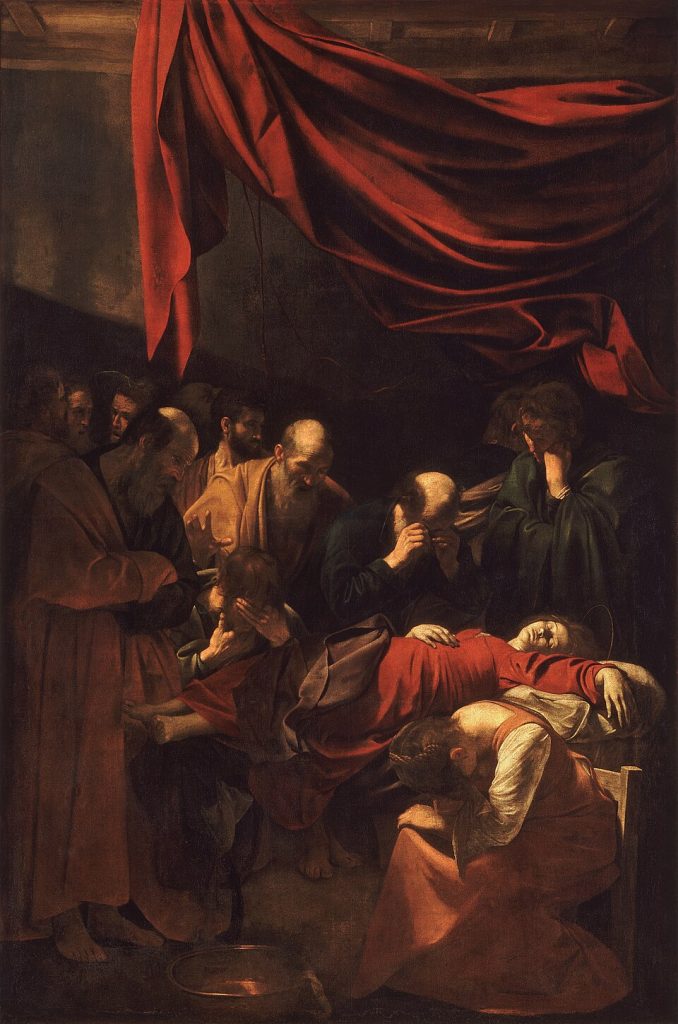
The Death of the Virgin was commissioned by Laerzio Cherubini, a papal lawyer, for the Cherubini Chapel in the church of Santa Maria della Scala in Trastevere, Rome. The painting was rejected by the Discalced Carmelites who administered the church, reportedly because Caravaggio had used the body of a drowned woman, possibly a prostitute, as his model for the Virgin. The rejection caused considerable public discussion, and the work was quickly purchased by Vincenzo Gonzaga, Duke of Mantua, on the advice of Peter Paul Rubens, who recognized its exceptional quality. Before leaving Rome, the painting was put on public display for a week, during which large numbers of artists came to study it. It passed through several collections over the following century before entering the French royal collection and eventually the Louvre. The rejection and rapid rehabilitation of the painting makes its history one of the most discussed episodes in early Baroque patronage, illustrating the tension between Caravaggio naturalistic approach and traditional expectations for sacred imagery.
The painting fills a very large canvas with a horizontal arrangement of figures surrounding the recumbent body of the Virgin. The body itself is placed low in the composition, with feet extending toward the viewer, and the face turned slightly to one side in the absolute stillness of death. Above, a large red curtain is draped across the upper portion of the canvas, adding a note of theatrical solemnity while blocking any view of a celestial realm. The apostles surrounding the body are depicted as aging, weary men in attitudes of private grief rather than formal lamentation. Mary Magdalene sits at the lower right, bent over with her face in her hands, a posture of unguarded sorrow that anchors the emotional register of the entire scene. The light enters from the upper left and rakes across the figures with the same naturalistic logic found throughout Caravaggio work. There is no heavenly light, no angels, no indication of miraculous assumption, only the stillness of a room where mourners have gathered around a body.
The meaning of this painting was contested from the moment of its rejection, and that controversy itself illuminates the cultural stakes of representing sacred figures in naturalistic terms. For the patrons who rejected it, the propriety of religious imagery required a degree of idealization that Caravaggio had refused to provide. For defenders of the work, including many of the most sophisticated artists and collectors of the period, the power of the painting derived precisely from its refusal of convention. The theological subject, the dormition or death of the Virgin, was a deeply important one in Catholic devotion, serving as a model for the good death and as the event that preceded the Assumption. By treating it with the full weight of physical mortality, Caravaggio does not diminish its sacred significance but relocates it in the felt experience of loss. The grief of the apostles and of Mary Magdalene becomes the viewer own grief, and the painting transforms contemplation into participation, which was at the heart of Counter-Reformation devotional practice.