Loading cart…
No products in the cart.

1603-1604 · Oil on canvas · Pinacoteca Vaticana, Vatican City
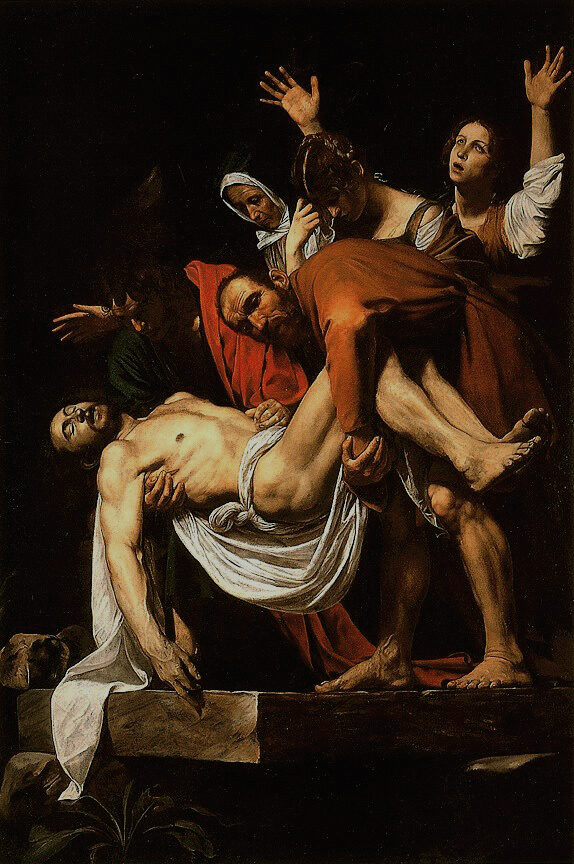
The Entombment of Christ was painted for the Vittrice Chapel in the Chiesa Nuova, also known as Santa Maria in Vallicella, in Rome. The commission came from Pietro Vittrice, and the painting was installed in the family chapel around 1603 to 1604. It remained in that location until 1797, when it was taken to Paris as part of the Napoleonic appropriation of Italian artworks following the Treaty of Tolentino. After the fall of Napoleon it was returned not to the Chiesa Nuova but to the Vatican collections, where it has remained in the Pinacoteca Vaticana. The original location in the Vittrice Chapel was taken by a copy. The painting was enormously influential during the seventeenth century and generated numerous copies and adaptations by other painters, testimony to the impact of its compositional solution and emotional force. Peter Paul Rubens produced a notable drawn copy of the work, and its influence can be traced in the work of many Baroque painters across Europe who studied it directly or through reproductions.
The composition is built around a powerful diagonal formed by the body of Christ, which is carried by Nicodemus at the lower right and John the Evangelist at the upper left. The stone slab onto which the body is being lowered juts toward the viewer at the lower edge of the picture, creating a strong sense of spatial projection and drawing the viewer into the scene. The group of mourning women behind the male figures adds vertical height and emotional counterpoint to the physical labor depicted in the foreground. Caravaggio handles the anatomy of the dead Christ with careful attention, rendering the pallor of skin and the relaxed weight of limbs in a way that insists on the full humanity of the figure. The faces of the mourners range from silent inward grief to the open-armed gesture of one woman looking upward. The overall arrangement is both architecturally rigorous and deeply emotionally varied, demonstrating the artist ability to balance formal structure with raw human feeling.
The Entombment of Christ carries a layered devotional meaning that would have been immediately legible to Counter-Reformation Catholic audiences. The painting insists on the physical reality of the Incarnation and the suffering of Christ in a manner consistent with Jesuit and Oratorian spirituality, both of which encouraged the faithful to meditate on the bodily experience of Christ passion and death. By presenting the entombment as an act requiring human strength and physical effort, Caravaggio makes the event accessible and immediate rather than remote and symbolic. The stone slab at the lower edge of the composition has been interpreted as an allusion to the altar over which the painting hung, creating a visual and theological connection between the sacrifice of Christ and the Eucharistic sacrifice enacted in the Mass below. The mourning women in the background evoke scriptural figures including Mary Magdalene and Mary the mother of James, grounding the scene in gospel narrative while allowing the emotional range of human responses to death to be fully expressed.