Loading cart…
No products in the cart.

Art Guides · Buying
Save articles to your collection
Log in or create a free account, and this article will be waiting in your Private Collection.
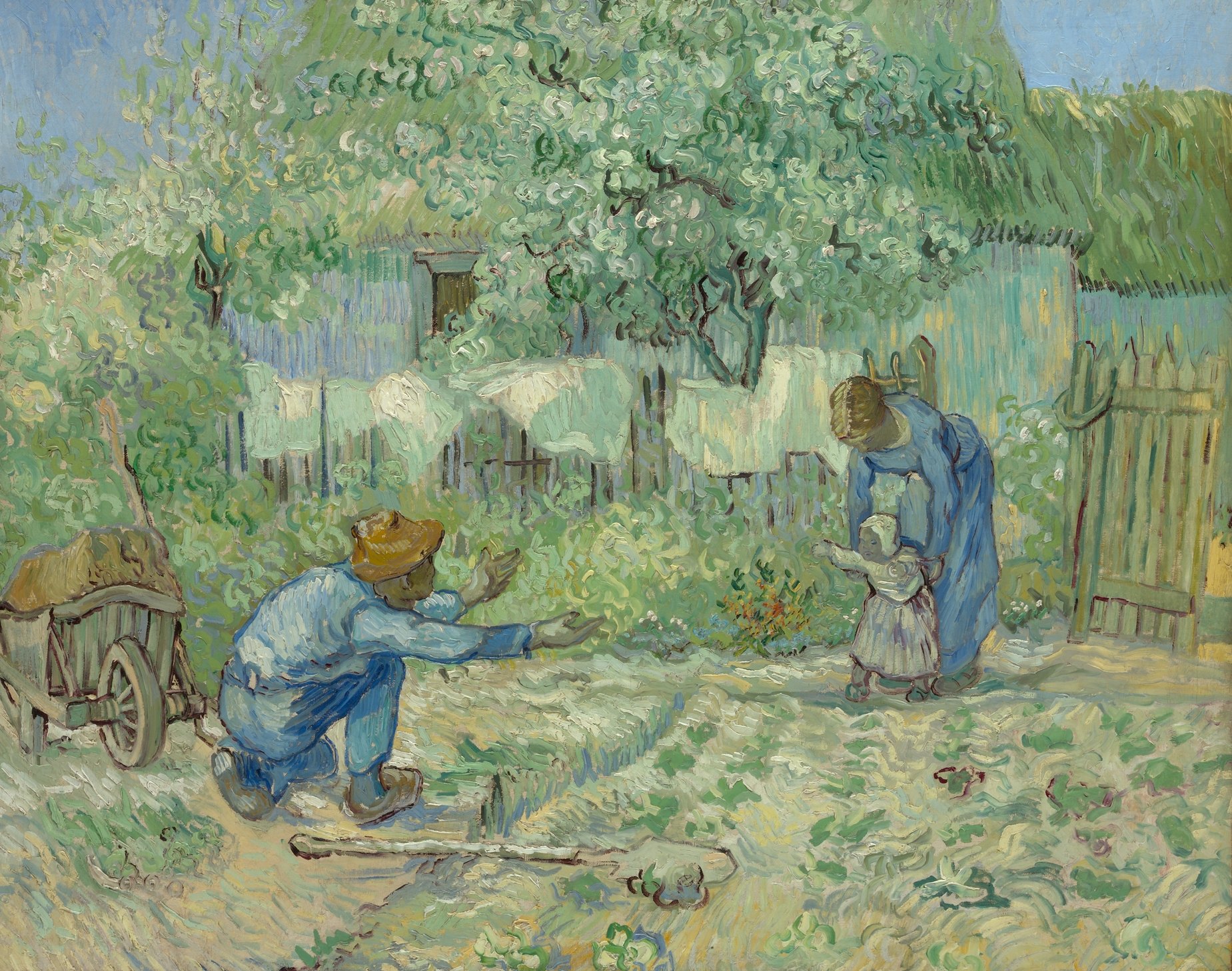
Log in or sign upIn September 1889, confined to the asylum at Saint-Rémy, Vincent van Gogh started copying. He worked from black-and-white prints of Jean-François Millet's farm workers and added the colour himself, making about twenty oil paintings this way. He did not think of it as cheating. He called it translating.
An oil painting reproduction comes from the same tradition: a painter copies a great work by hand, in oil, on canvas. The trouble is that a lot of what is sold under that name today has never been near a brush.
This guide shows you how to spot the real thing, what it should cost and how to choose one you will still love in ten years. We sell hand-painted reproductions ourselves, so read it with that in mind. The checks below work on any seller, including us.
An oil painting reproduction is a copy of an existing painting, made by hand in oil paint on canvas and sold openly as a copy. It is a real painting, built up in layers the same way the original was.
Three very different products get sold under that name, and the listing will not always tell you which one you are looking at.
| What it is | How it is made | Up close | Words in the listing |
|---|---|---|---|
| Hand-painted reproduction | A painter, a brush and real oil paint, layer by layer | Brushstrokes across the whole canvas | "Hand-painted", "100% oil on canvas" |
| Canvas print | Ink, from a large printer | Completely flat, with tiny dots of ink | "Giclée", "canvas print", "wall art" |
| Hand-embellished print | A print with a few strokes of gel or paint on top | Raised marks over a flat printed image | "Textured", "hand-embellished", "oil-look" |
A good canvas print is a fine thing to own. It just is not a painting, and it should not cost like one.
Six checks will catch almost every print dressed up as a painting. The first and last work before you buy. The others work the moment it arrives, or in any gallery.
Once you know it is real paint, the question changes. Is it any good? Put a photo of the copy next to the original and look at four things.
Start with the eyes and the hands. They are the hardest parts to copy and the first place a rushed painter gives up. If a face looks like a slightly different person, no amount of lovely colour will fix it.
Compare the whole picture, not just one area. Good copies keep the balance of warm and cool tones. Remember that screens shift colour, so judge a seller on several paintings, and use a museum's own image as your reference.
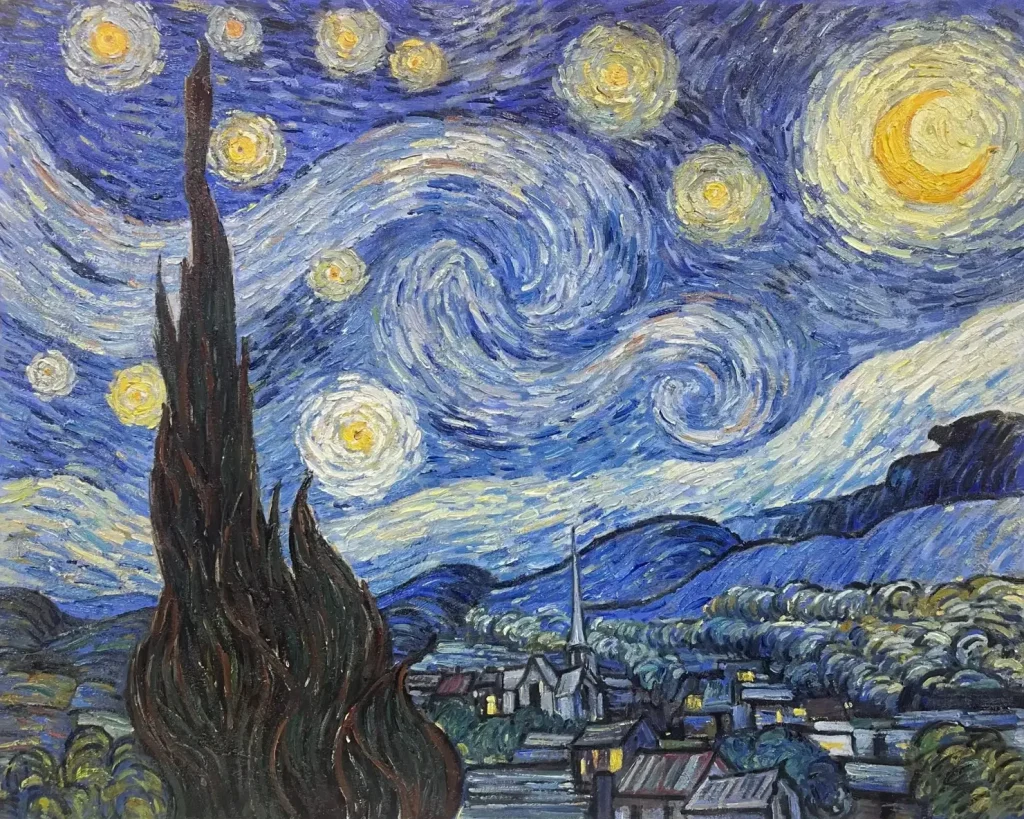
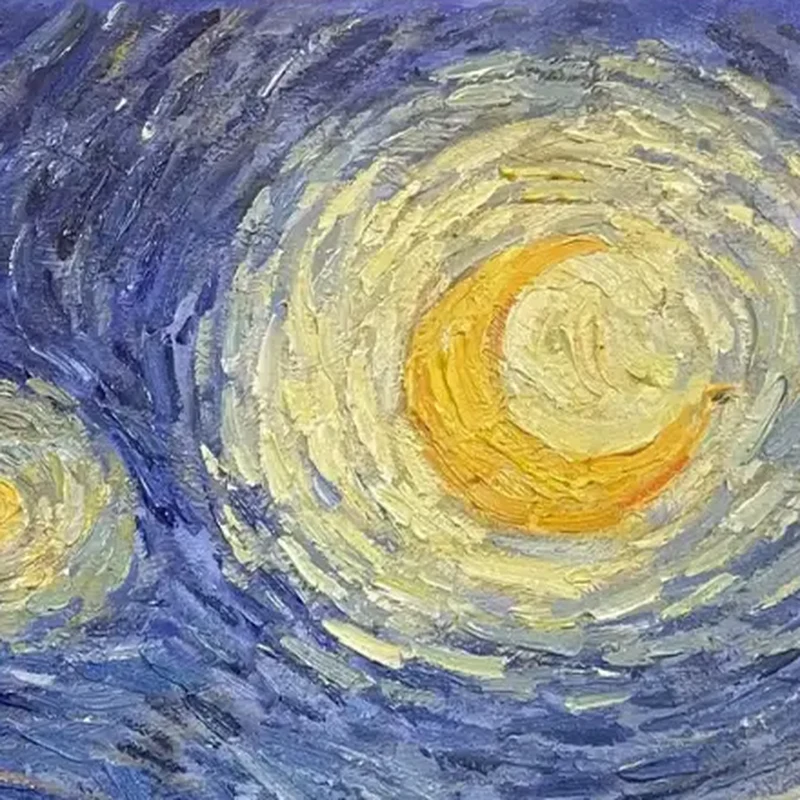
This is where the best painters stand out. More texture is not always better. The Starry Night should have thick, rolling ridges, because Van Gogh loaded his brush. Girl with a Pearl Earring should be almost smooth, because Vermeer's soft light comes from thin, careful layers. A heavy, ridged Vermeer is a bad copy, however much paint it has on it.
Look for artist-grade oil paint on primed canvas. If a seller will not say what they use, or the answer is "premium art materials", ask again.
In November 2026 we looked at public listings for hand-painted reproductions. Online studios started at around $250 to $335 for a small or medium canvas. Individual sellers on Etsy ran from about $160 to $550. Framing usually costs extra.
Three things move the price:
Be careful with a price far below these. Ask yourself how many hours of a skilled painter's time it could possibly pay for.
For reference, most paintings at ByMuseum start at $299 for an 18 x 20 inch rolled canvas. Very detailed works start at $1,499, because they need a large canvas to keep the detail.
Famous paintings are often smaller than people imagine. The Mona Lisa is about 30 x 21 inches (77 x 53 cm). The Starry Night is about 29 x 36 inches (74 x 92 cm). You do not need to match the original, but three rules help.
The painting is the same in all three. What changes is how it reaches your wall.
If you have a good framer nearby, rolled is usually the best value.
Yes, as long as the painting is out of copyright. Copying is one of the oldest habits in art. The Louvre has let artists set up easels in its galleries since it opened in 1793, and it still does. Its copyists follow one clever rule: a copy must be a fifth larger or smaller than the original, so nobody can ever pass it off as the real thing.
That is the line that matters. A reproduction sold as a copy is honest. A copy sold as the original is forgery.
Copyright is the other limit. In most countries it lasts 70 years after the artist's death, and in the United States works published before 1931 are generally free to copy. So Van Gogh, Monet and Vermeer are open to everyone. Picasso, Dalí and Hopper are not yet, which is why careful sellers will not paint them. This is general information rather than legal advice.
You have three main choices, and each suits a different buyer.
At ByMuseum, we make hand-painted oil painting reproductions to order. Here is how we answer the list above.
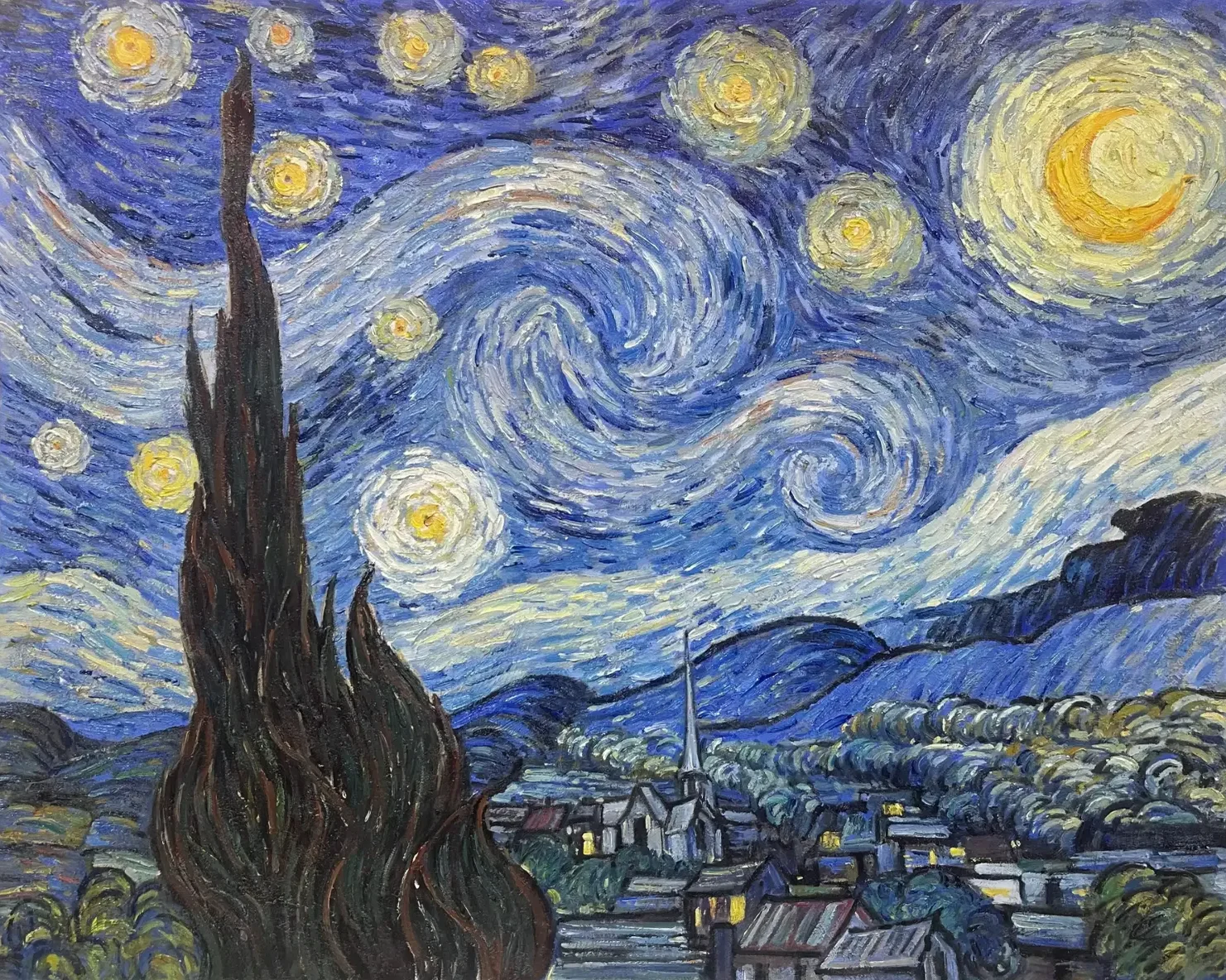
Yes, if you want a real painted surface on your wall. The texture and the way light moves across it are what you pay for, and no print has them. If you only want the image at a low price, a good print makes more sense.
Very little, in most cases. Buy one because you love the painting, not as an investment.
It should come very close in composition, colour and brushwork, but it will not be identical. A person painted it, so small differences are normal. Some of them are part of the charm.
A hand-painted reproduction is made with oil paint and a brush. A print is made with ink and a machine. Sellers often use "reproduction" for both, so always check which one you are buying.
Oil paintings can last for centuries with basic care. Hang yours away from direct sun, heat and damp, and dust it gently with a soft, dry brush.
Most older paintings can. Works still in copyright need permission from whoever holds the rights, which usually means the artist's estate.
Enjoyed this story?
Save articles to your collection
Log in or create a free account, and this article will be waiting in your Private Collection.
Log in or sign upPrices come from public listings we checked in November 2026 and will change. They are not based on any seller's sales data.

Man Writing a Letter
Gabriel Metsu, c. 1664
The gallery list
Every painting is already 50% off. Join the list and we will send you an extra $15 code, plus first access to new collections.
No spam. Unsubscribe anytime. · Privacy Policy
Welcome
Your $15 code is on its way. Explore the gallery while you wait.