Loading cart…
No products in the cart.

1654 · Oil on canvas · Six Collection, Amsterdam, Netherlands
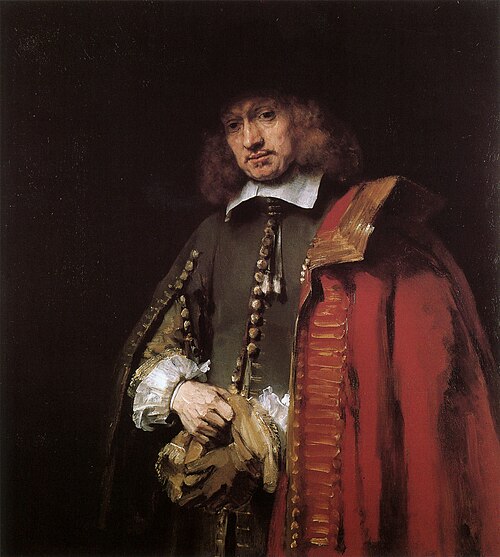
The Portrait of Jan Six was completed in 1654 and has remained in the possession of the Six family in Amsterdam for nearly four centuries, making it one of the few major works by Rembrandt van Rijn that has never entered a public museum collection. Jan Six was a wealthy Amsterdam patrician, poet, playwright, and collector who maintained a close personal friendship with Rembrandt during the 1640s and 1650s. The two men moved in overlapping social and intellectual circles, and Rembrandt had previously contributed an etching to a collection of poetry that Six published. The portrait was painted at a time when their friendship was at its height, which many historians believe contributed to the unusual sense of ease and intimacy that characterizes the image. The Six family has guarded the portrait with great care across generations, allowing it to be exhibited only on rare occasions. This exceptional provenance has given the work an almost legendary status among scholars and collectors. The painting is regularly cited in studies of Dutch portraiture as an example of how a close personal relationship between painter and sitter can produce results distinct from formal commissioned portraits. Jan Six himself was a man of considerable cultural ambitions, and his friendship with Rembrandt speaks to the high social standing that skilled painters could achieve in the Dutch Republic during the seventeenth century.
The portrait depicts Jan Six standing and pulling on a glove, his red coat rendered with extraordinarily loose and confident brushwork that conveys the sheen and weight of the fabric with remarkable economy of means. The face is painted with greater precision and detail than the hands or coat, directing the viewer's attention toward Six's expression, which is thoughtful, composed, and slightly distant. The background is kept deliberately neutral, ensuring that the figure commands the entire pictorial space without distraction. The freedom of Rembrandt's brushwork in this painting is often highlighted as an anticipation of later developments in European painting. The coat in particular is built up from broad, gestural strokes that describe texture and light simultaneously rather than through careful layering of detail. This approach creates a sense of immediacy and vitality that more finished portraits of the period often lack. The positioning of the figure, neither fully frontal nor in strict profile, and the casual action of pulling on the glove, gives the portrait a momentary quality, as if the viewer has encountered Six in the act of preparing to depart. This sense of caught movement was relatively unusual in formal Dutch portraiture of the period.
Portraits in seventeenth-century Amsterdam served complex social functions, communicating the sitter's wealth, status, learning, and character to a broad audience of family members, business associates, and civic peers. The Portrait of Jan Six accomplishes all of these functions while also suggesting something more personal. The relative informality of the pose, the warm and enveloping color of the coat, and the sense of psychological interiority in Six's expression all point toward a portrait conceived as a record of individual character rather than purely social position. The fact that the painting has remained within the Six family across nearly four centuries adds a layer of meaning to the work that public museum pieces do not carry. It functions simultaneously as a historical document, a personal memorial, and a symbol of lasting cultural continuity. For historians of Dutch art, the portrait also represents a significant moment in the evolution of portraiture away from rigid formality and toward psychological realism. Rembrandt's ability to suggest an inner life in his sitters, rather than simply recording their outward appearance, is consistently identified as one of the defining qualities of his contribution to European painting.