Loading cart…
No products in the cart.

c. 1665 · Oil on canvas · Rijksmuseum, Amsterdam, Netherlands
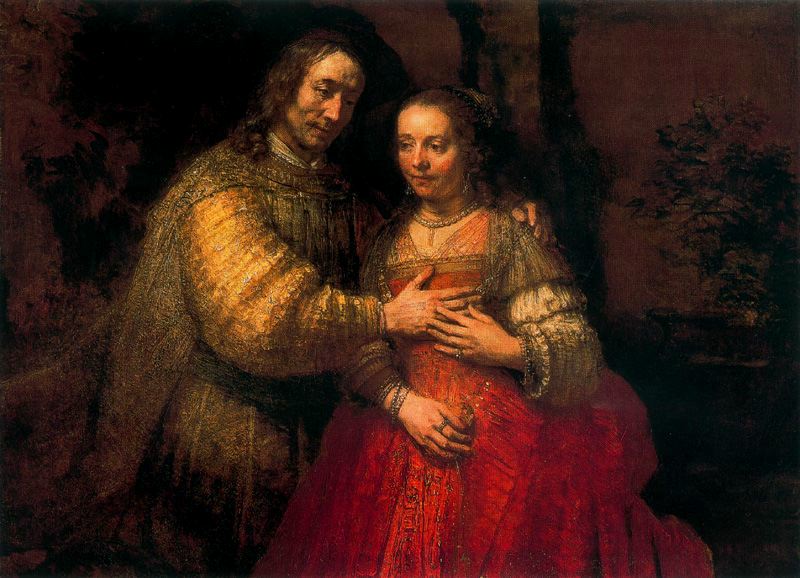
The Jewish Bride was painted around 1665 and has been part of the Rijksmuseum collection in Amsterdam since the nineteenth century. The title by which the painting is commonly known was assigned in the early nineteenth century by an Amsterdam art dealer who believed the work depicted a Jewish father presenting his daughter with jewelry on her wedding day. This identification has since been questioned by scholars, who have proposed numerous alternative identifications for the figures, including biblical pairs such as Isaac and Rebecca, or Tobias and Sarah, as well as the possibility that the work is a portrait of actual individuals depicted in biblical costume, a practice known as historiated portraiture that was common in the Dutch Golden Age.
The precise identity of the sitters remains unresolved, and this ambiguity has contributed to the painting's enduring fascination among historians and viewers. Despite the uncertainty surrounding its subject, the painting has been celebrated since it entered public collections for the extraordinary quality of its execution and the emotional warmth it conveys. Vincent van Gogh famously wrote about the painting in a letter, expressing that he would have given years of his life to sit before it. The work has been a centerpiece of the Rijksmuseum collection and is consistently highlighted in surveys of Dutch Golden Age painting.
The two central figures are depicted in close physical proximity, the male figure placing his right hand gently on the female figure's breast in a gesture of affectionate tenderness, while she rests her hand over his. Both figures look outward rather than at each other, giving the composition a reflective rather than performative quality. The costumes are richly detailed, the woman's golden-red dress rendered with dense, textured impasto that catches light across its surface in a way that suggests the weight and luminosity of embroidered fabric.
Rembrandt's late paint handling is at its most distinctive in this work. The sleeves of the male figure and the bodice of the female figure are built up with heavy, almost sculptural applications of paint that create a physical texture visible from close range. At a distance, these strokes coalesce into convincing representations of fabric and flesh. The faces, by contrast, are painted with relative restraint, their expressions calm and introspective. The color palette is dominated by warm golds, reds, and ochres, creating an enveloping visual warmth that reinforces the emotional content of the gesture at the center of the composition.
Whatever the specific identity of the figures, the painting communicates a universal experience of intimate human connection. The central gesture of the male figure's hand resting on the woman's chest, and her hand placed gently over his, speaks to a bond of trust, affection, and mutual recognition that transcends the specific biographical or biblical context of the image. The outward gaze of both figures suggests a couple united in their shared experience but also each carrying their own inner world, a quality that prevents the work from becoming merely a decorative representation of sentiment.
In the context of Rembrandt's late career, the painting fits into a broader pattern of works that emphasize human relationships, aging, vulnerability, and the emotional texture of private life. The richness of the costumes situates the figures in a world of abundance and celebration, yet the reflective quality of their expressions introduces a note of quiet solemnity. Scholars have suggested that for an aging painter who had outlived many of his closest companions, images of enduring human bonds carried particular personal significance. The painting continues to be cited as one of the most moving and technically accomplished works of the Dutch Baroque period.