Loading cart…
No products in the cart.

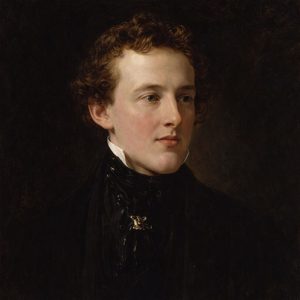
John Everett Millais stands as one of the most consequential figures in nineteenth-century British painting, a co-founder of the Pre-Raphaelite Brotherhood whose work challenged the academic conventions of his era and redirected the course of English art. At a moment…
John Everett Millais stands as one of the most consequential figures in nineteenth-century British painting, a co-founder of the Pre-Raphaelite Brotherhood whose work challenged the academic conventions of his era and redirected the course of English art. At a moment when the Royal Academy championed the smoothed and idealized traditions inherited from Sir Joshua Reynolds, Millais and his fellow Brotherhood members turned instead toward the crisp detail, vivid color, and moral earnestness they associated with painters working before the High Renaissance period of Raphael. The impact of this rebellion was immediate and lasting. Critics debated his canvases with unusual ferocity, the public gathered around them at exhibitions, and poets such as John Ruskin eventually became his most vocal champions. Millais did not merely react against his time; he constructed a new visual vocabulary that placed botanical accuracy, psychological depth, and luminous surface texture at the center of serious picture-making in Britain.
Born in Southampton in 1829, Millais demonstrated prodigious ability from early childhood and enrolled at the Royal Academy Schools at the remarkable age of eleven, becoming the youngest student ever admitted. He formed the Pre-Raphaelite Brotherhood in 1848 alongside Dante Gabriel Rossetti and William Holman Hunt, producing in quick succession a series of paintings that would define the movement: Christ in the House of His Parents, Mariana, Ophelia, and The Blind Girl, among others. His marriage in 1855 to Euphemia Gray, formerly the wife of John Ruskin, brought considerable personal controversy but did not slow his productivity. In his later career, Millais moved toward a broader, more commercially successful portrait style, and works such as Bubbles brought him enormous public renown. He was elected President of the Royal Academy in 1896, the same year he died. Across five decades of work, Millais demonstrated an unmatched range of ambition, moving from exacting naturalism to sweeping sentiment while always maintaining a command of paint and composition that few of his contemporaries could equal.
The technical foundation of the work of Millais rests on a method of extraordinary deliberateness. During the peak Pre-Raphaelite years, he adopted the practice of painting on a wet white ground, laying pigment over a freshly applied layer of flake white before it had time to dry. This technique, sometimes called the Pre-Raphaelite wet-white method, allowed colors to retain an almost jewel-like luminosity, giving his canvases the appearance of light emanating from within the surface rather than merely falling upon it. He worked directly from nature with a patience that bordered on obsessive. For Ophelia, he spent months beside the River Hogsmill in Surrey recording every reed, willow, and water plant with botanical precision. For The Blind Girl, he traveled to Winchelsea in East Sussex and painted the landscape plein air, ensuring that every blade of grass and arc of rainbow corresponded faithfully to observed reality. The resulting surfaces are dense with information, inviting extended looking and rewarding the viewer who moves close to trace individual brushstrokes and the fine stippling used to render texture in cloth, foliage, and water.
Beyond technique, the visual language of Millais is defined by a characteristic tension between decorative beauty and underlying melancholy. His compositions frequently place serene or lovely surfaces over subjects of loss, blindness, grief, or social exclusion. Color functions not merely descriptively but emotionally. The saturated greens and blues of Ophelia transform drowning into something almost pleasurable to look upon, creating a friction between aesthetic delight and moral awareness that is central to the Pre-Raphaelite project. His figure painting shows a similar duality: faces are rendered with unflinching naturalism, capturing fatigue, yearning, and sorrow without idealization, while the settings that surround those figures are organized with the compositional care of a painter deeply alert to arrangement and symbolic placement. This combination of scientific observation and emotional intelligence gives the painting of Millais a lasting power that transcends its historical moment.
Each card links to its own article with full analysis and reproduction details.
 #1
#1
A print can reproduce colors. What it cannot reproduce is texture, depth, and the physical presence of oil paint on canvas. John Everett Millais technique depends on these.
At ByMuseum, every reproduction is painted by hand using oil on canvas. There is no inkjet, no digital print. The brushwork is real. The result looks like a painting because it is one.