Loading cart…
No products in the cart.

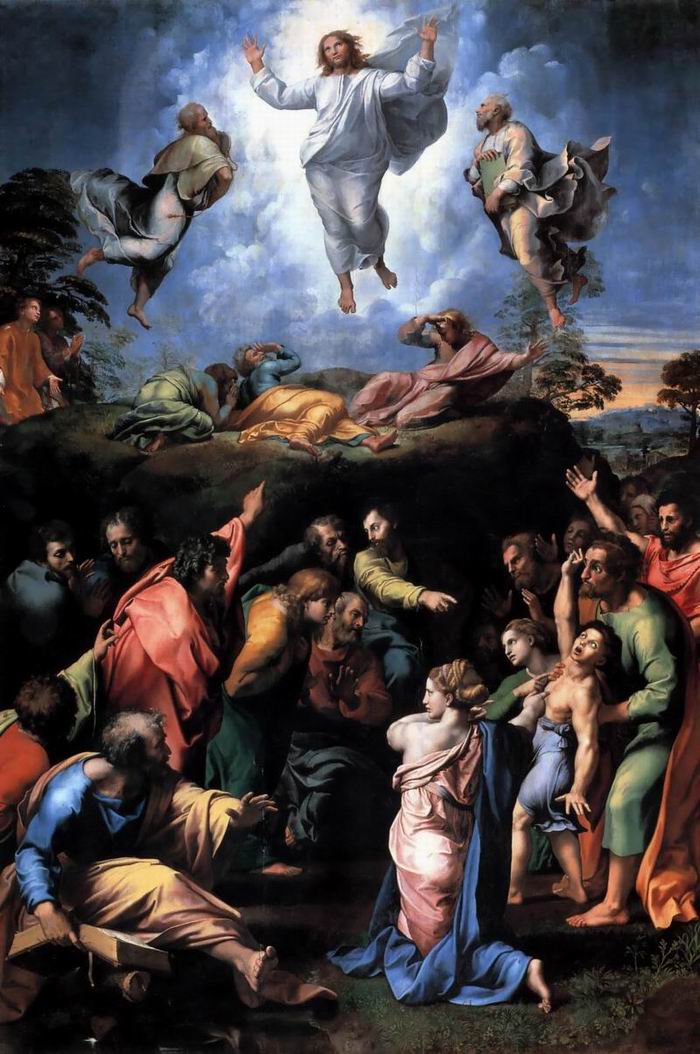
1516 to 1520 · Oil on panel · Pinacoteca Vaticana, Vatican City
Save articles to your collection
Log in or create a free account, and this article will be waiting in your Private Collection.
Log in or sign upThe Transfiguration was commissioned in 1516 by Cardinal Giulio de Medici, the future Pope Clement VII, who at the same time commissioned a second large altarpiece from the Venetian painter Sebastiano del Piombo, apparently with the intention of setting the two works in direct competition. Raphael chose the subject of the Transfiguration from the Gospel of Matthew, in which Christ ascends a mountain with three disciples and is revealed in radiant divine light before Moses and the prophet Elijah. He worked on the painting from 1516 until his sudden death on April 6, 1520, leaving the lower portion of the composition to be completed by his workshop assistant Giulio Romano. When Raphael died, the unfinished altarpiece was displayed beside his body during the funeral rites in his studio, a gesture that expressed the depth of grief felt by those who recognized what his death meant for the art of Rome. The painting was subsequently placed in the church of San Pietro in Montorio in Rome, for which it had been intended, and remained there until 1797, when it was among the works seized by Napoleon and transported to Paris. It was returned to Rome after the fall of Napoleon and installed in the Pinacoteca Vaticana, where it has remained ever since. The work holds a unique biographical and historical position as the final painting of one of the most significant careers in the history of Western art.
The compositional structure of The Transfiguration is bold and unconventional, dividing the picture plane into two distinct zones that are nevertheless linked by a complex web of gesture, gaze, and light. In the upper zone, Christ hovers in the air above the mountain peak, his garments brilliant with a white light that seems to originate from within rather than falling from an external source. Moses and Elijah flank him on either side while the three disciples below shield their eyes or prostrate themselves before the overwhelming vision. In the lower zone, a group of figures surrounds a young man in the grip of a convulsive episode, and the apostles who have remained in the valley gesture upward toward the absent Christ, whose divine power is the only remedy for what afflicts the boy. This compositional decision to place two separate narrative moments within a single image was unusual and was not universally admired in its own time, but it gives the painting an expressive tension that more unified compositions lack. The contrast between the radiant calm of the upper register and the turbulent crowd below generates a dramatic energy that carries across the full width and height of the panel. The figure types in the lower scene show the influence of Michelangelo, particularly in the treatment of muscular anatomy and the expressive use of physical strain. Those who wish to live with this extraordinary image can own this as a hand-painted oil reproduction, bringing its dramatic contrasts of light, shadow, and human emotion into their own collection.
The meaning of The Transfiguration operates across several interconnected dimensions that reward sustained reflection. At its theological core, the image presents the dual nature of Christ through a pictorial strategy that is both intellectually bold and visually compelling. The upper scene reveals the divine nature of Christ in all its overwhelming radiance, while the lower scene presents the human need that his divine power is called upon to answer. The suffering boy in the lower composition and the distressed crowd around him represent the world as it is, a place of affliction and confusion, while the transfigured Christ above represents the redemptive promise that faith holds out to that suffering world. The painting was intended as an altarpiece, meaning it would have presided over the central ritual act of the Christian liturgy, and its iconographic structure is perfectly suited to that function. The fact that it was displayed beside the body of Raphael at his funeral adds a further layer of meaning that has attached itself to the work through subsequent centuries of reception. Contemporary observers noted the poignant irony of a painting depicting divine radiance and miraculous healing standing in the same room as the lifeless body of the man who had created it. The work has been regarded ever since as both a culmination and an interruption, the fullest expression of the artistic vision of Raphael and at the same time the evidence of all that was lost when that vision was cut short. Owning this as a hand-painted oil reproduction is to bring into your home one of the most historically significant final works in all of Western painting.
Enjoyed this story?
Save articles to your collection
Log in or create a free account, and this article will be waiting in your Private Collection.
Log in or sign up