Loading cart…
No products in the cart.

Art Guides · Napoleon
Save articles to your collection
Log in or create a free account, and this article will be waiting in your Private Collection.
Log in or sign upNapoleon understood pictures better than any ruler of his time. He chose his painters, told them what to show and rarely bothered to pose. Others looked back at him later, with more honest eyes. Put ten famous Napoleon paintings in the order of his life and you get his whole story: the young general, the hero, the emperor, and the long road down.
The most famous are by Jacques-Louis David, who painted three of these ten. Jump to one, or start at the beginning.
 Explore the artistAntoine-Jean Gros →
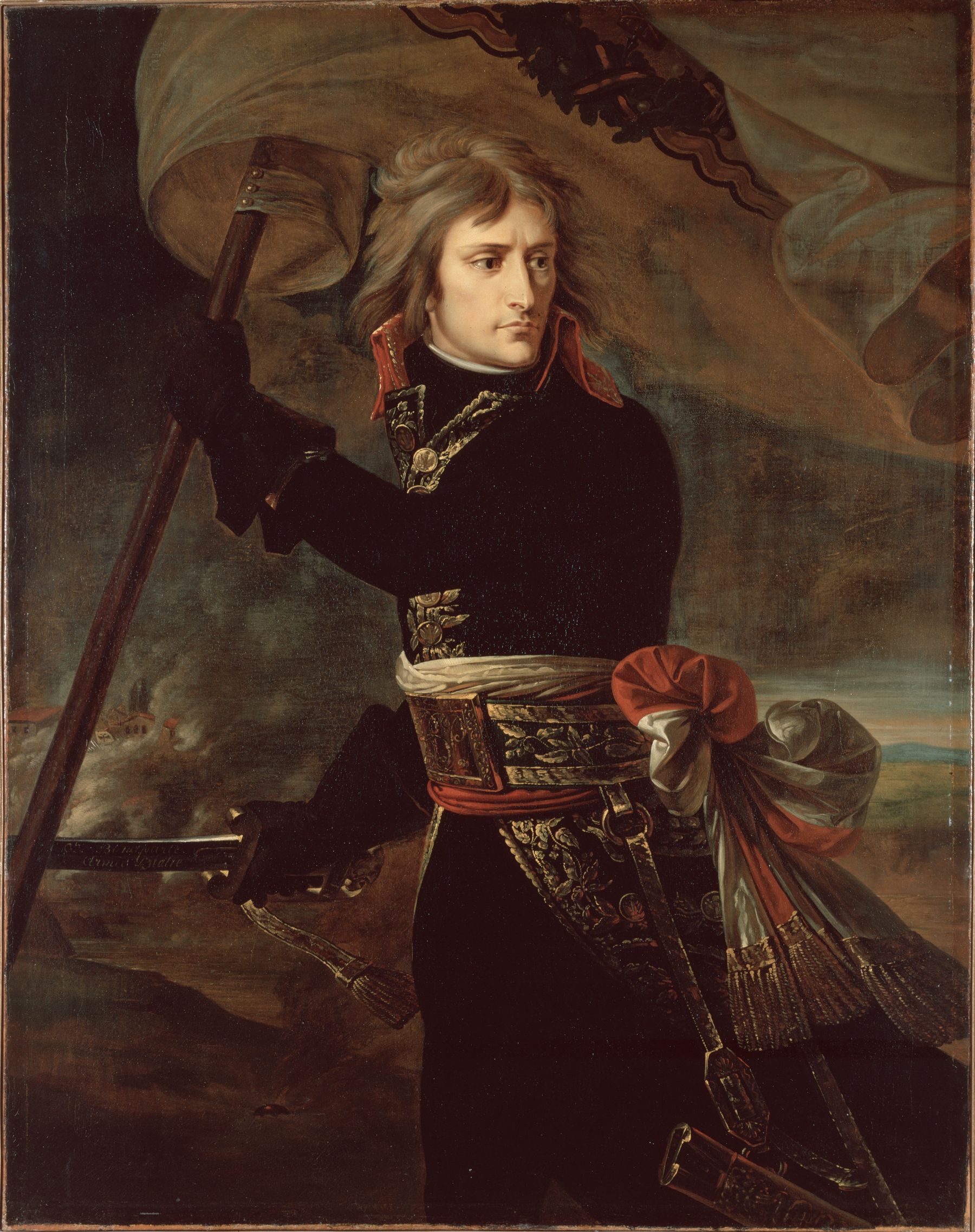
Before the crown and the famous hat there was a thin young general with long hair. In November 1796 Bonaparte led his troops to storm the bridge at Arcole, in Italy. Gros paints him turning mid-stride, with the flag in his left hand and his sword in his right. The words on the blade read Bonaparte, Armée d’Italie.
The portrait was commissioned by Joséphine, who was with him on the campaign. The story goes that he could not sit still long enough to be painted, so she held him on her lap while Gros worked. The restless energy stayed in the picture.
Source · WikipediaArtwork image from the ByMuseum catalogue.
Antoine-Jean Gros · oil on canvas, made to order
 Explore the artistJean-Léon Gérôme →
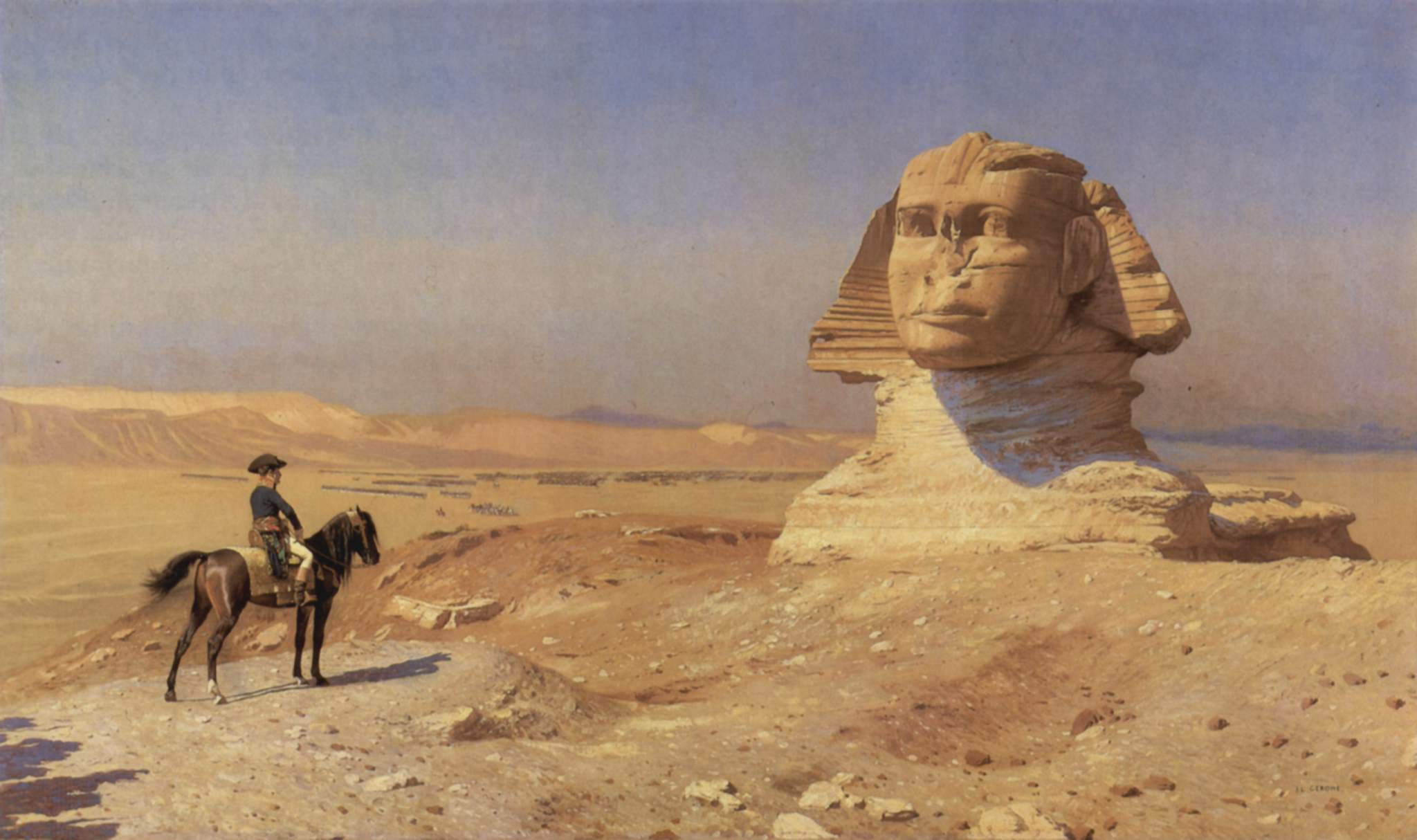
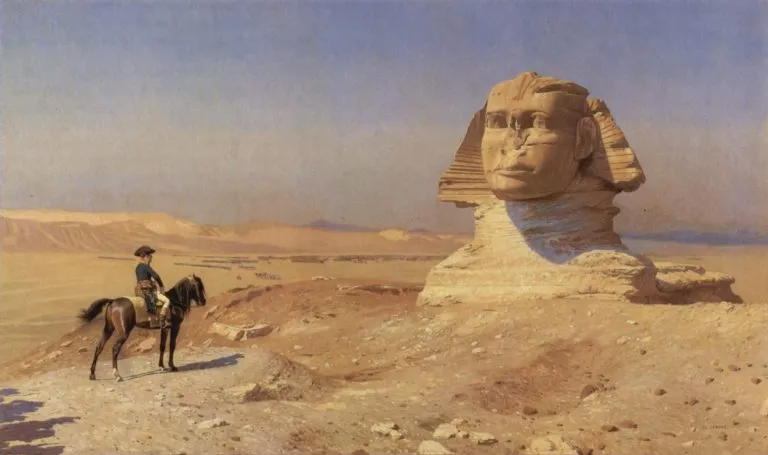
Two years after Arcole, Bonaparte was in Egypt. Gérôme, who had travelled there widely himself, leaves out almost everything: no battle, no pyramids, only sand, sky and two faces looking at each other. The army is little more than a trace in the distance.
When he showed it at the Salon of 1886, Gérôme called it Oedipus, after the hero who answered the riddle of the Sphinx. The New York Times saw “the solitary, self-communing man”. In 1898 the painting was bought by William Randolph Hearst, and it is still at his castle in California.
Source · WikipediaArtwork image from the ByMuseum catalogue.
Jean-Leon Gerome · oil on canvas, made to order
Explore the artistAntoine-Jean Gros →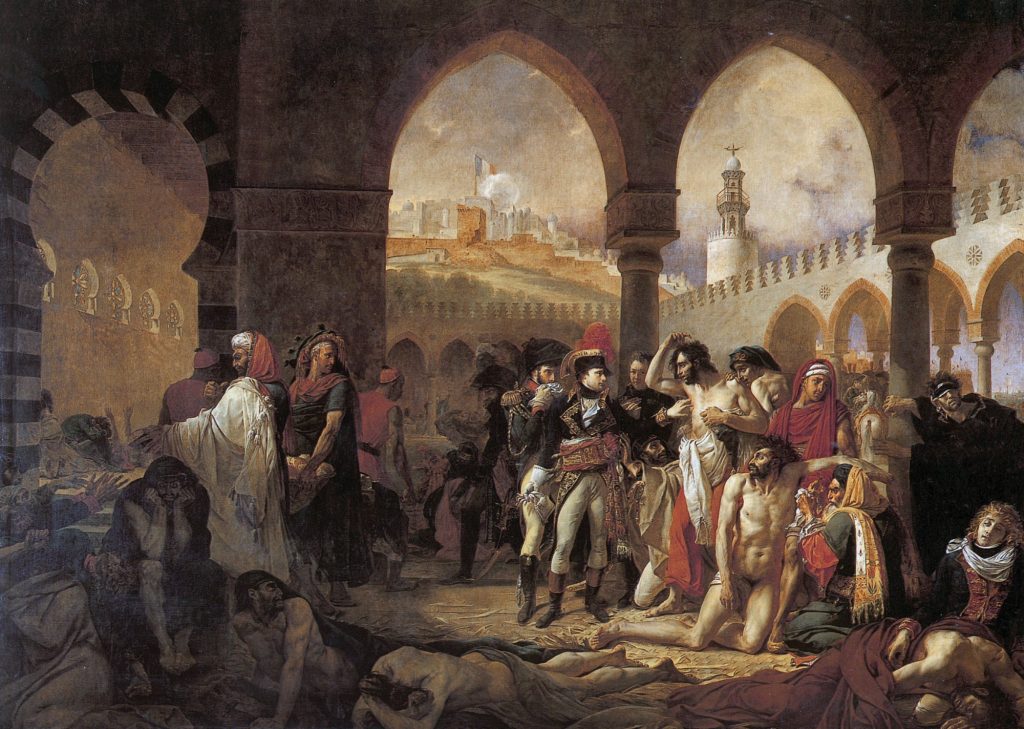
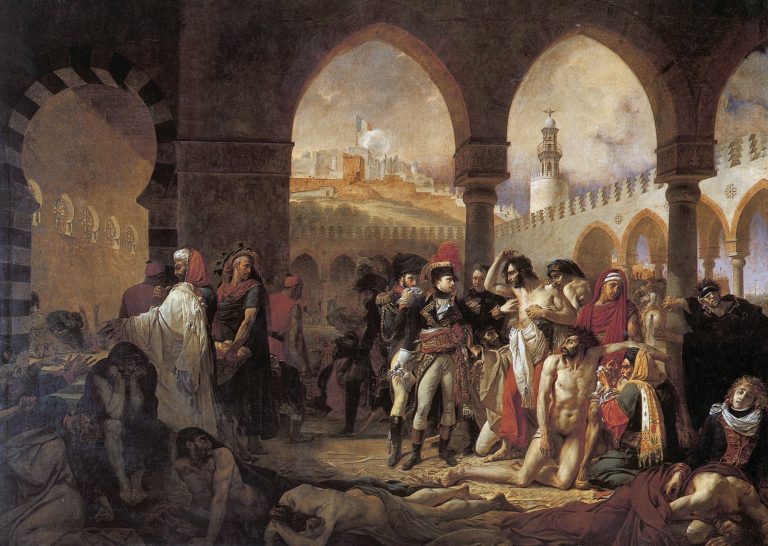
In March 1799 plague was killing the French army at Jaffa. Gros shows Bonaparte calmly touching a sick man’s sore with his bare hand, while an officer behind him tries to stop him. He looks like a king, or a saint, healing by touch.
The truth is darker. Napoleon ordered the picture to answer reports that he had fifty plague victims poisoned with opium, and to counter accounts of the brutal sack of the city. Witnesses disagreed about what he really did: his secretary wrote that he hurried through, his doctor that he helped carry the sick. The painting was shown in 1804, between his being named emperor and his coronation.
Source · WikipediaArtwork image from the ByMuseum catalogue.
Antoine-Jean Gros · oil on canvas, made to order
 Explore the artistJacques-Louis David →
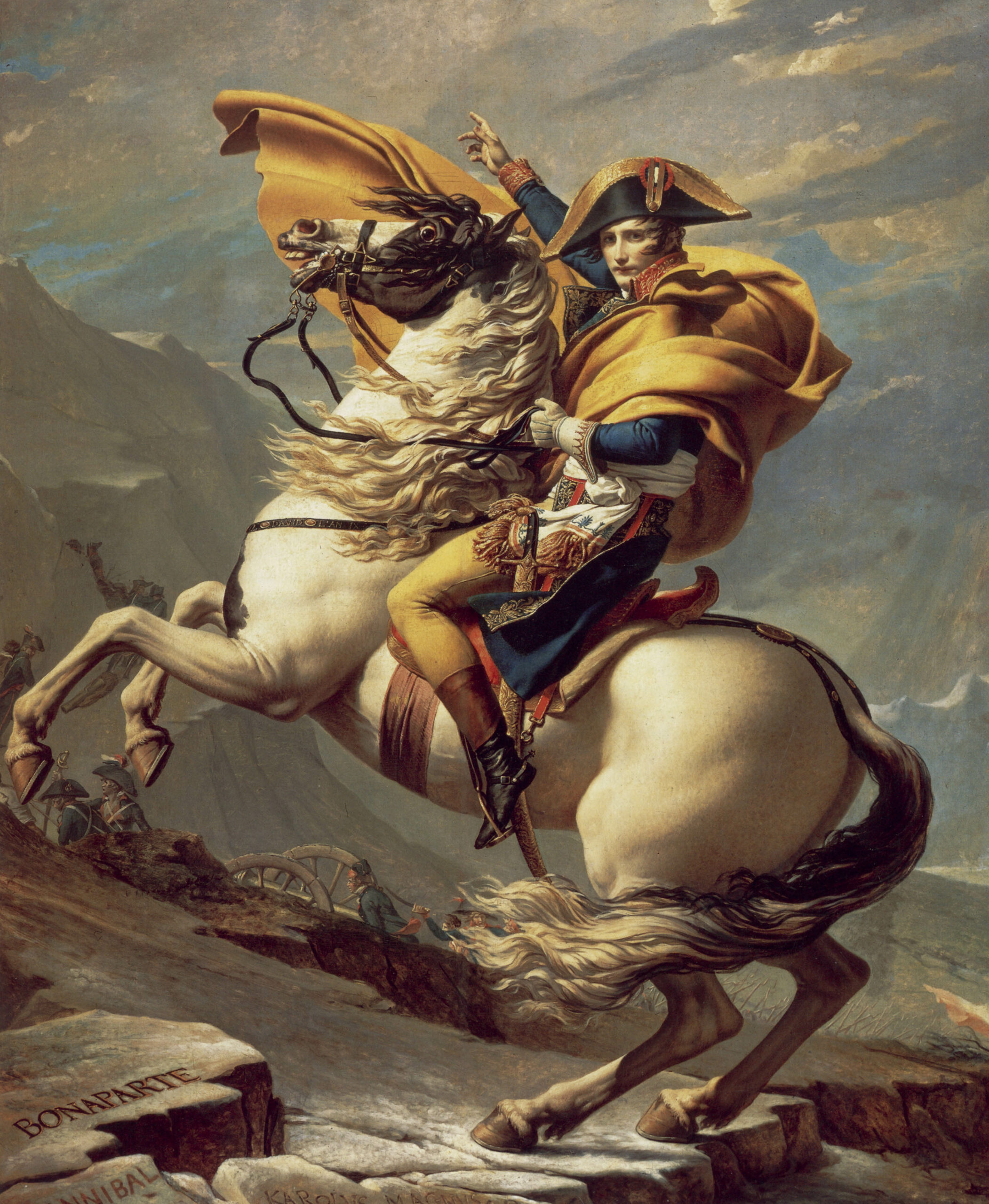
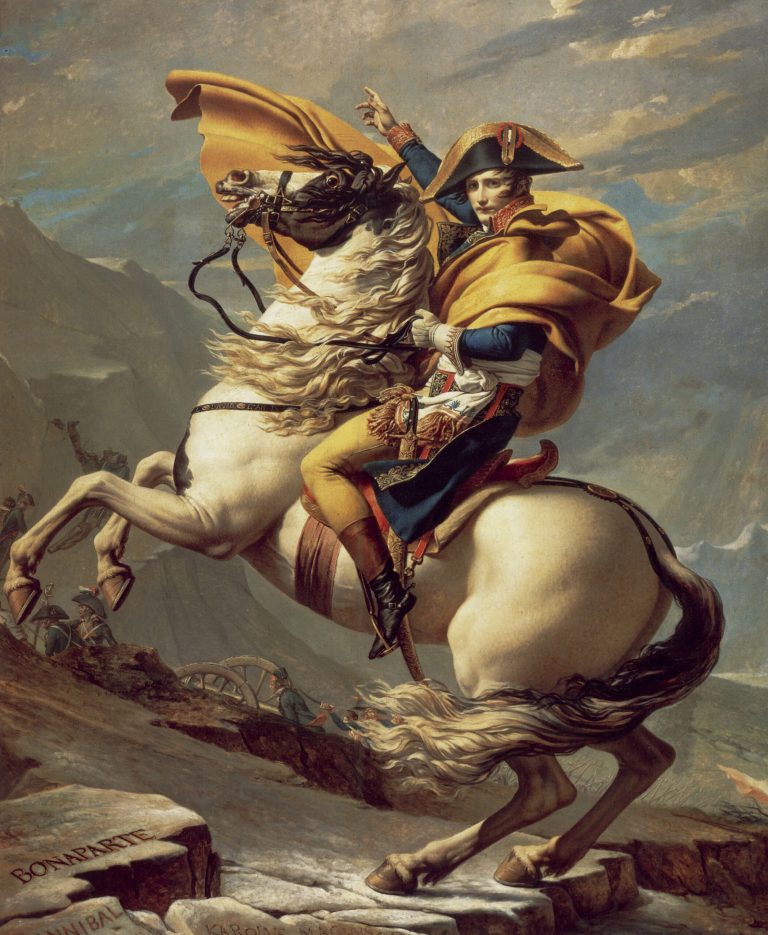
This is the Napoleon everyone knows. In May 1800 he took his army over the Great St Bernard Pass to surprise the Austrians. He told David to paint him calm on a fiery horse, and refused to pose: a portrait, he believed, should show character, not features. So David worked from a bust and put his own son on top of a ladder.
None of it happened that way. The weather was fine, and Bonaparte crossed on a mule led by a guide. On the rocks David wrote his name beside Hannibal and Charlemagne. The King of Spain ordered the first version, and David painted four more. Today they are at Malmaison, Versailles, which has two, Berlin and Vienna.
Source · WikipediaArtwork image from the ByMuseum catalogue.
Jacques-Louis David · oil on canvas, made to order
 Explore the artistPaul Delaroche →
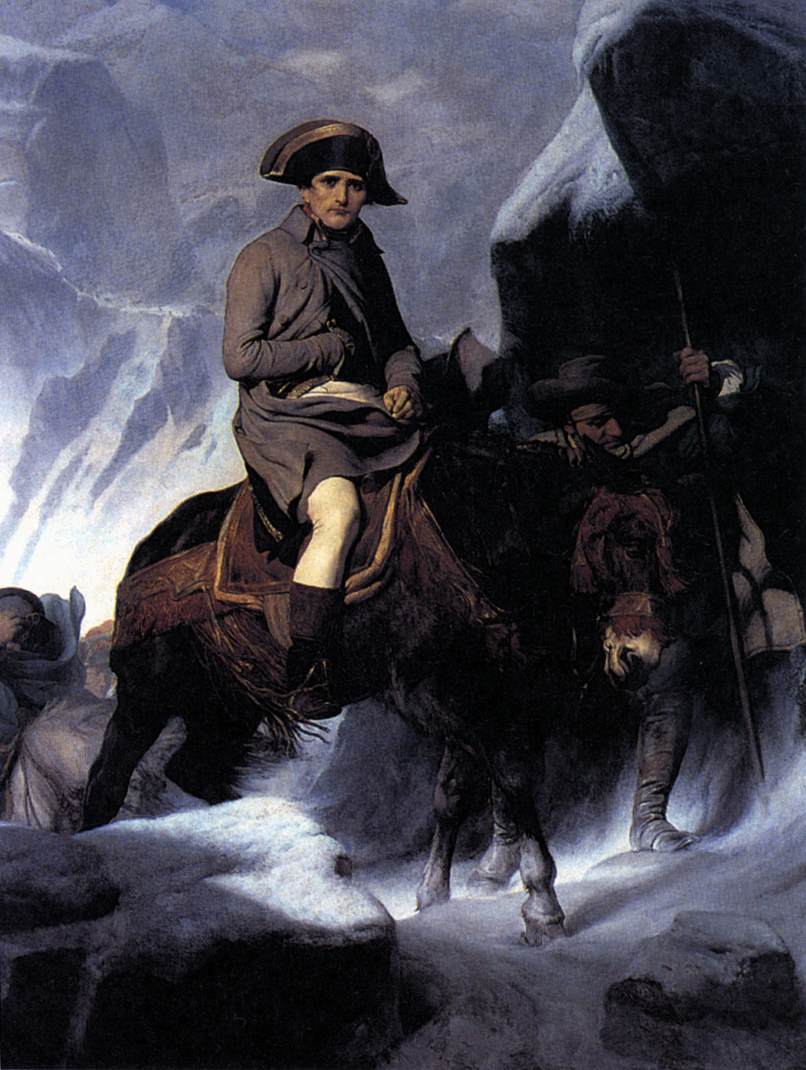
Almost fifty years after David, Delaroche painted the same journey as it really was: cold, slow and on a mule. A guide leads the way through deep snow. Bonaparte’s hand is tucked in his coat, and he looks tired.
Delaroche had studied with Gros. The story goes that he and the Earl of Onslow saw David’s picture together at the Louvre, agreed it was unrealistic, and the earl ordered this answer to it. Critics admired the snow and the icicles but missed the genius. Queen Victoria owned a small version.
Source · WikipediaArtwork image from the ByMuseum catalogue.
Paul Delaroche · oil on canvas, made to order
Explore the artistJacques-Louis David →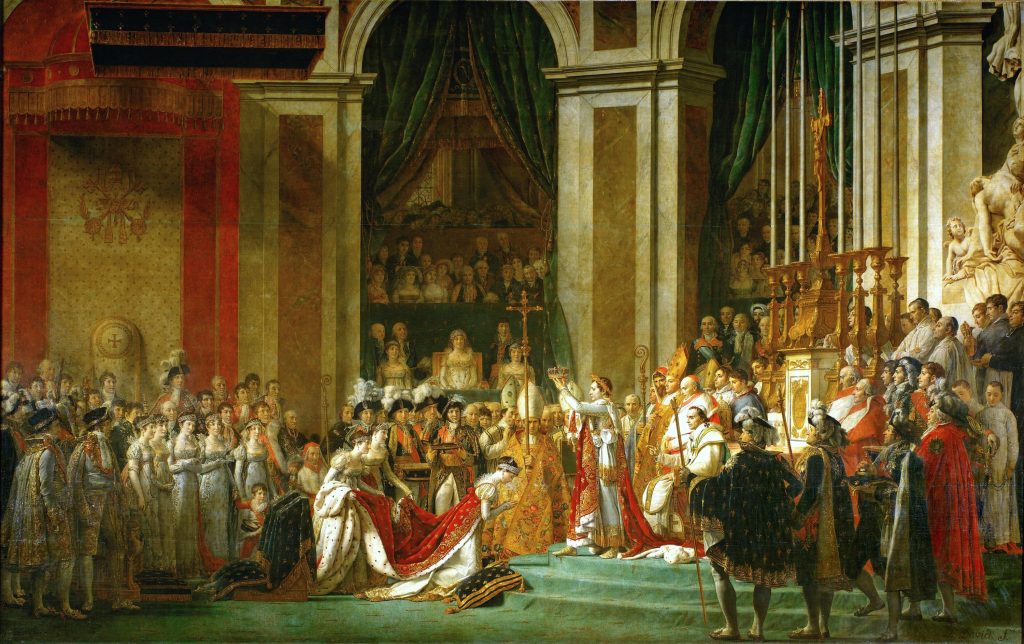
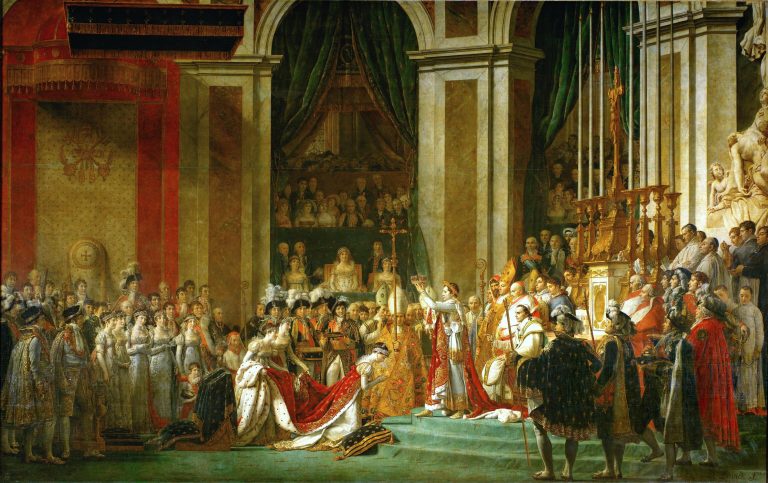
On 2 December 1804 Napoleon became emperor in Notre-Dame. David first drew him crowning himself, and the outline can still be seen in the paint. In the finished picture he crowns Joséphine instead, while Pope Pius VII raises a hand in blessing.
It is nearly ten metres wide, with about 190 figures, 93 of them identified portraits. One is a kind lie: Napoleon’s mother sits in the place of honour, though she stayed away because of a family quarrel. Only Veronese’s Wedding Feast at Cana is larger among the Louvre’s paintings.
Source · Musée du Louvre, WikipediaArtwork image from the ByMuseum catalogue.
Jacques-Louis David · oil on canvas, made to order
 Explore the artistJean-Auguste-Dominique Ingres →
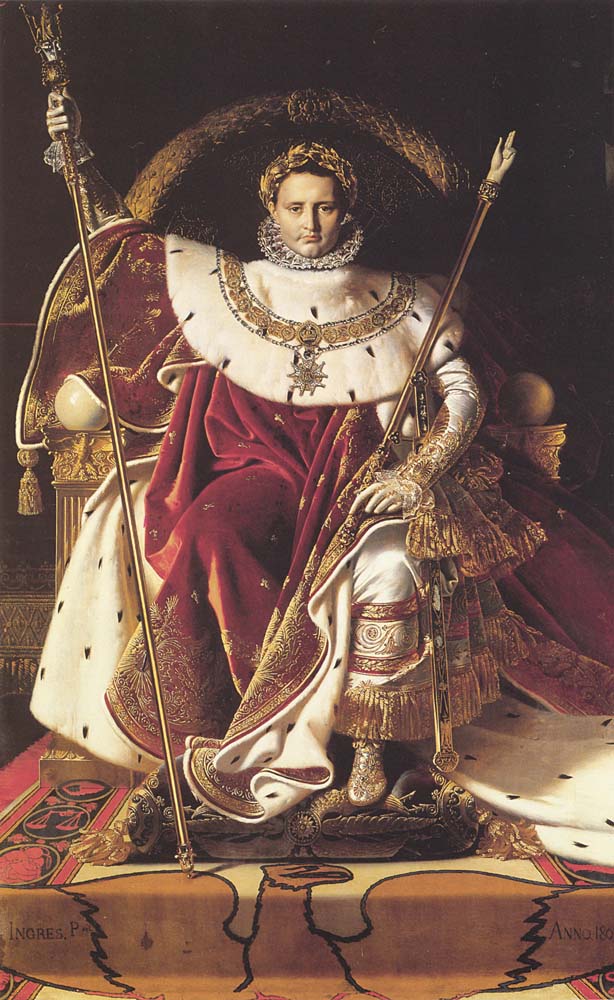
Ingres paints the emperor like a god. He faces us straight on, in his coronation costume, with the sceptre of Charlemagne, the hand of justice, a golden laurel wreath and a cloak scattered with golden bees. The pose goes back to the lost statue of Zeus at Olympia.
The Salon of 1806 hated it. One critic accused Ingres of dragging art back four centuries, to the time of Jan van Eyck. Today that strangeness is exactly why people remember it.
Source · WikipediaArtwork image from the ByMuseum catalogue.
Jean-Auguste-Dominique Ingres · oil on canvas, made to order
Explore the artistAntoine-Jean Gros →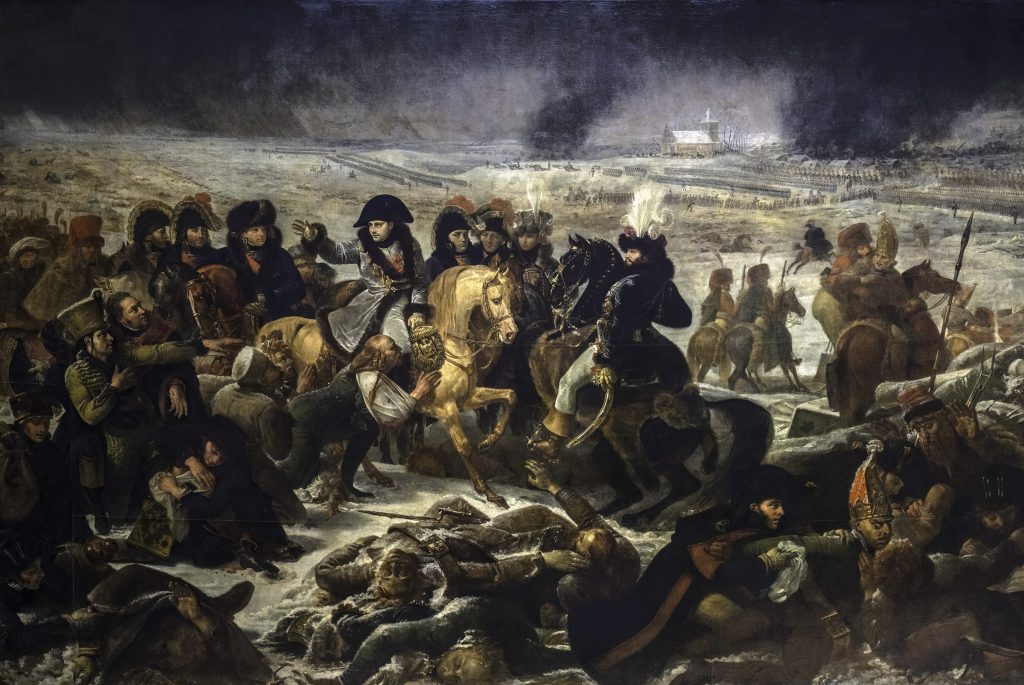
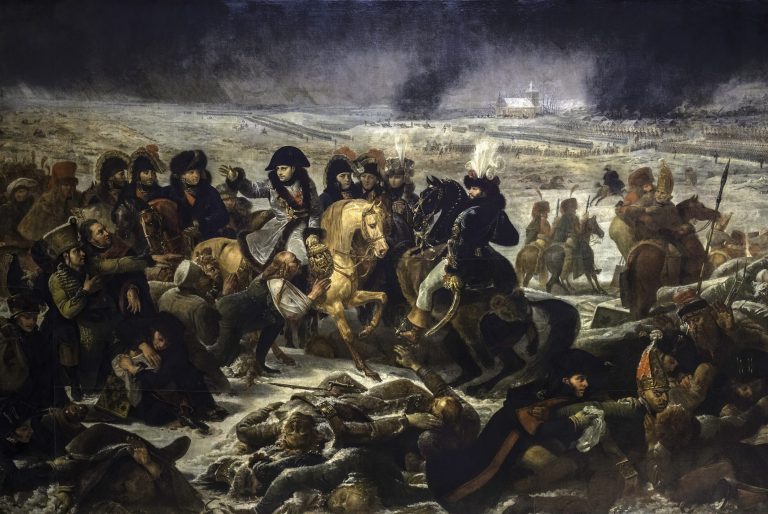
Eylau was a terribly costly victory. In February 1807 the French and the Russians fought in the snow for two days, and the field was left covered with frozen bodies. Gros shows the morning after. Napoleon lifts his hand as if blessing the wounded, but the dead lie closest to us, with faces twice life size.
“To instil in princes a love of peace and a horror of war.”
The 64th Bulletin of the Grande Armée, on Eylau
Twenty-six artists competed for the commission, and the brief even called for the bodies in the foreground. Some politicians suspected the picture was meant to make the emperor look bad. Napoleon liked it, and gave Gros the Legion of Honour.
Source · WikipediaArtwork image from the ByMuseum catalogue.
Antoine-Jean Gros · oil on canvas, made to order
Explore the artistJacques-Louis David →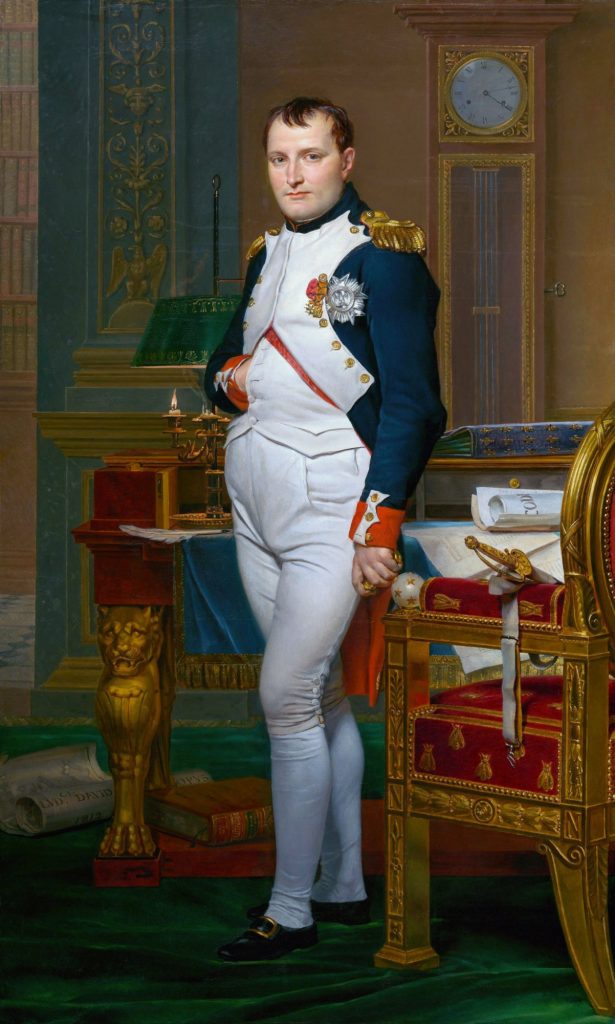
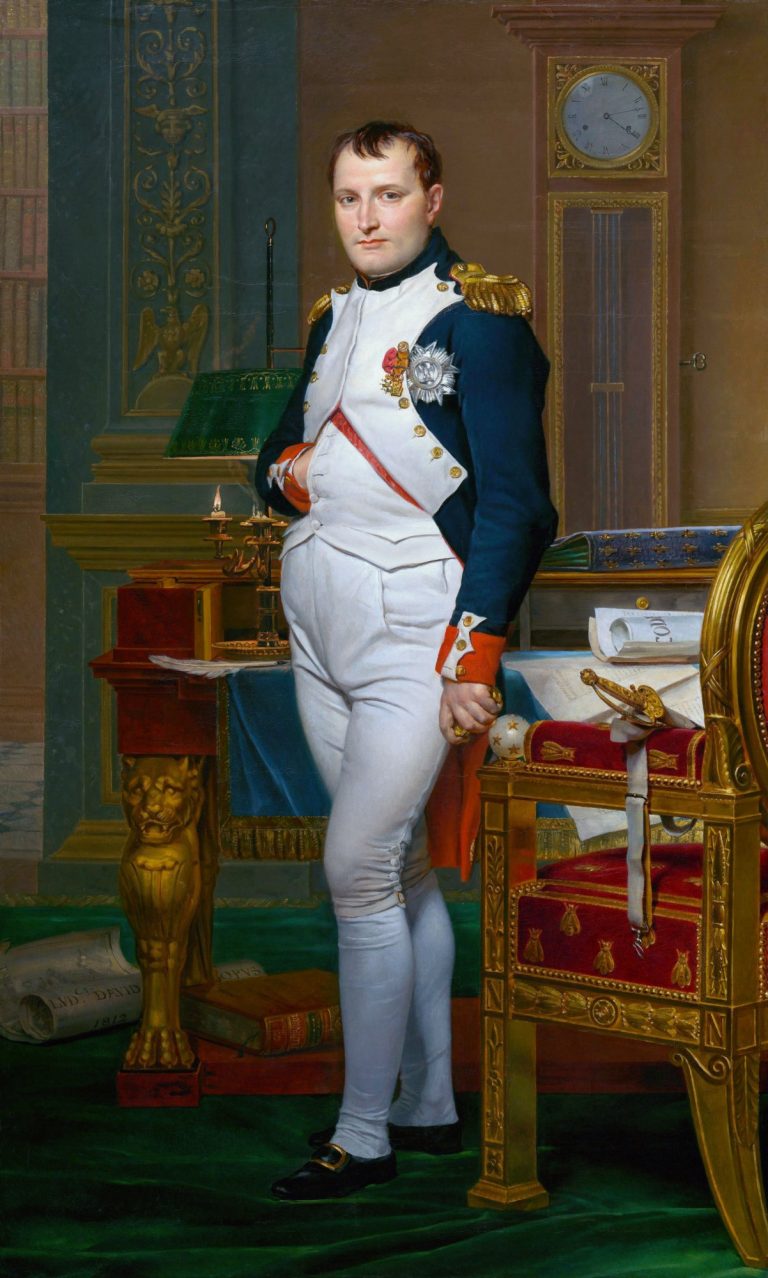
Here is the famous hand in the waistcoat. Look at the clock: it is 4:13 in the morning. The candles are almost gone, the stockings are wrinkled, the cuffs undone. A roll of paper on the desk shows the word “Code”. He has been awake all night, we are meant to believe, writing laws for France.
The strangest thing is who paid for it. It was ordered by a British admirer, the Scottish Duke of Hamilton, while Britain and France were at war. Napoleon probably never posed for it.
Source · WikipediaArtwork image from the ByMuseum catalogue.
Jacques-Louis David · oil on canvas, made to order
 Explore the artistErnest Meissonier →
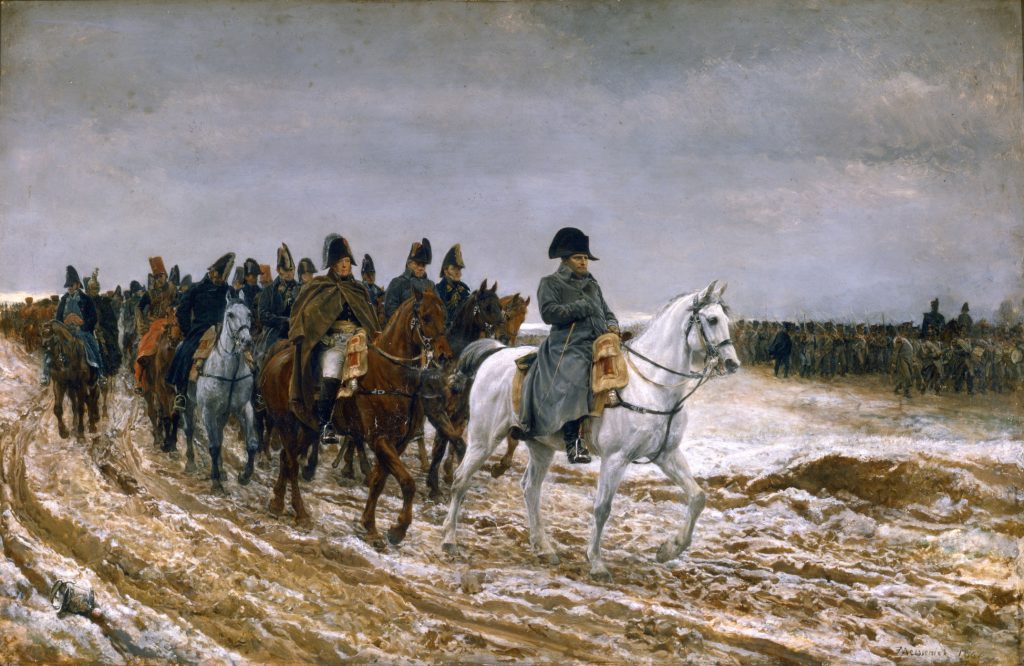
Our last picture is the end of the story. In March 1814, after losing the battle of Laon, Napoleon fell back towards Soissons. Meissonier paints the road: mud, dirty snow, a grey sky. The emperor rides ahead on a white horse, alone with his thoughts, and Ney, Berthier and the others follow.
For all its sadness it is tiny, about half a metre high. Meissonier painted it for the fiftieth anniversary of the campaign and showed it at the Salon of 1864. Set beside David’s leaping white horse, it tells you how far the road had gone.
Source · Fondation NapoléonArtwork image from the ByMuseum catalogue.
Jean-Louis Ernest Meissonier · oil on canvas, made to order
Napoleon Crossing the Alps by Jacques-Louis David, first painted in 1801. David made five versions of it.
Jacques-Louis David, his official painter. Antoine-Jean Gros, David’s pupil, painted Arcole, Jaffa and Eylau.
4:13 in the morning. David’s clock, the low candles and the wrinkled stockings all say that the emperor has worked through the night.
No. He crossed in fine weather on a mule led by a guide. Paul Delaroche painted that version around 1850.
David first drew him holding the crown above his own head. In the finished painting he crowns Joséphine, and the Pope only blesses.
In Paris: the Louvre has the Coronation, Jaffa and Eylau, the Musée d’Orsay has 1814, and the Musée de l’Armée has Ingres’s portrait. Others are at Versailles and Malmaison, in Washington, Liverpool, Berlin and Vienna, and at Hearst Castle in California.
See more from the same years in our ten famous Neoclassical paintings. Every painting above is available as a hand-painted oil reproduction.
Enjoyed this story?
Save articles to your collection
Log in or create a free account, and this article will be waiting in your Private Collection.
Log in or sign upPages read in November 2026. The order follows the events in Napoleon’s life, not a ranking. Stories marked “the story goes” are told by tradition and are not proved.
Man Writing a Letter
Gabriel Metsu, c. 1664
The gallery list
Every painting is already 50% off. Join the list and we will send you an extra $15 code, plus first access to new collections.
No spam. Unsubscribe anytime. · Privacy Policy
Welcome
Your $15 code is on its way. Explore the gallery while you wait.