Loading cart…
No products in the cart.

Art Guides · Renaissance
Save articles to your collection
Log in or create a free account, and this article will be waiting in your Private Collection.
Log in or sign upThe Renaissance had hundreds of painters, but only a few became names everyone knows. We ranked the ten famous Renaissance artists people search for most, from the restless genius who barely finished anything to the court painter of Henry VIII, and for each one we show you their face, three paintings, and the story that makes them who they are.
Start with the three giants, or read the full list below.
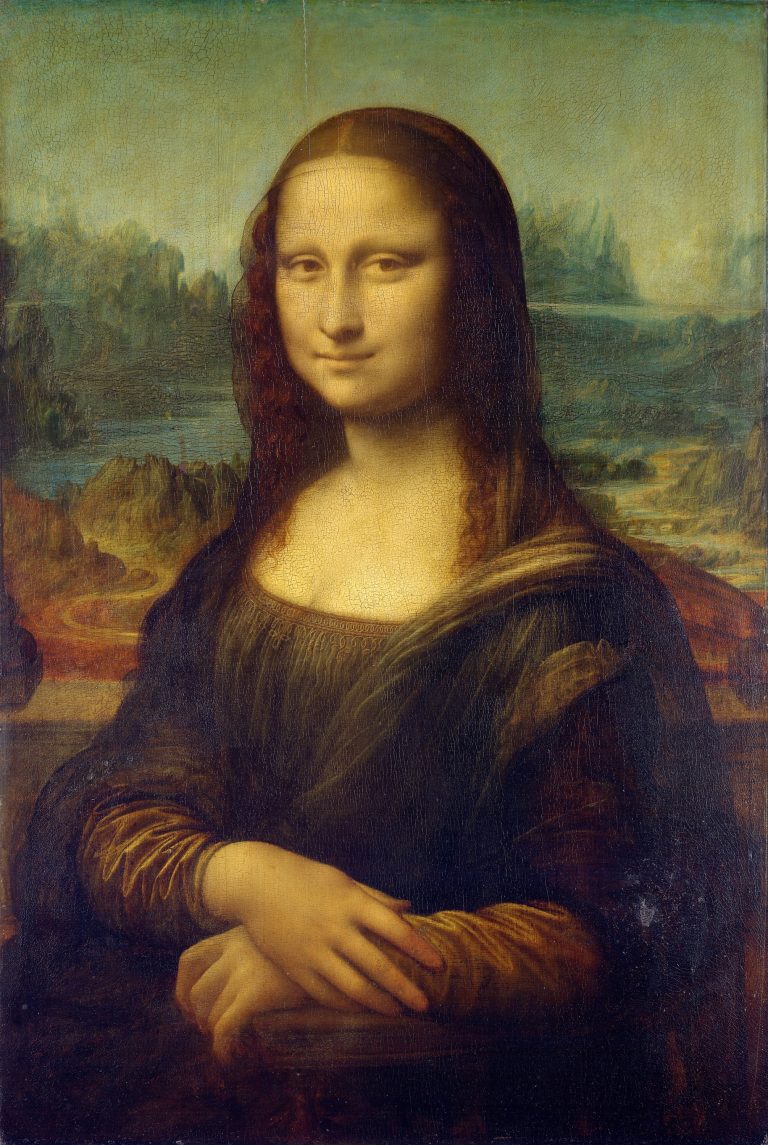
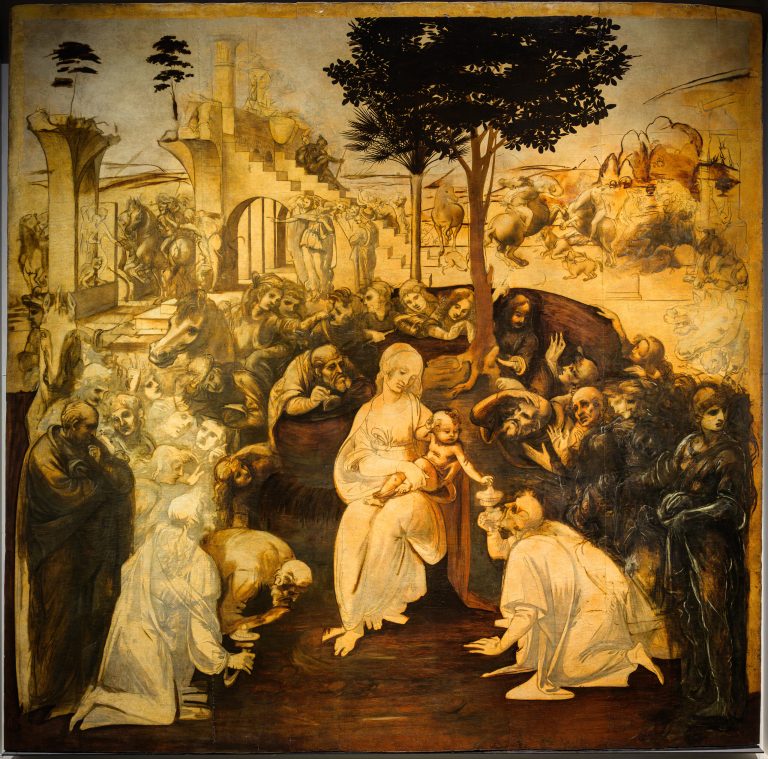
The most famous artist who ever lived finished fewer than twenty paintings. Leonardo was an illegitimate boy from a hill village who became a painter, engineer, musician and anatomist, and he never stopped being curious long enough to finish things. More than seven thousand pages of his notebooks survive, full of flying machines, dissected bodies and notes written backwards, from right to left.
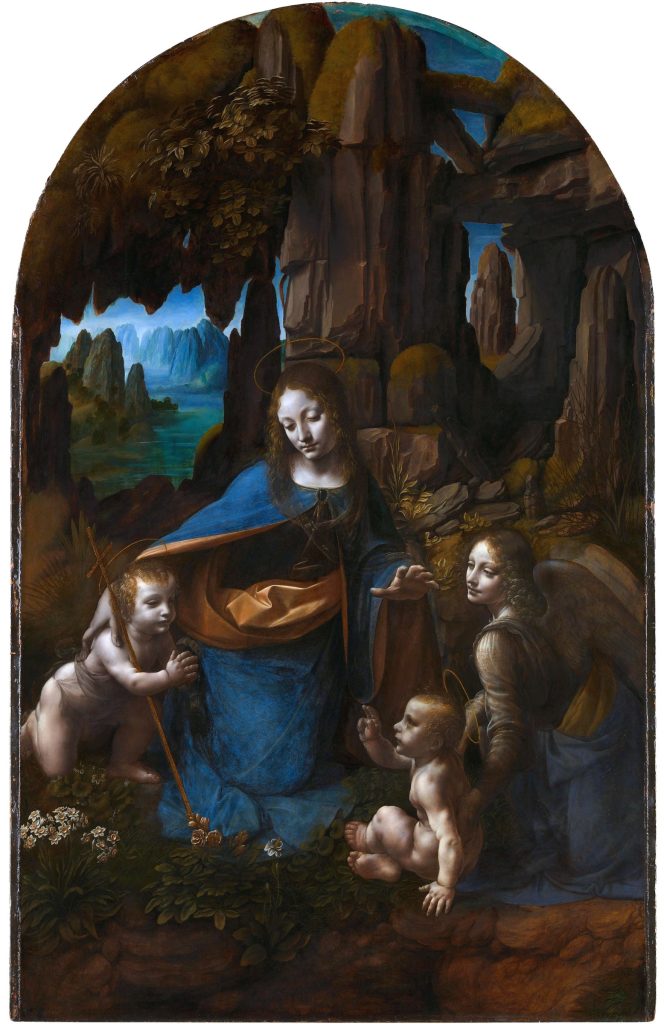
His paintings changed how light looks. Instead of drawing an outline and filling it in, he let forms emerge from shadow, a smoky softness the Italians call sfumato. You can see it in the faces of the Virgin of the Rocks, hidden in a cave of strange plants he drew from life. Four of his paintings are in our top ten famous Renaissance paintings, including the Mona Lisa.
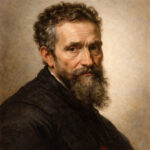

Michelangelo always said he was a sculptor, and he signed his letters that way. By twenty-four he had carved the Pietà; by twenty-nine, David. Painting felt like a lesser art to him, yet he painted the most visited ceiling in the world, in the Sistine Chapel, and was still working when he died at eighty-eight.
The Doni Tondo shows why his painted people look carved. Mary twists to take the baby from Joseph, her arms as strong as a stonemason's, the colours bright and hard as marble. It was a wedding present for a Florentine merchant, who tried to pay less than agreed; Michelangelo doubled the price until he paid. It is the only finished panel painting by him that survives.
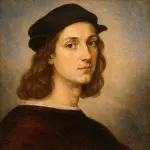
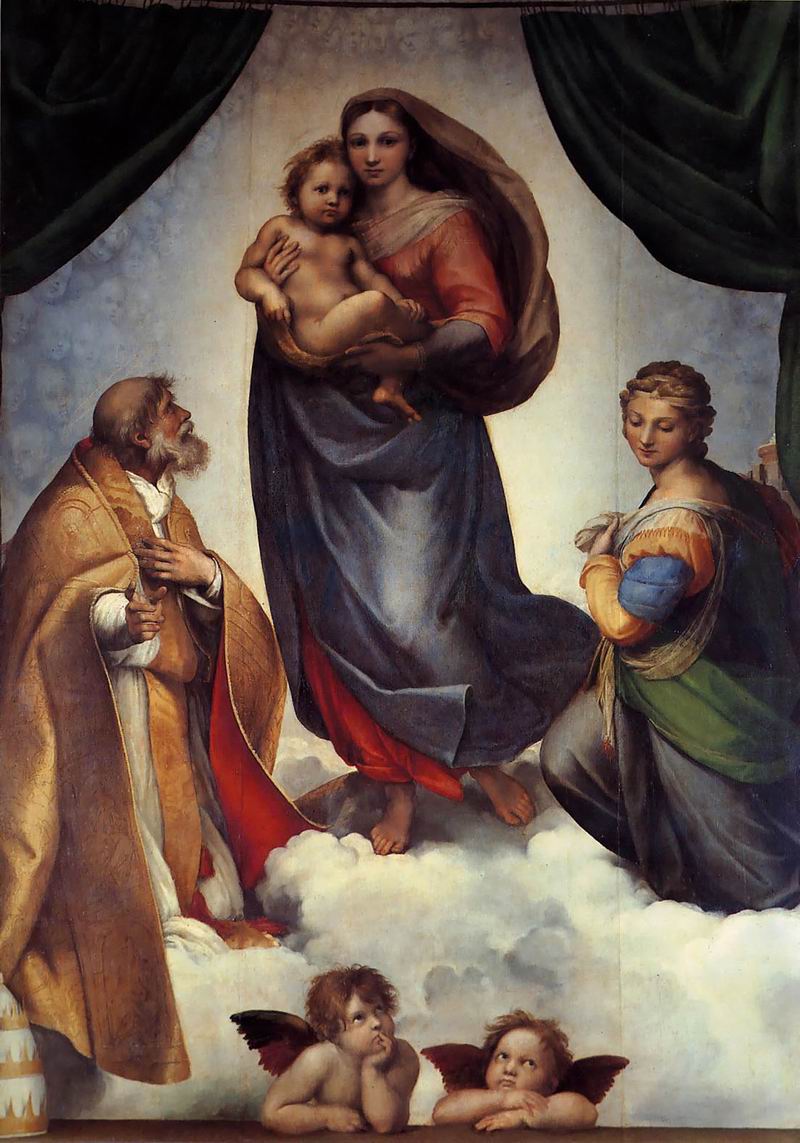
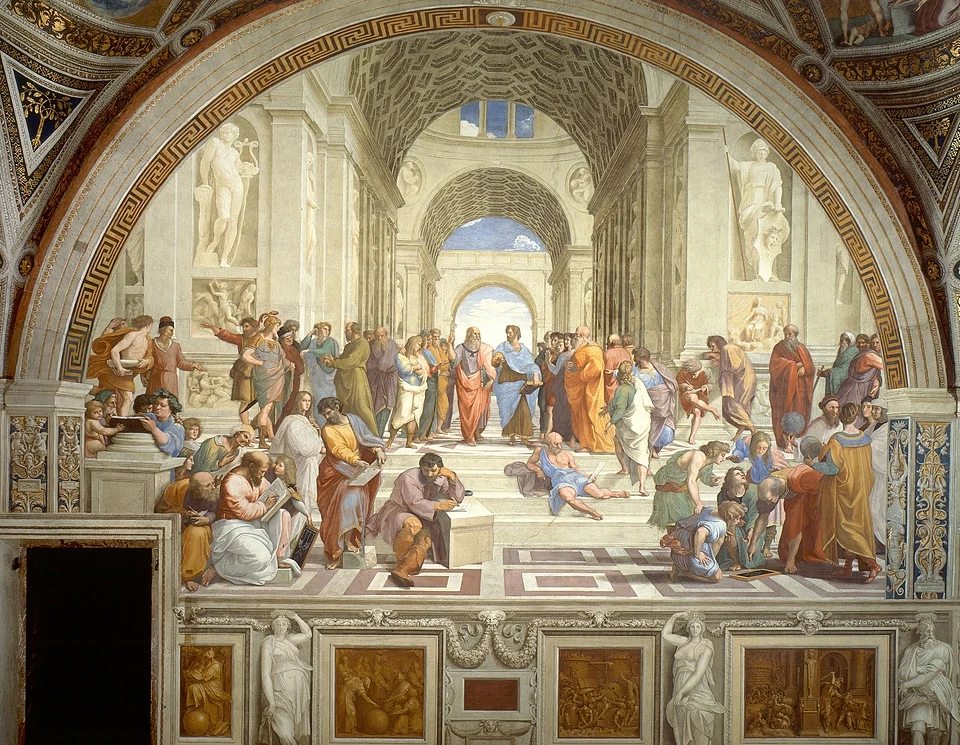
Raphael was everything Michelangelo was not: charming, quick, popular and adored by the Pope. The son of a painter from Urbino, he arrived in Rome at twenty-five, painted The School of Athens within three years, and ran a workshop of fifty assistants. He died at thirty-seven, by tradition on his own birthday, and Rome buried him in the Pantheon.
The Sistine Madonna is his most loved altarpiece. The Virgin walks toward us on the clouds as a curtain opens, carrying the child like a real young mother. But for the last century the stars have been the two bored little angels resting their chins on the ledge below, who have escaped onto stamps, mugs and umbrellas around the world.
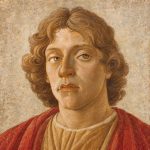
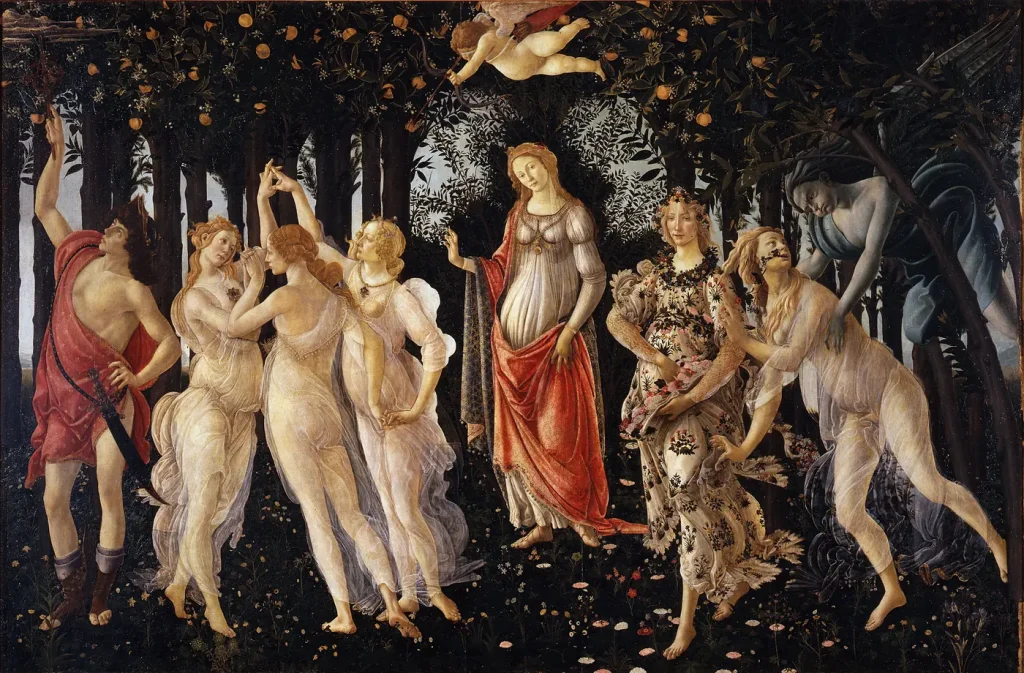
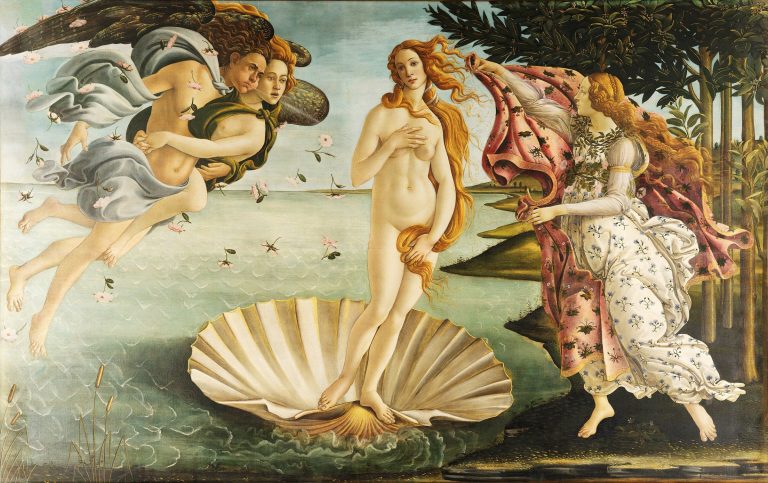
His real name was Alessandro Filipepi; Botticelli, "little barrel", was a family nickname that stuck. He was the favourite painter of the Medici circle in Florence, the man who brought the pagan gods back to life in paint, and then, after the fiery preacher Savonarola swept through the city, he turned to dark religious pictures and died poor and half forgotten.
Primavera is spring in a single room. Venus stands in an orange grove while the Three Graces dance in see-through dresses, the west wind chases a nymph who turns into Flora as flowers fall from her lips, and the ground is a carpet of blossoms you could name one by one. Nobody looked hard at Botticelli again for three hundred years, until the Victorians fell in love with him.
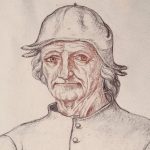

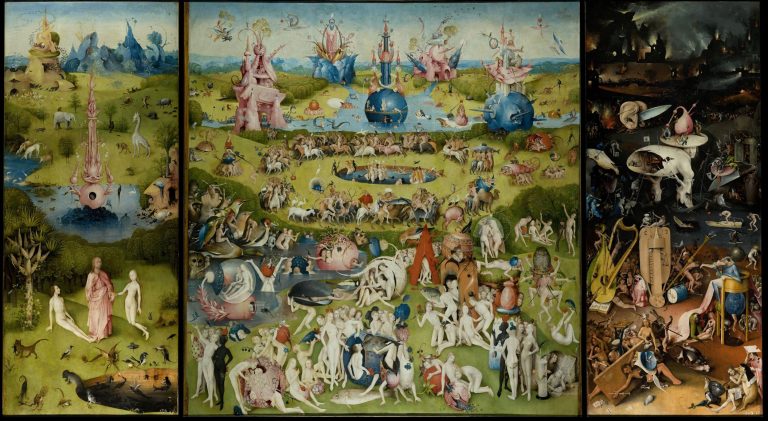
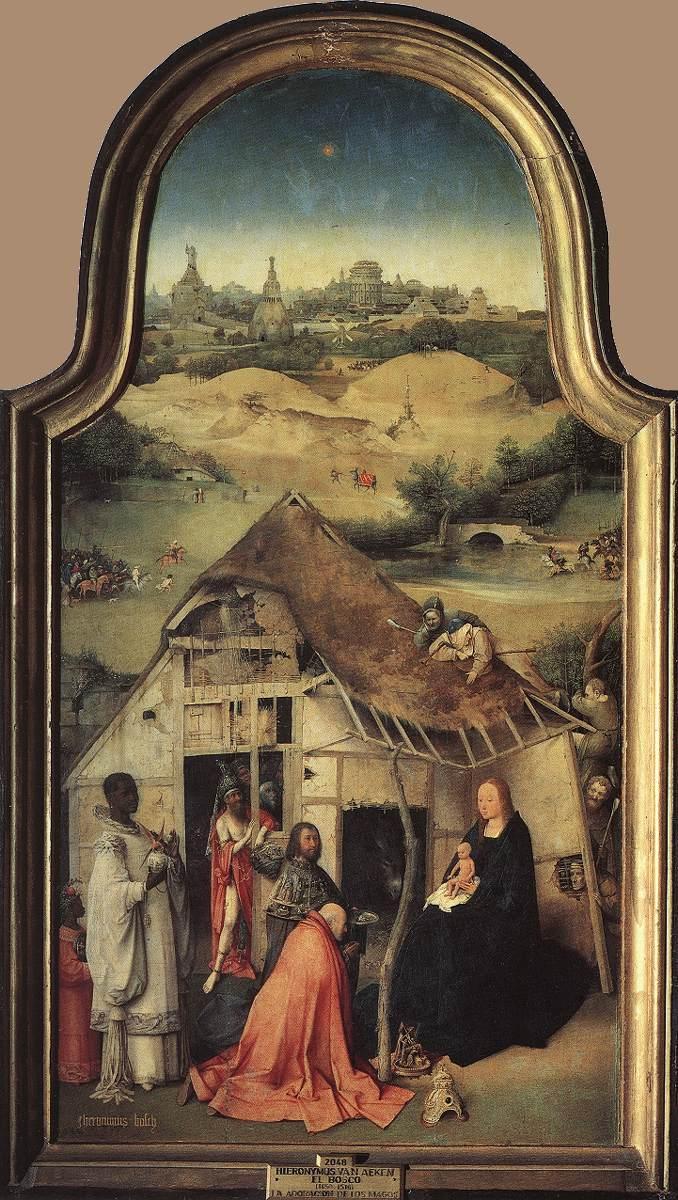
Almost nothing is known about the man who painted the strangest pictures of the age. He lived his whole life in one Dutch town, took its name as his own, belonged to a pious religious brotherhood, and signed only a handful of works. Yet kings collected him, and Philip II of Spain hung his nightmares in his bedroom. Our only likeness of him is a drawing made decades after his death.
The Ship of Fools shows his humour as well as his horror. A boatload of monks, nuns and drunks sing, eat and bite at a hanging cake, while a fool sits in the rigging and a tree serves as the mast. Nobody is rowing. It is a sermon about wasting your life, painted with a grin, and it once belonged to a larger triptych whose other panels are now in other museums.
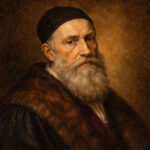
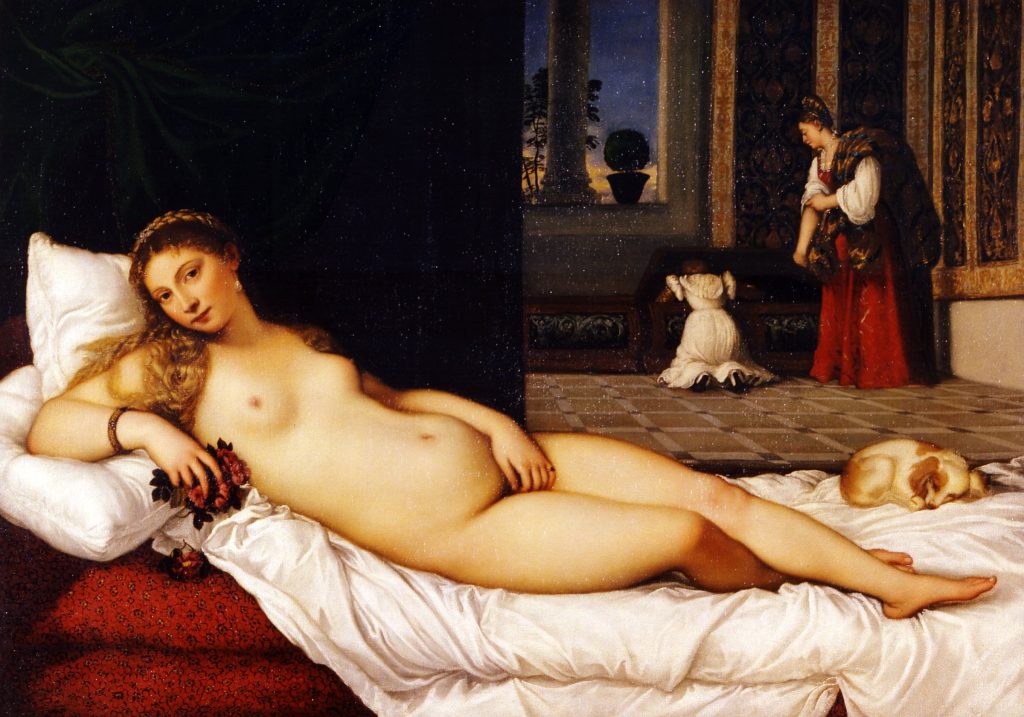
Florence drew, Venice painted, and Titian was Venice. For more than sixty years he was the painter every king and pope wanted; the Emperor Charles V made him a knight, and legend says the emperor once bent down to pick up a brush Titian had dropped. Where the Florentines built pictures from lines, Titian built them from colour and loose, buttery paint, and in old age he painted with his fingers.
The Venus of Urbino is the reclining nude every later painter had to answer, from Goya to Manet. She is not a distant goddess but a real woman in a real Venetian bedroom, looking straight at us, while her maids search a chest for her clothes and a little dog sleeps at her feet. It was so frank that Mark Twain called it "the vilest, the obscenest picture the world possesses".
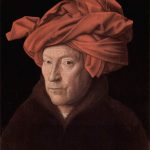
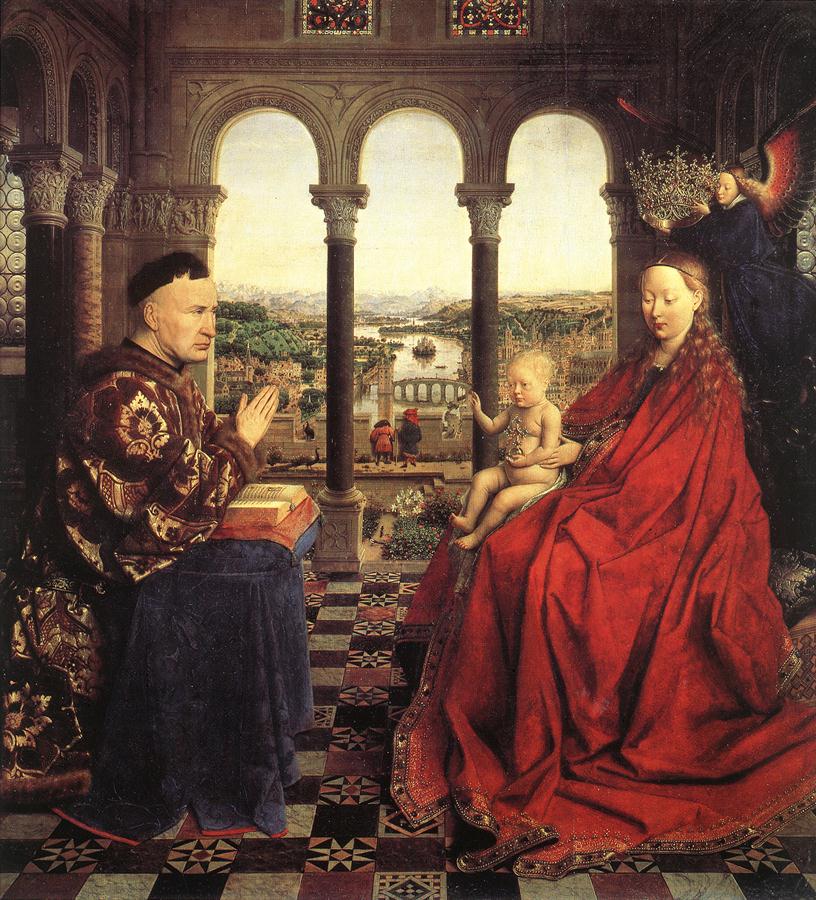
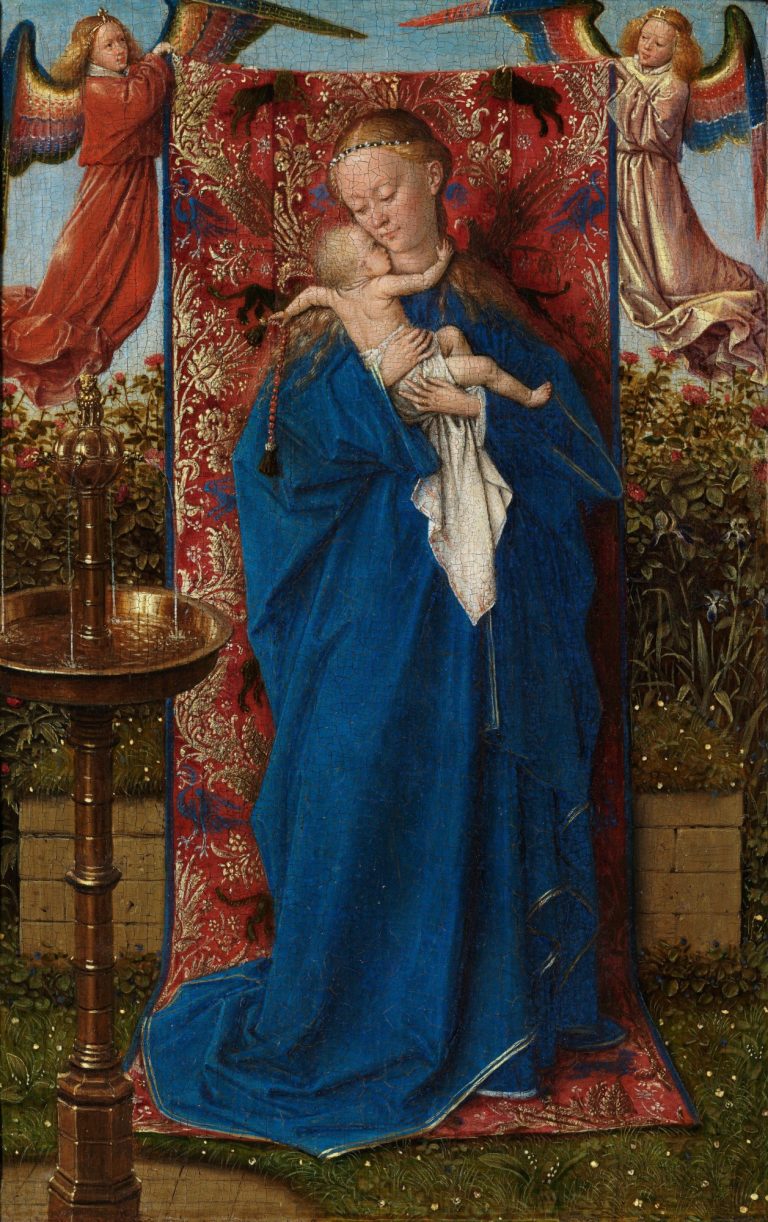
Van Eyck did not invent oil painting, as people used to say, but he made it do things no one had seen before. Court painter to the Duke of Burgundy in Bruges, he built up thin, glassy layers of oil until metal shone, fur felt warm and light passed through glass. His portrait in a red turban, possibly of himself, carries his motto on the frame: "As I can".
The Madonna of Chancellor Rolin shows his whole world in one panel. A powerful minister kneels face to face with the Virgin, as if he had booked an appointment. Behind them, through three arches, stretches a river city so detailed you can count the boats and the people crossing the bridge. It is no bigger than a window, and you could look at it all afternoon.
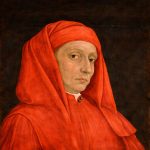
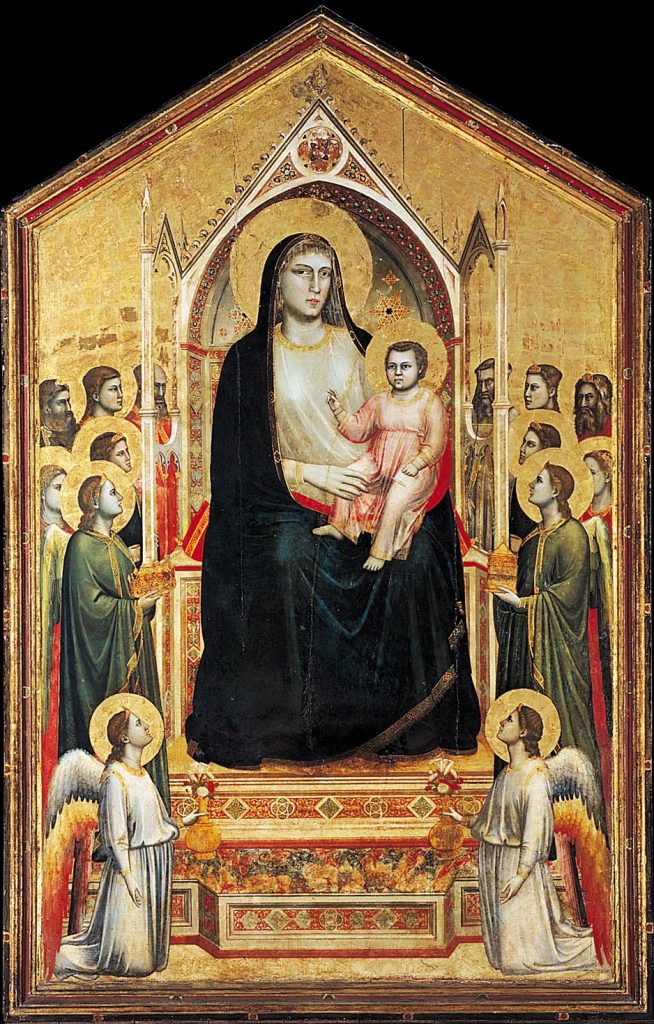
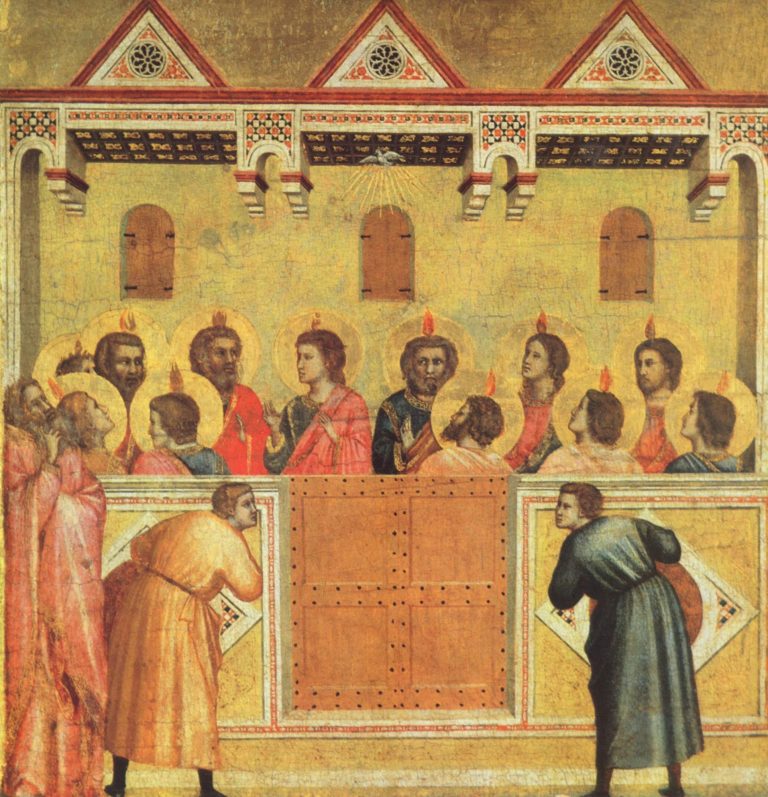
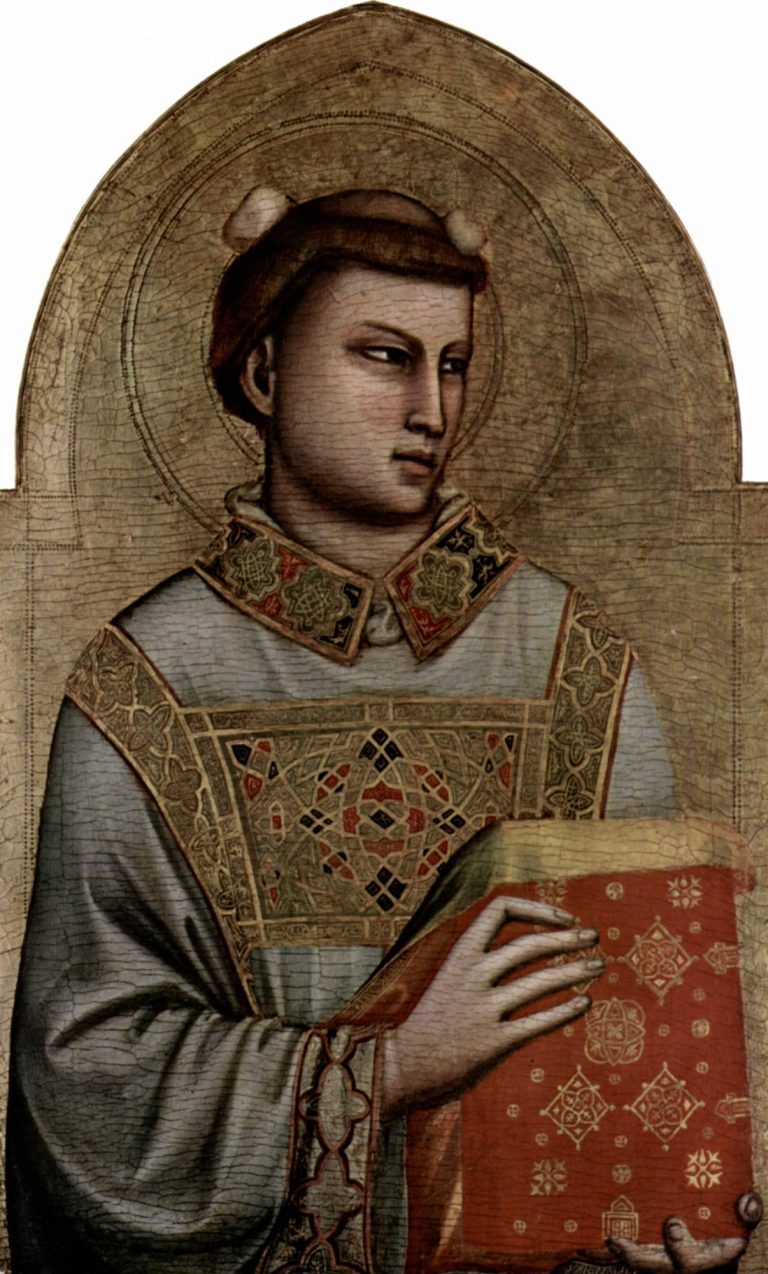
Giotto lived a century before the Renaissance began, and that is exactly why he is on this list: he started it. Painting before him was flat and golden, saints floating like icons. Giotto gave them weight, faces and feelings, and Florence never forgot it. Dante put him in his poem as the painter who had overtaken everyone, and Vasari says he once proved his skill to a papal messenger by drawing a perfect circle freehand.
The Ognissanti Madonna shows the change in one glance. The gold background and the angels are still medieval, but the Virgin herself sits solidly on her throne, her knees pushing against her robe, the child a real heavy baby. Two hundred years of painters, from Masaccio to Michelangelo, learned from this.
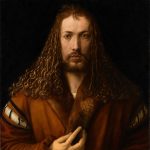

Dürer was the first artist to treat himself as a celebrity. The son of a Nuremberg goldsmith, he crossed the Alps to Venice, came home with the Italian Renaissance in his head, and spread it across Europe through prints. His woodcuts and engravings sold everywhere, signed with a famous AD monogram, and when other artists copied them he took them to court.
In 1500, at twenty-eight, he painted this. He faces us head on, symmetrical and solemn, his hand raised to his chest, in the pose painters reserved for Christ. It is either deeply pious or breathtakingly bold, and it was probably meant to be both: a statement that an artist's gift comes from God. Few self-portraits have ever been so sure of themselves.
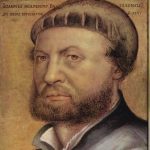

If you can picture Henry VIII, you are picturing Holbein's Henry VIII. The German painter left a Basel ruined by religious riots for London, became the King's Painter, and recorded the whole Tudor court: Thomas More, Thomas Cromwell, Jane Seymour and the portrait of Anne of Cleves that, the story goes, made Henry agree to a marriage he regretted the moment she arrived. Holbein died in London, probably of the plague, in 1543.
The Ambassadors is his masterpiece and his trick. Two young French diplomats stand among globes, books and a lute with a broken string, a catalogue of everything worldly. Across the floor floats a strange grey shape. Walk to the side, look back, and it snaps into a perfect skull: a reminder that death waits behind all of it.
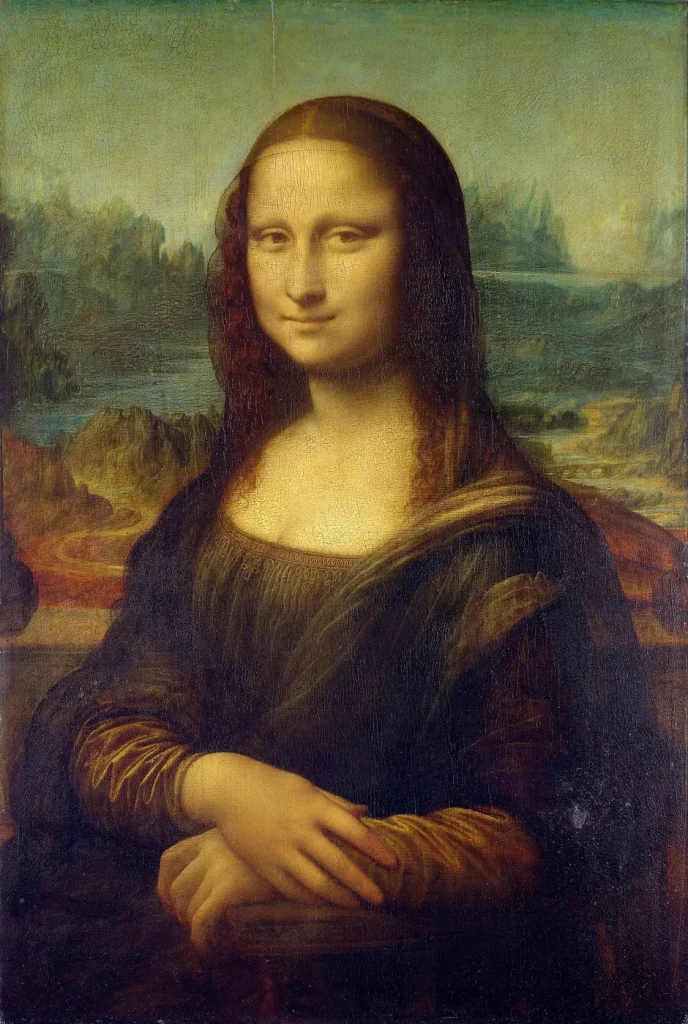
Who is the most famous Renaissance artist? Leonardo da Vinci. People search for his paintings more than for any other Renaissance artist's, ahead of Michelangelo and Raphael.
Who are the four great Renaissance artists? Usually Leonardo da Vinci, Michelangelo, Raphael and Donatello, the four who gave their names to the Teenage Mutant Ninja Turtles. Donatello was a sculptor, which is why he is not on this list of painters.
What is the difference between the Italian and the Northern Renaissance? Italian painters like Botticelli and Raphael looked back to ancient Rome, idealised beauty and mostly painted in fresco and tempera. Northern painters like Jan van Eyck, Bosch, Dürer and Holbein worked in oil and loved precise everyday detail, from fur to reflections in a mirror.
Was Giotto a Renaissance artist? Strictly, he came before it, around 1300. He is included because he is the painter the Renaissance itself named as its starting point.
Can I own a painting by these artists? The originals are in museums, but every painting shown here is available from us as a hand-painted oil reproduction, along with many more by each artist.
Enjoyed this story?
Save articles to your collection
Log in or create a free account, and this article will be waiting in your Private Collection.
Log in or sign upRanking follows monthly US Google search volume for each artist's paintings (OpenSEO, October 2026). We do not publish the figures.

Man Writing a Letter
Gabriel Metsu, c. 1664
The gallery list
Every painting is already 50% off. Join the list and we will send you an extra $15 code, plus first access to new collections.
No spam. Unsubscribe anytime. · Privacy Policy
Welcome
Your $15 code is on its way. Explore the gallery while you wait.