Loading cart…
No products in the cart.

Art Guides · Rococo
Save articles to your collection
Log in or create a free account, and this article will be waiting in your Private Collection.
Log in or sign upRococo is the art of a party that knew it would end. After Louis XIV died in 1715, French aristocrats left the stiff court of Versailles for Paris salons, gardens and boudoirs, and painting followed them. Out went heroes and martyrs. In came lovers on swings, goddesses at their dressing tables and picnics that drift into dusk, all in pinks, powder blues and soft gold. This guide explores ten famous Rococo paintings, chosen using November 2026 search data and our catalogue, with the story hiding in each one.
Fragonard has three of them. Start with the top three, or read the whole list below.
The name was first a joke. The Neoclassical painter Pierre-Maurice Quays, who wanted art to be serious and Roman, mocked the old style as "rococo", a twist on rocaille, the shell and pebble decoration of fashionable grottoes. The insult stuck, and today it names the elegant, playful painting of roughly 1720 to 1780, led in France by Watteau, Boucher and Fragonard.
 Explore the artistJean-Honoré Fragonard →
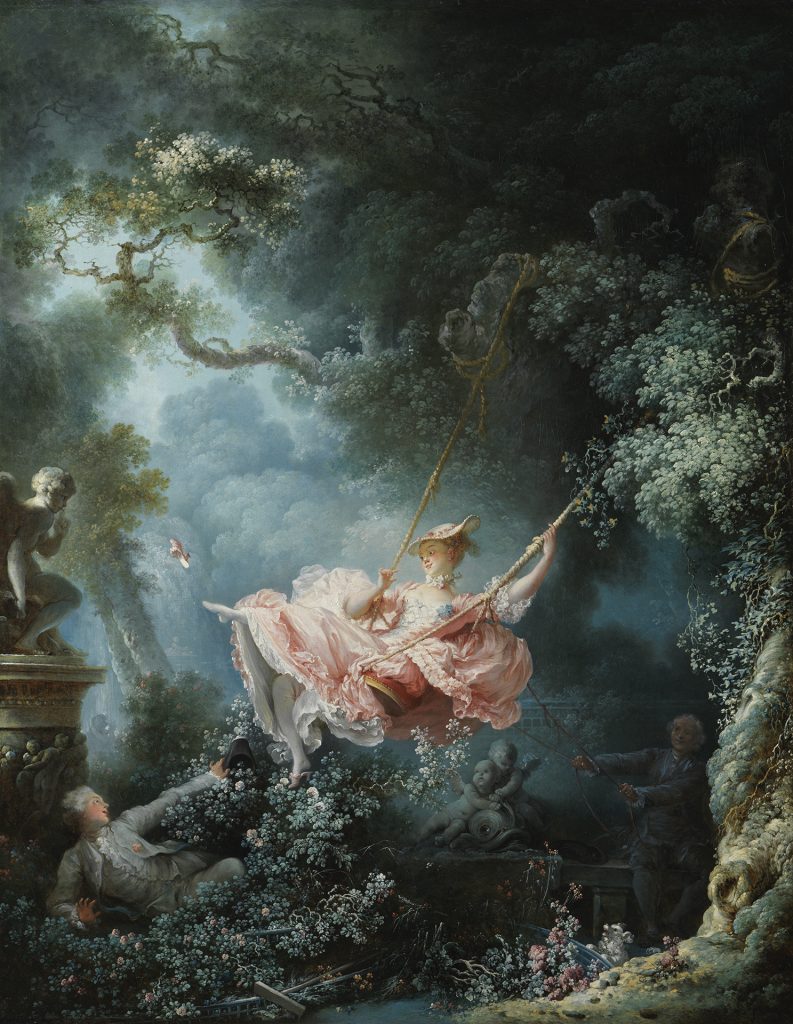
A young woman in a pink silk dress soars on a swing deep in a garden. An older man in the shadows pulls the ropes. Below her, half hidden in a rose bush, a young man points his hat towards her and looks straight up her skirts, while her little slipper sails off into the air. On the left, a stone Cupid holds a finger to his lips. Nobody is going to tell.
The idea did not come from Fragonard. A courtier first asked the history painter Gabriel-François Doyen for a picture of his mistress on a swing, pushed by a bishop, with himself placed where he could see her legs. Doyen was not comfortable with it and passed the job on. Fragonard took it, kept the joke, quietly turned the bishop into an ordinary older man, and made the most famous image of the whole Rococo age.
Collection reference · The Wallace CollectionImage courtesy of The Wallace Collection (P430), via Wikimedia Commons.
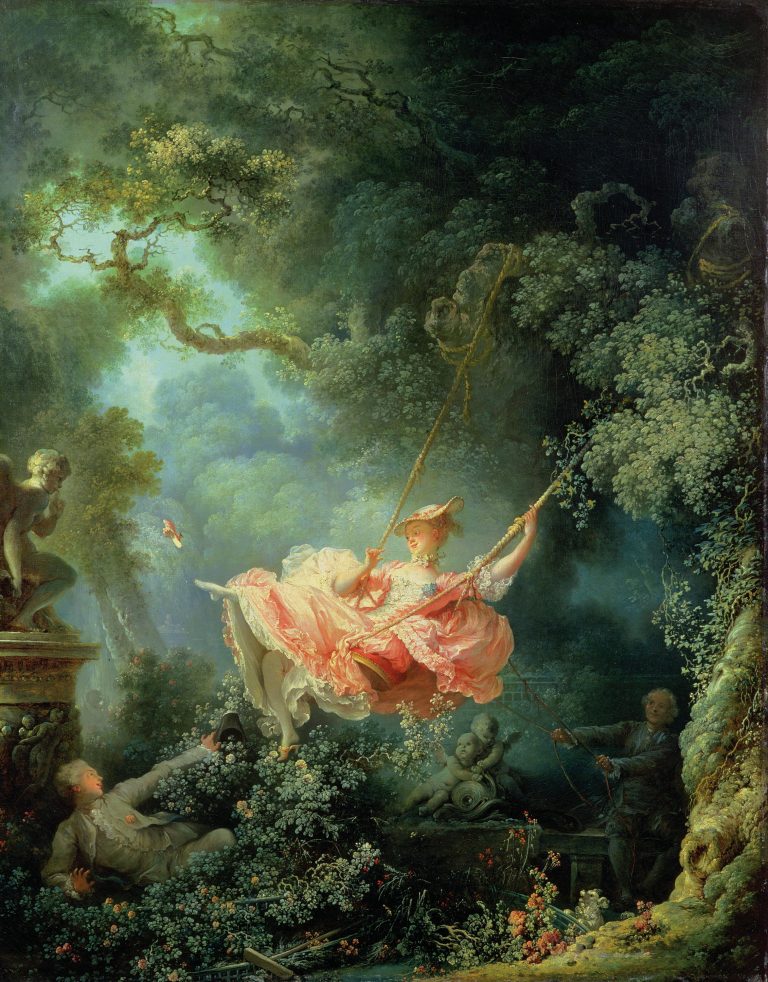
Jean-Honore Fragonard · oil on canvas, made to order
 Explore the artistAntoine Watteau →
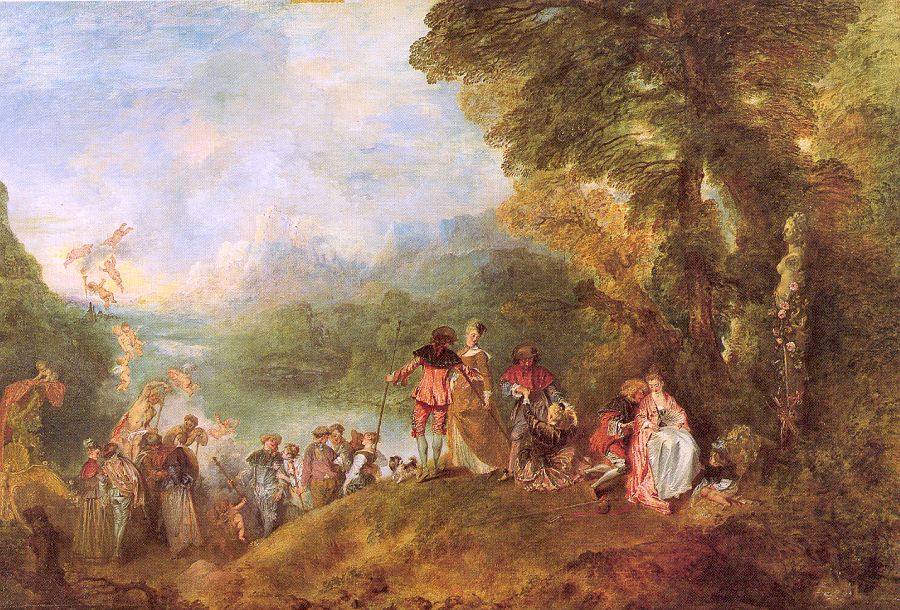
Cythera was the island of Venus, goddess of love. On a hillside, pilgrims in silk dresses and capes linger by her rose-covered statue, then wander down in pairs towards a golden boat while little cupids tumble in the air. The far landscape melts into haze, so you cannot tell dawn from dusk.
Are they arriving on the island of love, or sadly leaving it? People have argued about that for three hundred years, and the painting never answers. Watteau painted it as his entry piece for the Royal Academy in Paris, and the Academy had no category that fitted it. So it invented one: the fête galante, a dreamy outdoor party of lovers. A whole school of painting began with this one picture.
Collection reference · Musée du LouvreArtwork image from the ByMuseum catalogue.
Antoine Watteau · oil on canvas, made to order
Explore the artistAntoine Watteau →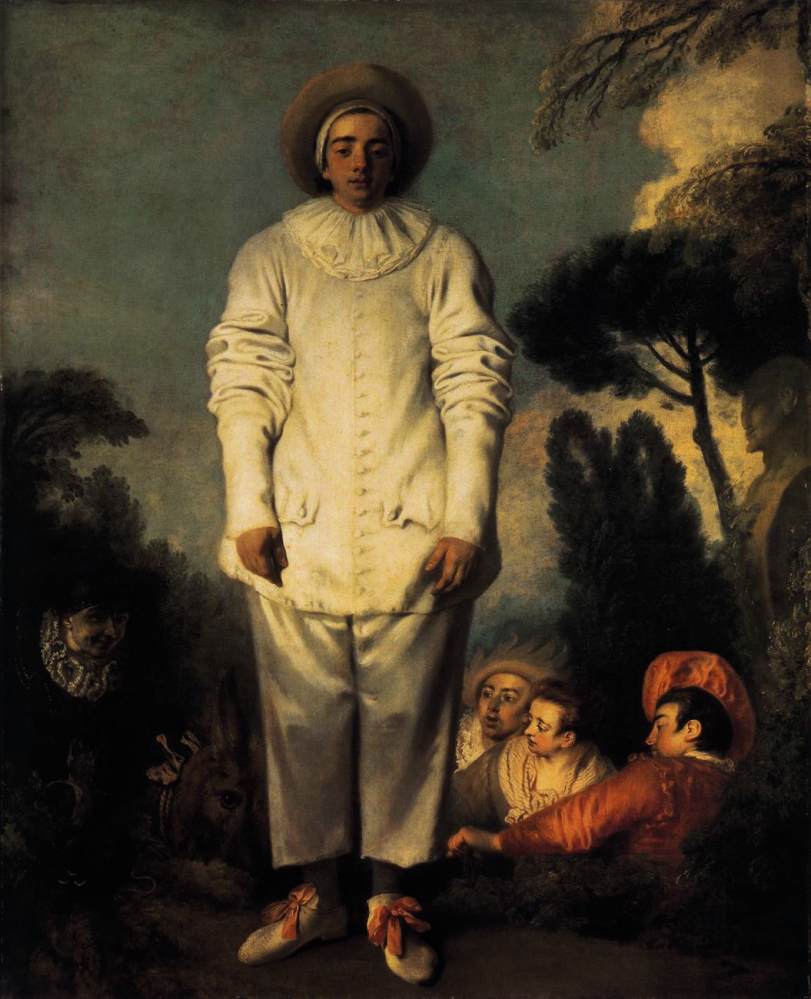
A clown in a baggy white suit stands facing us, arms hanging, looking a little lost. Behind and below him, his fellow actors from the Italian comedy are busy with each other, one of them riding a donkey. He is alone. We see a sad clown, but some historians point out that Pierrot was only simple and foolish in Watteau's day, and that the melancholy came later. Watteau painted him as tall as a real man.
Nobody knows why it was painted. One theory says it was a giant shop sign for a café run by a retired actor. No written record mentions it before 1826. Early in the nineteenth century, the story goes, a dealer who could not sell it chalked on the canvas: "How happy Pierrot would be, if he had the gift of pleasing you." Vivant Denon, Napoleon's director of museums, bought it for 150 francs. It was left to the Louvre in 1869.
Collection reference · Musée du LouvreArtwork image from the ByMuseum catalogue.
Antoine Watteau · oil on canvas, made to order
 Explore the artistThomas Gainsborough →
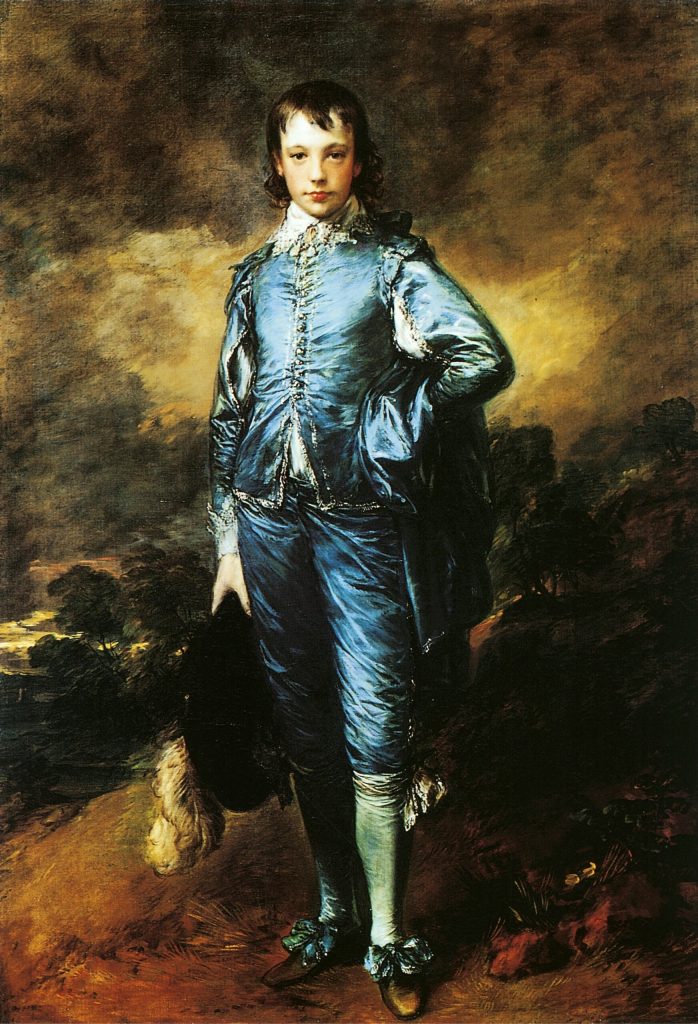
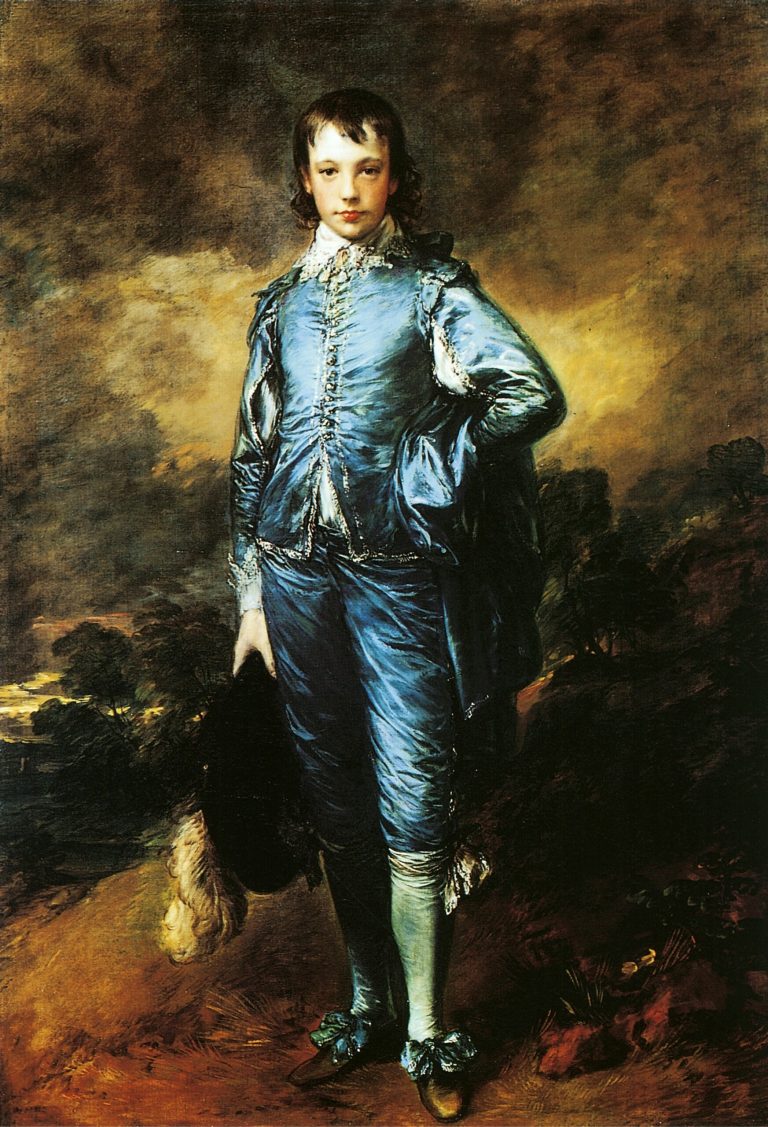
A boy stands in a stormy landscape wearing a shimmering suit of blue satin, a costume from the century before. It is a tribute to Anthony van Dyck, whose elegant portraits Gainsborough loved. British Rococo is a looser label than the French one, but the light, feathery brushwork earns Gainsborough his place: the satin seems to shiver as you look at it. The boy was long thought to be Jonathan Buttall, son of a hardware merchant. More recently he has been identified as the painter's nephew, Gainsborough Dupont.
In 1921 the Duke of Westminster sold it to the American railway magnate Henry Huntington. Britain mourned. Around 90,000 people went to see it at the National Gallery in London before it left for California. In January 2022, exactly a hundred years after it left, the Blue Boy came back to the National Gallery on loan for five months.
Collection reference · The HuntingtonArtwork image from the ByMuseum catalogue.
Gainsborough · oil on canvas, made to order
Explore the artistThomas Gainsborough →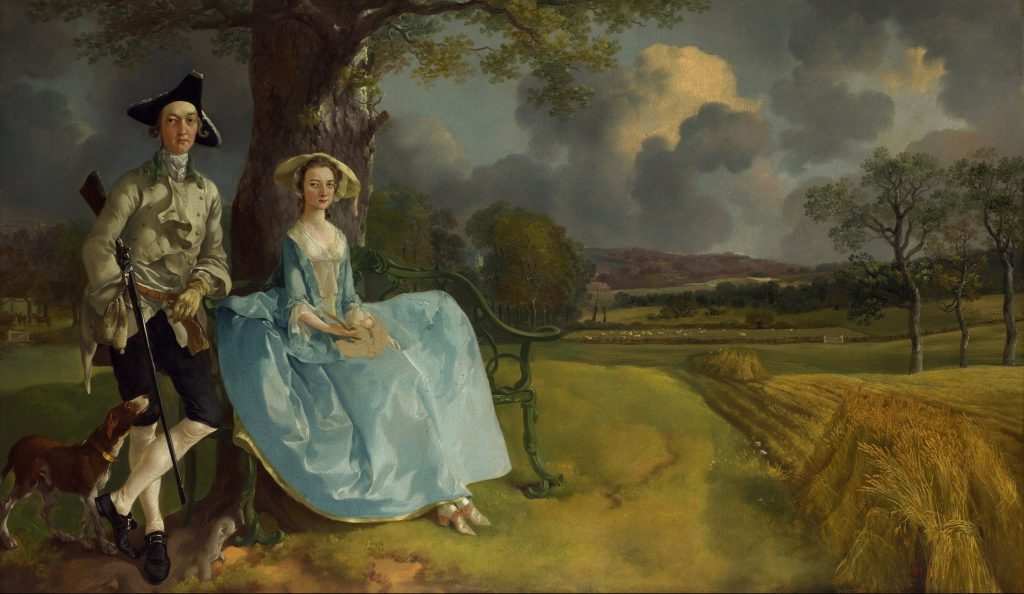
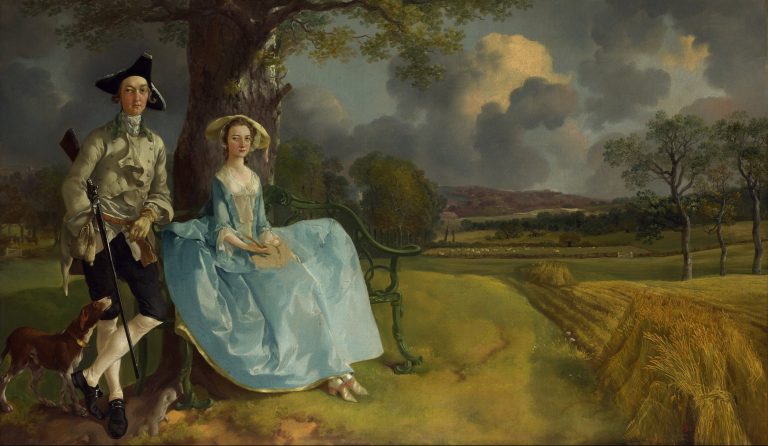
Robert Andrews and Frances Carter married in 1748. About two years later Gainsborough, then only about 23, painted them under an oak on their estate in Essex, a few miles from his home town of Sudbury. He stands with his gun and his dog. She sits in pale blue on a curly Rococo bench. And then, unusually, half the picture is simply their land: neat rows of golden wheat and soft hills under a wide sky.
Look at her lap. There is a bare patch of brown that was never finished. Was it meant for a pheasant her husband had shot, a book, or a baby still to come? Nobody knows. Gainsborough trained in London with the French engraver Hubert Gravelot, who taught him the Rococo style, and you can see it in the bench and the lightness of touch. The painting stayed with the family until 1960.
Collection reference · The National Gallery, LondonArtwork image from the ByMuseum catalogue.
Gainsborough · oil on canvas, made to order
 Explore the artistFrançois Boucher →
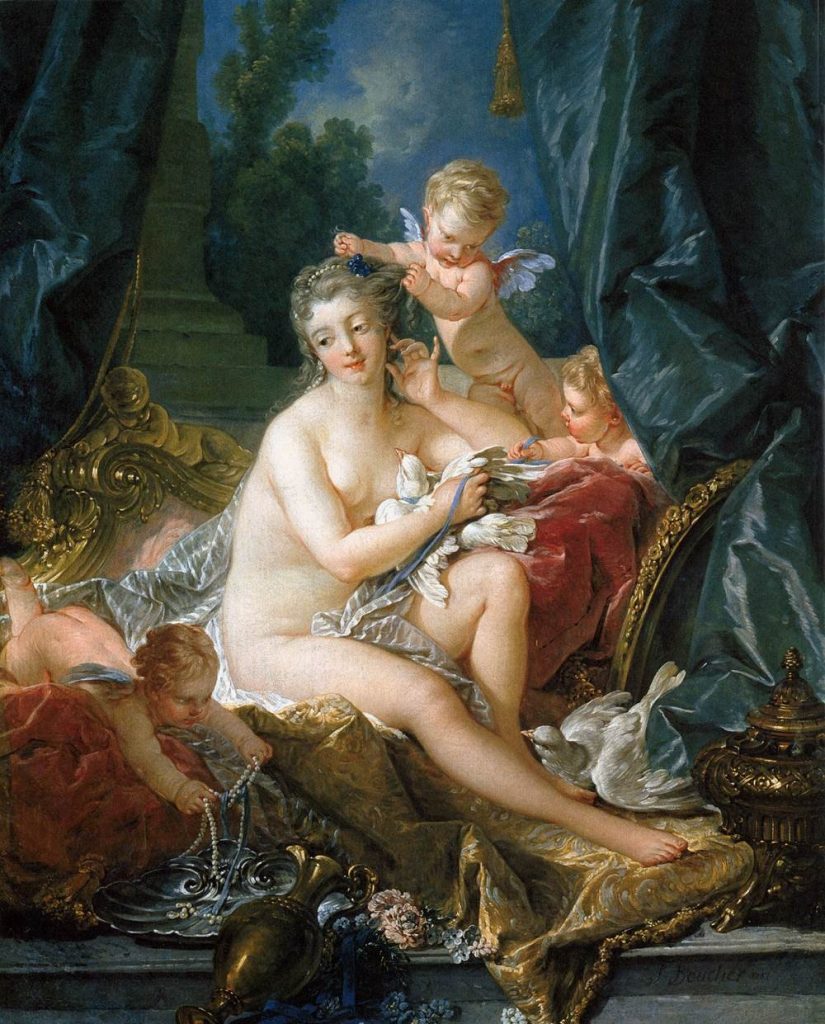
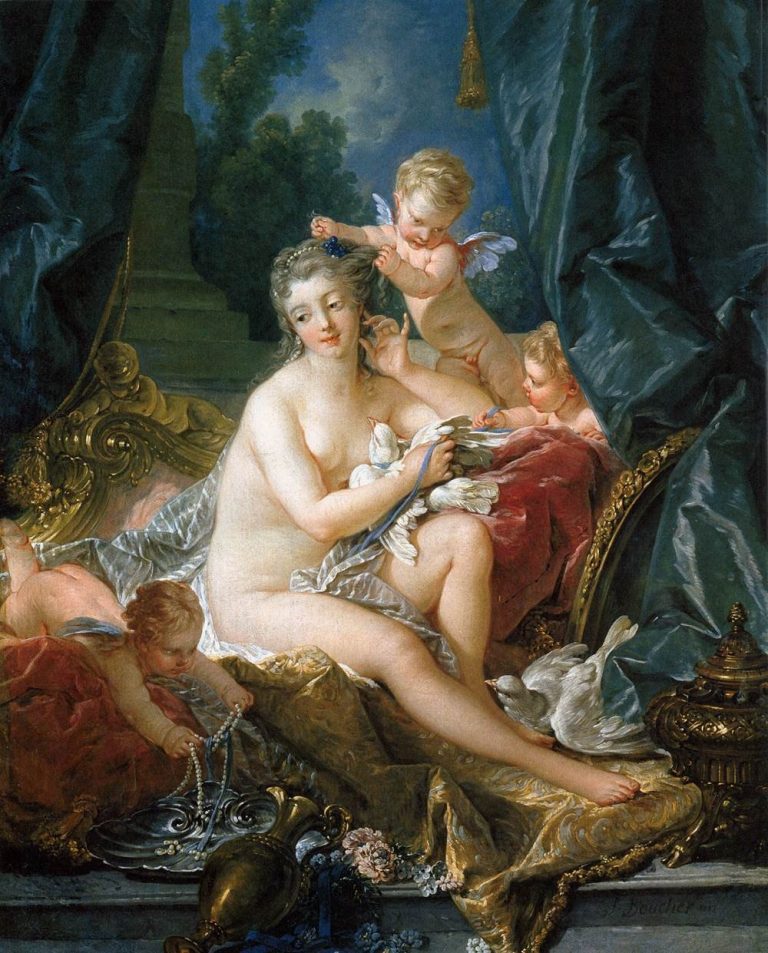
Venus, goddess of love, sits on a gilded sofa while three cupids help her. One does her hair, one hands her a ribbon, one lifts a string of pearls. She holds a dove. There is no drama here and no lesson. Just pearly skin, flowers and rich fabric. That is Boucher's whole art: pure pleasure, painted beautifully.
It was made for the most powerful woman in France. Madame de Pompadour, the mistress of King Louis XV and Boucher's great patron, ordered it for the bathroom suite of her Château de Bellevue, outside Paris. A year earlier she had played Venus herself, in a court ballet with a scene called La Toilette de Vénus, so the goddess may be a compliment to her.
Collection reference · The Metropolitan Museum of ArtArtwork image from the ByMuseum catalogue.
Francois Boucher · oil on canvas, made to order
 Explore the artistÉlisabeth Vigée Le Brun →
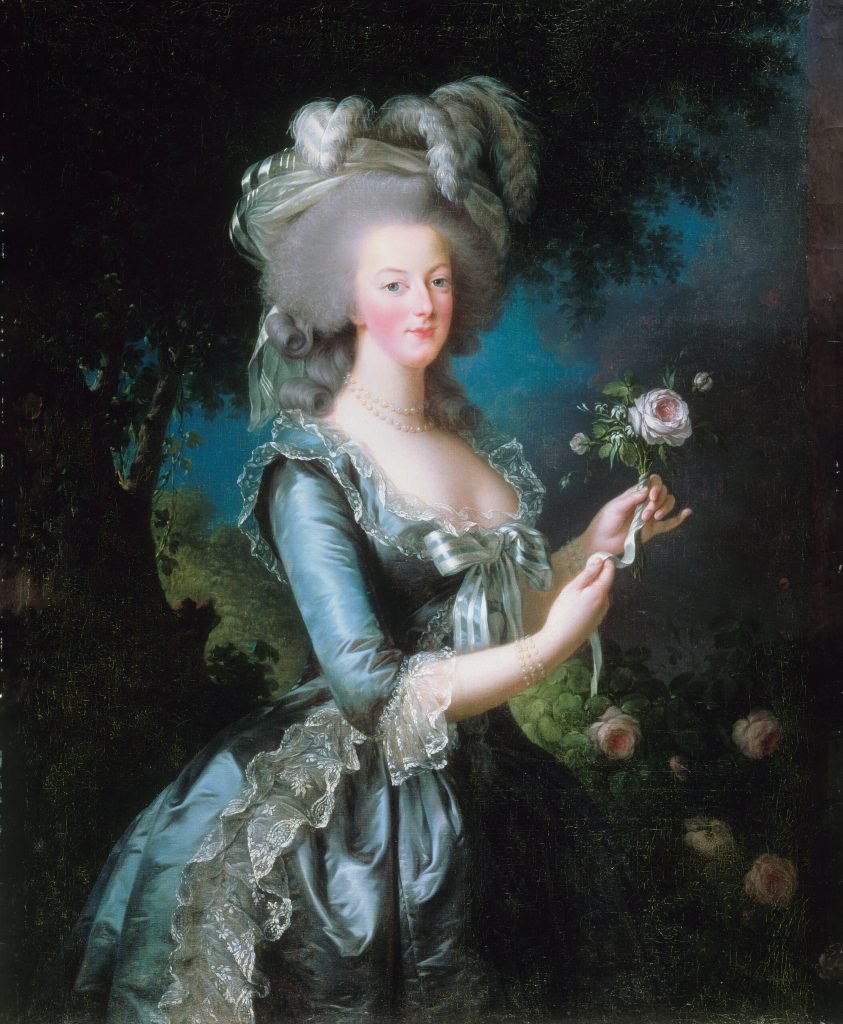
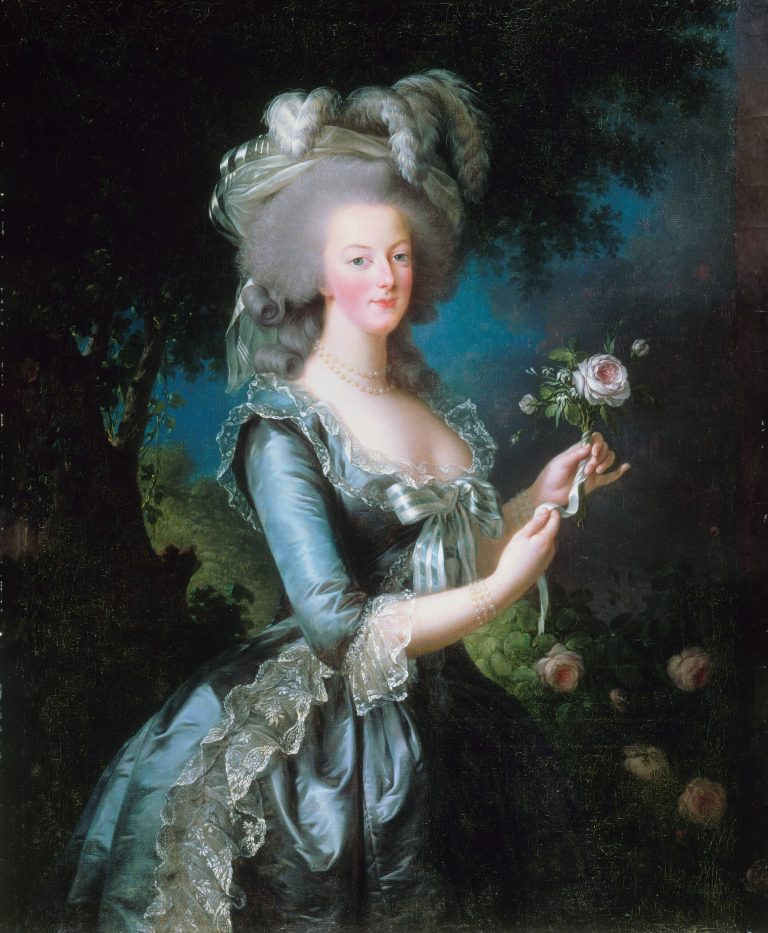
This is the second version, and it exists because of the first. Earlier in 1783 Vigée Le Brun showed a portrait of the queen in a simple white muslin dress, the relaxed style Marie Antoinette wore at her private retreat in Versailles. Paris was outraged. People said the Queen of France had been painted in her underwear, and the picture was taken down from the exhibition.
So the painter repeated the same pose, the same rose, in a proper silk gown. The choice of silk was pointed too: the muslin was imported cotton, and silk supported the weavers of Lyon. The new portrait was finished in time to hang before the exhibition closed. Six years later the Revolution began.
Collection reference · French Ministry of Culture catalogueArtwork image from the ByMuseum catalogue.
Élisabeth Vigée Le Brun · oil on canvas, made to order
Explore the artistJean-Honoré Fragonard →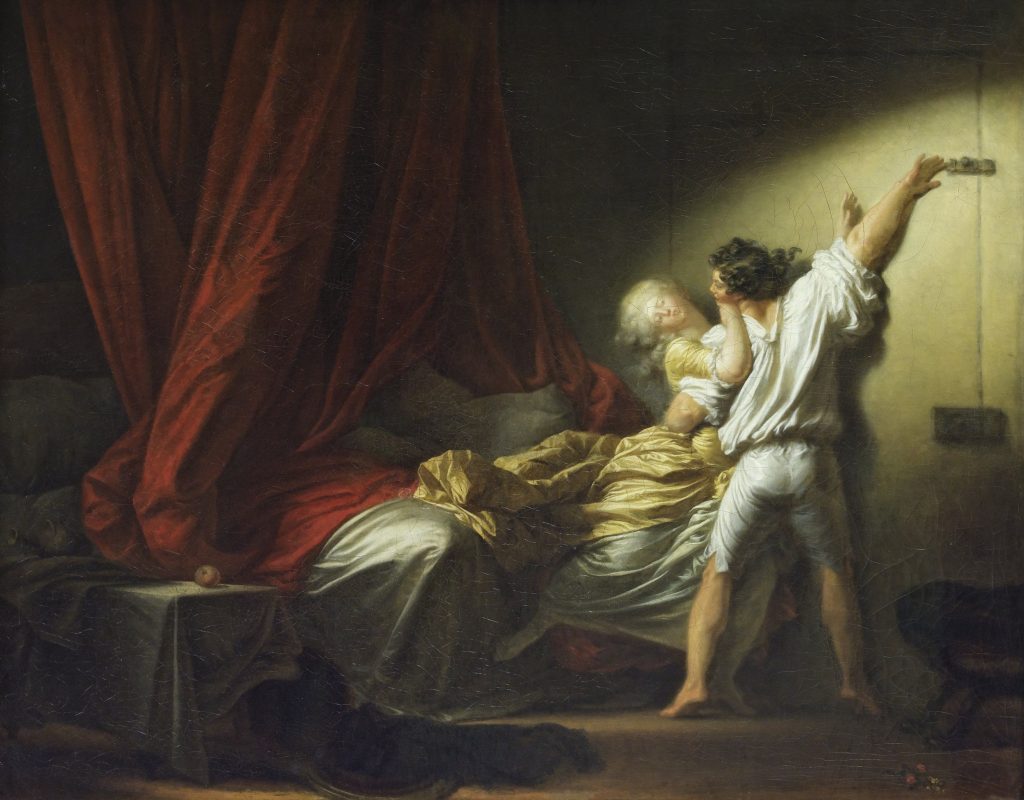
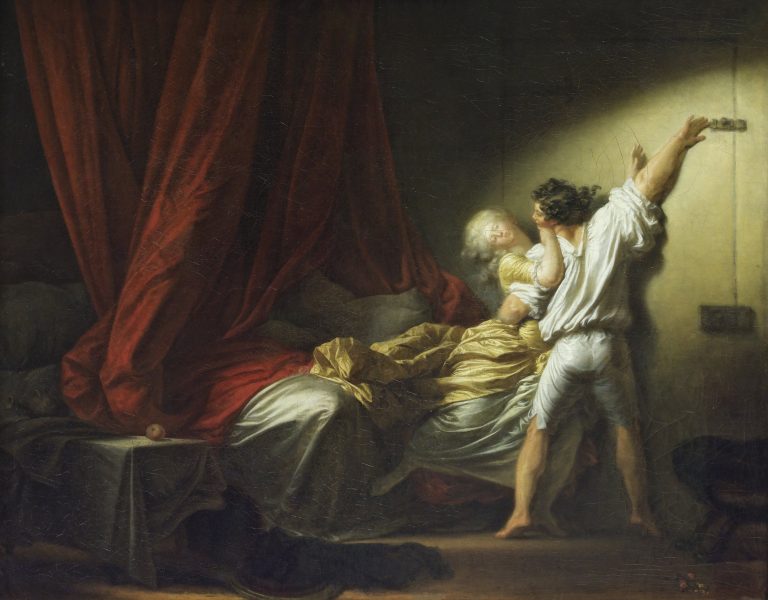
A young man reaches up to lock the bedroom door while holding a woman who twists away from him, one hand stretched towards the bolt. The huge red bed fills half the room, its sheets already tumbled. A spotlight falls on the couple and the rest sinks into shadow. On a small table sits an apple, the fruit of Adam and Eve's fall.
Two lovers, or an assault? Historians still disagree, and the painting has sometimes been called The Rape. Her arm reaches towards the bolt too, but to close it or to get out? It was commissioned by the Marquis de Véri, and it is often discussed alongside a religious picture by Fragonard, The Adoration of the Shepherds.
Collection reference · Musée du LouvrePublic-domain reproduction via Wikimedia Commons.
Jean-Honore Fragonard · oil on canvas, made to order
Explore the artistJean-Honoré Fragonard →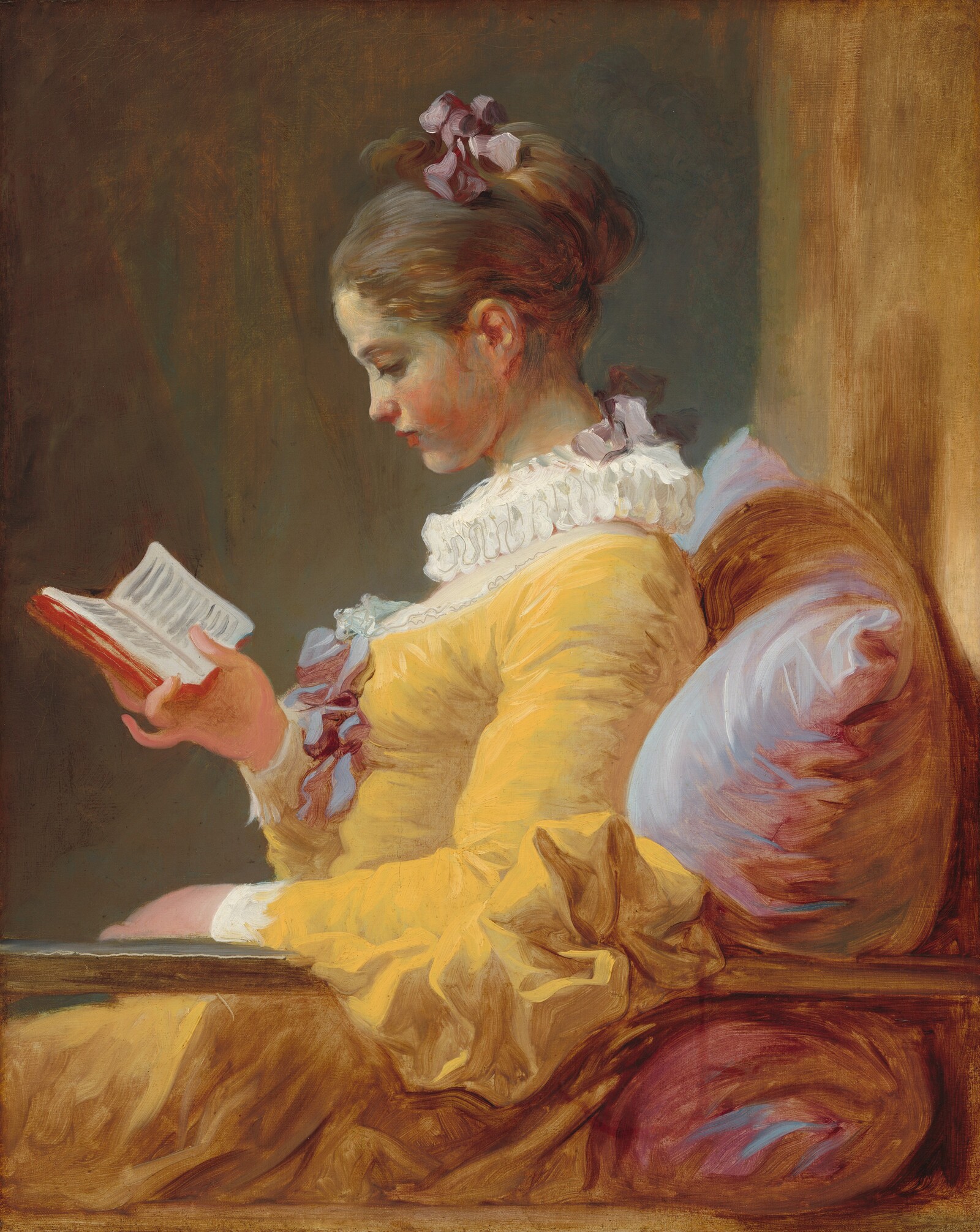
A girl in a lemon-yellow dress sits against a big cushion, lost in a little book. It looks calm, but the paint is fast and wild. Look at the white collar: Fragonard scratched the folds into the wet paint with the wooden end of his brush. This was one of his "fantasy figures", quick, free paintings of people who were never meant as ordinary portraits.
X-rays revealed a surprise. Underneath this quiet profile is a different head, turned to look at the viewer. Fragonard changed his mind and painted a girl who does not notice us at all, which is exactly why we cannot stop looking at her.
Collection reference · National Gallery of Art, WashingtonImage courtesy of the National Gallery of Art, Washington, Gift of Mrs. Mellon Bruce in memory of her father, Andrew W. Mellon, 1961.16.1. Public domain (Open Access).

Jean-Honore Fragonard · oil on canvas, made to order
Explore the artistFrançois Boucher →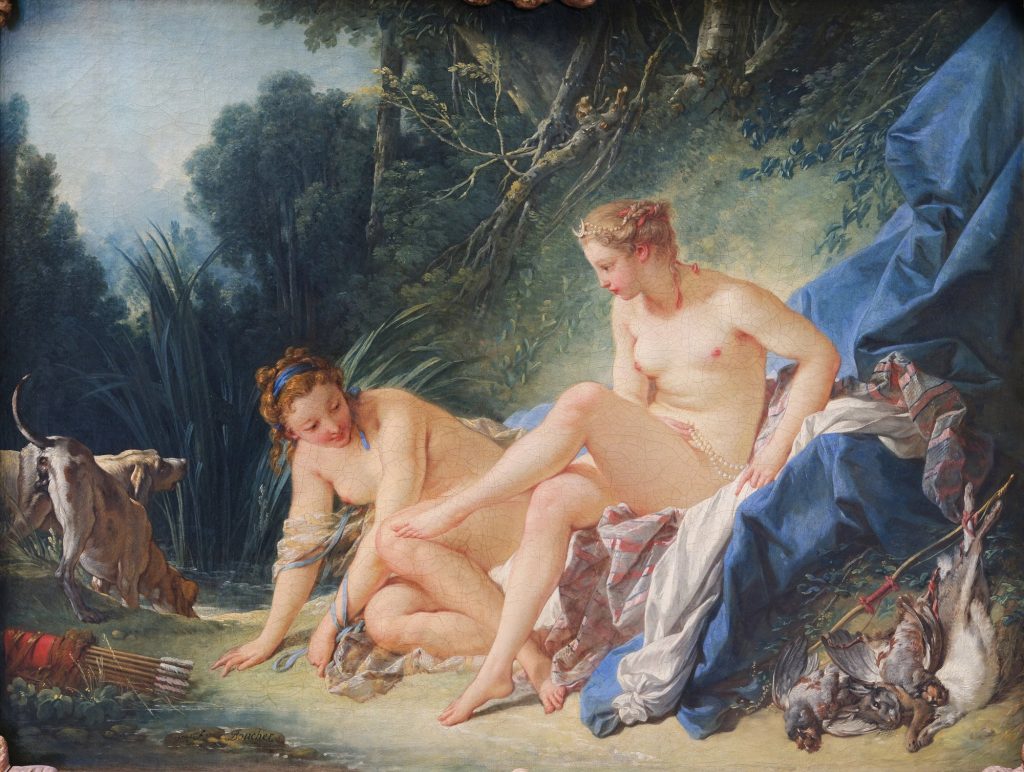
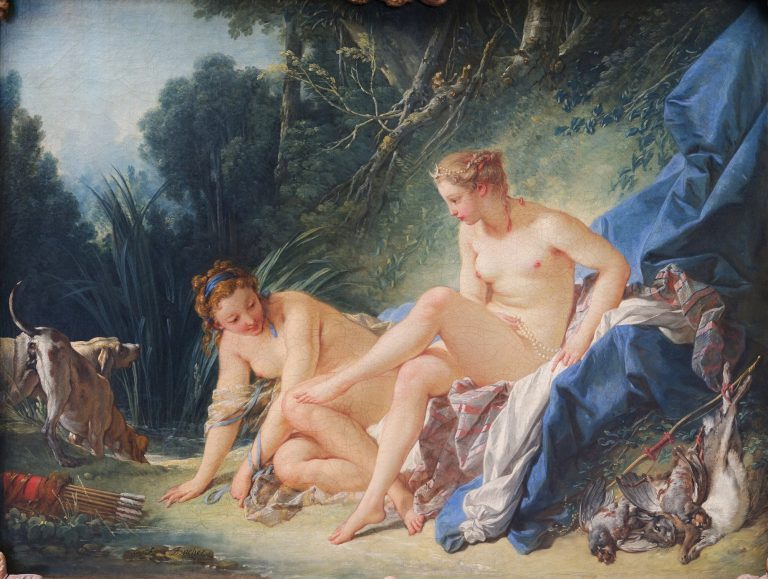
Diana, goddess of the hunt, sits by a stream after her bath, with a companion at her feet. Her bow and quiver lie in the grass with the birds and hare from the morning's hunt, and one of her two dogs drinks from the water. A crescent-shaped jewel in her crown of pearls tells you who she is.
It is small, about 57 by 73 centimetres, and it is Boucher at his best. Pierre-Auguste Renoir is said to have loved it from his youth, and it is easy to see Boucher's glowing skin tones in Renoir's own bathers.
Collection reference · Musée du LouvreArtwork image from the ByMuseum catalogue.
Francois Boucher · oil on canvas, made to order
The Swing by Jean-Honoré Fragonard, painted in 1767 and now in the Wallace Collection in London. Watteau's Pilgrimage to Cythera is a close second.
A light, playful and elegant style that started in Paris around 1720, after the death of Louis XIV, and spread across Europe until about 1780. It favours love scenes, garden parties and mythology, painted in soft pastel colours with curving lines and lots of ornament.
Baroque is big, dramatic and often religious, with strong light and deep shadow. Rococo is its lighter, more intimate child: smaller rooms, paler colours, private pleasures instead of public power. Compare it with our ten famous Baroque paintings.
In France, Antoine Watteau, François Boucher and Jean-Honoré Fragonard, with Élisabeth Vigée Le Brun painting the court at its very end. In Italy, Giovanni Battista Tiepolo painted huge Rococo ceilings, and in England Thomas Gainsborough brought the same lightness to portraits.
Taste turned against it. By the 1770s critics such as Denis Diderot attacked Boucher's pretty nudes as empty, and a new generation led by Jacques-Louis David wanted serious, moral art based on ancient Rome. That became Neoclassicism. Then the Revolution of 1789 swept away the world Rococo had painted.
Four are in the Louvre in Paris. The Swing is in the Wallace Collection in London, Mr and Mrs Andrews in the National Gallery, The Blue Boy at the Huntington in California, The Toilet of Venus at the Met in New York, Young Girl Reading in Washington, and Marie Antoinette with a Rose at Versailles. All ten are available from us as hand-painted oil reproductions.
Explore more works in our Rococo collection. Every painting above is available as a hand-painted oil reproduction.
Enjoyed this story?
Save articles to your collection
Log in or create a free account, and this article will be waiting in your Private Collection.
Log in or sign upOrder is guided by monthly US Google search volume for each painting's name (OpenSEO, November 2026), chosen from paintings in our catalogue. We had no figure for The Blue Boy or Young Girl Reading and placed them ourselves. Pierrot combines searches for Pierrot and Gilles. We do not publish the figures.
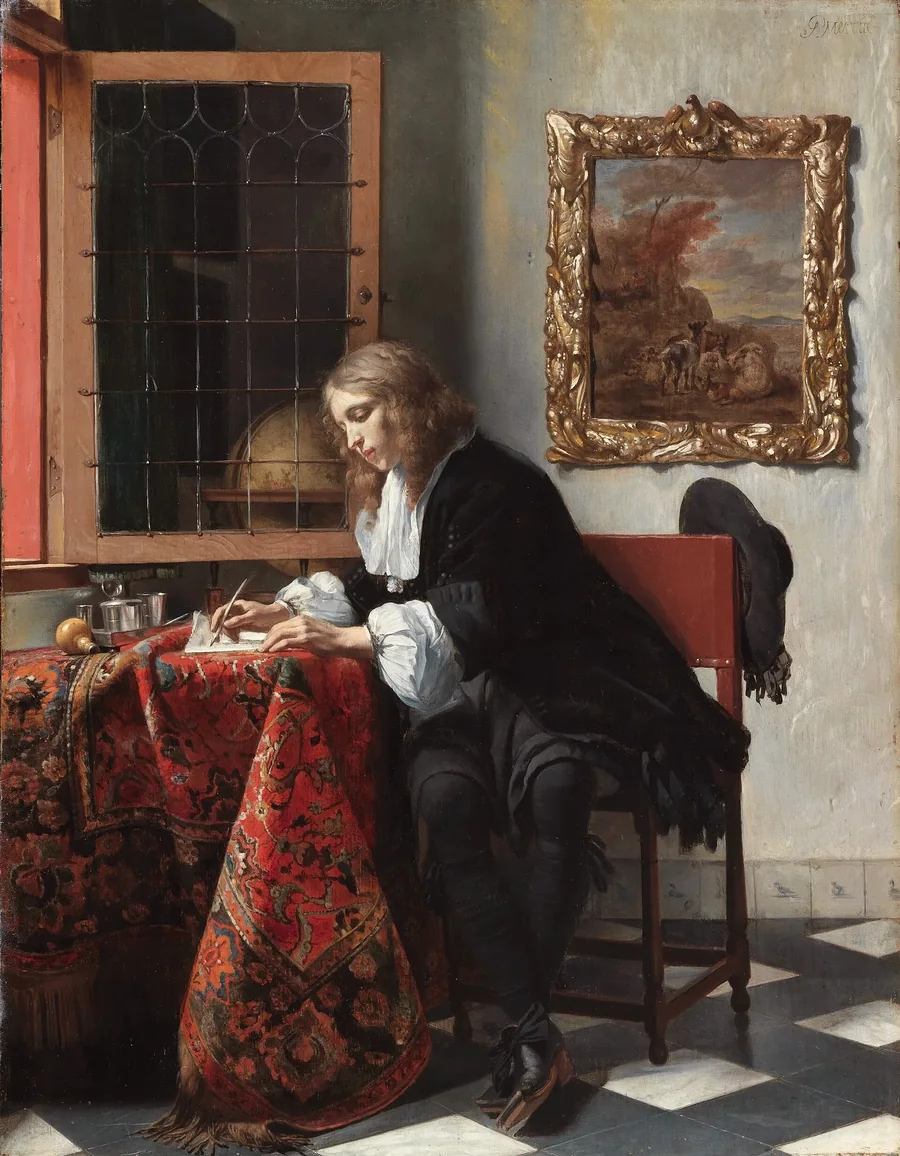
Man Writing a Letter
Gabriel Metsu, c. 1664
The gallery list
Every painting is already 50% off. Join the list and we will send you an extra $15 code, plus first access to new collections.
No spam. Unsubscribe anytime. · Privacy Policy
Welcome
Your $15 code is on its way. Explore the gallery while you wait.