Loading cart…
No products in the cart.

c. 1743 · Oil on canvas · National Gallery, London
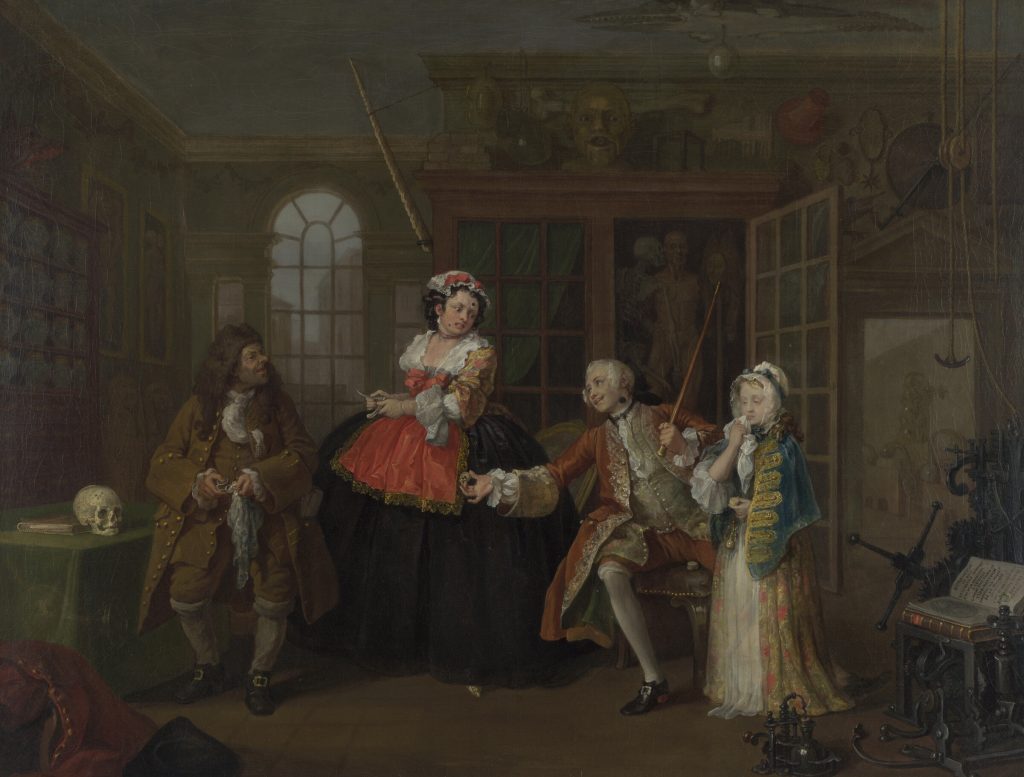
The third room is not in the great house. It is a consulting room in a poor part of town, and the story has come here because the Viscount has a problem that neither his father's title nor his father-in-law's money can fix. Hogarth calls the picture The Inspection. It is the one where the comedy turns.
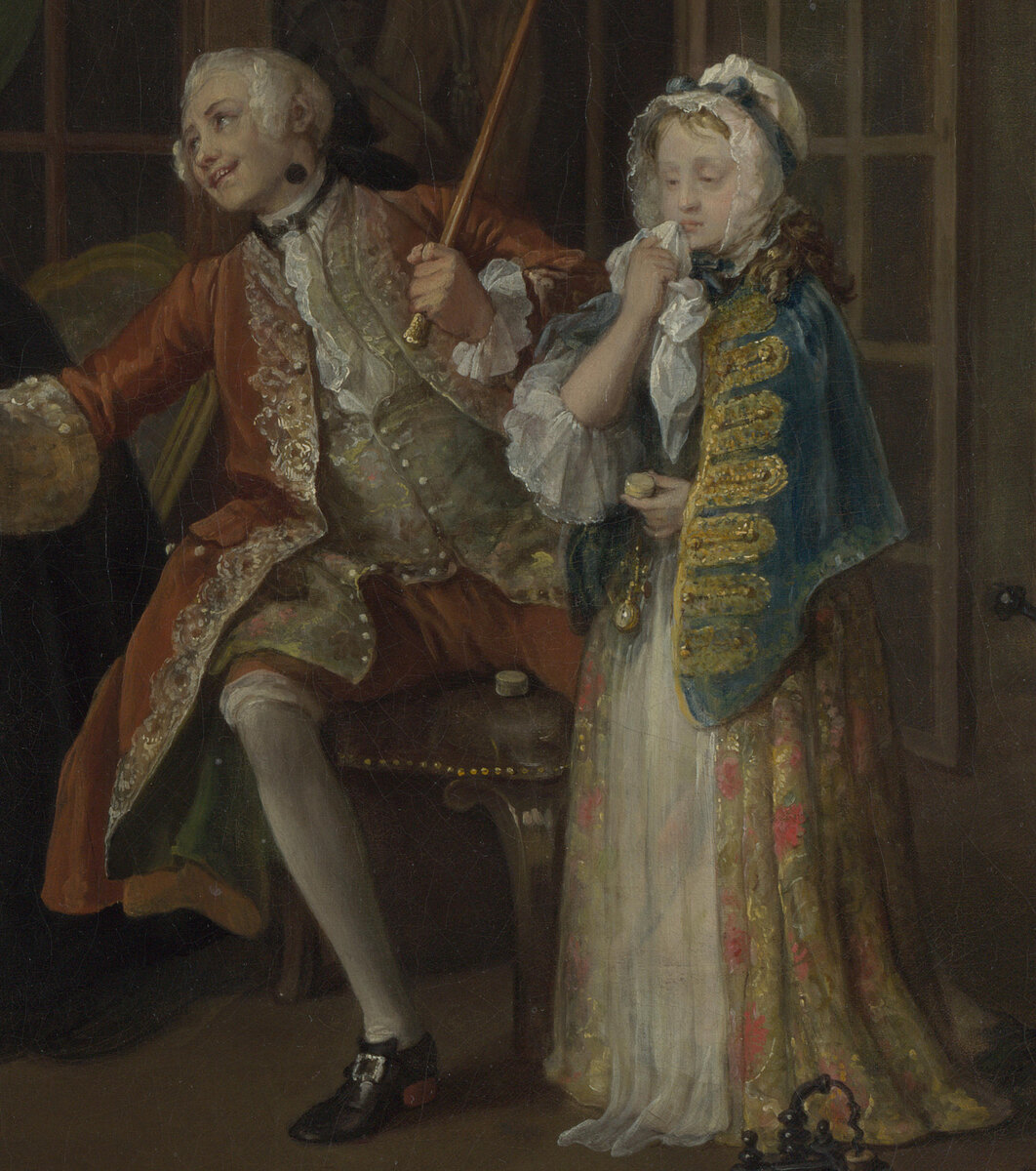
The Viscount sits in the middle in a red coat, as cheerful as ever, holding a pillbox up on the end of his cane toward the doctor. The pills have not worked, and he is complaining, with a smile, in the manner of a customer returning a hat. Beside him stands a girl in a mob cap and a blue cloak, dabbing at a sore on her mouth with a handkerchief. She is not his wife. She is barely more than a child, and she holds a second pillbox of her own.
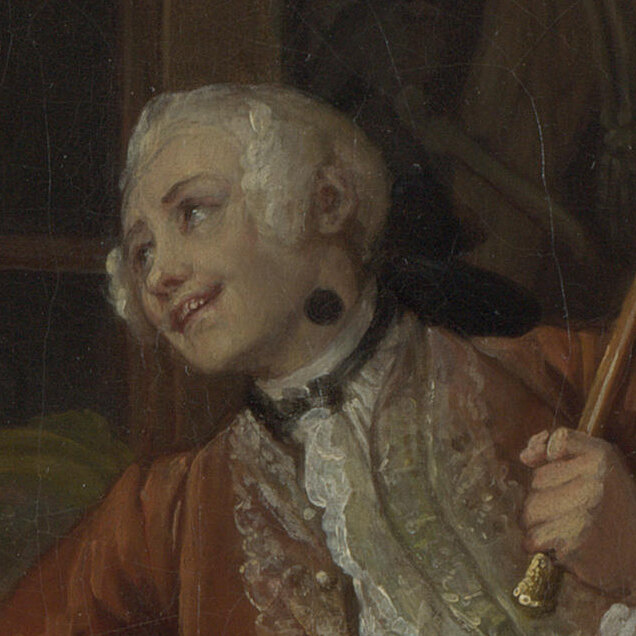
Look at his neck. The black patch was there in Room 1, when he sat on the sofa admiring himself. Beauty patches covered spots, and the spot this one covers is the sign of syphilis, the disease of the fashionable and the careless in eighteenth-century London. He had it before the wedding. The girl has it now. Whether it stops with her is a question the last room answers.
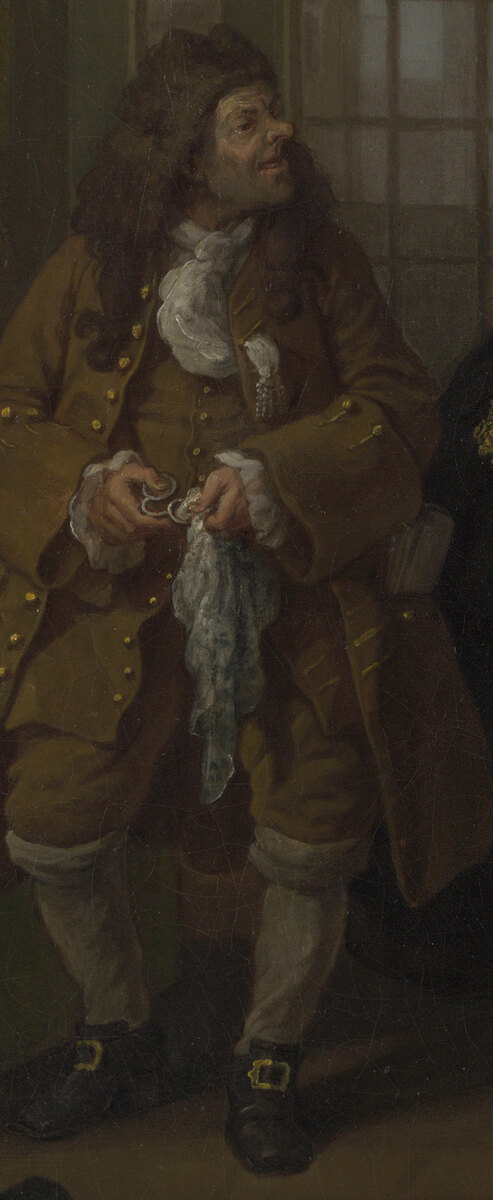
The doctor, in a brown coat and a wig twenty years out of date, polishes his spectacles and looks at the Viscount with a face that promises nothing. Hogarth's contemporaries called him a quack, a French one, and the engraving names him Monsieur de la Pillule. He treats venereal disease, which respectable physicians would not, and the room is his advertisement.
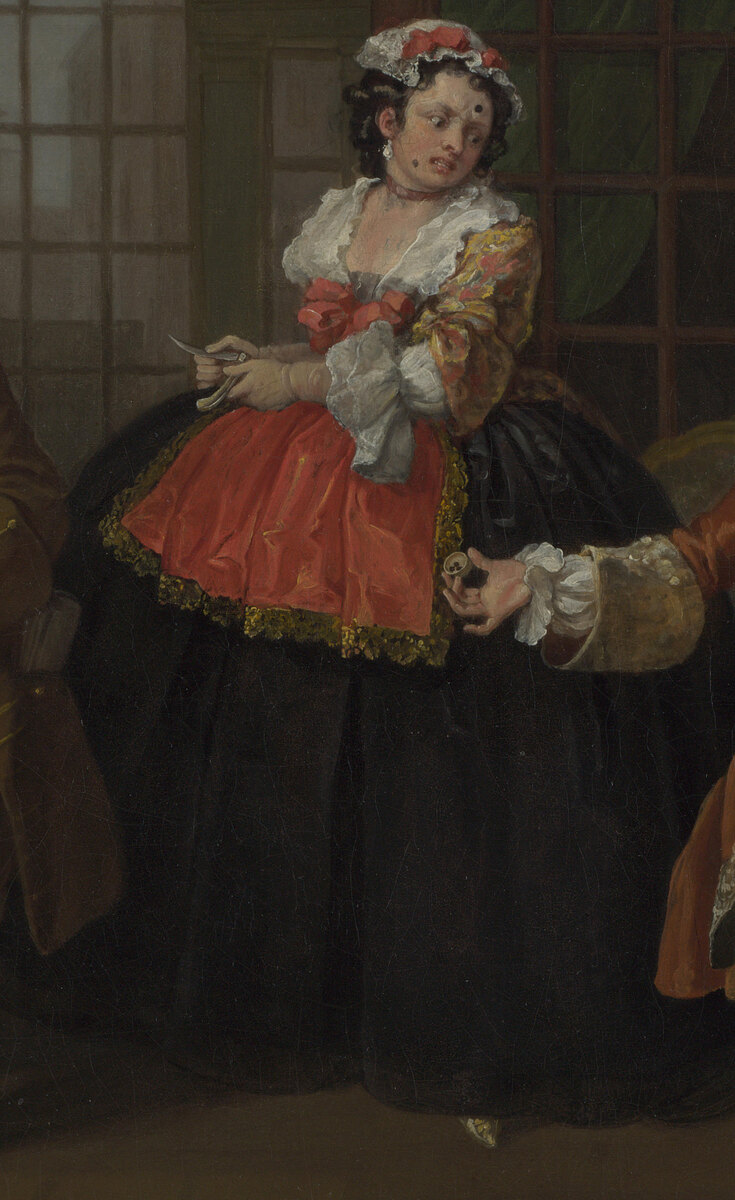
The tall woman in black towering over all of them is the mystery of the picture. She is opening a clasp knife. Her face is patched, so she has the disease too, and her dress is expensive. She may be the doctor's wife, or the girl's mother, or a bawd who supplied the girl and has been accused of it. The National Gallery leaves it open, and so does Hogarth. What is certain is that she is angry and armed, and that the Viscount, pointing his cane at the doctor, has just said something to make her so.
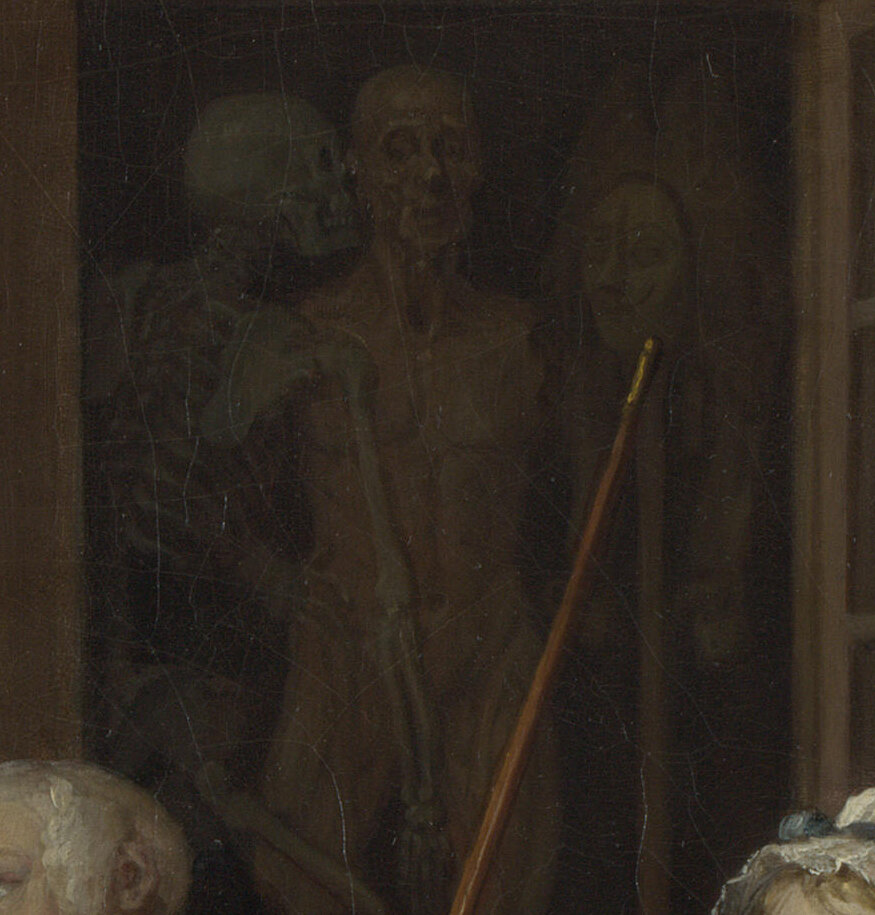
Hogarth's rooms always tell you who lives in them, and this one is a museum of quackery. In the cupboard at the back a skeleton leans toward a flayed anatomical figure, as if telling it a secret. On the shelves are skulls, bones, a stuffed crocodile hanging from the ceiling, a narwhal tusk, and a mummy standing in the corner. On the right two great machines of wood and brass, which the tract on the table announces as inventions of the doctor's own for resetting shoulders and drawing corks. Every object is a cure for something, and none of them work.
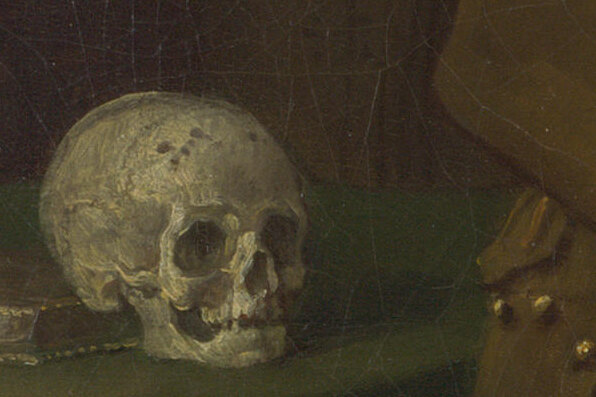
On the table at the left there is a skull, and in most paintings a skull means remember you will die. Here it means something plainer: the doctor keeps one. It is also, the National Gallery notes, a skull with the marks of the disease on it. The patient is being shown, without anyone saying it, what the pills are for.
The Inspection is the room in which the series stops being a comedy of manners. Rooms 1 and 2 were about money and boredom. This one is about a disease that the Viscount caught before his marriage, has passed to a child and will pass to his own, and about a whole economy of people who make a living from it. His audience recognised every object.
What it is not is a moral lecture. The Viscount is still smiling. That smile is the horror of the picture: he has not understood, and he is not going to. The next room goes back to the great house, where his wife has stopped waiting for him.
The original hangs with the other five in the National Gallery in London, where the series has been since the Gallery opened in 1824. Our hand-painted reproduction of The Inspection is painted in oil on canvas from the National Gallery original, and the six scenes can be ordered singly or as a set to hang in order. More Hogarth in our William Hogarth collection.
Visible details, documented facts and interpretation are kept separate throughout this article. Hogarth left no written key to the series; readings of individual objects follow the National Gallery and Paulson and are marked as readings.