Loading cart…
No products in the cart.

c. 1743 · Oil on canvas · National Gallery, London
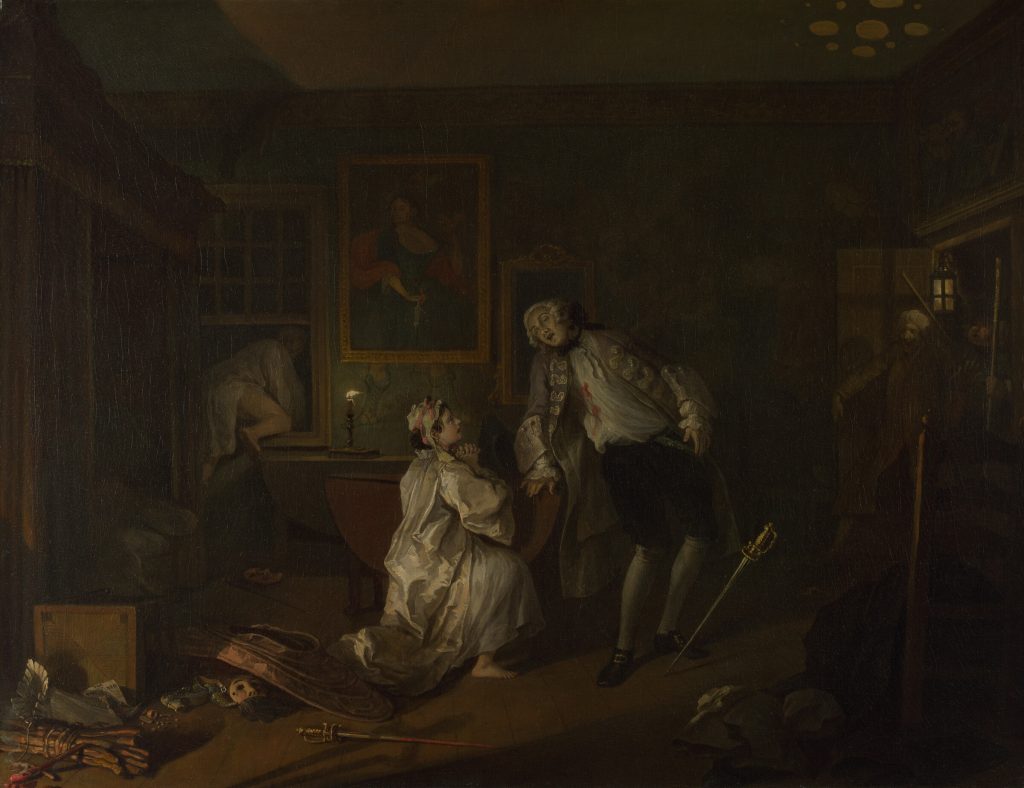
A bagnio was a bath house, and by 1743 the word meant a house where rooms could be taken by the night with no questions asked. The Turk's Head in Covent Garden was the famous one, and a bill from it lies on the floor. It is after the masquerade. The Countess and Silvertongue have come here in their costumes, and her husband has followed them.
I have endeavoured to treat my subjects as a dramatic writer; my picture is my stage, and men and women my players.
William Hogarth, autobiographical notes
He meant it, and this is the scene where he proves it: the last act of a tragedy, with one light, one door and everyone frozen at the instant after the blow. It is the darkest painting of the six, literally: a single candle on the table lights it, and the rest is shadow.
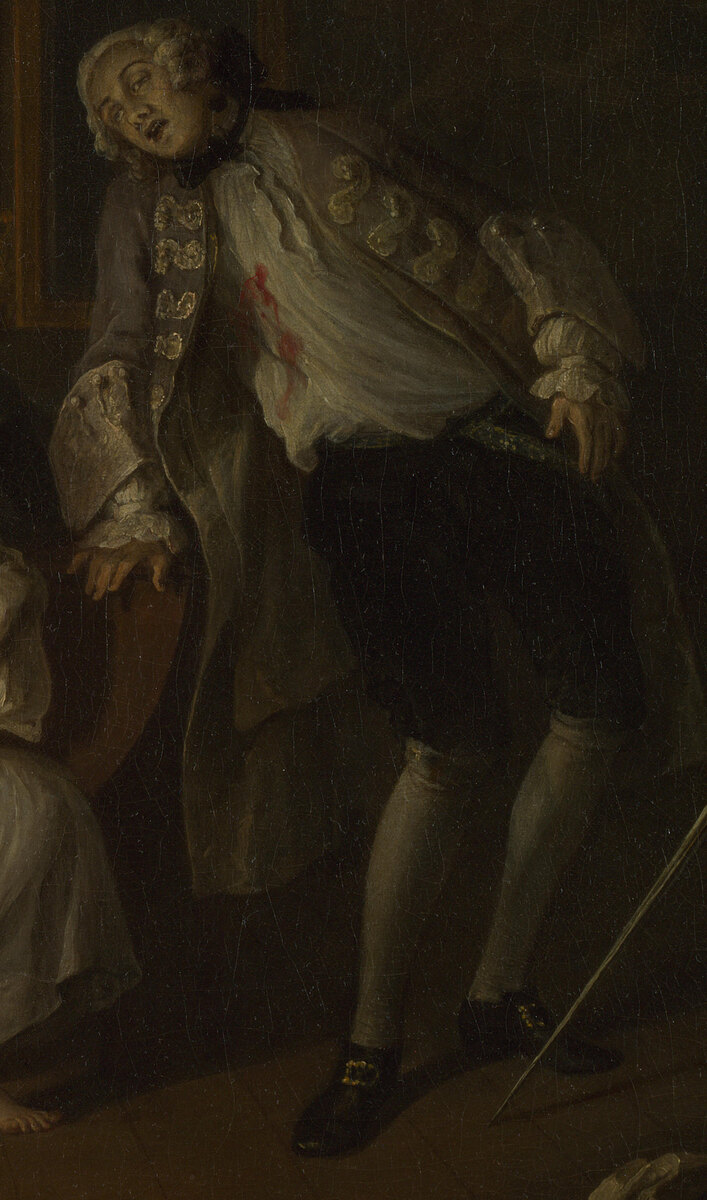
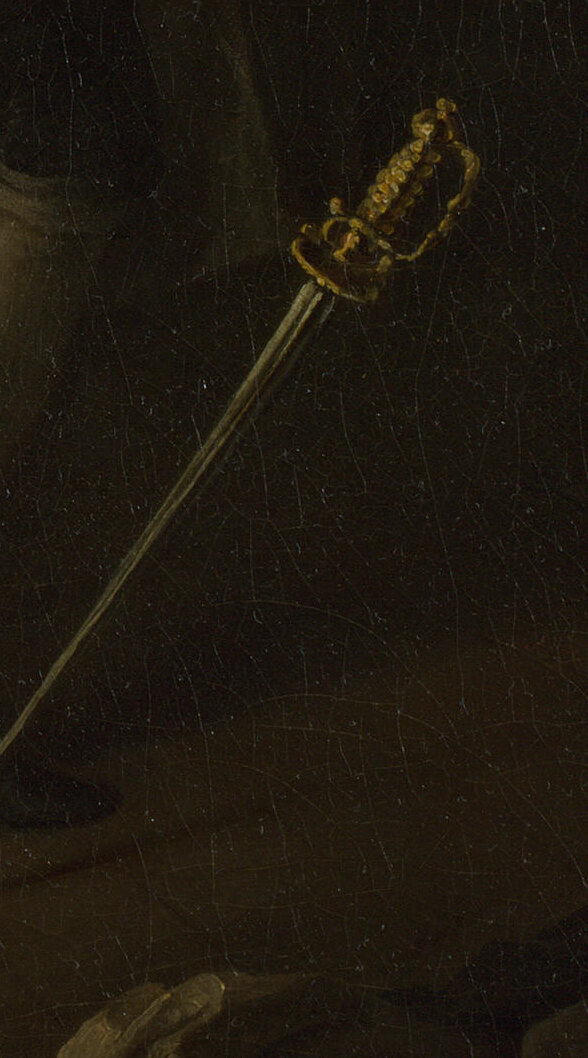
The Earl, who was the Viscount, is dying. He has burst in, drawn his sword and fought the lawyer, and the lawyer has won. His own sword lies on the floor beside him, and the blood is spreading on his shirt as he falls back, one hand groping for the table, his face turned upward with the expression of someone who has just understood something for the first time. It is the only moment in six paintings in which he is not smiling.
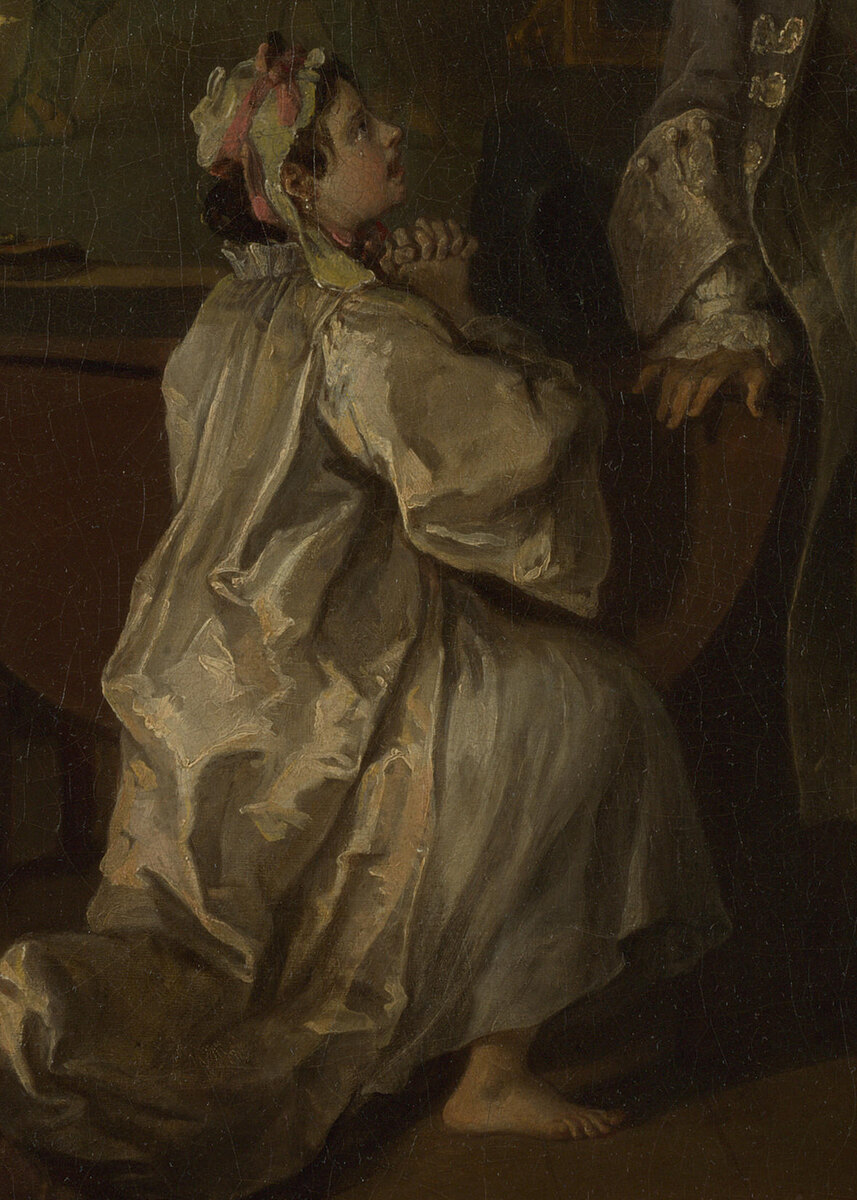
The Countess is on her knees in her shift, the masquerade dress thrown on the floor behind her, her hands clasped and her face turned up to the man she has just watched being killed. Whether she is begging his forgiveness or simply terrified, Hogarth does not say, and the picture has been read both ways. Her feet are bare. Everything about her is exposed, which after four rooms of silk and coronets is the point.
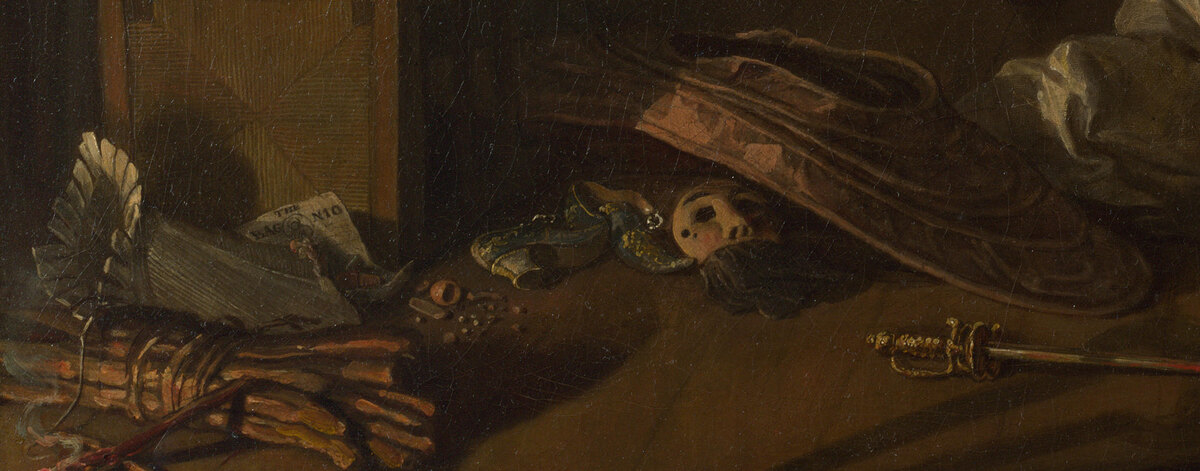
On the floor at the front lie the two masks from the masquerade, a hooded domino, her stays, and the bundle of firewood the house sells with the room. The bill is from the Turk's Head. It is a still life of the whole evening, laid out for the watch to find.
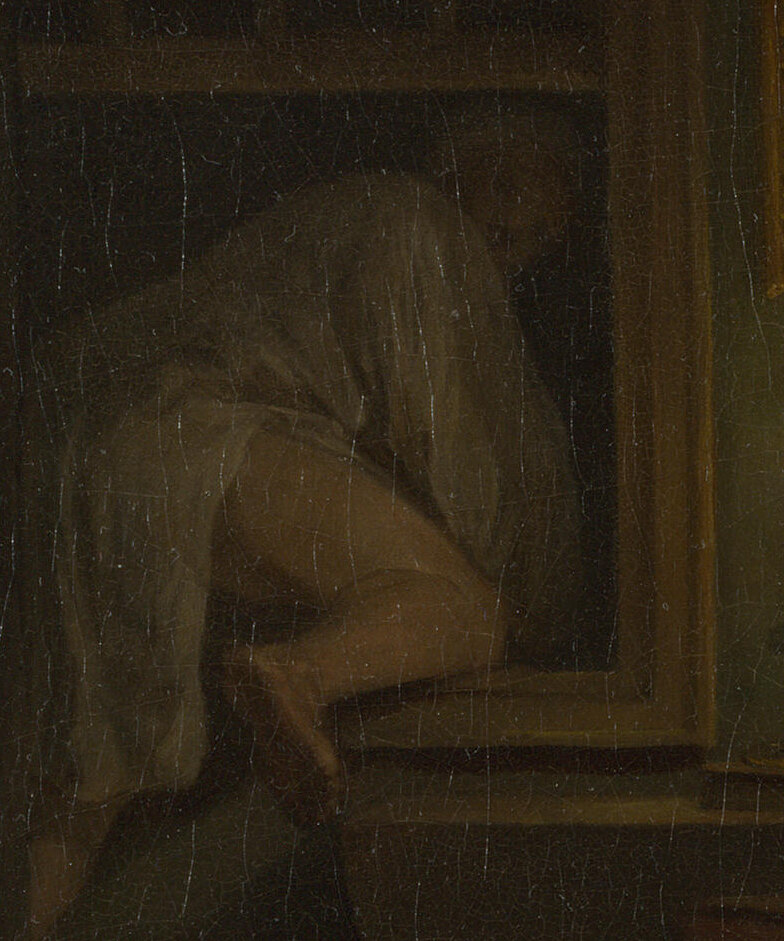
Silvertongue is going out of the window. He is in his nightshirt, one leg over the sill, and his sword is still in the room. It is the least dignified exit in British painting and it is exactly what he would do. He was the only clever person in Room 1 and he is the only one with a plan now. Whether the plan works, the last room will tell you. Look for a pamphlet on the floor.
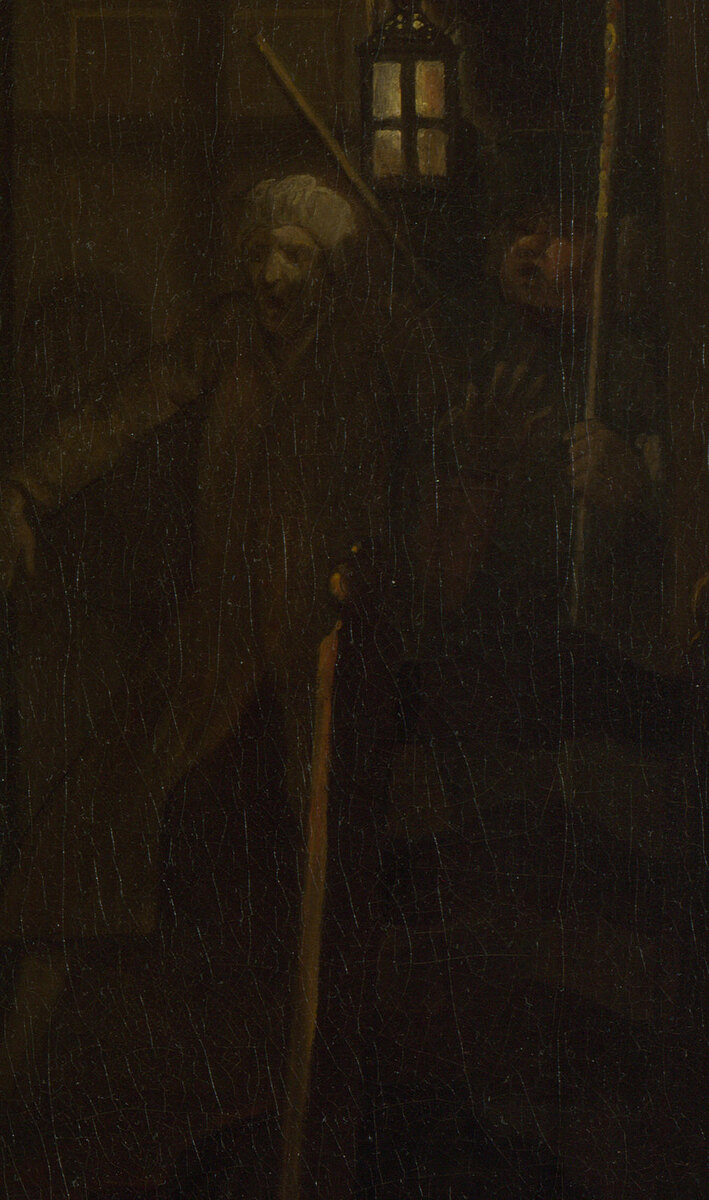
At the door, drawn by the noise, come the watch and the landlord of the bagnio with a lantern and a staff, and with them the outside world. What has been private for four paintings, the mistress, the disease, the lawyer on the sofa, is now a matter for a magistrate. On the wall behind the lovers a tapestry shows the Judgement of Solomon: a king deciding which of two women a child belongs to. Hogarth put it there on purpose, and the child comes in the next room.
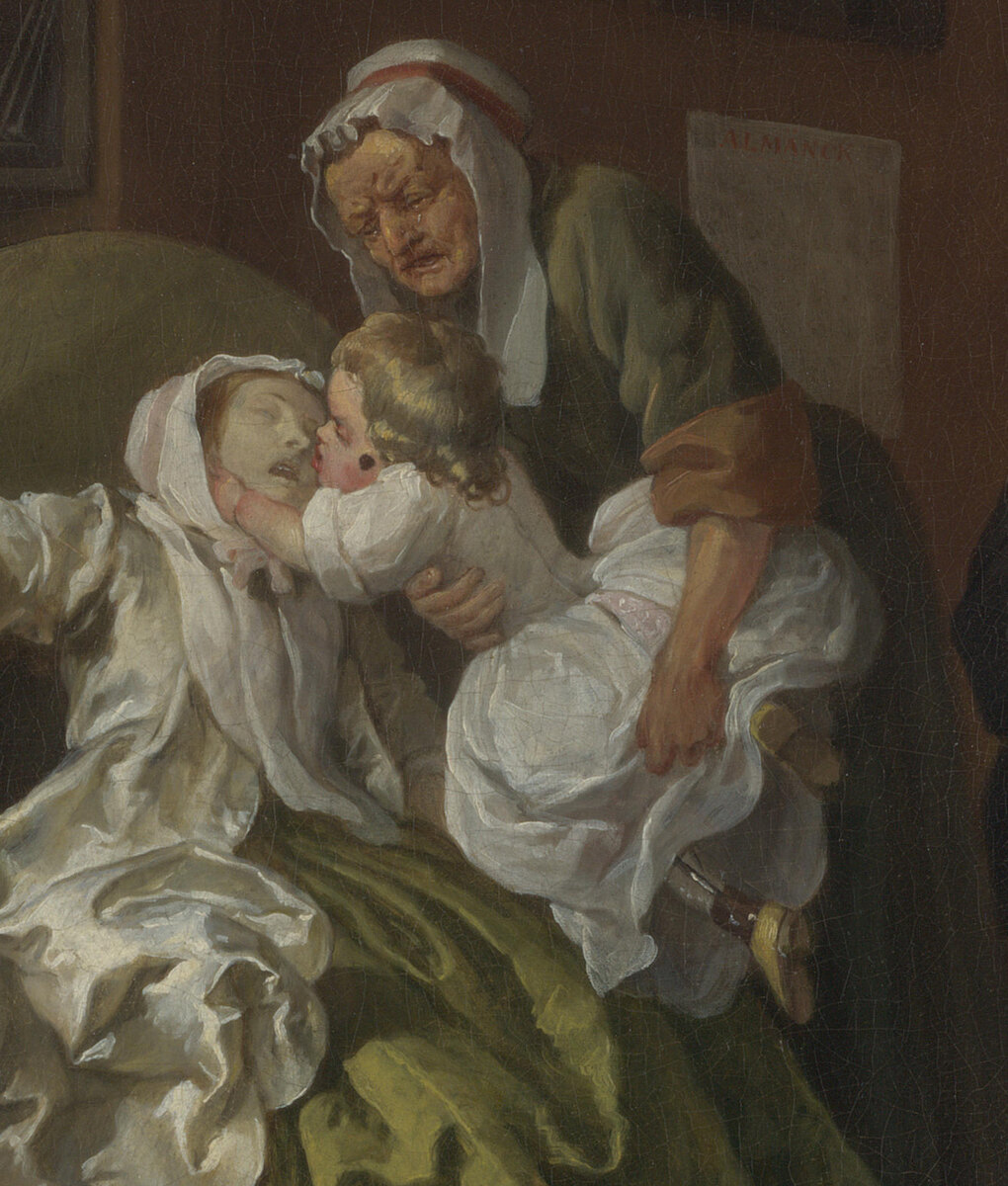
This is the room the whole series has been walking toward, and Hogarth stages it with the economy of a playwright: one light, six people, every one of them at the worst moment of their life. The comedy is gone. What is left is a plain account of a killing in a rented room, painted by a man who had seen the inside of a few.
The story is not quite finished. The Earl is dead and the lawyer is caught, but the contract in Room 1 had a third party, the Alderman, and the money went from him. The last room goes back to his house.
The original hangs with the other five in the National Gallery in London, where the series has been since the Gallery opened in 1824. Our hand-painted reproduction of The Bagnio is painted in oil on canvas from the National Gallery original, and the six scenes can be ordered singly or as a set to hang in order. More Hogarth in our William Hogarth collection.
Visible details, documented facts and interpretation are kept separate throughout this article. Hogarth left no written key to the series; readings of individual objects follow the National Gallery and Paulson and are marked as readings.