Loading cart…
No products in the cart.

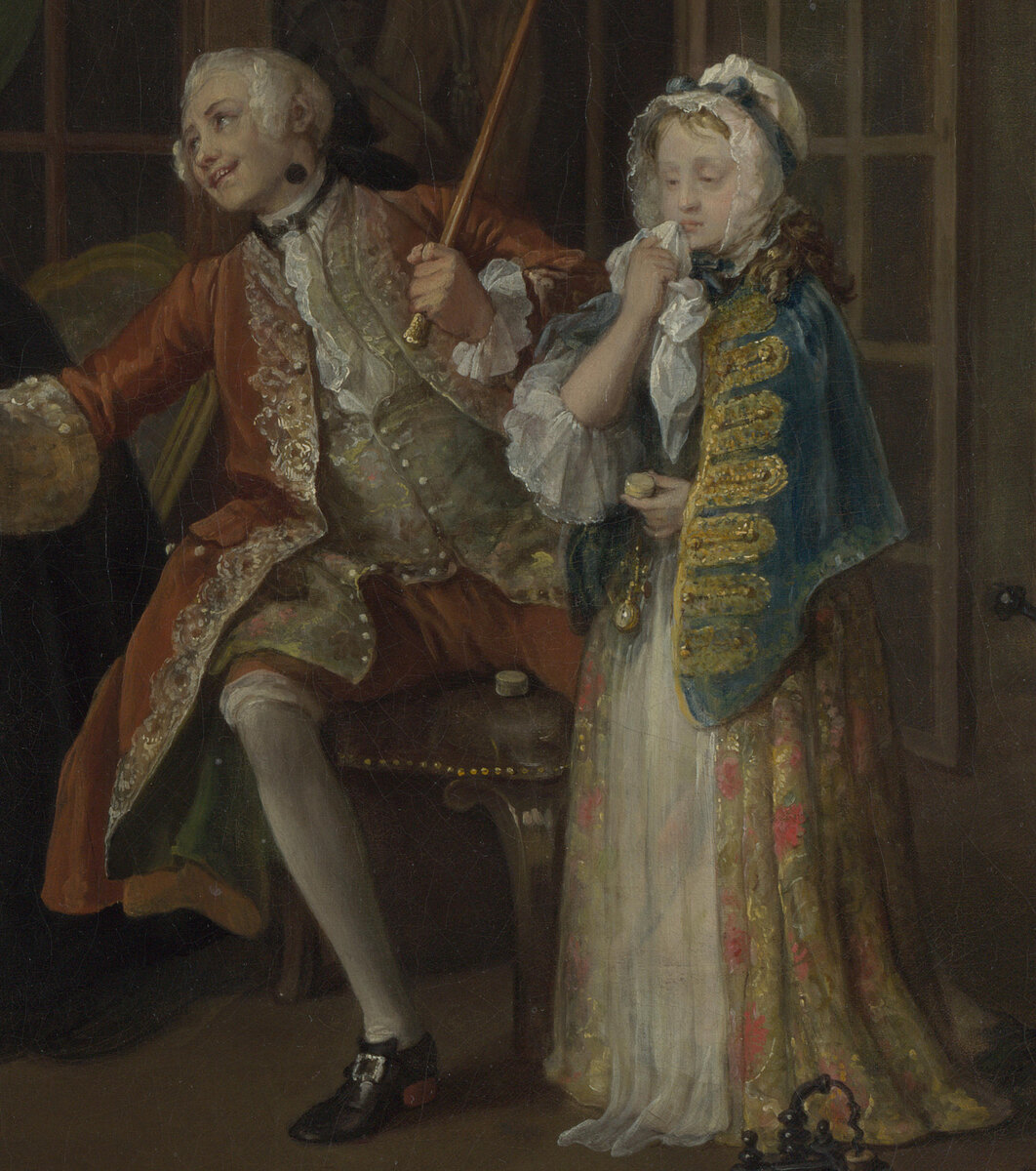
c. 1743 · Oil on canvas · National Gallery, London
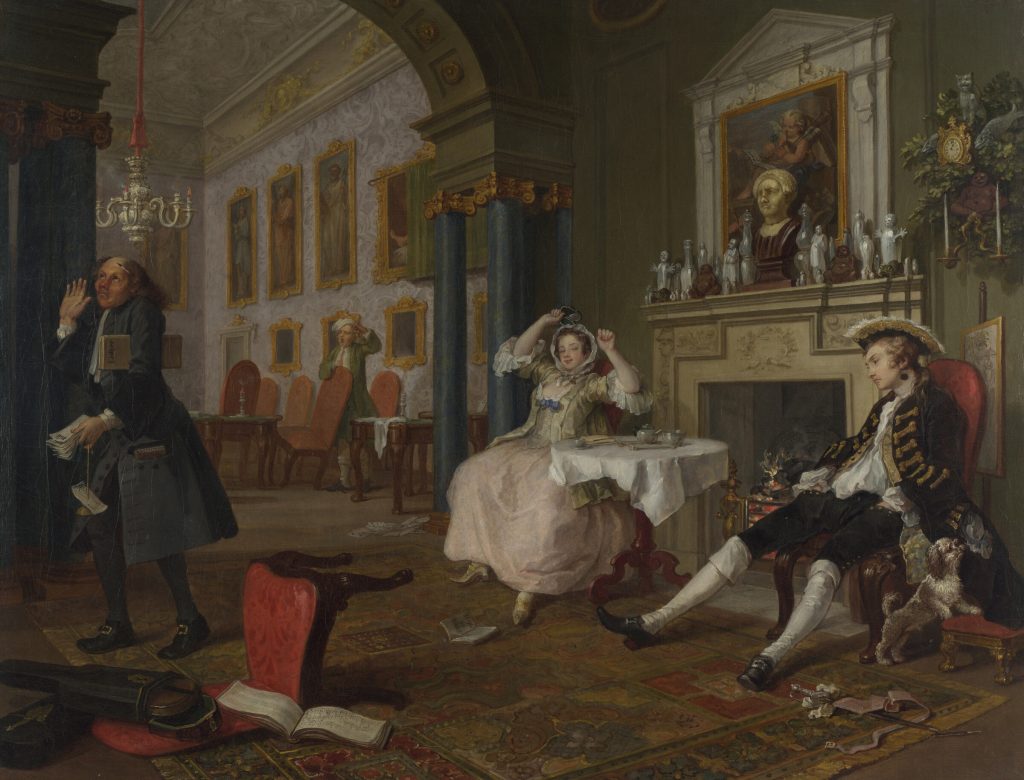
Start with the clock. It is on the wall at the top right, a rococo confusion of a fish, a cat and a Buddha, and it says twenty past twelve. The candles in the chandelier have burned to stubs. The fire is out. The steward is leaving. It is midday, and in this house it is the morning after.
Hogarth called the picture The Tête à Tête, a head to head, and it is the funniest of the six because it is built like a detective story: everything you need to reconstruct the night before is lying on the floor. The marriage in Room 1 was a few months ago. Nobody in this room has slept in their own bed, and possibly not in the house.
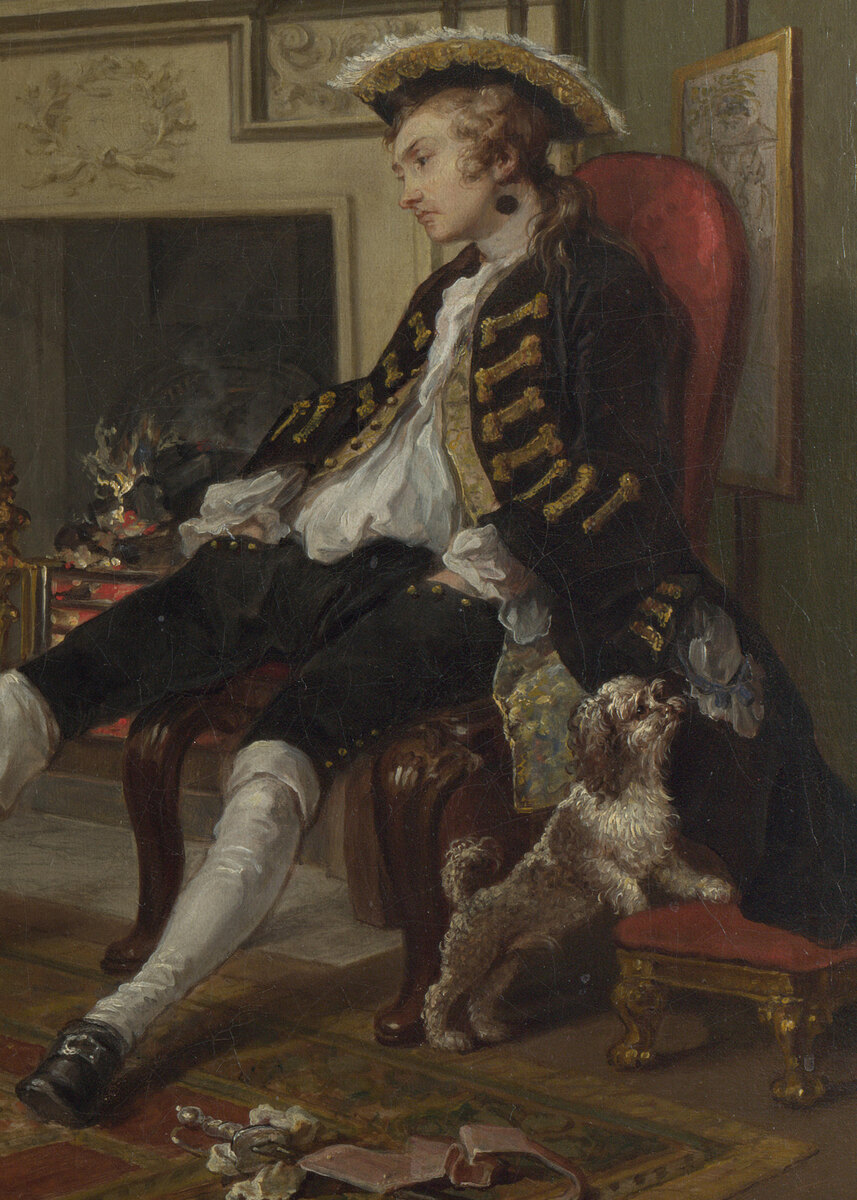
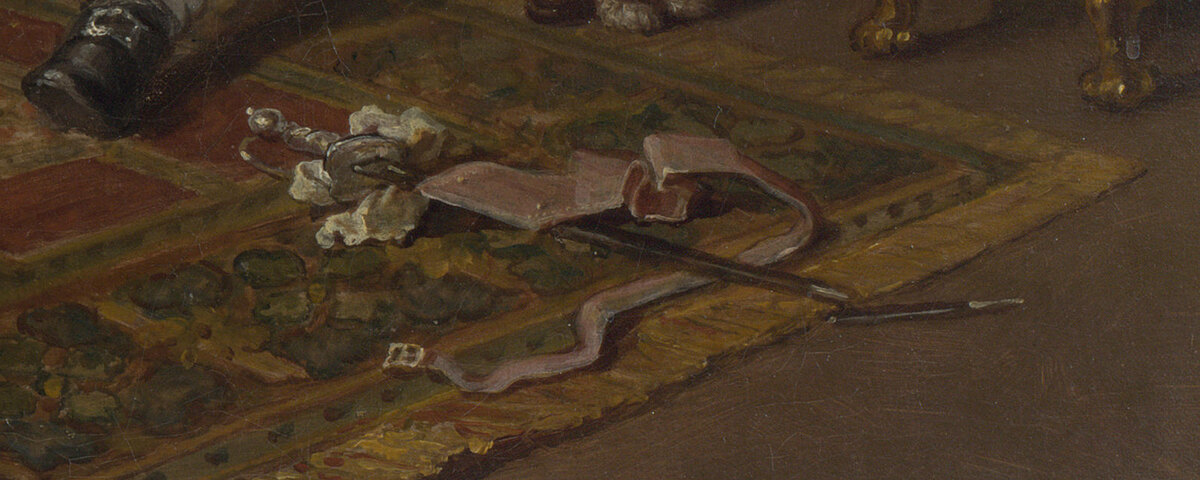
The Viscount has come in and dropped into a chair by the dead fire. He still has his hat on. His hands are in his pockets and his legs are out in front of him, and his face has the calm of the truly exhausted. His sword lies on the floor beside him, and it is broken: he was in a fight, and not a good one.
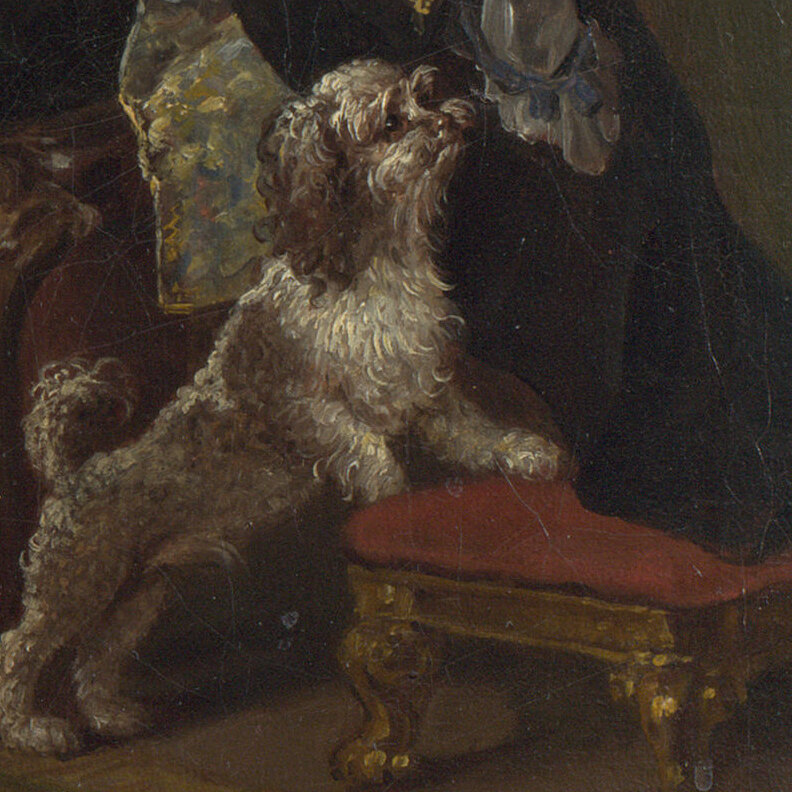
The dog does the detective work for you. It has its nose in his coat pocket and is pulling out a woman's lace cap. Where he spent the night is not in doubt. Hogarth loved dogs and used them for the truth, and this one is the most useful witness in the series.
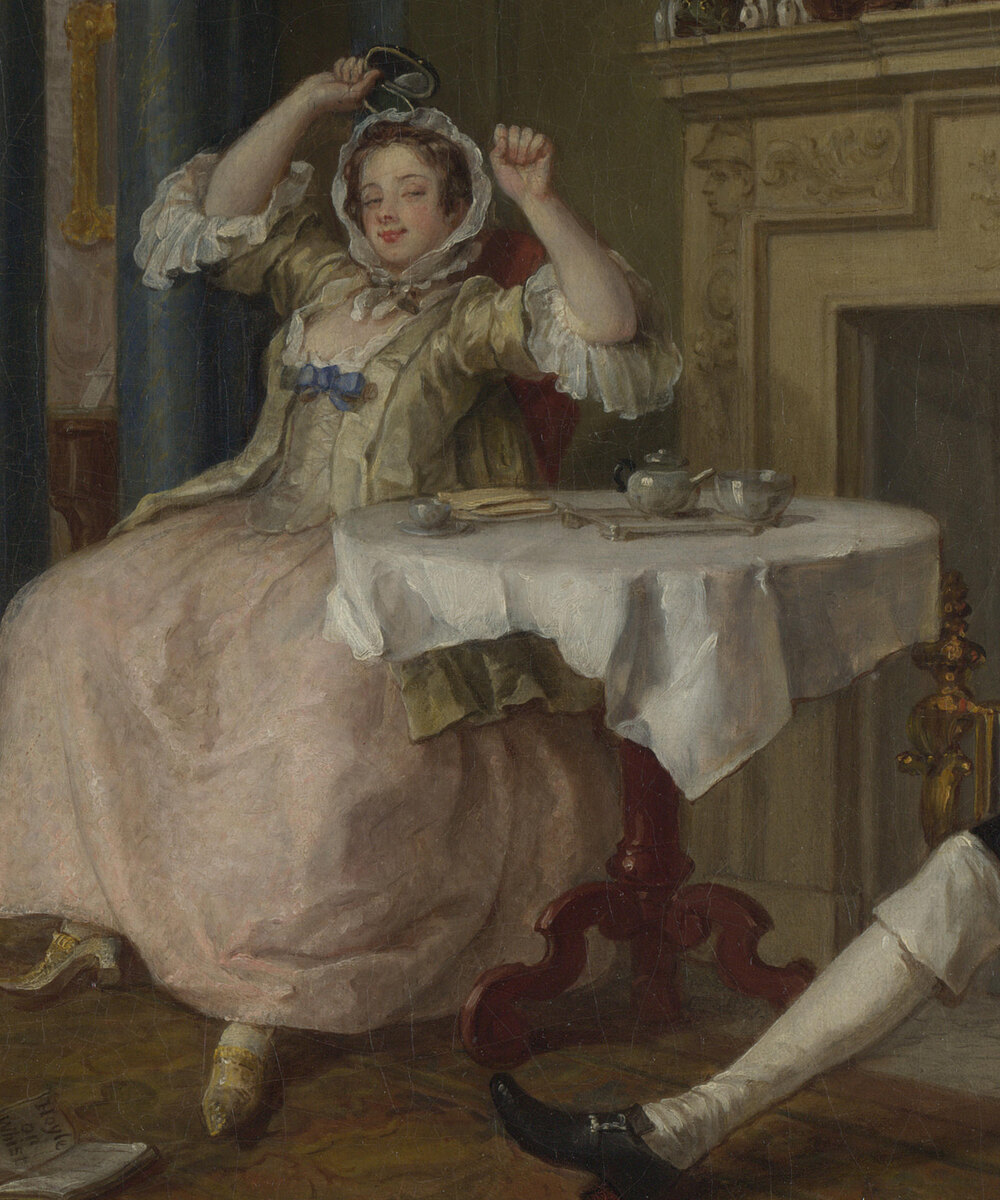
His wife has had a better night. She stretches with both arms over her head, one hand holding a small mirror, and smiles at nothing in particular. Behind her the chairs are pushed back from a card table and the cards are all over the floor. There was a party while he was out. She has been up as long as he has, and enjoyed it more.
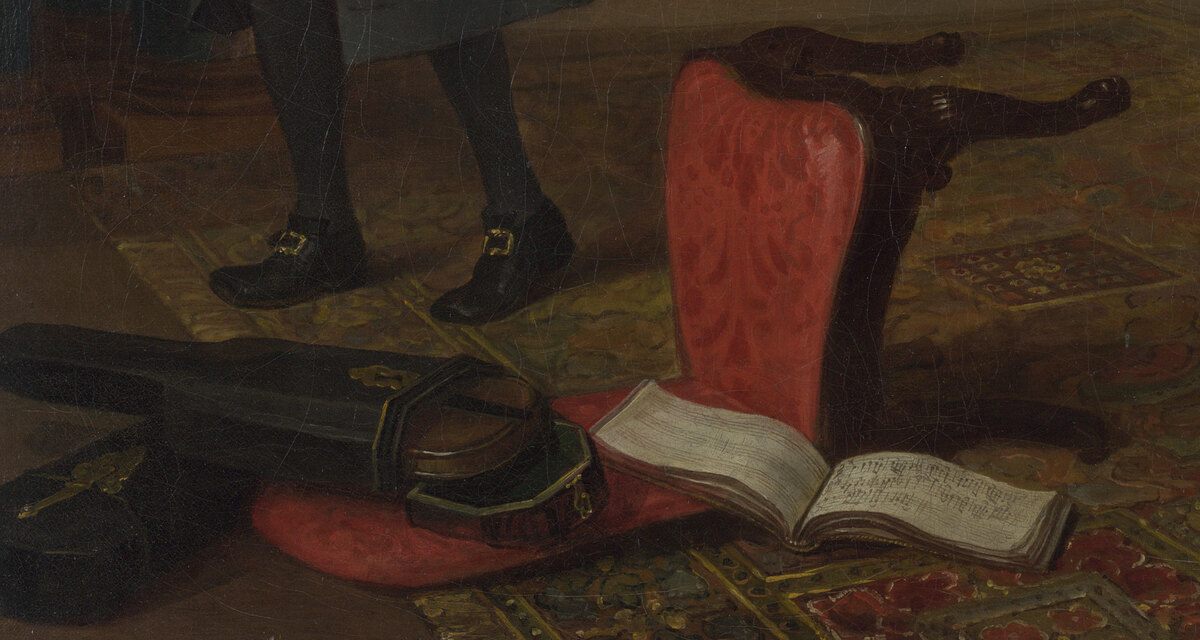
At the front an armchair has gone over on its back, with a violin case and a book of music beside it. Someone was playing, and someone left fast. Hogarth does not say who. The chair is the one piece of evidence he leaves open, and readers have been filling it in since 1745: a music master, a guest, a visitor who did not want to meet the husband on the stairs.
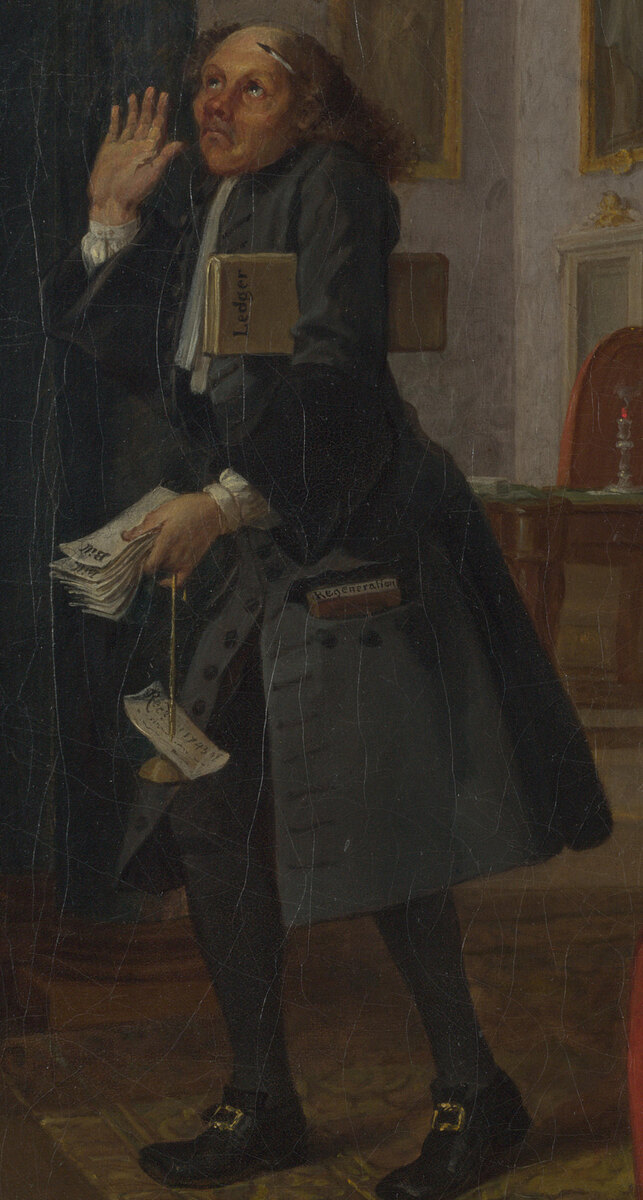
The man walking out on the left is the steward, and he is the only person in the picture who understands money. He carries a fistful of bills, and one receipt, on its own, hanging from the bundle. Everything else is unpaid. He has a ledger under his arm and a book in his pocket called Regeneration, which tells you he is a Methodist and disapproves of all of it. His hand is raised in the gesture of a man giving up.
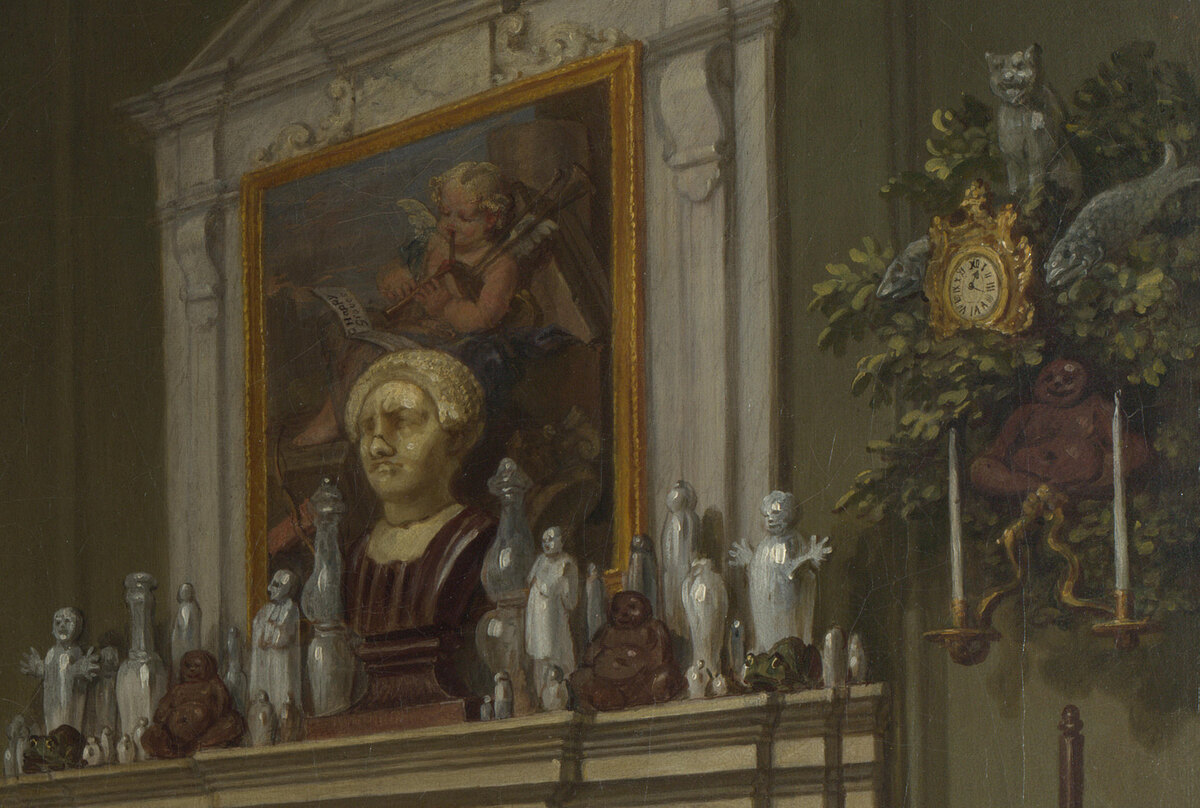
The house is already showing where the Alderman's money went. The mantelpiece is a jumble of china figures and a Roman bust with its nose broken off. Above it, a painting of Cupid among ruins, playing the bagpipes, an instrument that makes an unpleasant noise. On the far wall a religious picture is half hidden by a curtain, which in a house like this means it is not religious. The steward's bills are for all of this.
The picture is about a marriage that has stopped before it started. He has a mistress, she has company, they meet in the drawing room at noon like two guests at the same hotel. Hogarth's genius is that he shows none of it happening. He shows the room afterwards and lets you work it out, which is why the picture has never needed a caption.
It is also the picture where the money starts to disappear. The Alderman's gold in Room 1 is turning into china, candles and cards, and the only person counting is walking out of the door. One thing in this room is not about money at all. Look again at the patch on his neck, and then open the next door.
The original hangs with the other five in the National Gallery in London, where the series has been since the Gallery opened in 1824. Our hand-painted reproduction of The Tête à Tête is painted in oil on canvas from the National Gallery original, and the six scenes can be ordered singly or as a set to hang in order. More Hogarth in our William Hogarth collection.
Visible details, documented facts and interpretation are kept separate throughout this article. Hogarth left no written key to the series; readings of individual objects follow the National Gallery and Paulson and are marked as readings.