Loading cart…
No products in the cart.

c. 1743 · Oil on canvas · National Gallery, London
Save articles to your collection
Log in or create a free account, and this article will be waiting in your Private Collection.
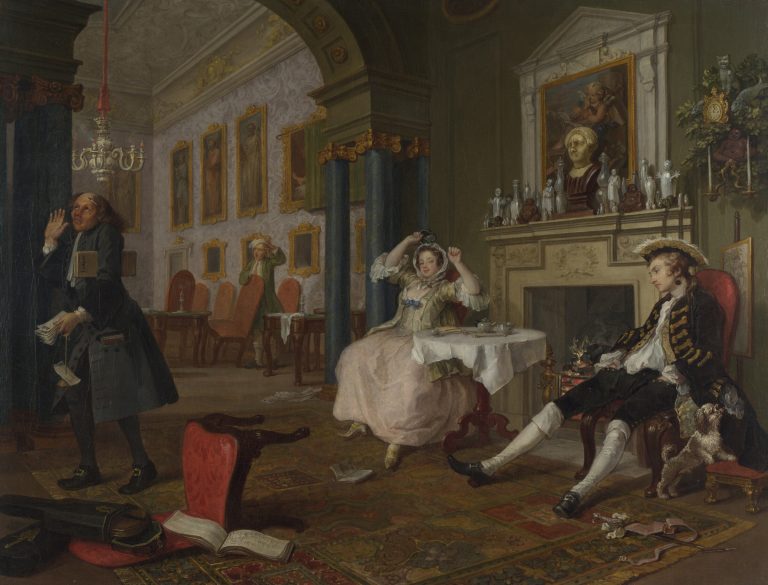
Log in or sign upRoom 1 ended with a deal and a dark mark on the groom's neck. Room 2 jumps forward a few months. The bargain worked: the young couple have a fine new house. But we have arrived too late. Whatever happened last night has already happened. Hogarth does not show it. He shows what it left behind.
Start with the clock on the wall. It says it is a little after twelve. In the afternoon. The candles have burned down, the fire is low, and the people of the house are only now getting up.
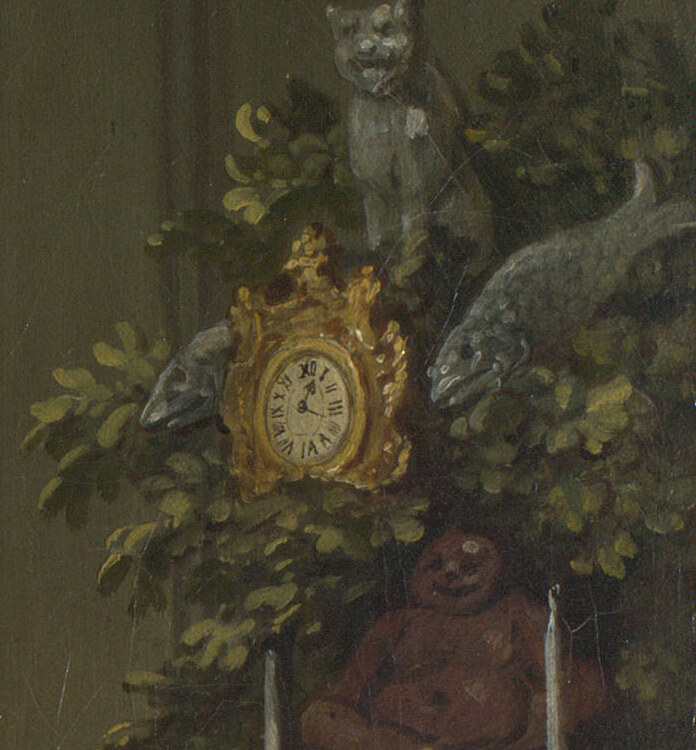
Look at the clock itself, because Hogarth clearly wanted you to laugh at it. The National Gallery describes two fish, a cat and a Buddha, all bursting out of a thicket of gilded leaves. It is the most expensive and the silliest object in the room, and that is the point. This house has money, and no taste.
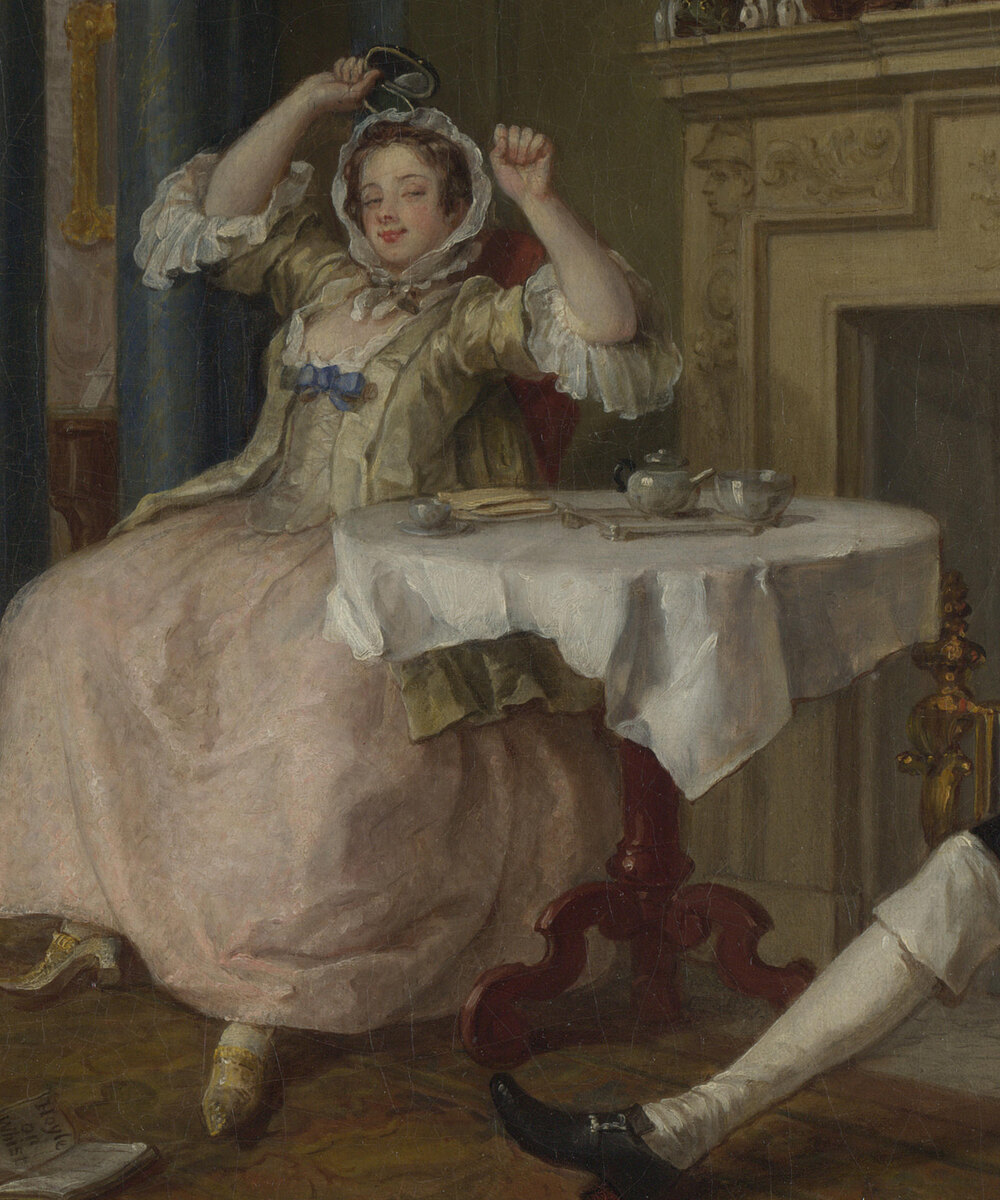
The wife sits at the breakfast table, stretching like someone who has not been to bed. She has spent the night at cards, the National Gallery says, and the evidence is everywhere: cards scattered on the floor, a book about card playing dropped near her feet, two music cases stacked on a chair that has been knocked over.
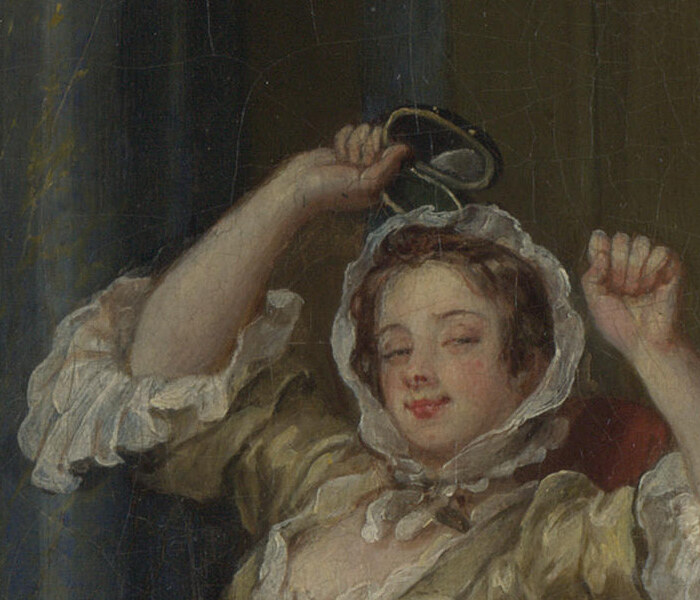
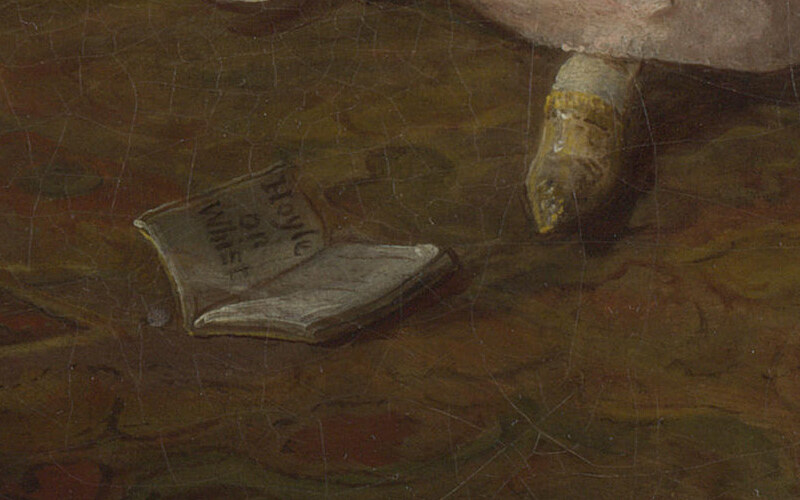
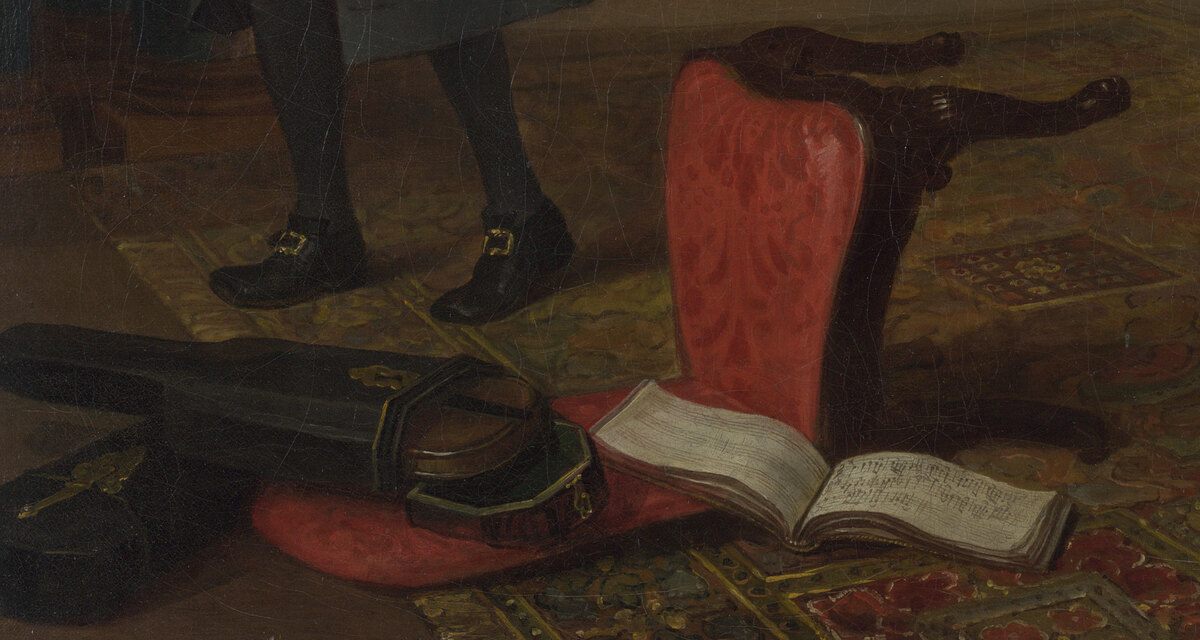
Notice what Hogarth is doing. Nothing in the room is a confession. Everything is a clue. We are not watching a story. We are reconstructing one, the way a detective reads a room the morning after.
A man in black is leaving the room with an armful of papers and his eyes turned up to heaven. He is the steward, the man who runs the household accounts, and the papers are unpaid bills. A single receipt is still on his spike, and it carries the date of the painting: 1743. He has tried. Nobody here wants to hear about money.
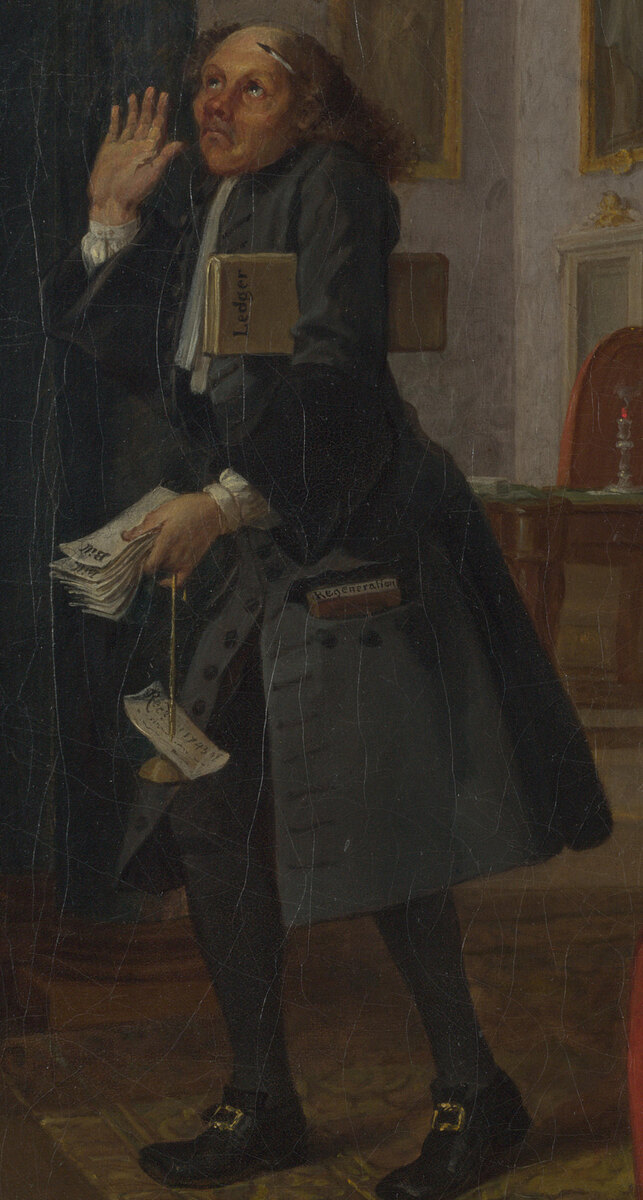
Here is the twist. Remember the half-finished building through the window in Room 1? The National Gallery says this is the newly completed home, paid for with the Alderman's money. The bride's dowry built this room. It is already being spent faster than it came in.
Now the husband. He has just come home, still in his hat, and has collapsed into a chair with his hands in his pockets and his legs stuck out. He looks young and worn out at the same time.
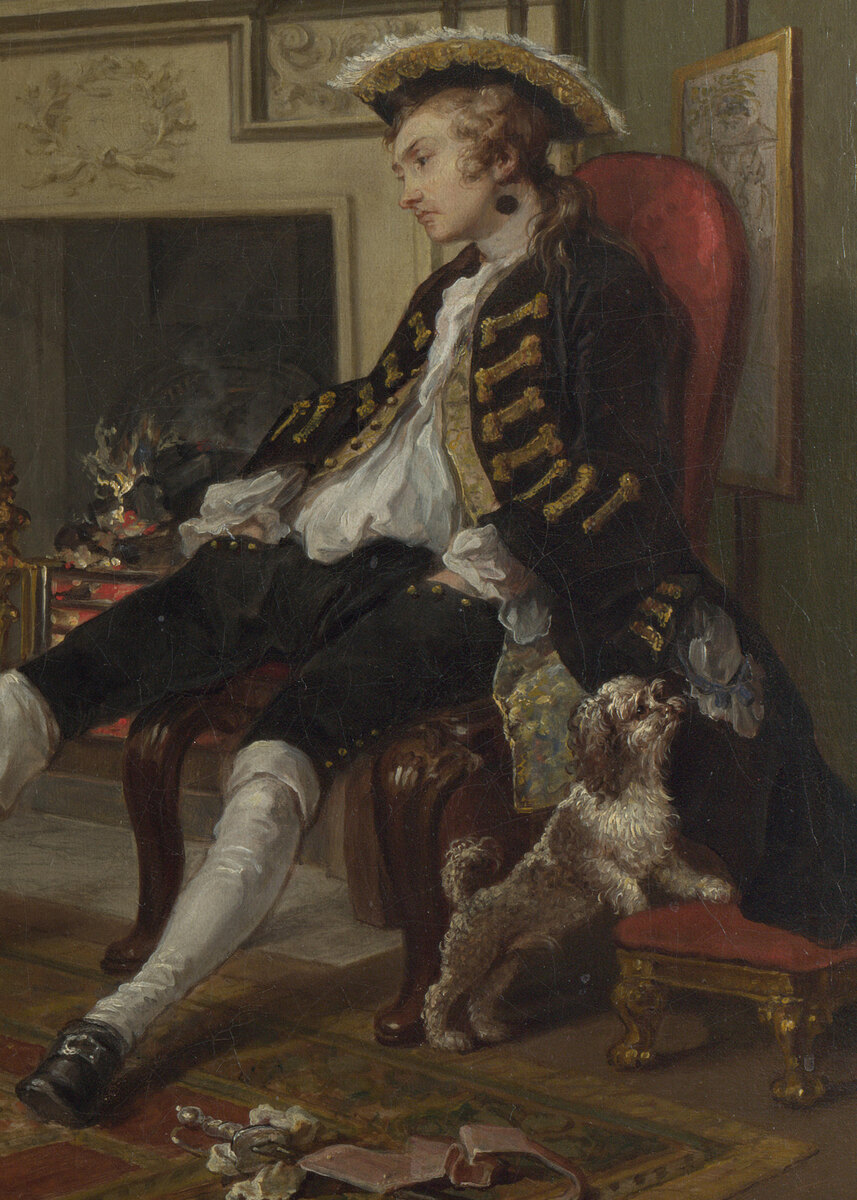
The little dog has found something in his coat pocket and is pulling it out: a woman's lace cap. It is not his wife's. And down on the floor lies his sword, broken, with another cap wound round the hilt.
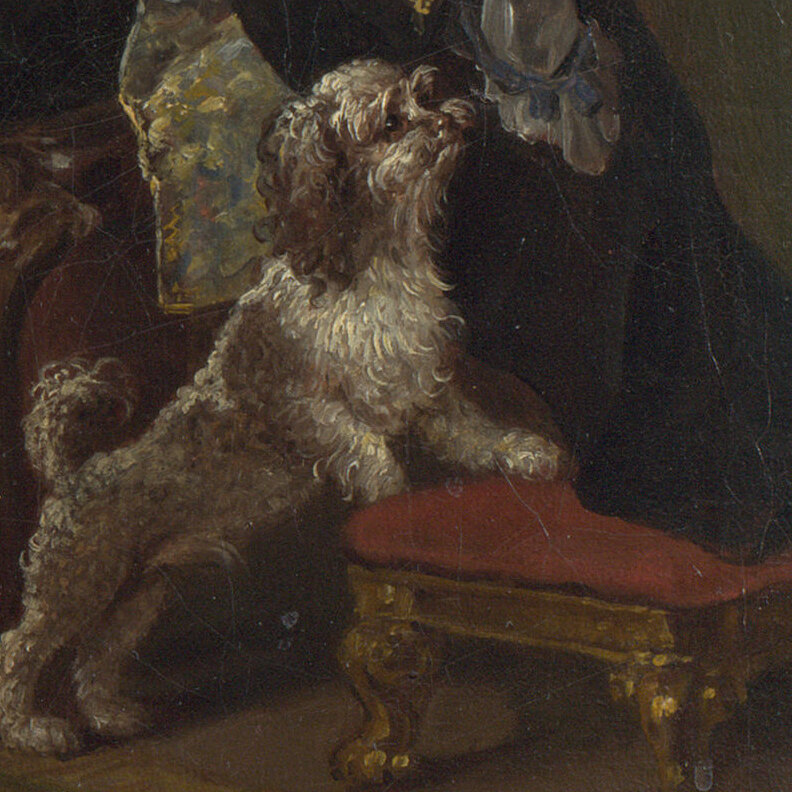
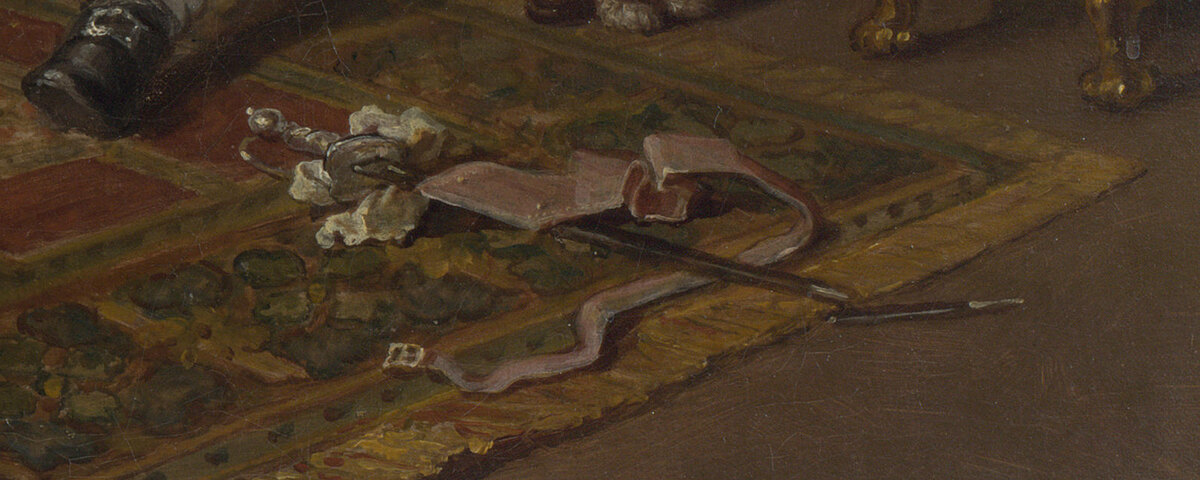
Hogarth gives us the evidence and stops there. Two caps and a broken sword point somewhere, and the room lets us draw our own conclusions. What we can say for certain is that husband and wife spent the night in different places, and both of them came home tired.
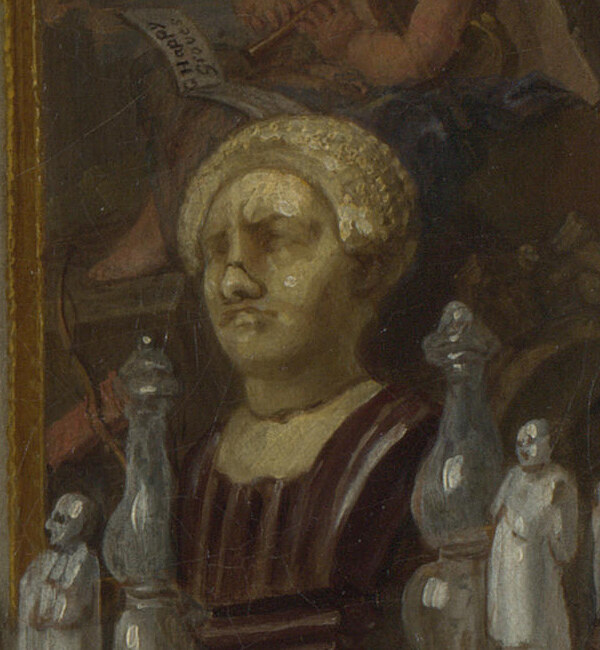
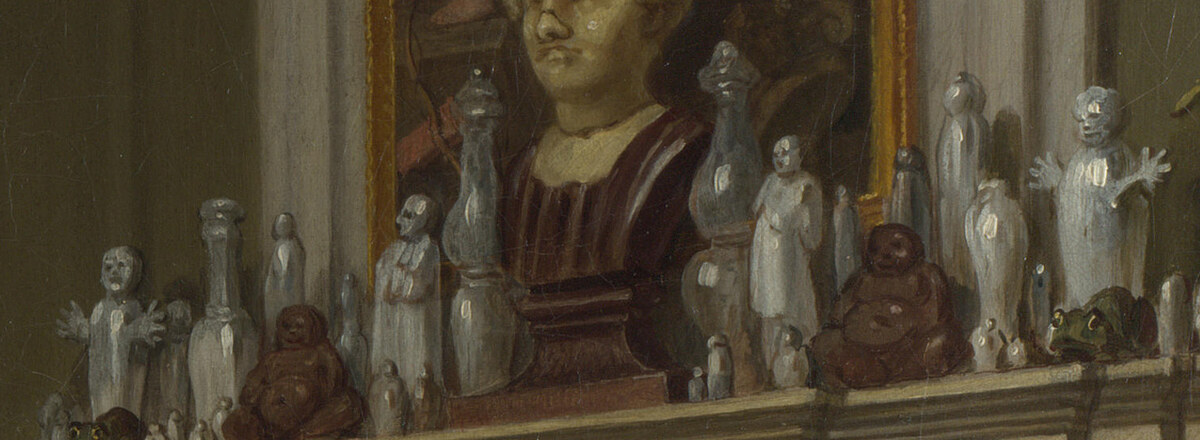
Look up at the mantelpiece and you will find Hogarth having fun with his customers. A battered antique bust sits in the middle, surrounded by rows of little china figures, the fashionable oriental knick-knacks that every rich house had to own. The National Gallery calls them bogus.
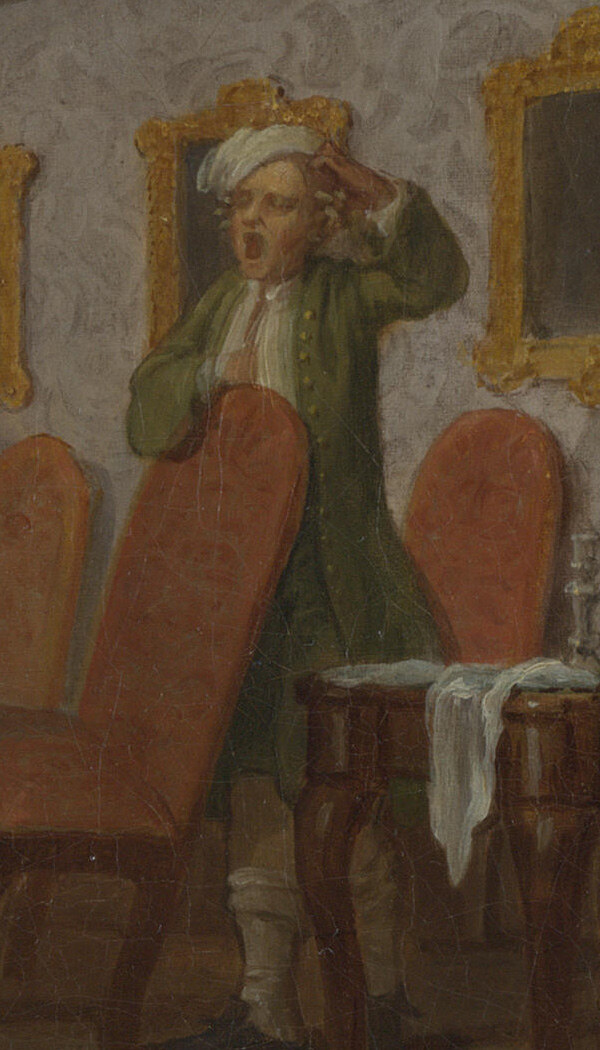
In the room beyond, a servant is only just getting up, yawning and scratching his head among chairs that have not been put straight. The whole house is out of order, and the people who are supposed to run it are asleep.
Step back and look at how the couple sit. He sprawls on one side of the fireplace, she stretches on the other. They do not look at each other, any more than they did in Room 1. The National Gallery calls the room a battleground, but nobody is fighting. They have simply stopped meeting. The social arrangement has succeeded. The marriage, as a daily life shared by two people, already looks exhausted.
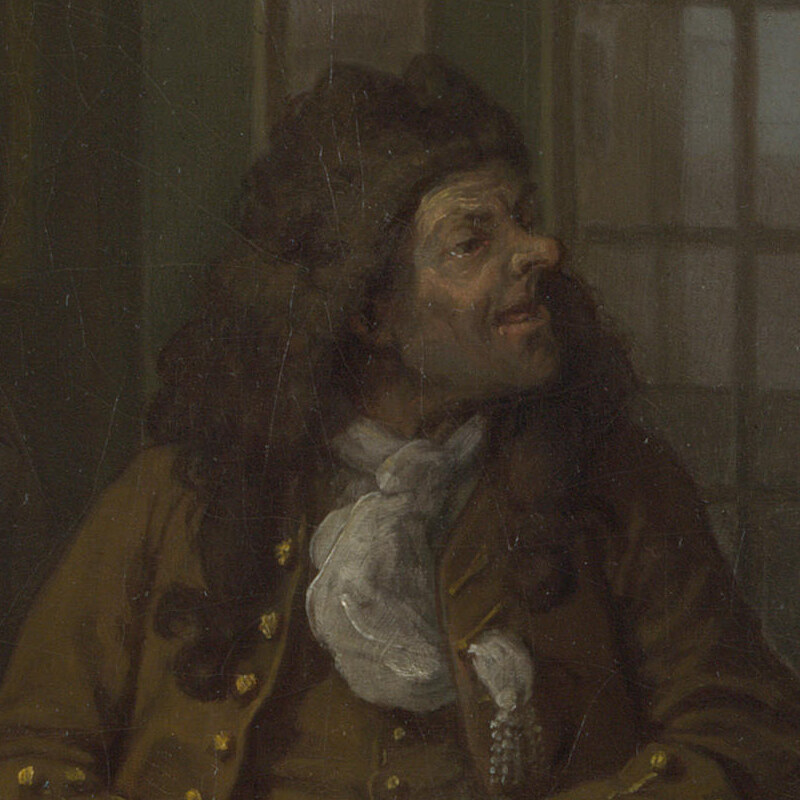
Look at the husband's neck again. Under the ear, on the same side as before, there is a black spot, the same dark mark we saw on the groom in Room 1. It has not gone away. It may have grown.
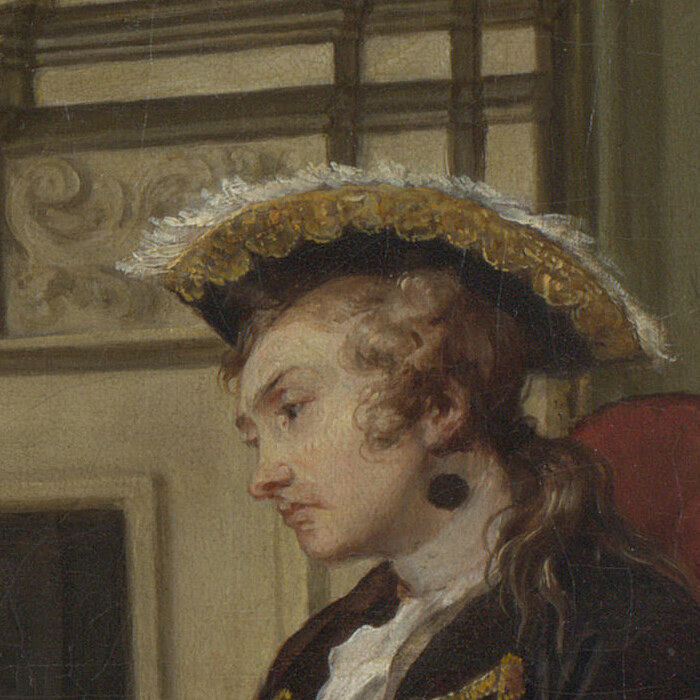
Hogarth repeats it on purpose. In a story told in six pictures, anything you see twice is a clue. So ask the question the painting is asking you: what is that black mark on his neck?
Room 2 leaves it unanswered. The next door follows that mark out of the drawing room and into a doctor's consulting room.
The original hangs in the National Gallery in London with the other five rooms. Our hand-painted reproduction of The Tête à Tête is painted in oil on canvas from the National Gallery original, and the six scenes can be ordered singly or as a set to hang in order.
This is Room 2 of The Six Rooms of a Bad Marriage. Missed the beginning? Start with Room 1, the deal.
Enjoyed this story?
Save articles to your collection
Log in or create a free account, and this article will be waiting in your Private Collection.
Log in or sign upWhat is visible in the painting, what the National Gallery says, and what ByMuseum reads into it are kept apart. Hogarth left no written key to the series.