Loading cart…
No products in the cart.

1851 to 1852 · Oil on canvas · Tate Britain, London
Save articles to your collection
Log in or create a free account, and this article will be waiting in your Private Collection.
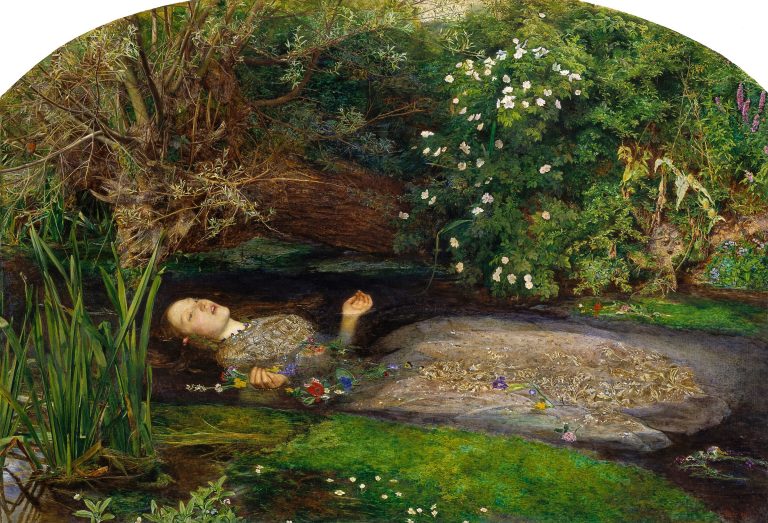
Log in or sign upNobody sees Ophelia drown in Hamlet. Her death happens offstage and is reported by the queen, Gertrude, in one long speech, and it is that speech, not the scene, that John Everett Millais painted. Everything in the picture is in it: the willow, the garlands, the dress spread out on the water, the girl still singing as she goes down.
There is a willow grows askant the brook,
William Shakespeare, Hamlet, Act 4, Scene 7
That shows his hoar leaves in the glassy stream;
There with fantastic garlands did she come
Of crow-flowers, nettles, daisies, and long purples.
…
Her clothes spread wide,
And mermaid-like awhile they bore her up;
Which time she chanted snatches of old lauds,
As one incapable of her own distress.
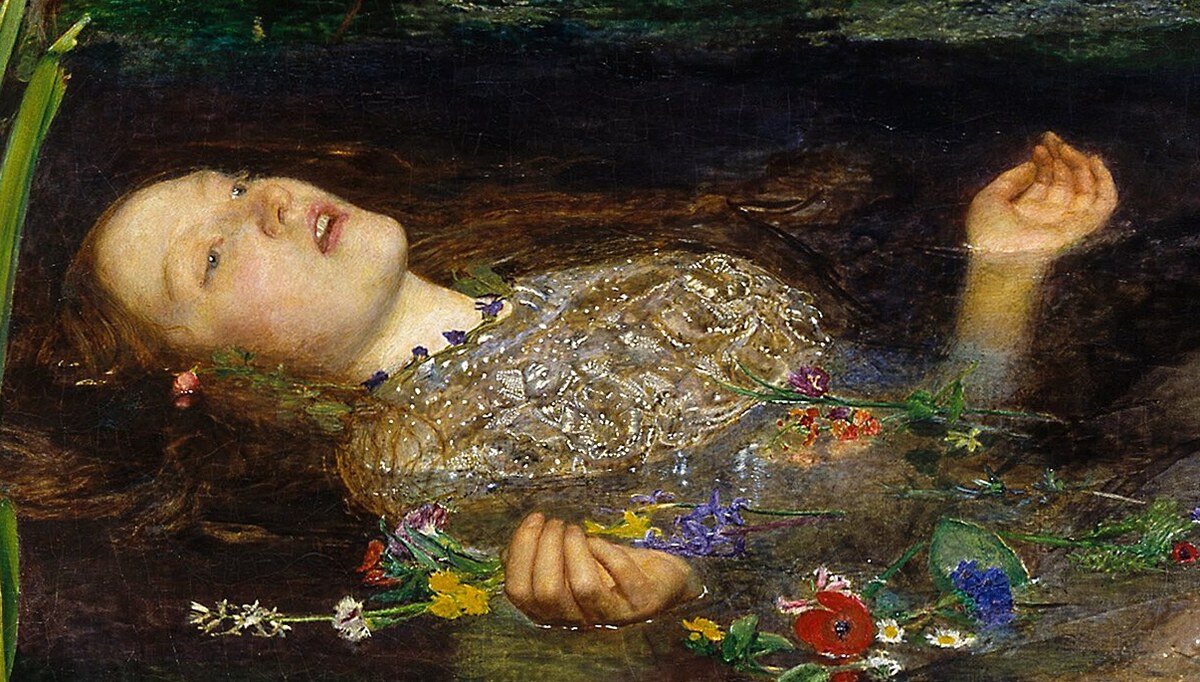
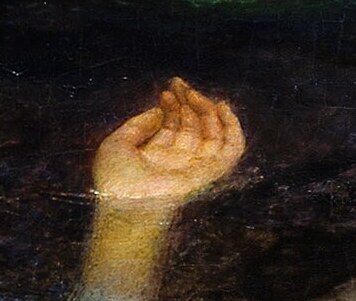
Millais paints the moment Gertrude describes as awhile: Ophelia is still afloat, her dress holding her up, her hands open, her mouth open in the middle of a song. She is not struggling. The horror of the painting is that she seems calm, and that the whole bank around her is in flower.
The Victorians read flowers the way we read emoji, and Millais chose every plant in this painting for what it meant as well as for how it looked. Here they are, the way a visitor at the Royal Academy in 1852 would have read them.
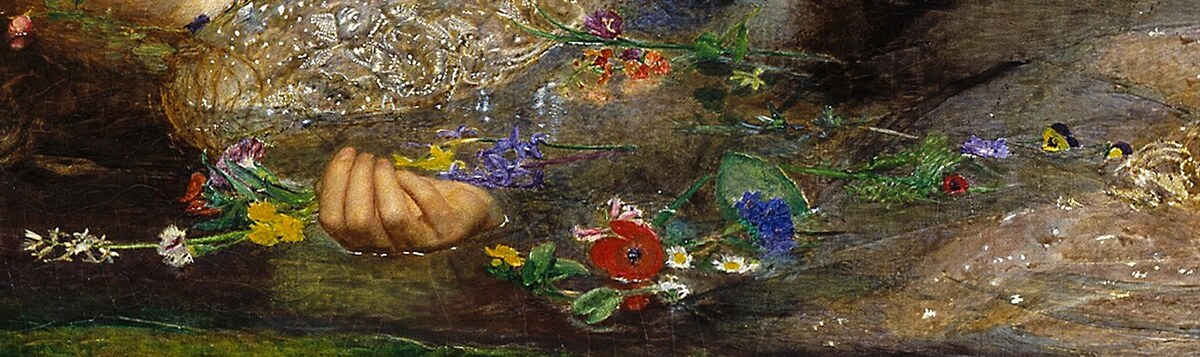
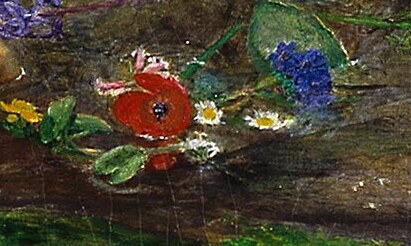
The red flower. The only strong red in the whole canvas, floating by her right hand. It is usually read as a poppy, the flower of sleep and death, although the Tate's own list of the plants leaves it out. Shakespeare does not mention it.
Daisies. Innocence, and one of the flowers in Gertrude's list. They float with the poppy near her hand.
Pansies. Love in vain, or thoughts; Ophelia hands out pansies earlier in the play, saying they are for thoughts. They float on her skirt.
Violets. She wears a chain of them round her neck. They mean faithfulness, and early death; in her mad scene Ophelia says the violets all withered when her father died.
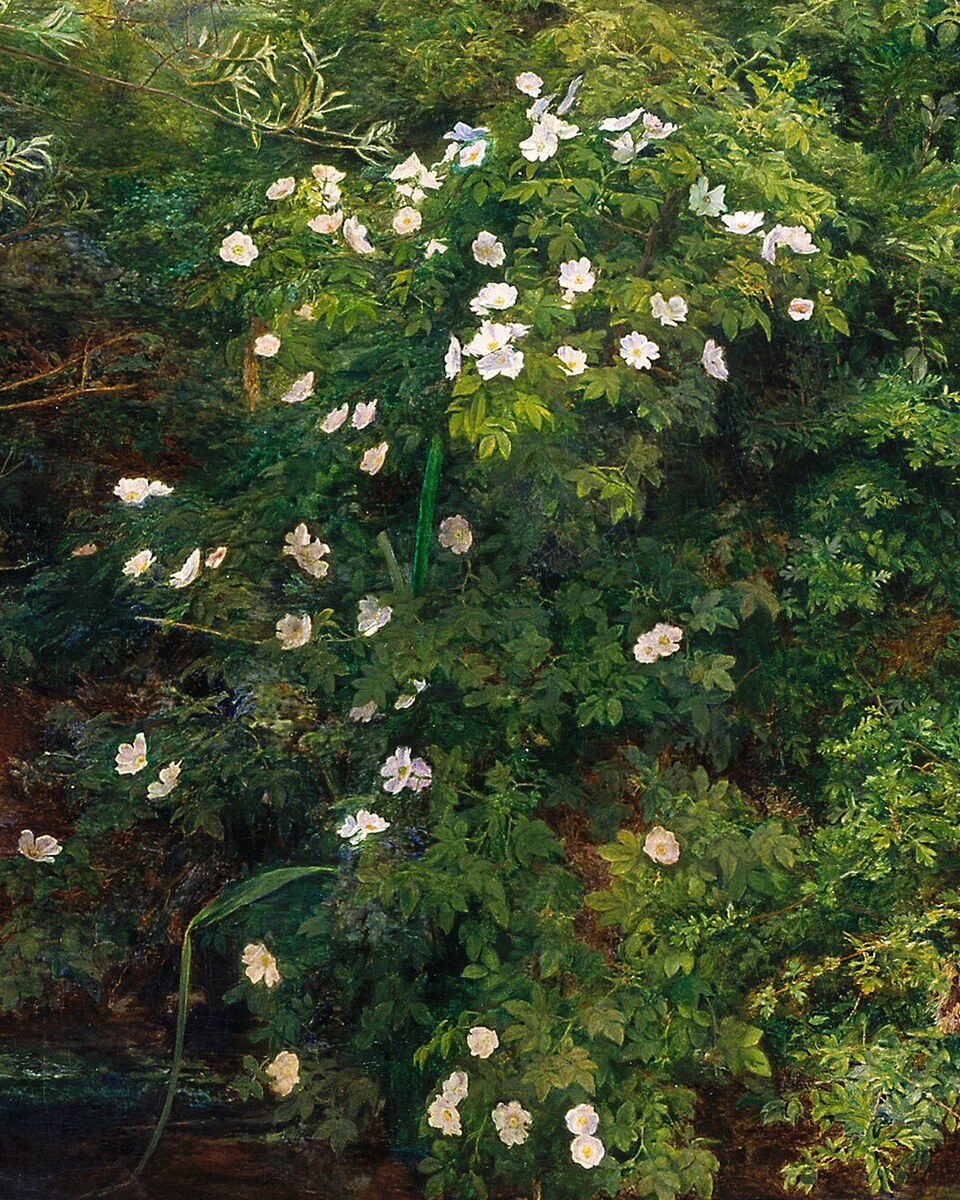
Roses. Wild dog roses tumble down the bank above her and drift by her cheek and on her dress. Her brother Laertes calls her the rose of May. Youth, love and beauty.
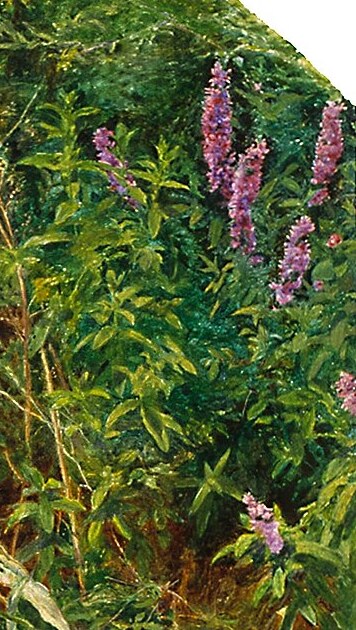
Long purples. The tall purple spikes at the top right are loosestrife, which is how most readers identify the long purples in Gertrude's speech; Shakespeare adds, a little rudely, that shepherds called them something else.
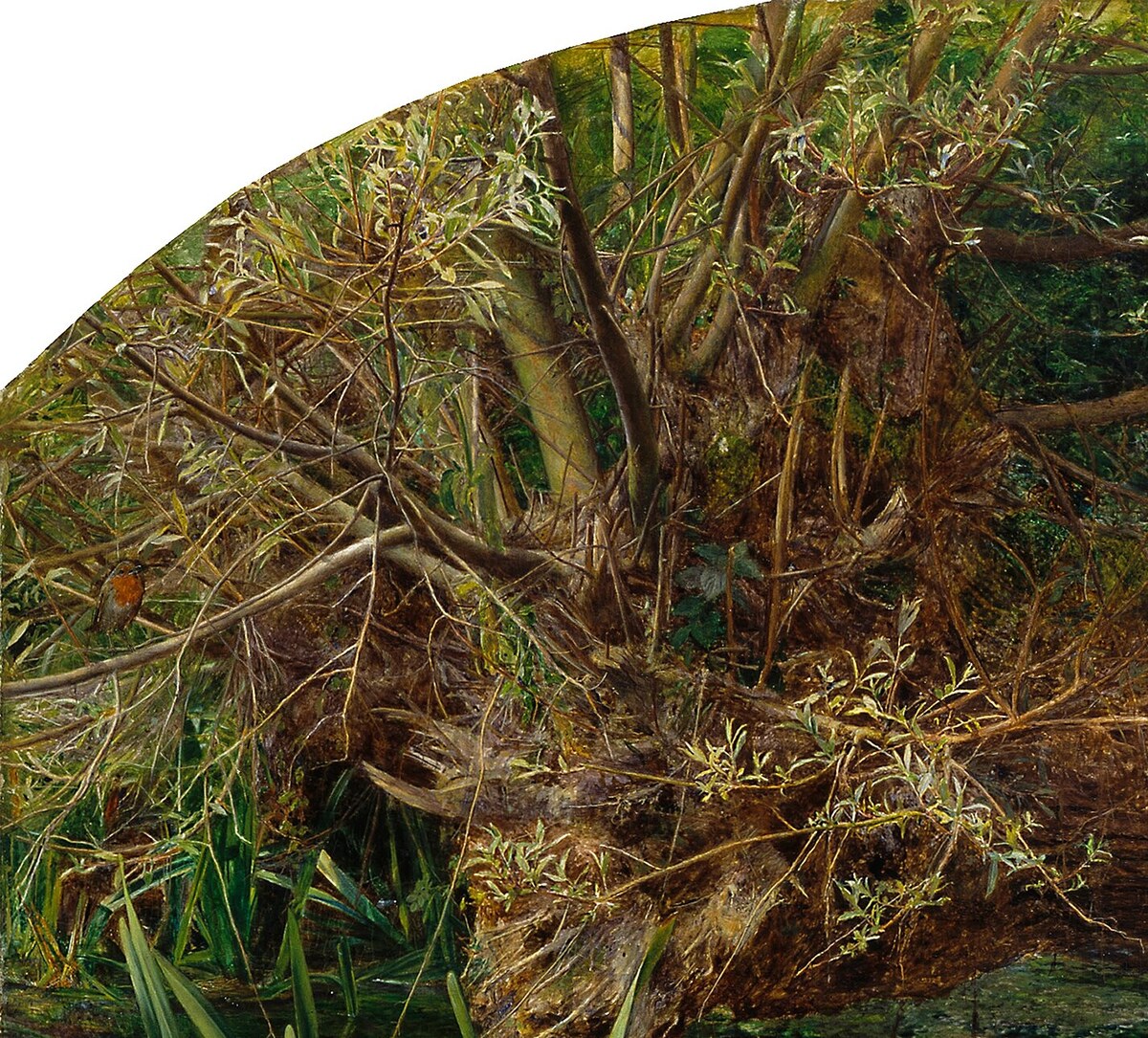
The willow. The tree she climbed to hang her garlands, and whose branch broke. Willow was the tree of forsaken love. Millais painted it leaning out over the water exactly as Gertrude says.
Nettles, meadowsweet, pheasant's eye and fritillary. Pain, futility and sorrow, twice: the Tate's catalogue identifies all four among the plants around her. Nettles are in Gertrude's list; the others are Millais's additions to it.
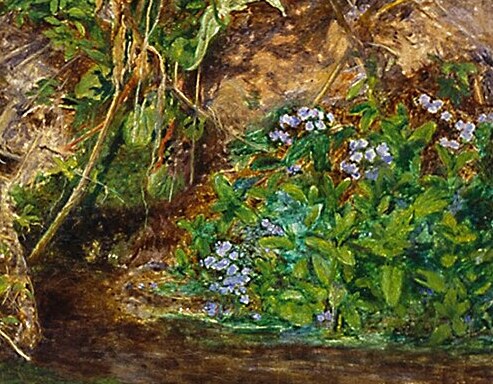
Forget-me-nots. The small blue flowers on the far bank and floating near her are usually read as forget-me-nots, which need no translation.
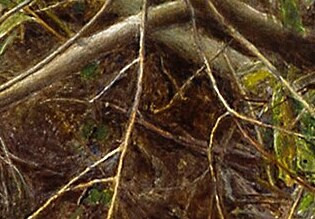
And a bird. Hidden in the willow at the top left is a robin. It is not a flower, but it is part of the code: in her madness Ophelia sings For bonny sweet Robin is all my joy. Most people never find it.
The flowers are real, and they did not all bloom at the same time, which is the first clue to how the picture was made. Millais painted the landscape first, outdoors, on the bank of the Hogsmill River near Ewell in Surrey, for about five months from July 1851. He worked on it day after day, sitting in the same spot, painting leaf by leaf with a tiny brush on a wet white ground so the colours would glow. His letters complain about the flies, the wind, the swans, and a farmer who threatened him for trespass.
That is why the painting looks the way it does: not a scene composed in a studio but a single stretch of English riverbank, observed so closely that botanists have identified almost every plant in it. The Pre-Raphaelites, of whom Millais was then the youngest and most gifted, believed in painting nature exactly as it was. This is the most famous result.
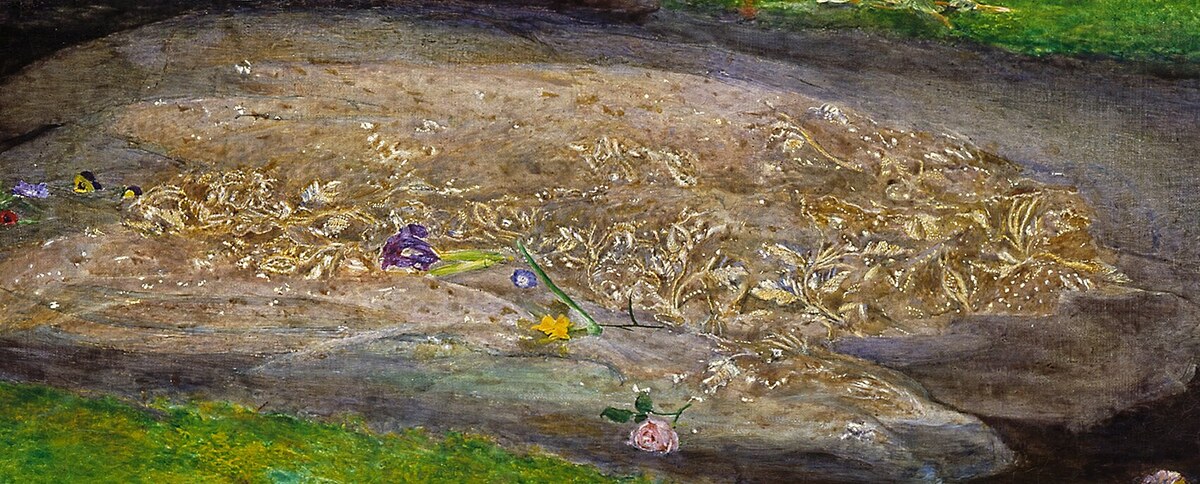
The girl was painted that winter, indoors, in London. The model was Elizabeth Siddal, nineteen, a milliner's assistant with red hair who later married the painter Dante Gabriel Rossetti. Millais bought an antique embroidered dress for four pounds, filled a bath with water in his studio in Gower Street, and had her lie in it, fully dressed, for hours at a time, with oil lamps underneath to keep the water warm.
One day the lamps went out and Millais, absorbed in the painting, did not notice. Siddal did not complain. She fell seriously ill, her father paid fifty pounds in doctor's bills, and he then demanded that Millais pay them back. The story is told in the painter's family biography and in the Tate's account of the painting, and it is the reason the face in this painting looks so genuinely cold.
On the surface, it is an illustration of a speech: a girl driven mad by the death of her father at the hands of the man she loved, drifting to her death singing. Underneath, it is the Victorian age's favourite subject, beauty and death in the same frame, painted so exactly that you cannot look away. The flowers are the story told a second time, in a language everyone then could read.
It has become the image of Ophelia, the one every later version answers. Waterhouse painted her three times, sitting on the bank before the fall; Cabanel painted her slipping off the branch. Millais painted the end, and made it beautiful, which is the thing people have argued about ever since.
In Tate Britain in London. Henry Tate bought it in 1892 and gave it to the nation in 1894. It is oil on canvas with an arched top, 76.2 by 111.8 centimetres, smaller than most people expect, and the greens are as bright as the day it was painted because of the white ground underneath.
It is one of the most requested paintings we make, and one of the most demanding: the riverbank has to be painted leaf by leaf, as Millais did, or the picture goes flat. Our hand-painted reproduction of Ophelia is painted in oil on canvas from the Tate original, arched top included if you want it. More Victorian painting in our John Everett Millais collection.
Enjoyed this story?
Save articles to your collection
Log in or create a free account, and this article will be waiting in your Private Collection.
Log in or sign upFlower meanings follow the Victorian language of flowers as the Tate's catalogue reads the painting; readings of individual plants are traditional, not documented by Millais.

Man Writing a Letter
Gabriel Metsu, c. 1664
The gallery list
Every painting is already 50% off. Join the list and we will send you an extra $15 code, plus first access to new collections.
No spam. Unsubscribe anytime. · Privacy Policy
Welcome
Your $15 code is on its way. Explore the gallery while you wait.