Loading cart…
No products in the cart.

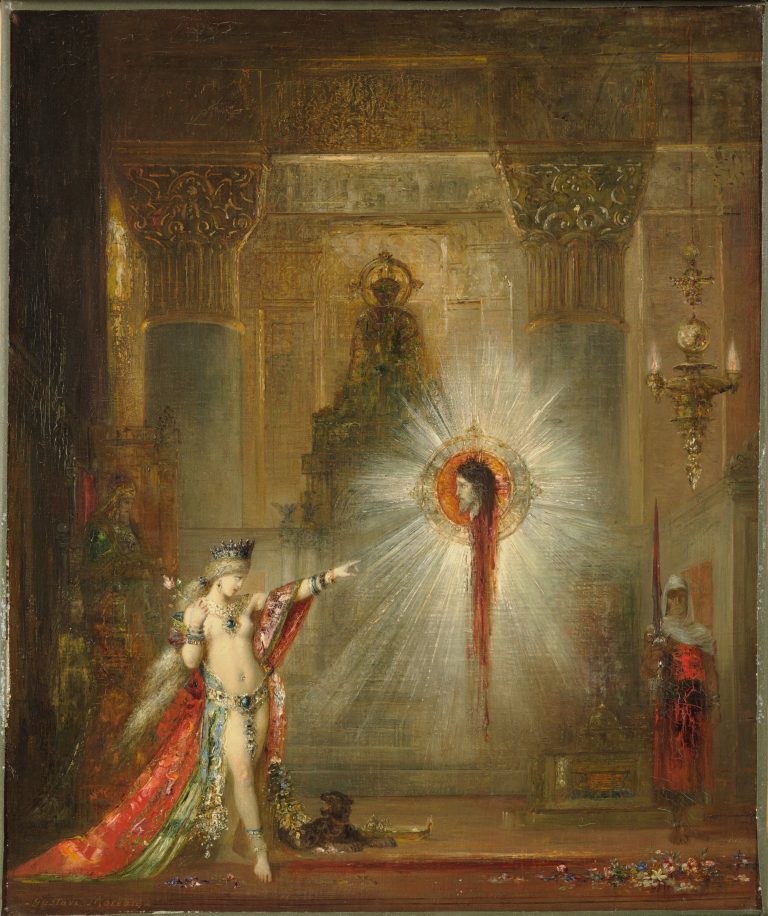
c. 1876 to 1877 · Oil on canvas · Harvard Art Museums (Fogg Museum), Cambridge, Massachusetts
Save articles to your collection
Log in or create a free account, and this article will be waiting in your Private Collection.
Log in or sign upA young woman in a crown and jewels, almost naked, stands in the corner of a dark golden palace. She has just stopped dancing. Her arm shoots out and her finger points at something in the middle of the room: a man's severed head, hanging in the air, surrounded by a blaze of white light, with blood running down from the neck.
The woman is Salome. The head belongs to John the Baptist. In the Bible story she asks for his head as a reward for her dance, and it is brought to her on a dish. In this painting it comes back on its own, floating and shining, and it looks straight at her. The title, L'Apparition, is French for "the apparition", or "the vision".
The story comes from the Gospels of Mark and Matthew. John the Baptist, the preacher who baptised Jesus, had condemned King Herod Antipas for marrying Herodias, his brother's wife. Herod had John arrested. At Herod's birthday feast, Herodias's daughter danced for the guests, and the king was so pleased that he promised to give her anything she asked for. Prompted by her mother, she asked for the head of John the Baptist on a platter. Herod did not want to, but he had made a promise in front of his guests. John was beheaded in prison and the head was brought to the girl.
The Gospels never give the daughter's name. It comes from the Jewish historian Josephus, who calls her Salome. Over the centuries she became one of the most painted women in art, and by the time Moreau took up the story she had turned into something the Bible never describes: a dangerous, seductive dancer.
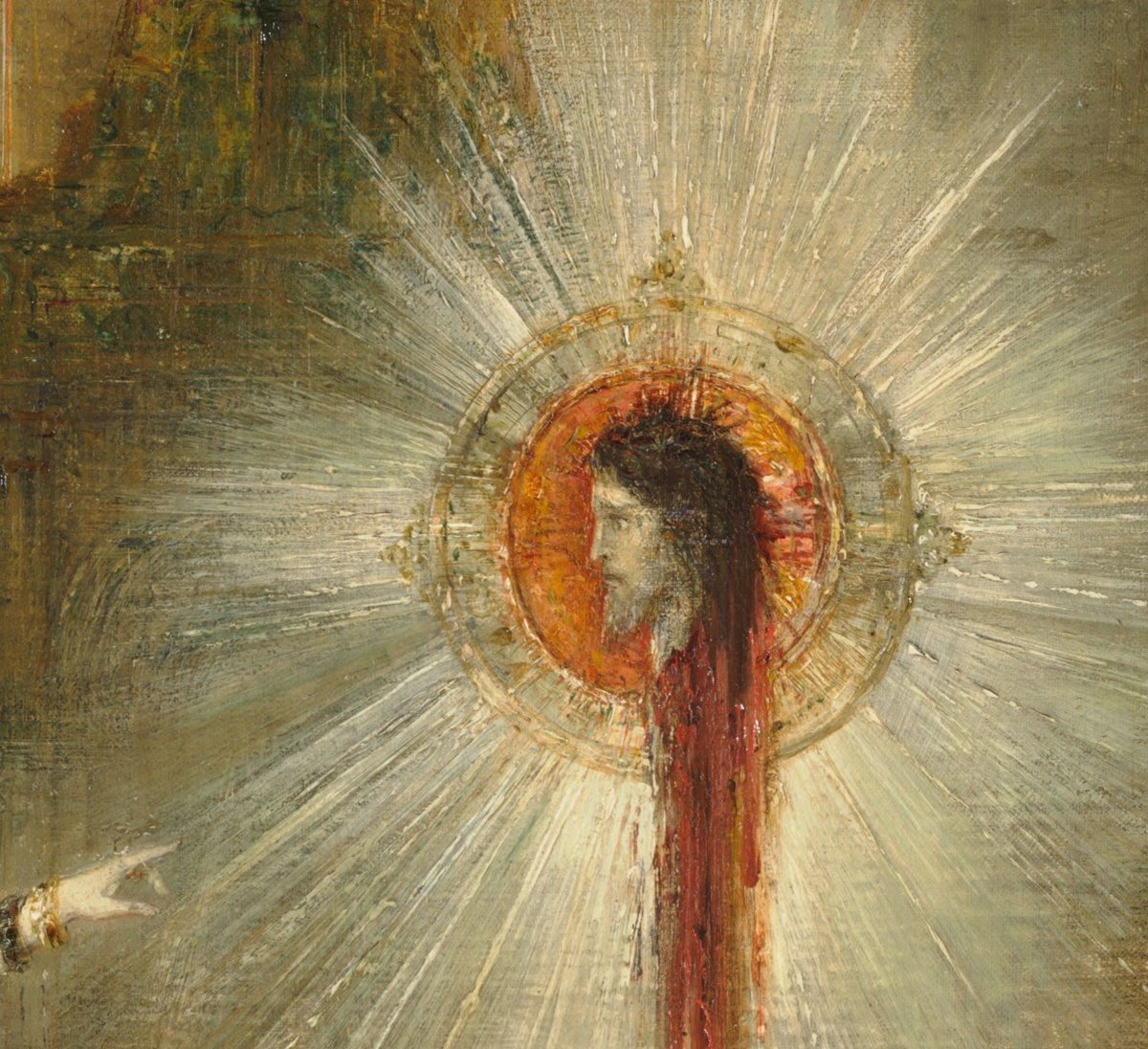
Because Moreau invented this moment. Nothing like it happens in the Bible. He imagines that, after the dance, the head of the man Salome has had killed rises up in front of her as a vision, glowing like a saint in a church window.
Look at how he paints the light. The rays are scratched and dragged across the canvas in thin white strokes, so the whole centre of the picture seems to vibrate. The head sits in a ring of red and gold, like a halo, and a long line of blood falls from it straight down. It is holy and horrible at the same time.
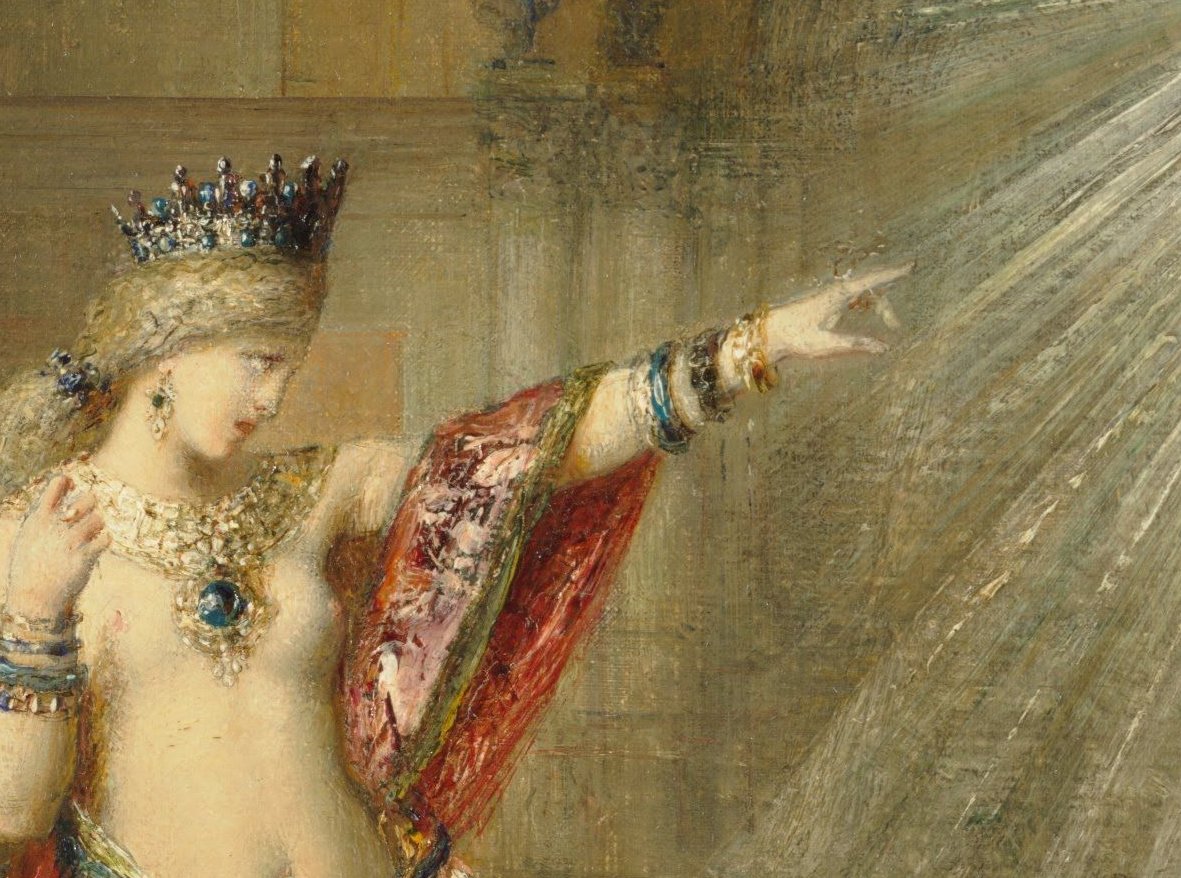
Salome's reaction is the other half of the picture. Her body is still turned away, as if she has stopped mid-step. Only her arm goes forward, stiff and straight, pointing at the head. She does not scream or run. She stares.
What you can see, and what is interpretation: the pointing arm, the fixed stare and the glowing head are all there in the paint. Whether she is afraid, defiant or fascinated is for the viewer to decide. Moreau leaves her face calm enough to be read all three ways.
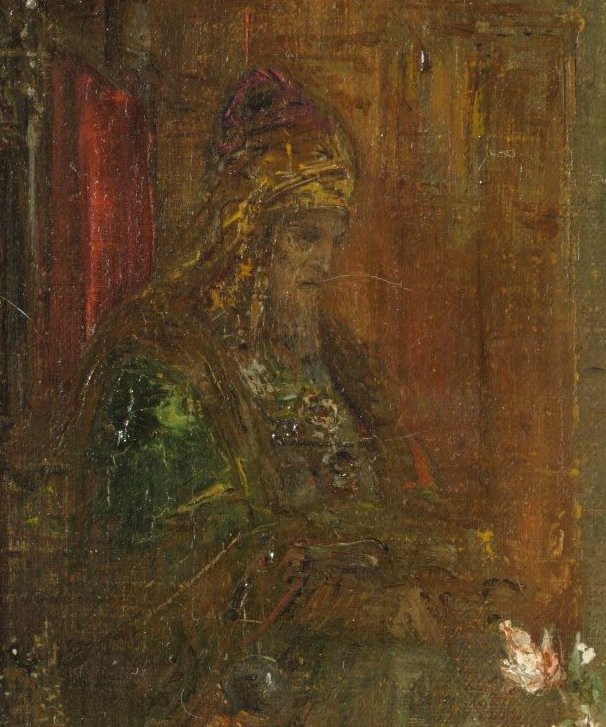
Almost hidden in the dark on the left, an old bearded man in a turban sits on a throne. This is usually taken to be King Herod. He does not look up at the head.
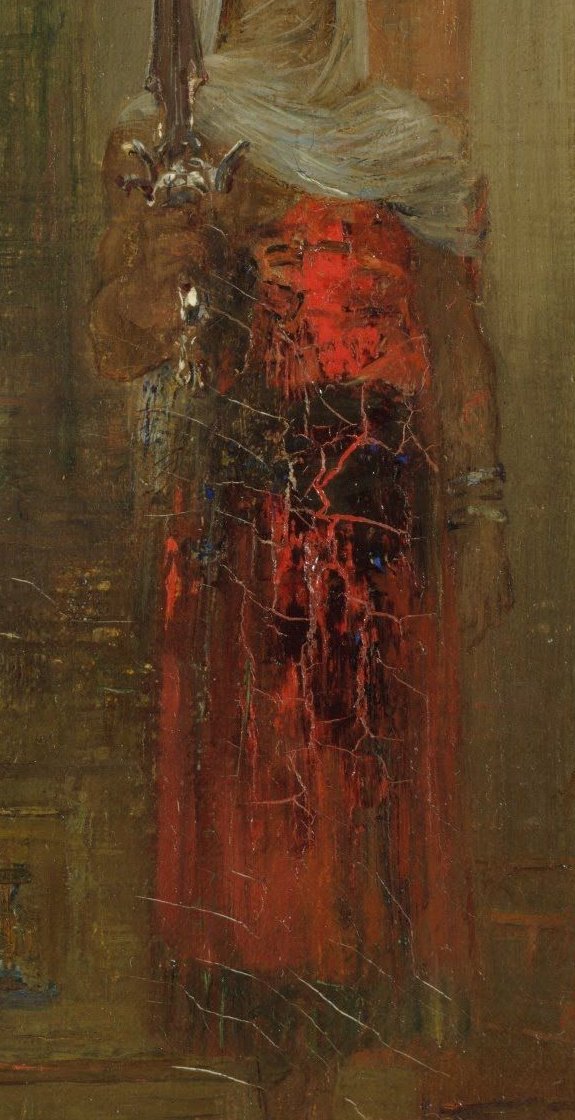
On the right, the executioner stands in a white head cloth and a blood-red robe, holding his sword upright. He is the man who cut off the head, and he stands only a few steps from it, but he stays perfectly still.
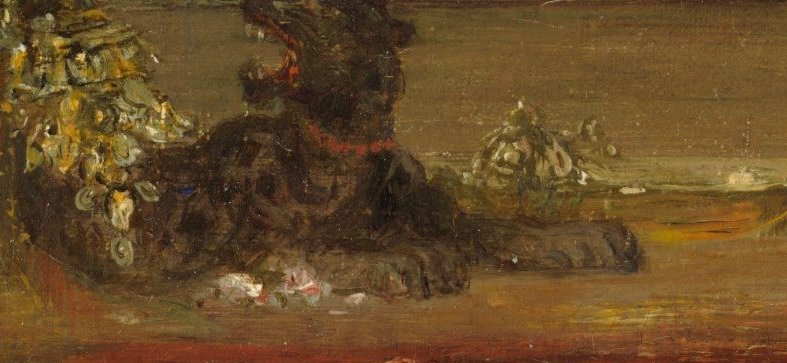
And behind Salome, on the floor, lies a dark panther, the kind of exotic animal Moreau liked to place beside his women. Flowers are scattered across the floor at the front, left over from the dance.
What you can see, and what is interpretation: neither Herod nor the executioner reacts to the head. Many writers take this to mean that the vision is only in Salome's mind, and that she alone can see it. The painting does not say so directly, but the stillness of everyone else makes the reading hard to avoid.
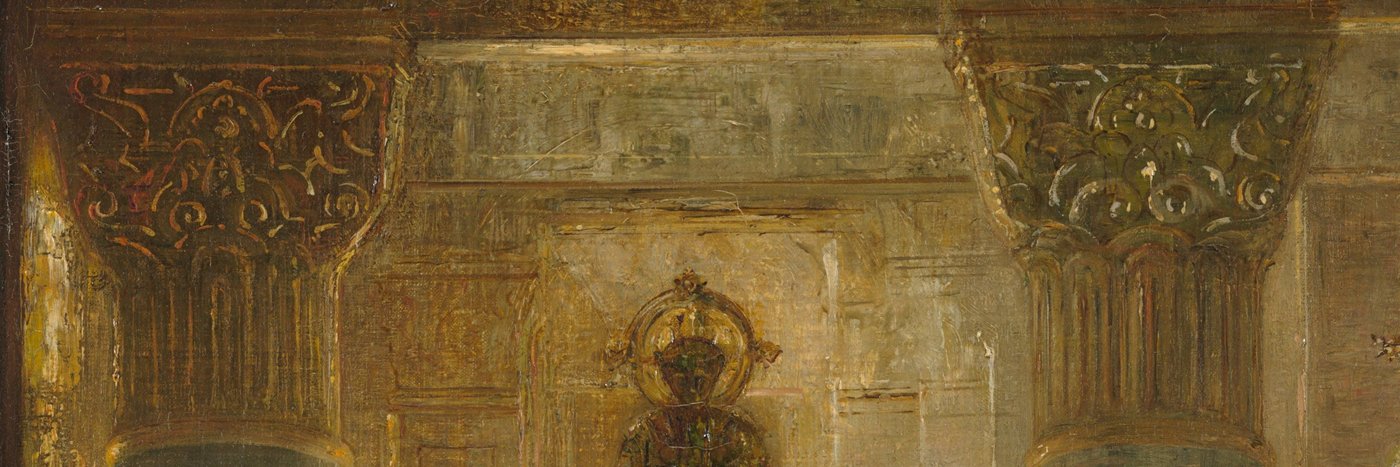
No real place. Moreau builds Herod's palace out of pieces from many times and countries: heavy columns with carved capitals, gold everywhere, a hanging lamp with burning candles, and at the back a dark seated figure under a ring like a halo, more like an idol in a temple than a statue in a palace.
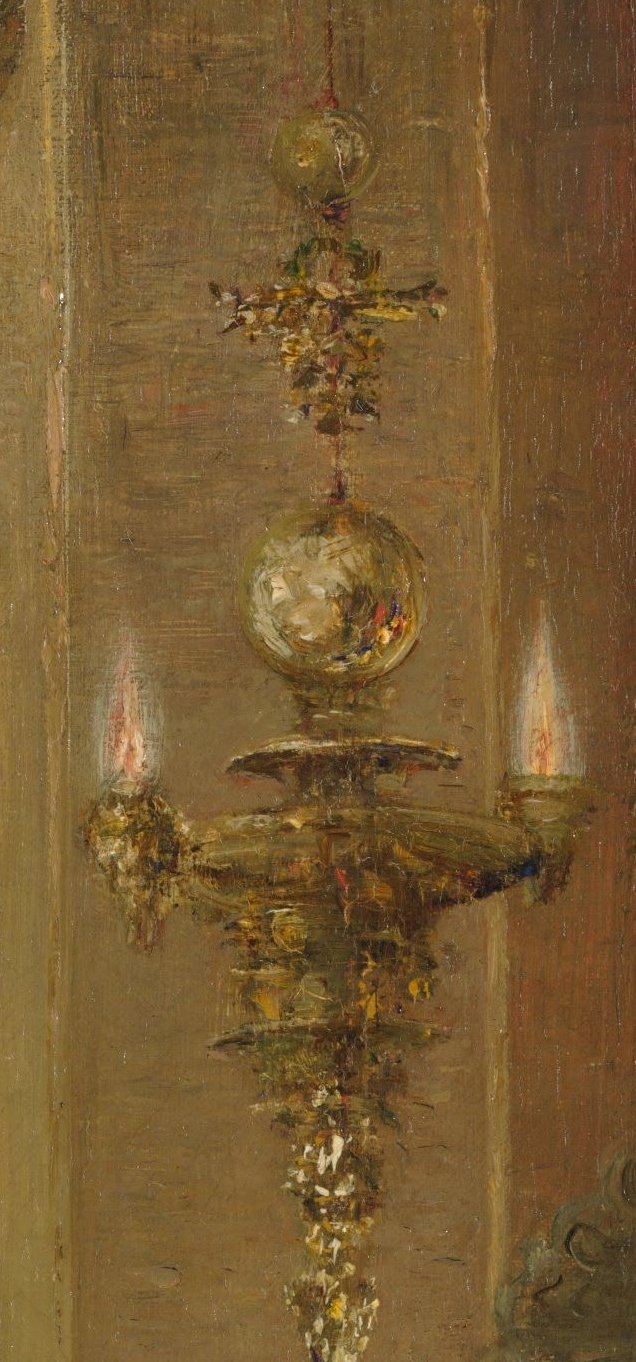
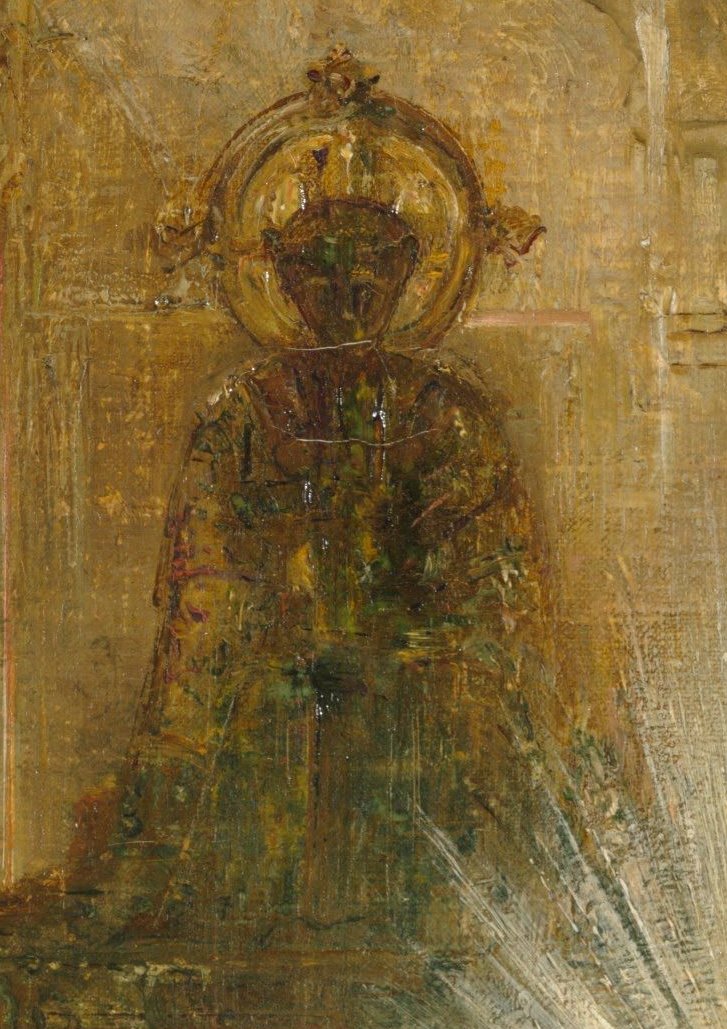
Moreau studied and collected pictures of Indian, Persian, Islamic and ancient art, and he mixed their ornaments freely. He was not trying to show what Herod's palace really looked like. He wanted a place that felt ancient, rich, sacred and slightly suffocating, a setting where a vision like this could happen.
In 1876 Moreau showed two Salome pictures at the Paris Salon, the most important art exhibition in France: an oil painting of Salome dancing before Herod, and a large watercolour of L'Apparition. Visitors had never seen the story told like this. Salome was no longer a girl obeying her mother but a jewelled, almost naked figure caught in a moment of horror and fascination.
The pictures became even more famous eight years later, in 1884, when the writer Joris-Karl Huysmans put them in his novel À rebours (Against Nature). Its hero, a wealthy man who shuts himself away with rare and strange beautiful things, owns both of Moreau's Salomes and spends pages describing them. The book made Moreau's Salome a symbol of the whole decadent, dreamlike art of the end of the nineteenth century. Oscar Wilde's play Salomé, written a few years later, is often said to owe something to these pictures.
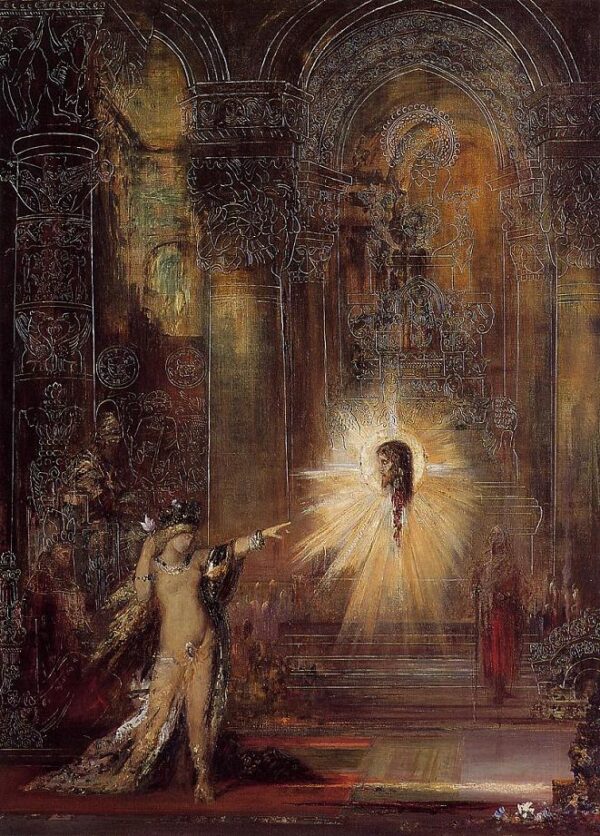
Moreau returned to the subject many times. Three versions are the best known:
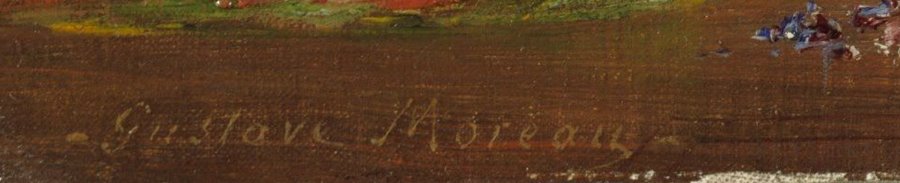
The Harvard painting is the most colourful of the three. Salome's cloak is a bright red lined with green and gold, the light around the head is almost white, and the brushwork is loose and thick, especially in the jewels and the rays. It is signed in the lower left corner.
Moreau was one of the leading painters of Symbolism, a movement of painters and poets who wanted art to show ideas, dreams and feelings rather than everyday life. L'Apparition is a Symbolist picture in that sense. It is not really about what happened at Herod's feast. It is about guilt, desire and the power of an image: the moment a person is confronted with the result of what she wanted.
The painting is also one of the first great images of the "femme fatale", the fatal woman, who fascinated artists around 1900. Klimt, Beardsley and many others made their own Salomes after Moreau. But Moreau's Salome is not simply wicked. Frozen with her arm outstretched, she looks as trapped by the vision as she is responsible for it.
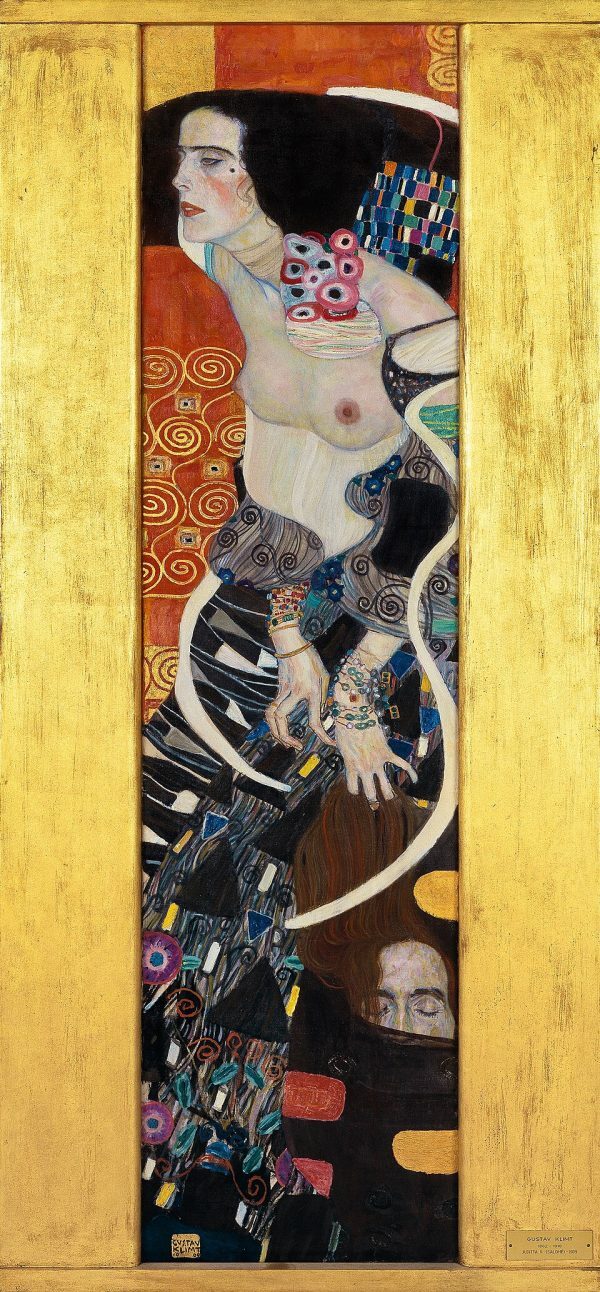
Salome and the story of John the Baptist run through our other articles too: Klimt's Judith II (Salome), Leonardo's Saint John the Baptist, and another woman with a severed head in Caravaggio's Judith Beheading Holofernes.
This version belongs to the Harvard Art Museums in Cambridge, Massachusetts, as part of the Fogg Museum collection. It came to Harvard in 1943 with the bequest of the collector Grenville L. Winthrop. It is oil on canvas, 55.9 by 46.7 centimetres, and dated around 1876 to 1877. The watercolour is in the Musée d'Orsay, and the large oil is in the Musée Gustave Moreau, the painter's own house in Paris, which he left to the French state and which opened as a museum in 1903.
We paint L'Apparition by hand in oil on canvas, at the original size or the size that suits your wall, with the white rays, the jewels and Salome's red cloak built up in layers. See the hand-painted reproduction, or explore all of Gustave Moreau and the wider Symbolism collection.
Enjoyed this story?
Save articles to your collection
Log in or create a free account, and this article will be waiting in your Private Collection.
Log in or sign upWhat can be seen in the painting, what is documented, and what is interpretation are kept separate throughout this article.