Loading cart…
No products in the cart.

1883 · Oil on canvas · Private Collection
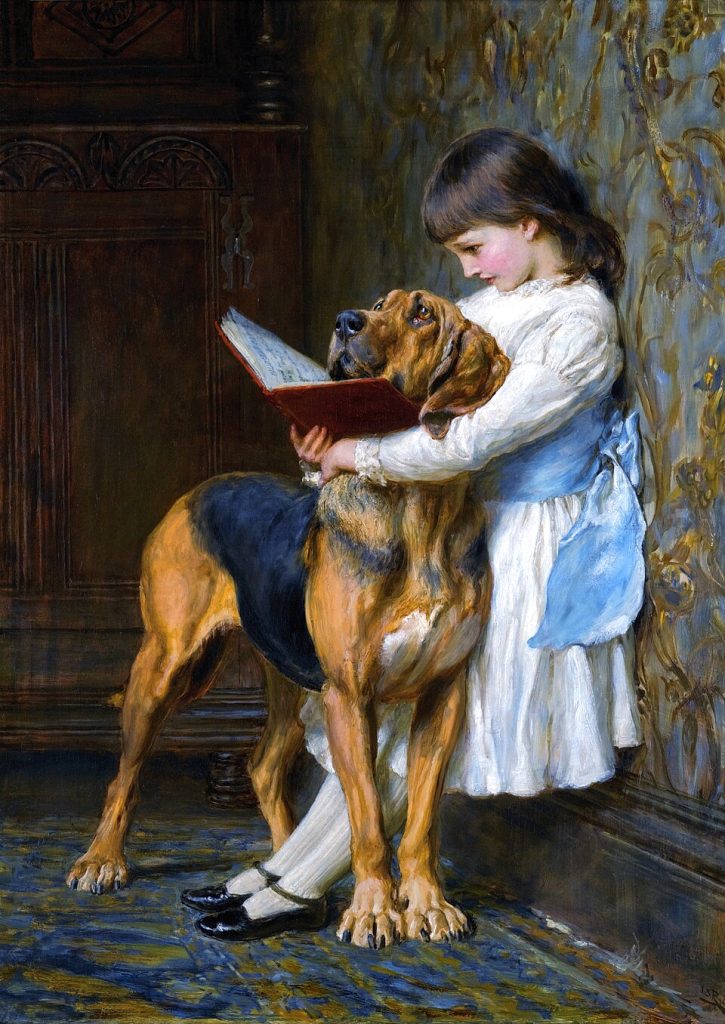
Perseverance was completed during a period when the Elementary Education Act of 1880 had made school attendance compulsory for children in England and Wales up to the age of ten. Rivière, who had long been interested in the psychological bond between human figures and animals, turned his attention in this work to the domestic consequences of that legislative shift. The painting depicts a working-class boy, dressed in plain clothing that signals modest circumstances, laboring over written exercises at home after formal school hours. The setting is spare and unadorned, suggesting a household where books were not commonplace before the new education laws brought them into everyday life. Rivière exhibited the work at the Royal Academy in 1883, where it attracted commentary from critics who recognized its gentle engagement with the social reality of compulsory schooling and the quiet sacrifices it demanded of families unaccustomed to allocating time and resources to academic study. The painting entered private hands shortly after the Royal Academy exhibition closed and has remained outside major public collections, which has contributed to its relatively lower profile compared to Rivière other celebrated animal compositions. Nevertheless, contemporary reviews preserved in Victorian periodicals confirm the work reception as warm and sympathetic. The Illustrated London News remarked on the sincerity of the scene and the artist ability to invest a humble domestic interior with genuine emotional weight. The inclusion of the dog, a recurring motif throughout Rivière career, was noted as more than decorative. The animal was read by critics as a symbol of steadfast loyalty, mirroring the perseverance demanded of the child by the new educational order. The painting stands as a carefully observed document of how compulsory education reshaped the rhythms of ordinary Victorian domestic life.
Rivière constructed the composition around a tight diagonal that draws the viewer eye from the upper left corner, where weak natural light enters through a small window, down across the boy hunched shoulders and bent head to the resting dog at the lower right. This diagonal creates a sense of gentle downward pressure, visually reinforcing the weight of duty that the child carries. The palette is deliberately restrained, built from warm ochres, muted browns, and soft greys, colors that evoke the modest interiors of working-class Victorian homes without romanticizing their poverty. The boy clothing, painted with careful attention to worn fabric and practical cut, anchors the scene firmly in the realist tradition that Rivière had been developing since the 1870s. Every surface texture, from the grain of the wooden table to the roughness of the flagstone floor, is rendered with the disciplined observation that characterized Victorian Realism at its most conscientious. The dog is positioned with the same anatomical precision that Rivière brought to all his animal subjects, reflecting his training and his lifelong practice of drawing animals from life. The animal posture, chin resting on the floor and eyes half-closed in patient waiting, echoes the boy own posture of quiet endurance. Rivière avoided sentimentality by keeping both figures absorbed in their own states rather than looking outward toward the viewer. This refusal of direct eye contact gives the painting a documentary quality, as though the artist had observed the scene without disturbing it. The light source is natural and untheatrical, consistent with the painter commitment to depicting working-class domestic space as it actually appeared rather than as Victorian genre painting sometimes idealized it for middle-class audiences seeking comfortable reassurance about the social order.
The title Perseverance functions on multiple levels within the context of Victorian attitudes toward education and class. On the most immediate level it describes the visible effort of the boy, who continues his studies in difficult conditions, poor light, hard seating, and the competing pull of the dog companionship. On a broader social level the title engages with the debate that surrounded the introduction of compulsory schooling in Britain. Many working-class families viewed mandatory attendance with ambivalence, since children who attended school were children who could not contribute to household income or domestic labor. The boy in the painting embodies the tension between the state demand for educated citizens and the economic realities that made that demand genuinely costly for the families it targeted. Rivière did not moralize openly, but the compositional sympathy he extended to the child suggests a clear awareness of that tension. The dog presence amplifies the meaning of the scene in ways that connect this painting to broader themes in Rivière body of work. Throughout his career Rivière used animal figures to express qualities of loyalty, endurance, and uncomplaining faithfulness that he found difficult to locate reliably in human social arrangements. In Perseverance the dog functions as the boy silent companion in a task the animal cannot understand but refuses to abandon. This pairing of human effort and animal loyalty creates a subtle argument about the nature of perseverance itself, suggesting that it is less a heroic quality than a daily, unheroic habit of continuing. Placed within the historical context of the 1880 Education Act and its social consequences, the painting becomes a thoughtful reflection on what it cost ordinary Victorian children to participate in the project of national self-improvement that their government had decided was compulsory.