Loading cart…
No products in the cart.

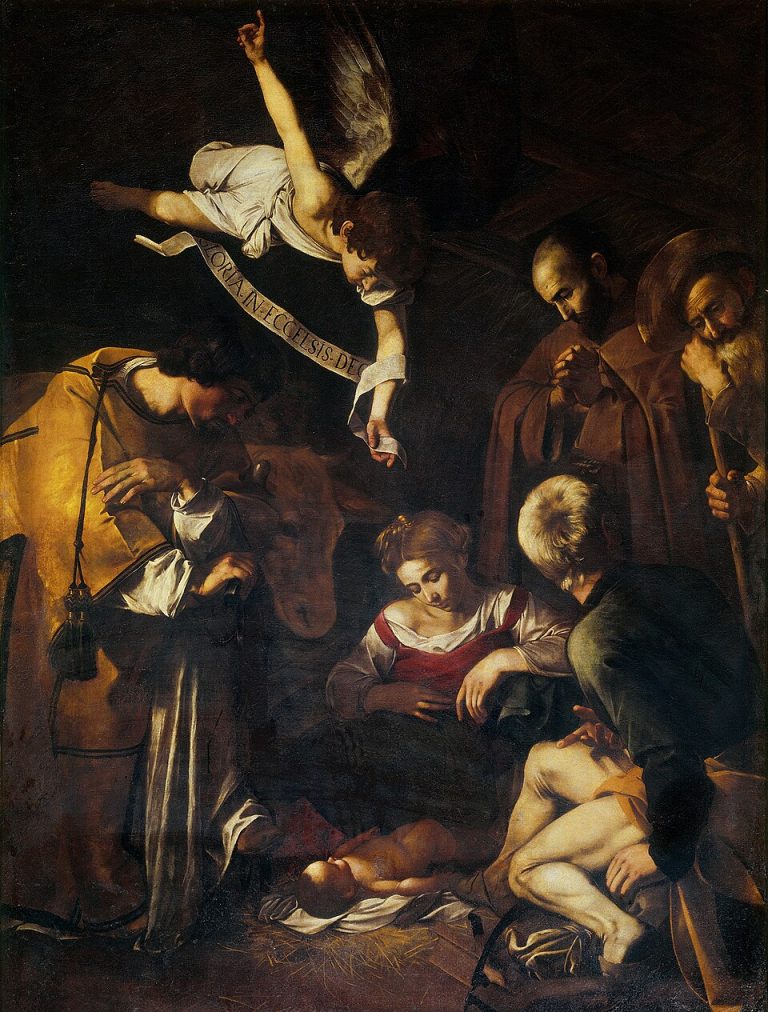
1600 or 1609 · Oil on canvas · Stolen from the Oratory of San Lorenzo, Palermo
Save articles to your collection
Log in or create a free account, and this article will be waiting in your Private Collection.
Log in or sign up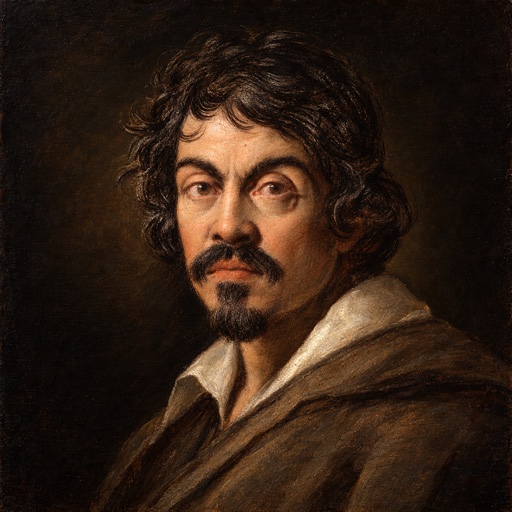 Explore the artistCaravaggio →
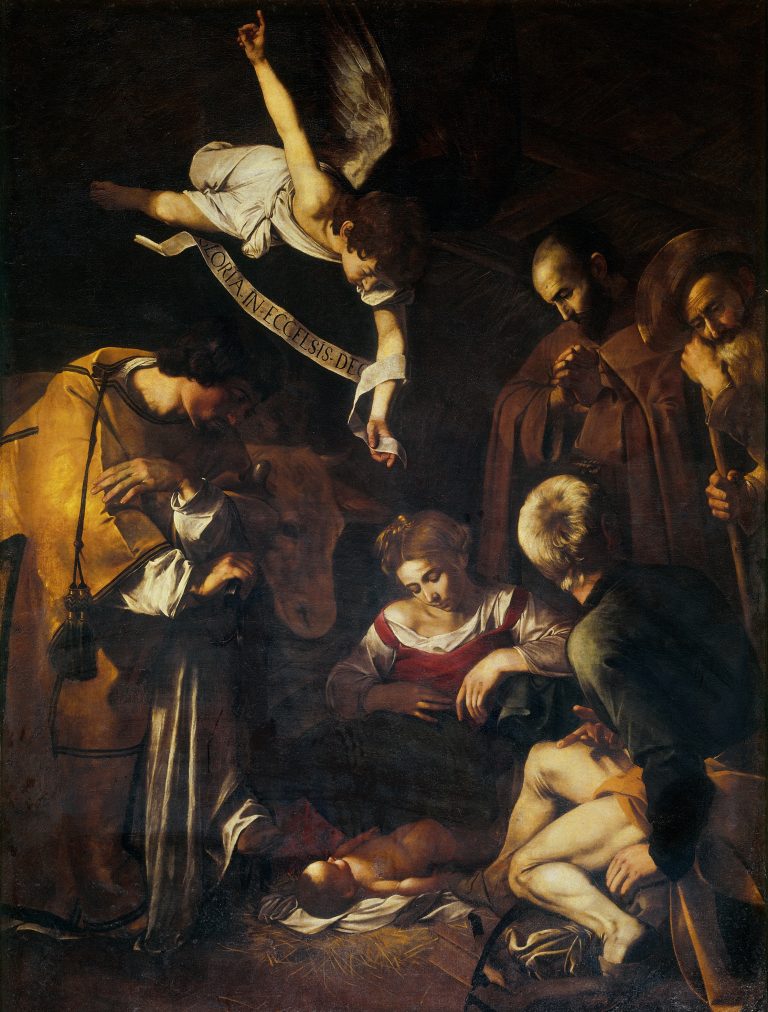
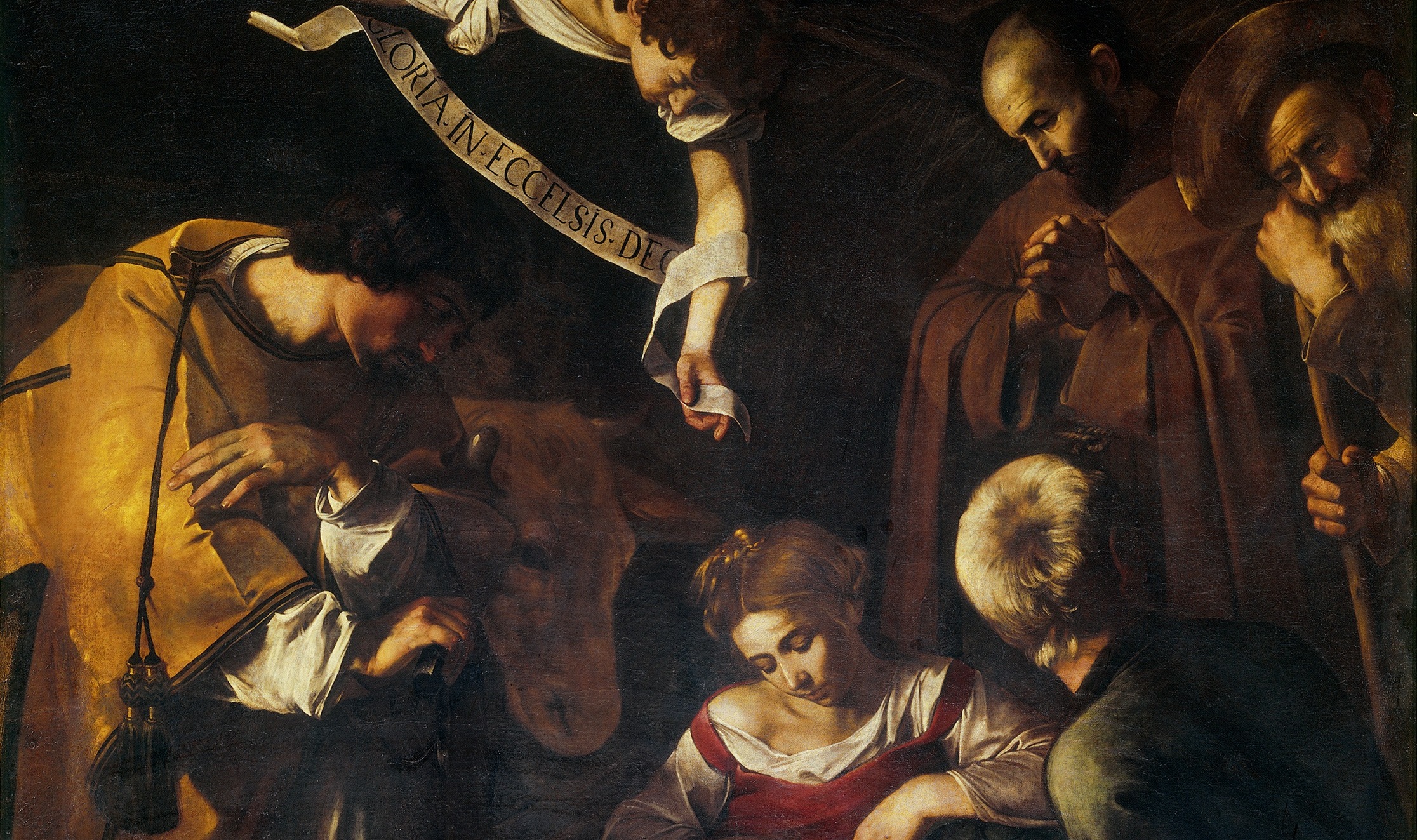
In a small oratory in Palermo, visitors can look up at an altarpiece that appears to be Caravaggio’s Nativity. The image over the altar is a facsimile installed in 2015. The original, Nativity with Saint Francis and Saint Lawrence, was stolen from the Oratory of San Lorenzo in October 1969. The FBI still lists it among its Top Ten Art Crimes.
A white banner stretches diagonally across the upper half of the canvas. Follow the angel’s lowered arm and you reach the darkest part of the scene, where the newborn Christ lies on a cloth spread across the straw. The child is so low that the adults must bend or look down to see him.
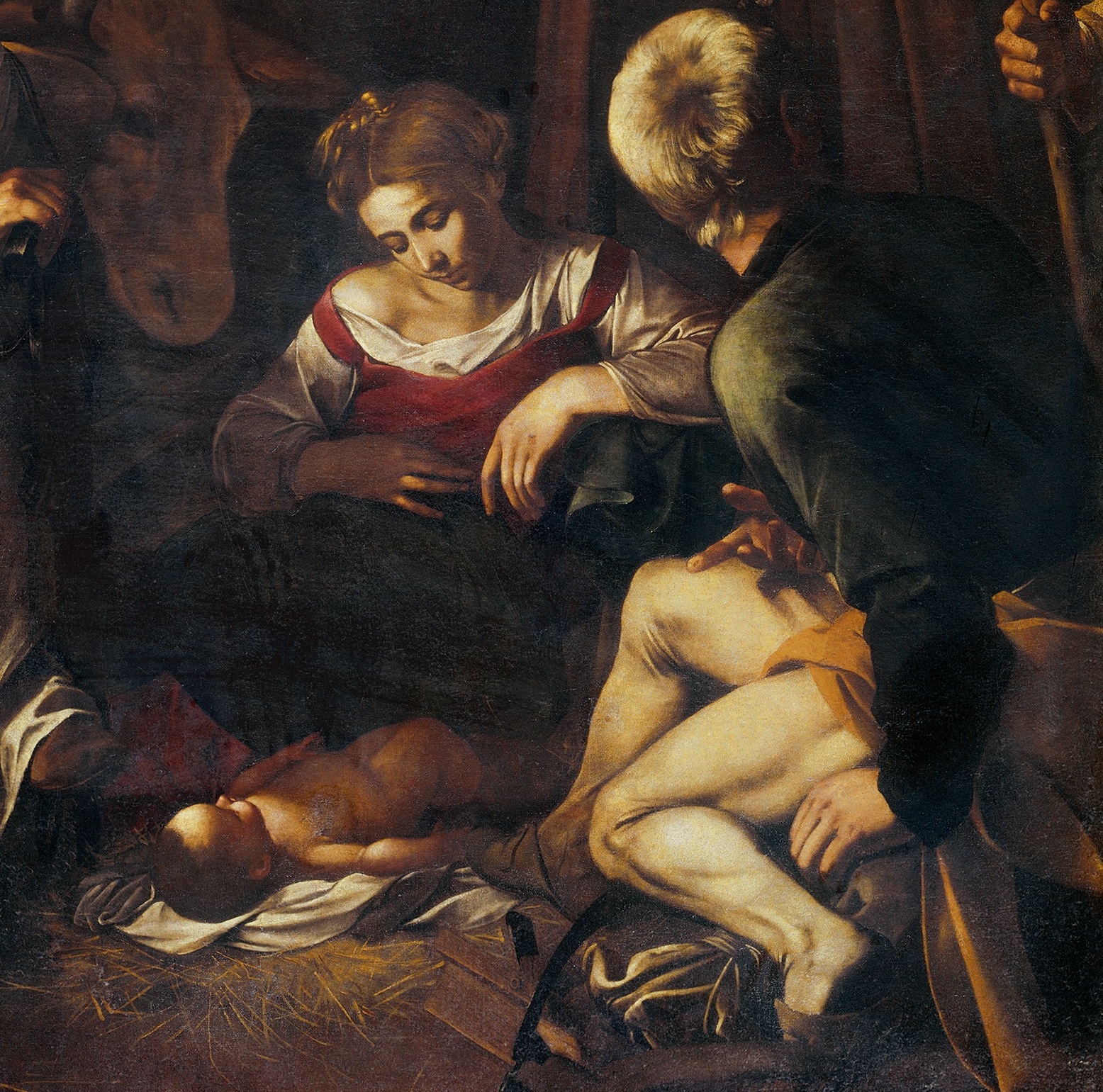
Mary’s dress catches a narrow band of light at the neckline. One shoulder is bare and her head tips towards her child. The white cloth under the infant picks up the colour of the angel’s drapery far above, joining two areas that the surrounding shadows almost separate.
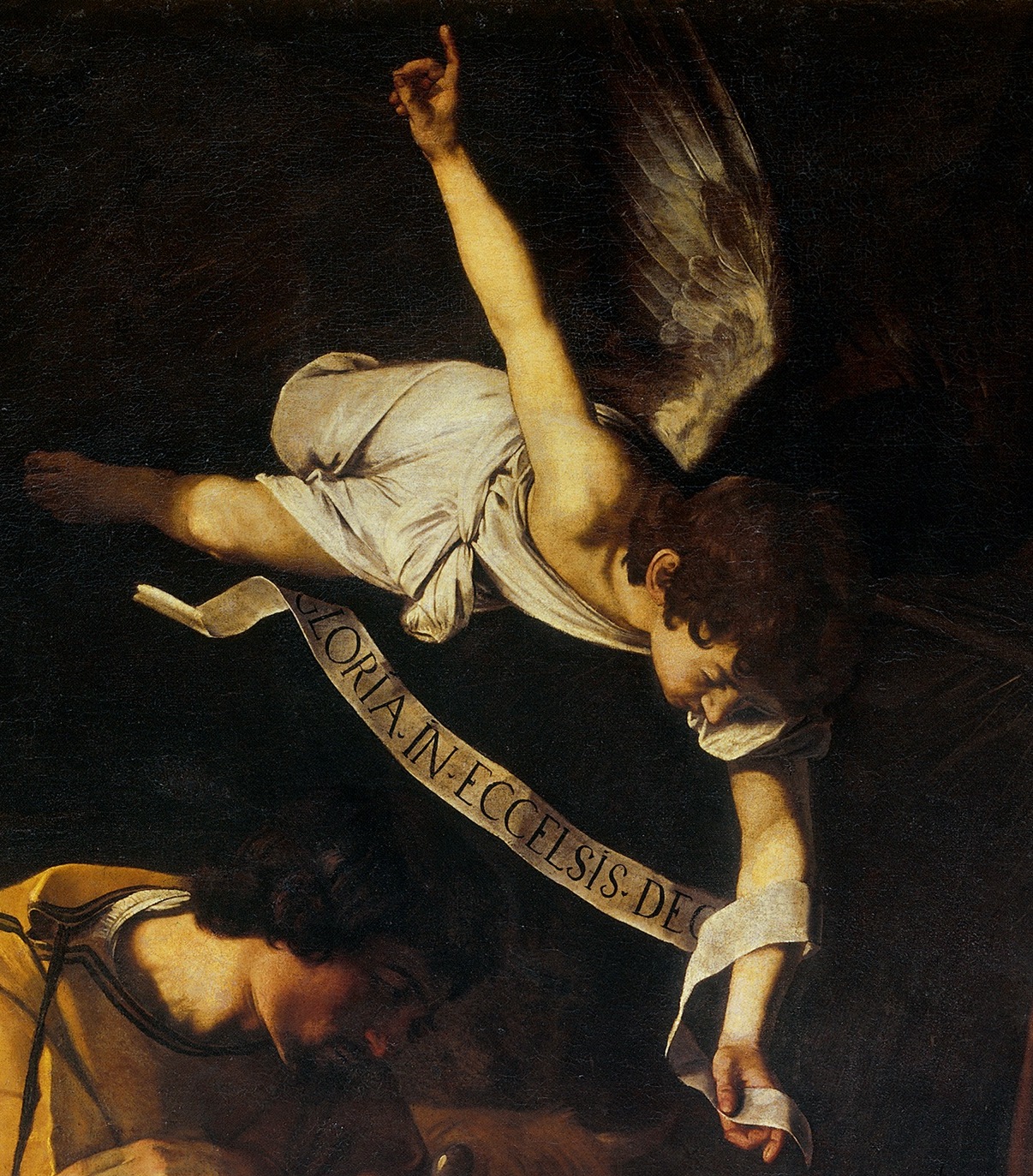
The banner reads Gloria in excelsis Deo, the angelic proclamation from Luke’s account of the birth. Caravaggio balances that announcement with the quiet of the gathering below. A man with his back towards us fills the right foreground, his legs and bare feet almost as prominent as the infant.
Saint Lawrence, the patron of the oratory, is the figure in gold at the left. Saint Francis, in a brown habit, stands on the opposite side. The saints lived centuries after the event they witness. Their presence brings together the biblical birth and the religious community that worshipped in front of the canvas.
Historians disagree about when the painting was made. A longstanding account places it in Sicily in 1609, near the end of Caravaggio’s life. Michele Cuppone and other scholars have made a case for 1600, connecting it with a documented Roman commission for an altarpiece that left its subject unspecified. The visual and archival evidence has kept both dates in the discussion.
The Italian Central Institute for Restoration dates the theft to the night of 17 to 18 October. The FBI says two thieves entered the oratory and removed the canvas from its frame. Its removal left the confraternity without the picture that had hung above its altar for centuries.
Later testimony linked the missing painting to Sicilian organised crime. Italy’s parliamentary Antimafia Commission examined that testimony, including reports that the painting passed through several hands. The accounts diverge over its fate. There has been no publicly confirmed recovery.
Factum Arte reconstructed the composition from archival material including a colour transparency it credits to photographer Enzo Brai. The scale of the original meant that a modest photograph had to carry an immense amount of visual information. The team studied surfaces from other Caravaggio paintings while preparing the facsimile, which was installed at San Lorenzo in 2015.
Old photographs let us study the stolen picture’s composition, from the angel’s banner to the figures around the straw. The facsimile lets visitors see how that composition fills the space over the altar.
Enjoyed this story?
Save articles to your collection
Log in or create a free account, and this article will be waiting in your Private Collection.
Log in or sign up
Man Writing a Letter
Gabriel Metsu, c. 1664
The gallery list
Every painting is already 50% off. Join the list and we will send you an extra $15 code, plus first access to new collections.
No spam. Unsubscribe anytime. · Privacy Policy
Welcome
Your $15 code is on its way. Explore the gallery while you wait.