Loading cart…
No products in the cart.

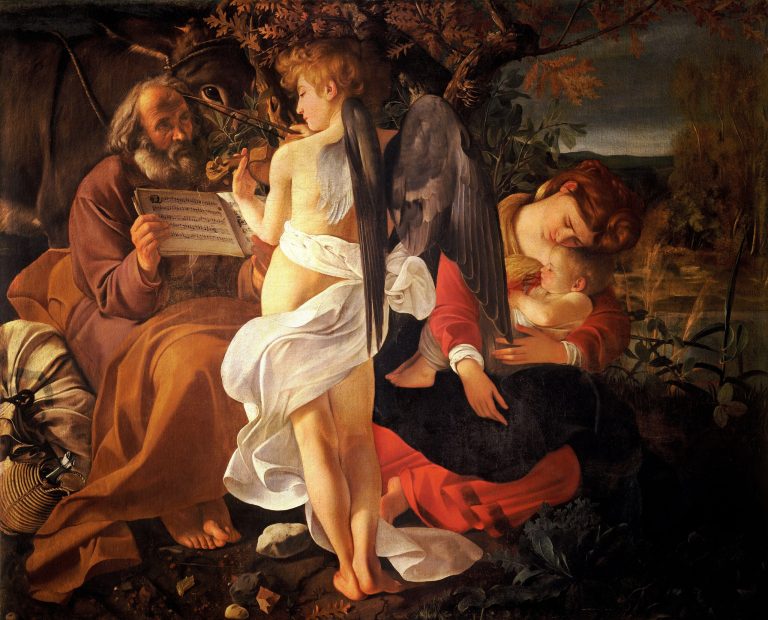
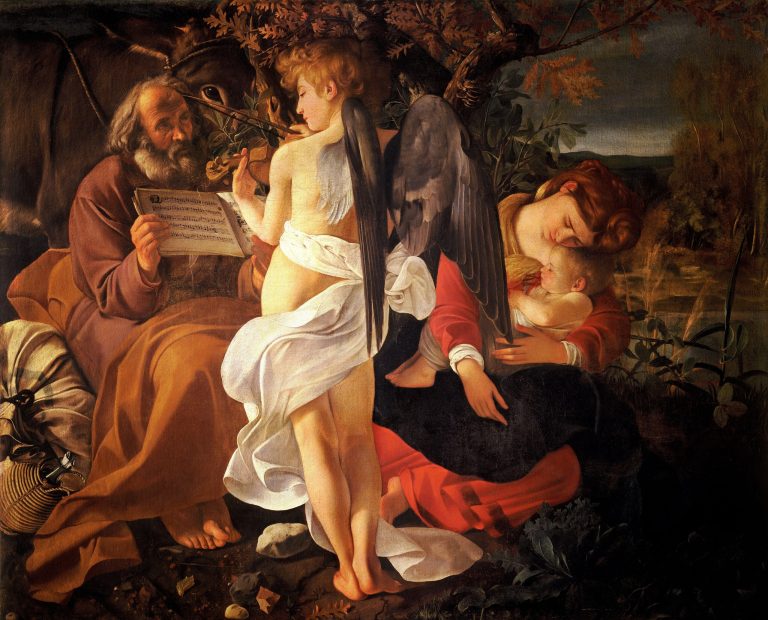
c. 1597 · Oil on canvas · Galleria Doria Pamphilj, Rome
Save articles to your collection
Log in or create a free account, and this article will be waiting in your Private Collection.
Log in or sign up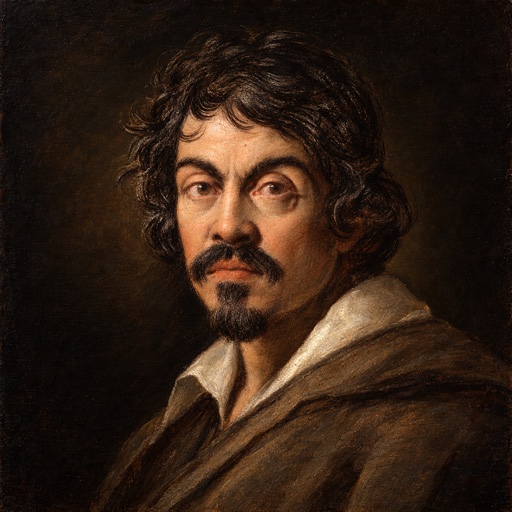 Explore the artistCaravaggio →
Joseph is holding a sheet of music. Across from him an angel plays a violin, and a few feet away Mary has fallen asleep with the infant Christ in her arms. In Rest on the Flight into Egypt, painted around 1597, Caravaggio gives the angel a piece of music that can be identified.
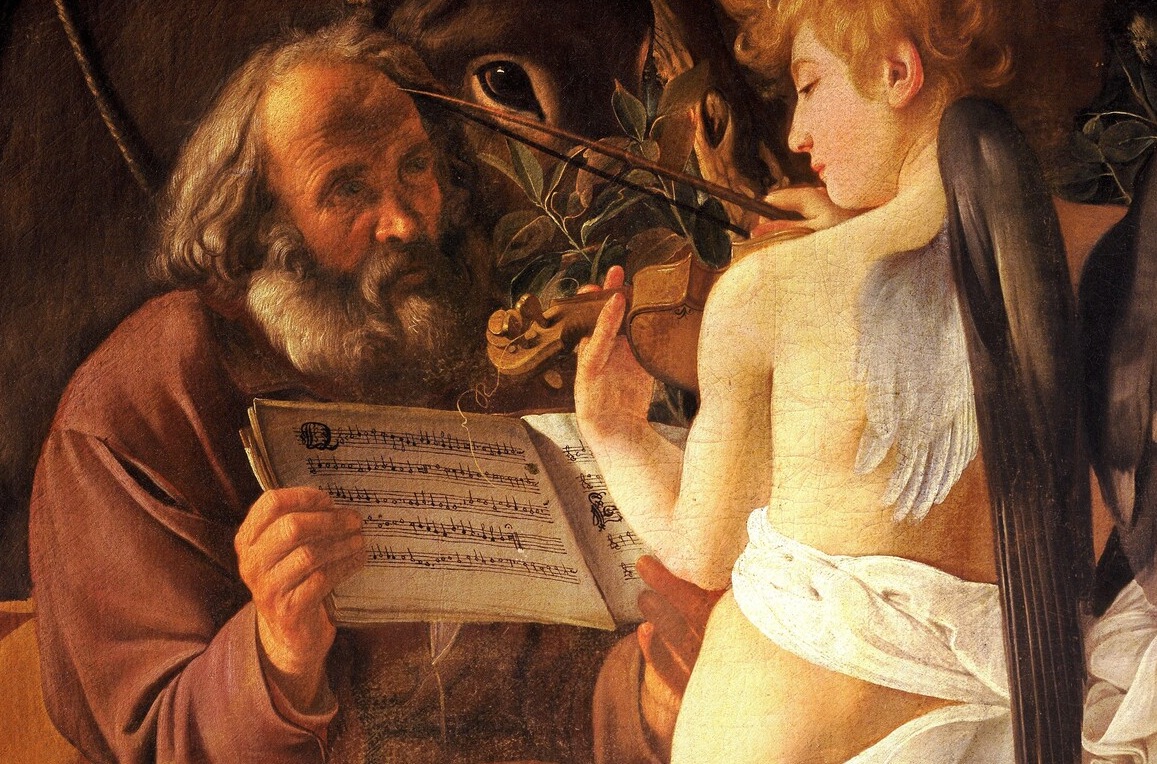
The marks on the page have been identified with Quam pulchra es, a motet by the Franco-Flemish composer Noël Bauldeweyn. Its text comes from the Song of Songs. The words praise the beauty of a beloved, and Christian readings of the text could associate that beloved with Mary. The score puts those associations beside her sleeping figure.
Notice how Joseph grips the edge of the paper. The sheet bends slightly towards the player, and his eyes follow the music. The angel’s attention stays on the instrument. Caravaggio makes the performance feel like something the two figures have quietly worked out between them.
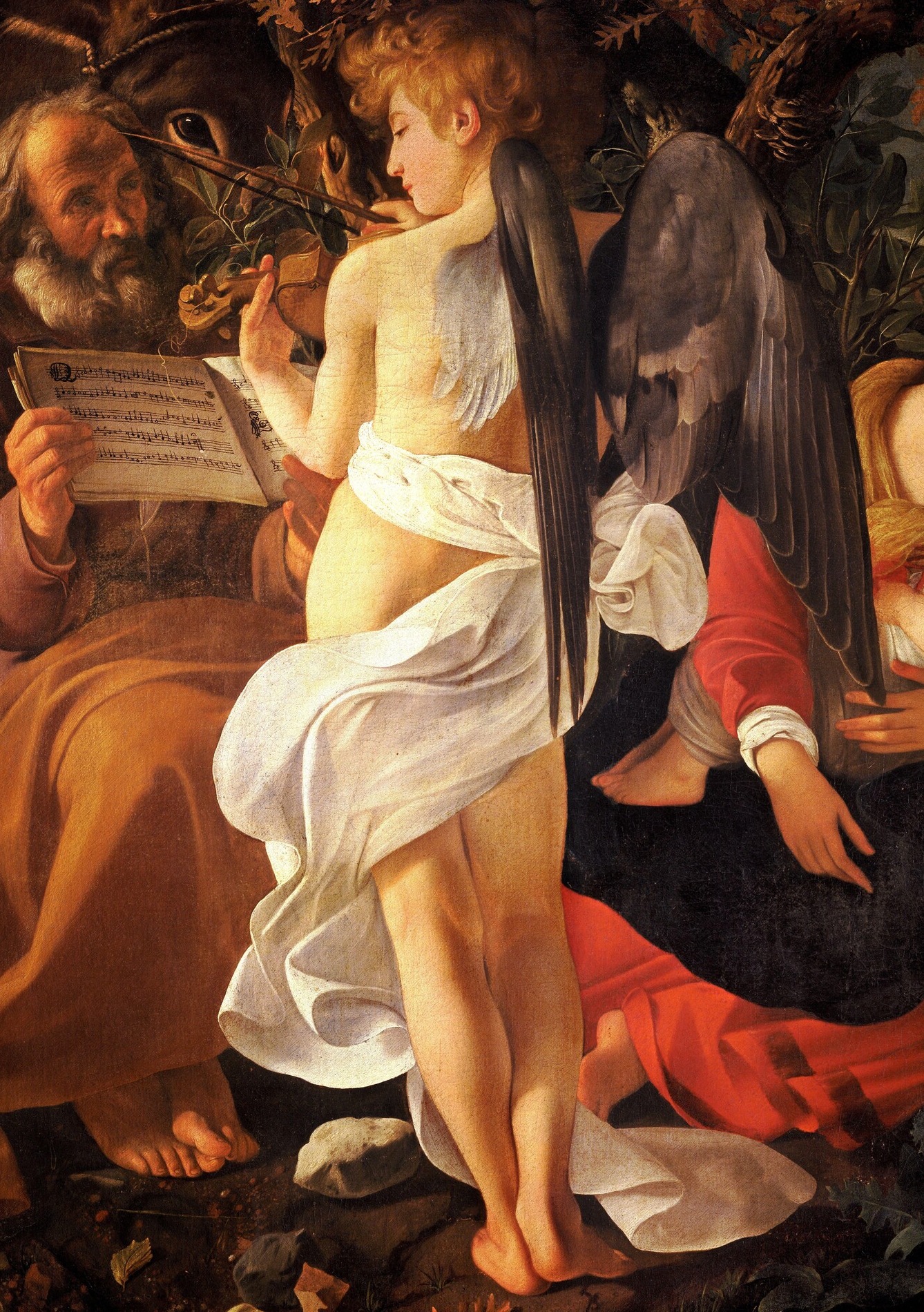
The angel is the brightest figure in the foreground. The white drapery turns around the body as the dark wing rises almost to the top of the canvas. We see the player from behind. That position leaves the face turned away and the hands busy with the violin.
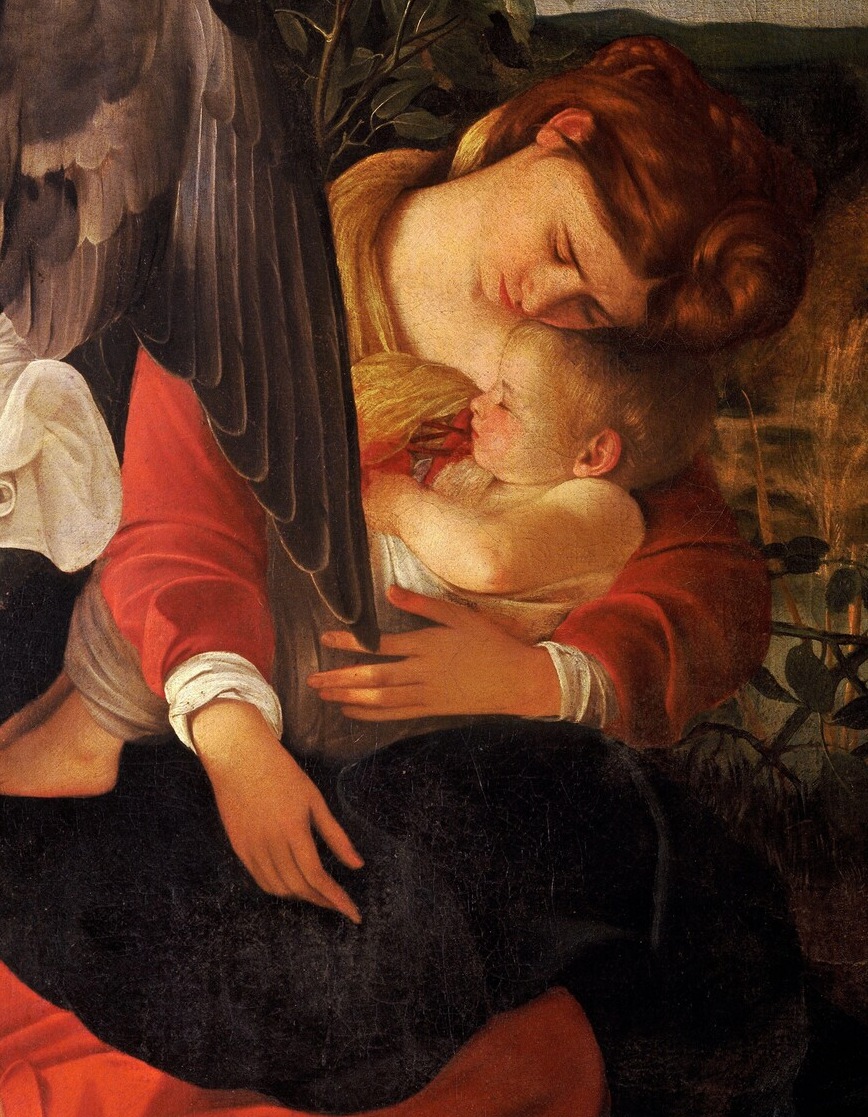
On Joseph’s side, the donkey’s eye and the folds of a bag emerge from the dark. On Mary’s side the view opens towards pale sky and water. Her head rests against the child, and her relaxed hand drops over the red and blue cloth. Where Joseph’s fingers brace the score, Mary’s fingers hang loose.
Matthew’s Gospel describes Joseph taking Mary and the child to Egypt after a warning about Herod. The Gospel moves directly through the journey. Painters later imagined a pause along the road, which gave them room to picture the family as travellers carrying a child and a few belongings.
Caravaggio sets the bundle close to Joseph’s bare feet. A stoppered container catches the light on the ground. These modest things give the journey a physical presence even as the violin changes the character of the halt.
The canvas is now in the Galleria Doria Pamphilj in Rome. It belongs to an early phase of Caravaggio’s career, before the large commissions that made his name. Compare the dark shelter and solitary descending angel in his Palermo Nativity. In the earlier painting the angel stays on the ground long enough to finish a phrase.
Enjoyed this story?
Save articles to your collection
Log in or create a free account, and this article will be waiting in your Private Collection.
Log in or sign up
Man Writing a Letter
Gabriel Metsu, c. 1664
The gallery list
Every painting is already 50% off. Join the list and we will send you an extra $15 code, plus first access to new collections.
No spam. Unsubscribe anytime. · Privacy Policy
Welcome
Your $15 code is on its way. Explore the gallery while you wait.