Loading cart…
No products in the cart.

Art Guides · Baroque

Save articles to your collection
Log in or create a free account, and this article will be waiting in your Private Collection.
Log in or sign upA murderer on the run, a miller's son who went bankrupt, a woman who took her rapist to court, a painter who became a diplomat, and a man who painted kings so well that one of them knighted him. The Baroque painters lived as dramatically as they painted. We ranked the ten famous Baroque artists people search for most, and for each one we show you three paintings and the story that makes them who they are.
Start with the three names everyone knows, or read the full list below.
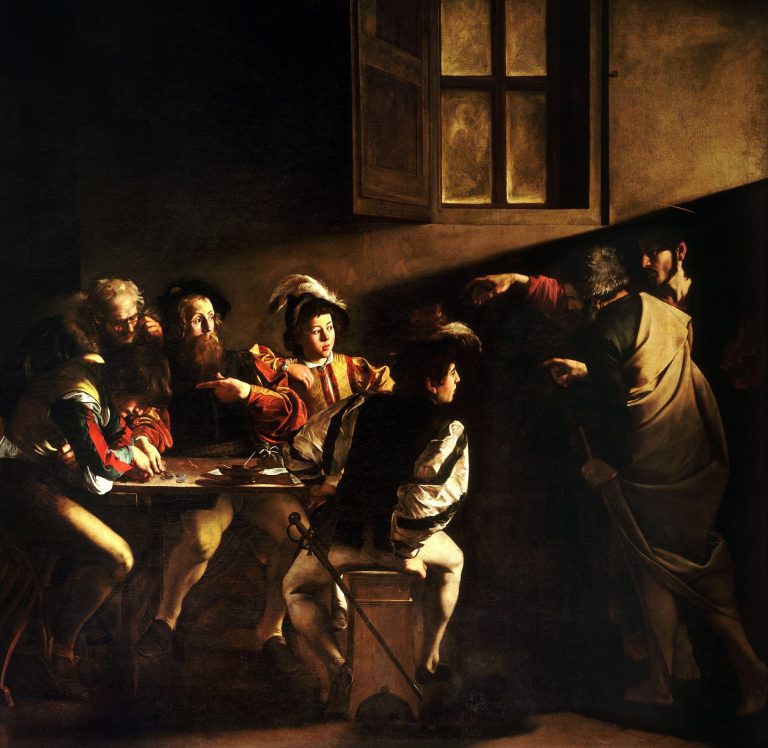
Michelangelo Merisi took his name from the small town near Milan where his family came from. In Rome he became the most talked-about painter of his day, and the most dangerous. He used real people from the streets as models for saints, dirty feet and all, and lit them like actors on a dark stage. The police records of Rome are full of his name: brawls, insults, a sword carried without a licence, a plate of artichokes thrown at a waiter.
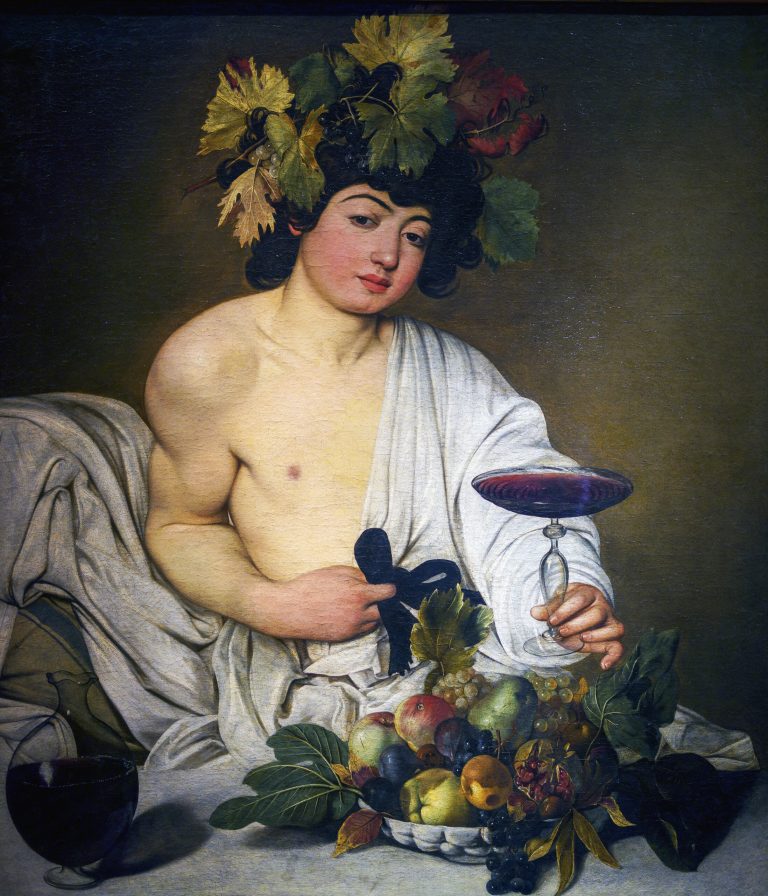
This early picture of a rich boy being cheated at cards was bought by Cardinal Francesco del Monte, who took Caravaggio into his palace and launched his career. Lost for most of the twentieth century, it was rediscovered in a private collection in 1987. In 1606 Caravaggio killed a man and spent his last four years on the run. Two of his paintings are in our ten famous Baroque paintings.
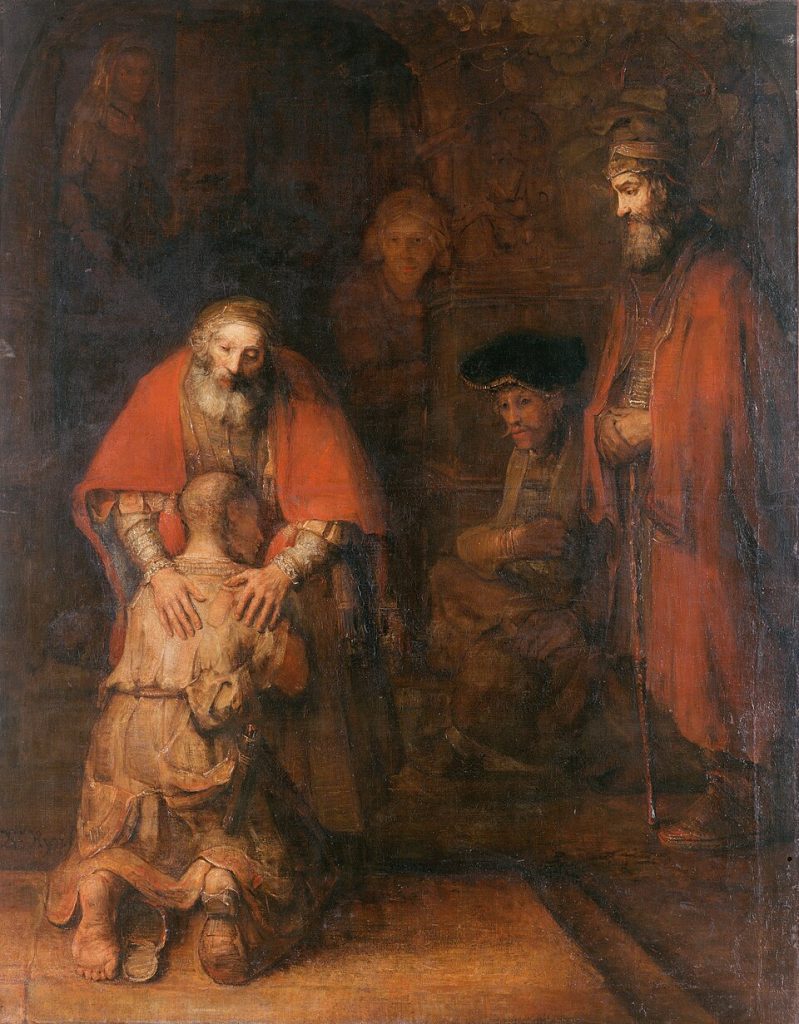
The son of a miller in Leiden, Rembrandt moved to Amsterdam in his twenties and quickly became its star portrait painter. He married Saskia, bought a grand house and filled it with art, armour and curiosities. Then it went wrong. Saskia died in 1642, the year of The Night Watch, he lived beyond his means, and in 1656 he went bankrupt and had to sell almost everything.
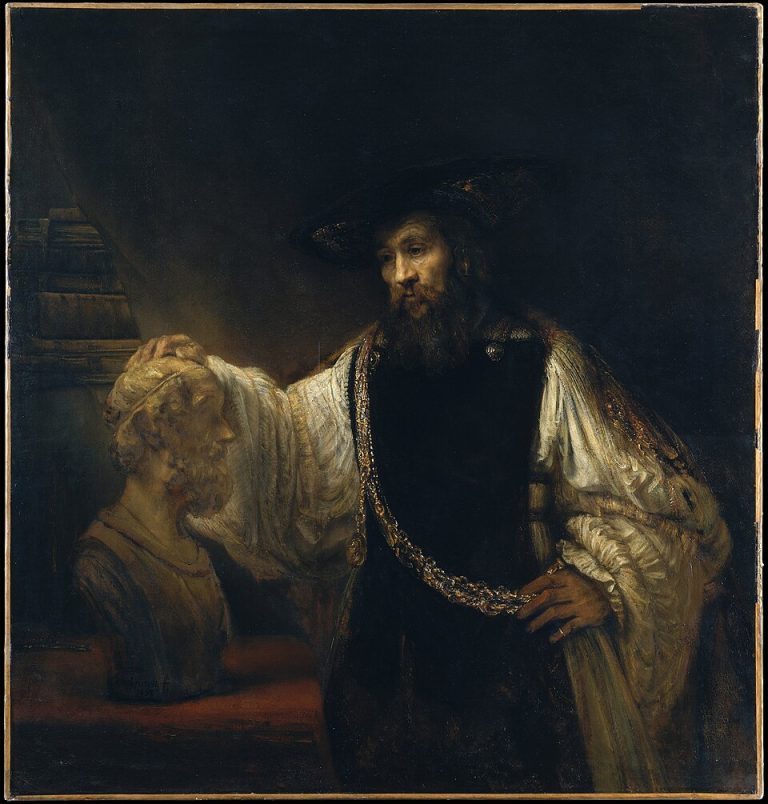
Through it all he kept painting himself, more than eighty times in paintings, drawings and prints, a diary of a face growing older. This late picture, painted about a year before his death, shows the son who wasted his inheritance coming home in rags. People have long noticed that the father's two hands are different, one broad and strong, one slender and gentle, as if he were both father and mother. Rembrandt died poor in 1669, a year after his own son Titus.
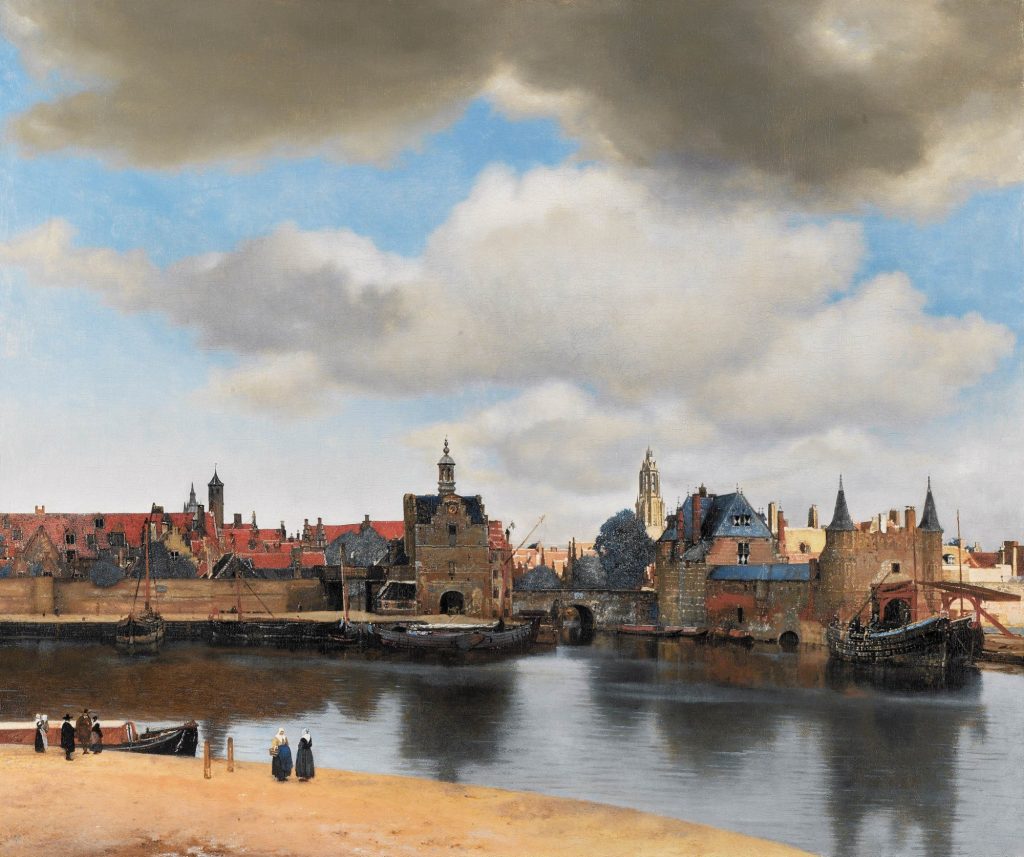
Vermeer spent his whole life in Delft. He was an art dealer and an innkeeper's son, married a Catholic woman from a wealthier family, and had fifteen children, eleven of whom survived. He painted slowly, perhaps two or three pictures a year, mostly the same few rooms with light coming through a window on the left. Only about 35 of his paintings survive.
When he died at 43, deep in debt, his widow had to give two of his paintings to the baker to pay the bill for bread. He was then almost forgotten for two centuries, until a French critic rediscovered him in the 1860s and called him the Sphinx of Delft. In Proust's novel In Search of Lost Time, the writer Bergotte dies in front of this painting, staring at its little patch of yellow wall.

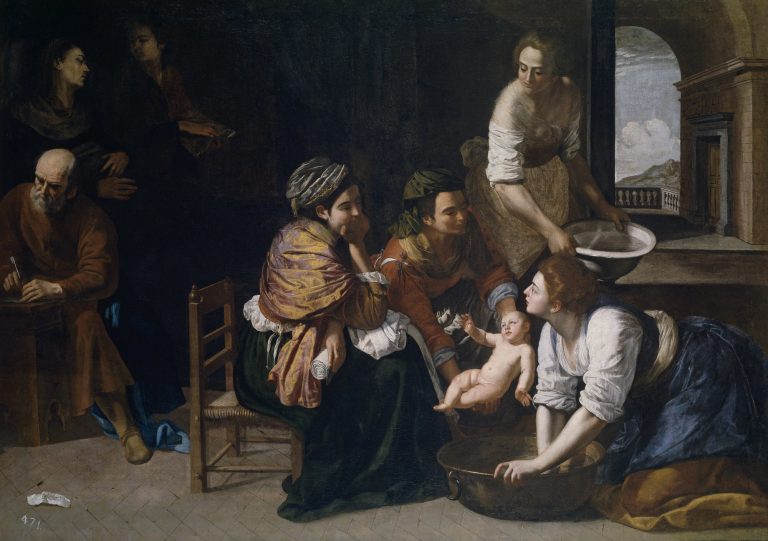
Artemisia learned to paint in the Rome studio of her father, Orazio, a follower of Caravaggio. At seventeen she was raped by Agostino Tassi, a painter her father had hired to teach her. The family took him to court in 1612, and the trial records survive: Artemisia was tortured with thumbscrews to prove she was telling the truth. Tassi was convicted, and barely punished.
She left for Florence, married, and in 1616 became the first woman admitted to the city's Academy of Drawing. She worked for the Medici, for Venetian and Neapolitan patrons and for King Charles I in London. Her heroines, Judith, Susanna, Cleopatra, are strong, real women. In this self-portrait she plays the allegory of Painting, a role tradition gave to a woman, so no male painter could ever do the same. Her Judith is number four in our ten famous Baroque paintings.
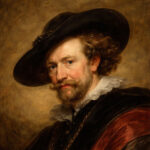
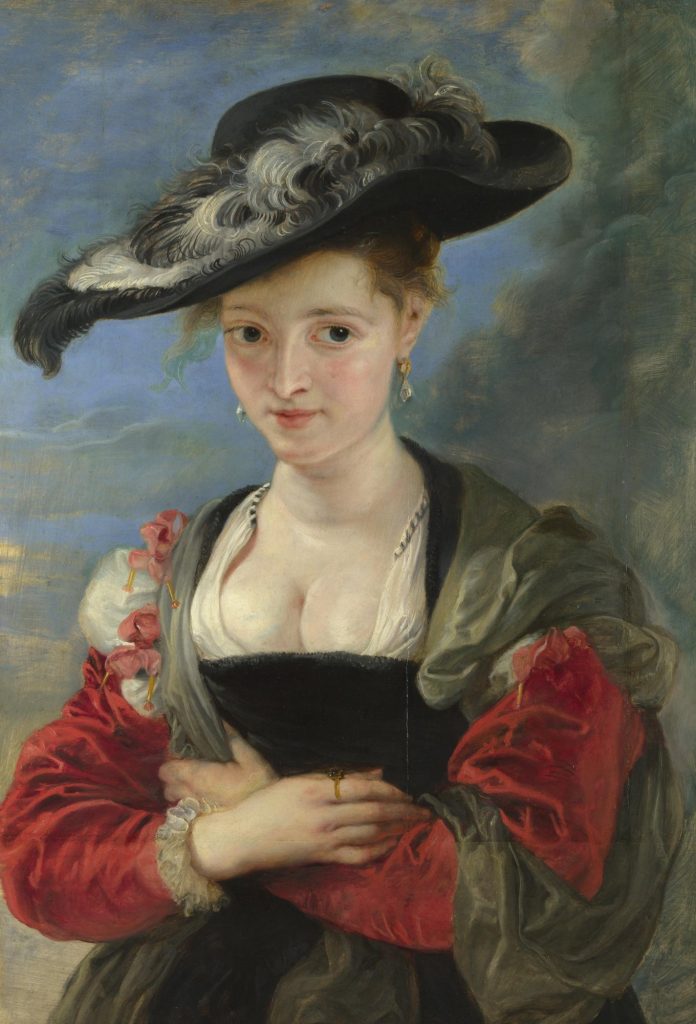
Rubens was the most successful painter of his age, and one of its busiest men. He ran a huge workshop in Antwerp that turned out altarpieces, ceilings and hunting scenes for half the courts of Europe, spoke six languages, and worked as a diplomat on peace missions between Spain and England. Both Philip IV and Charles I knighted him.
His paintings overflow with movement and flesh, which is where the word Rubenesque comes from. This portrait is far more intimate. The sitter is probably Susanna Lunden, sister of Helena Fourment, whom Rubens married at 53 when she was sixteen. Her face is lit by daylight reflected under the shadow of her hat. The picture has been called The Straw Hat since the eighteenth century, though she is plainly wearing black felt.
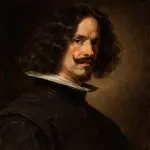
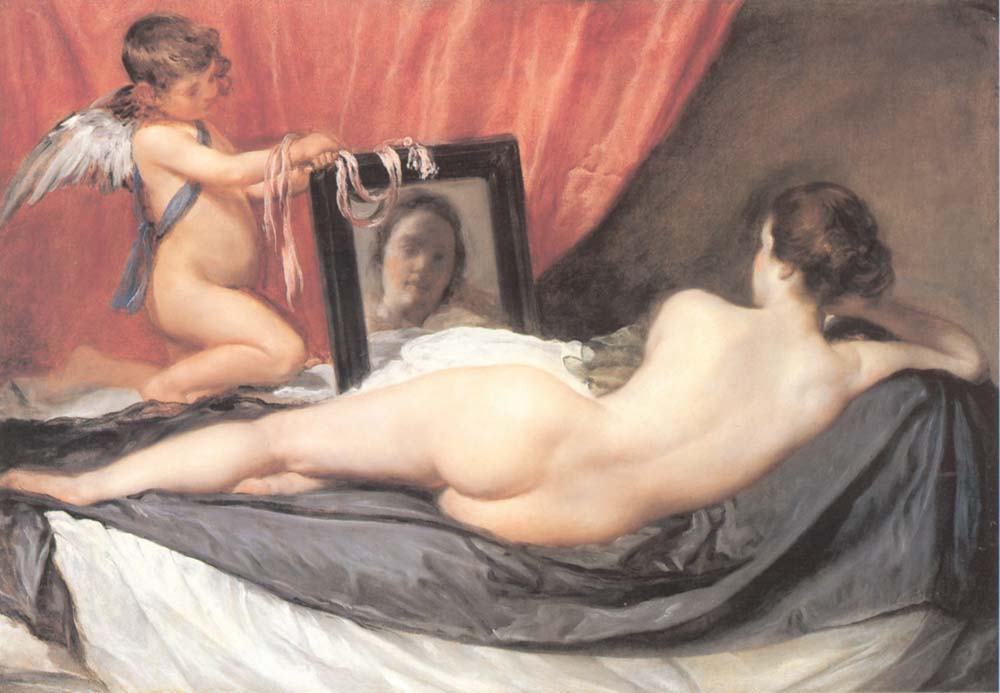
Born in Seville, Velázquez was appointed court painter to King Philip IV at 24 and stayed in Madrid for the rest of his life, painting the king, his family, his jesters and his dwarfs with the same calm honesty. When he painted Pope Innocent X in Rome in 1650, the pope is said to have looked at it and said: troppo vero, too true. His masterpiece, Las Meninas, is number two in our list of paintings.
Nudes were rare and risky in Spain, where the Inquisition watched closely, and this is the only female nude by Velázquez to survive. Venus lies with her back to us; Cupid holds up a mirror, but her face in it is blurred. In 1914 the suffragette Mary Richardson walked into the National Gallery and slashed the canvas seven times with a meat cleaver, in protest at the arrest of Emmeline Pankhurst. It was skilfully repaired.
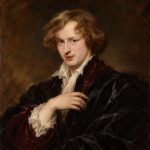

Van Dyck was a prodigy. By his late teens he was the best assistant in Rubens's Antwerp workshop. After six years in Italy painting the nobles of Genoa, he moved to London in 1632 as principal painter to King Charles I, who knighted him. He gave the English court the look it still has in our minds: tall, elegant, relaxed, in shimmering silk, with the pointed beard we still call a Van Dyke.
This triple portrait was painted for Gian Lorenzo Bernini, the great Baroque sculptor, who was to carve a marble bust of the king in Rome. The bust was a triumph, and was destroyed in the fire at Whitehall Palace in 1698. Van Dyck died in London in 1641, aged only 42, the year before civil war broke out. Charles I was beheaded in 1649.


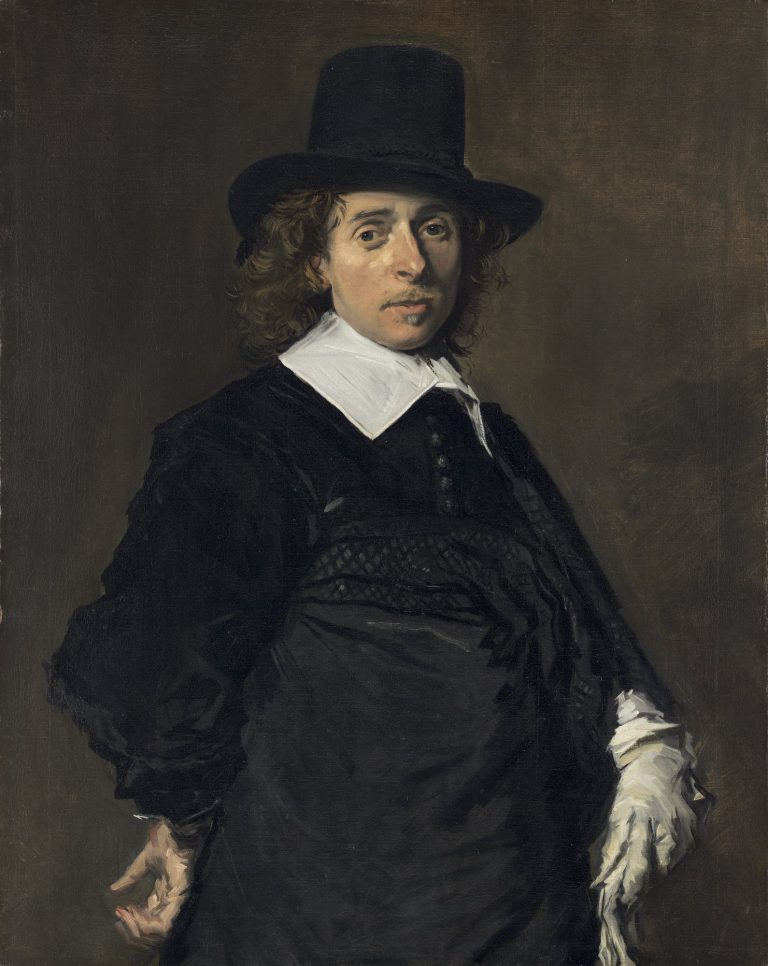
Hals spent almost his whole life in Haarlem, painting its merchants, militia companies, drinkers and children with a speed and freedom nobody else dared. His brushstrokes stay loose and visible, so his people seem to move and breathe. Two centuries later Manet and Van Gogh studied him with passion; Van Gogh counted twenty-seven different blacks in his paintings.
The man in this portrait was 26 in 1624, according to the inscription, and that is all we know. The title was invented in the nineteenth century, when the painting became famous after the Marquess of Hertford outbid a Rothschild for it in Paris. Look at his sleeve: it is embroidered with bees, arrows, flaming torches and lovers' knots, the symbols of the pleasures and pains of love. Hals, for all his talent, died poor, living on a small pension from the city.
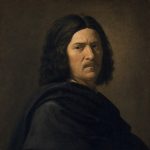

Poussin was the calm, thinking painter of the Baroque. Born in Normandy, he settled in Rome at thirty and stayed there for almost the rest of his life, studying ancient sculpture and Raphael. Instead of drama and spotlights he aimed for order, clarity and noble feeling, building each picture like a stage with little wax figures he arranged in a box.
King Louis XIII called him back to Paris in 1640 to be First Painter. He hated the court and its intrigues and was back in Rome within two years. In this painting four dancers stand for the wheel of human fortune, from poverty to work to wealth to pleasure, and round again, to the music of old Father Time. The English novelist Anthony Powell borrowed its title for his twelve-volume novel.
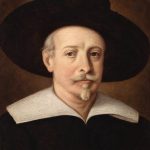
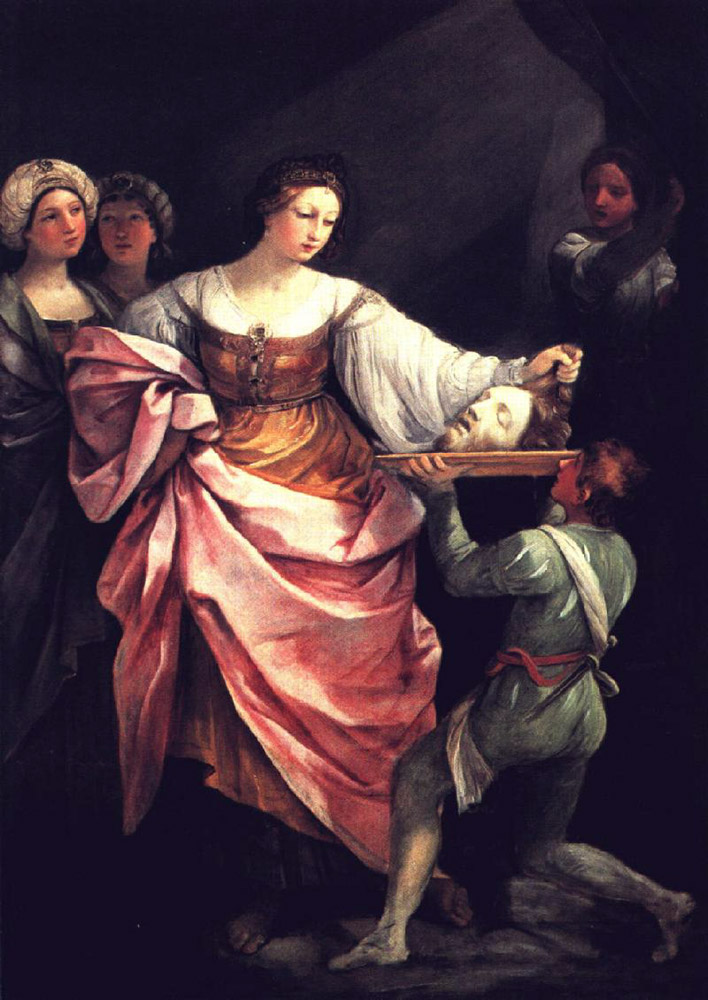
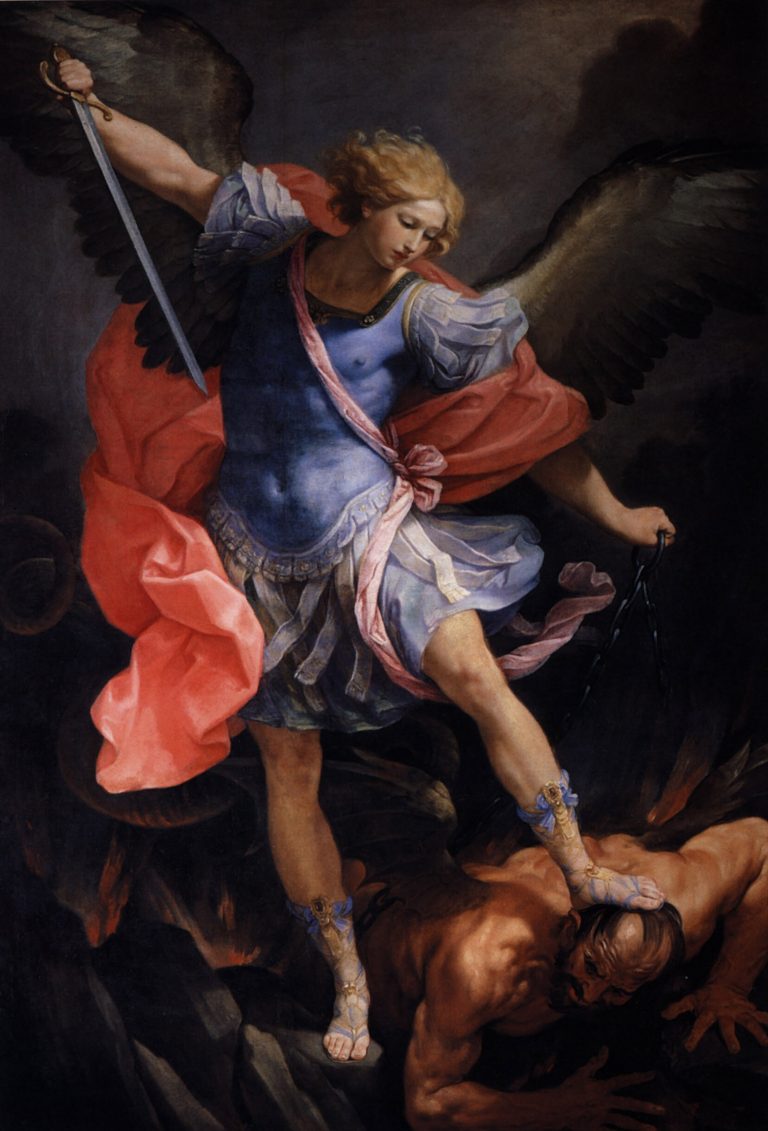
In his lifetime and for two centuries after, Guido Reni was one of the most admired painters in Europe, often called the divine Guido. Trained in Bologna at the academy of the Carracci family, he moved to Rome and became famous for his Aurora, a ceiling fresco of the dawn goddess leading the sun's chariot, painted in 1614.
Where Caravaggio was violent and real, Reni was graceful and idealised: soft pale skin, upturned eyes, silky colours. He was also deeply superstitious, wary of women, and addicted to gambling, which kept him in debt despite huge fees. Victorian critics found him too sweet and his fame faded, but recent exhibitions have brought him back.
Who is the most famous Baroque artist? Caravaggio, closely followed by Rembrandt. People search for both far more than for any other painter of the period, with Vermeer third.
Who were the women Baroque painters? Artemisia Gentileschi is the most famous. Judith Leyster, Clara Peeters, Elisabetta Sirani and Rachel Ruysch were also highly successful in their time.
What is the difference between Renaissance and Baroque art? Renaissance painting aimed for balance, harmony and calm. Baroque painting wanted movement, emotion and drama: diagonals instead of symmetry, strong light and dark, and the moment of highest tension.
Is Rembrandt Baroque? Yes. Rembrandt, Vermeer and Frans Hals belong to the Dutch Golden Age, the Dutch side of the Baroque.
Can I own a painting by these artists? The originals are in museums, but every painting shown here is available from us as a hand-painted oil reproduction, along with hundreds more by these artists. Start with the ten famous Baroque paintings.
Enjoyed this story?
Save articles to your collection
Log in or create a free account, and this article will be waiting in your Private Collection.
Log in or sign upRanking follows monthly US Google search volume for each artist's name (OpenSEO, October 2026). El Greco, searched more often than several artists here, is left out because he belongs to the late Renaissance and Mannerism. Ties are broken with clickstream data. We do not publish the figures.

Man Writing a Letter
Gabriel Metsu, c. 1664
The gallery list
Every painting is already 50% off. Join the list and we will send you an extra $15 code, plus first access to new collections.
No spam. Unsubscribe anytime. · Privacy Policy
Welcome
Your $15 code is on its way. Explore the gallery while you wait.