Loading cart…
No products in the cart.

c. 1743 · Oil on canvas · National Gallery, London
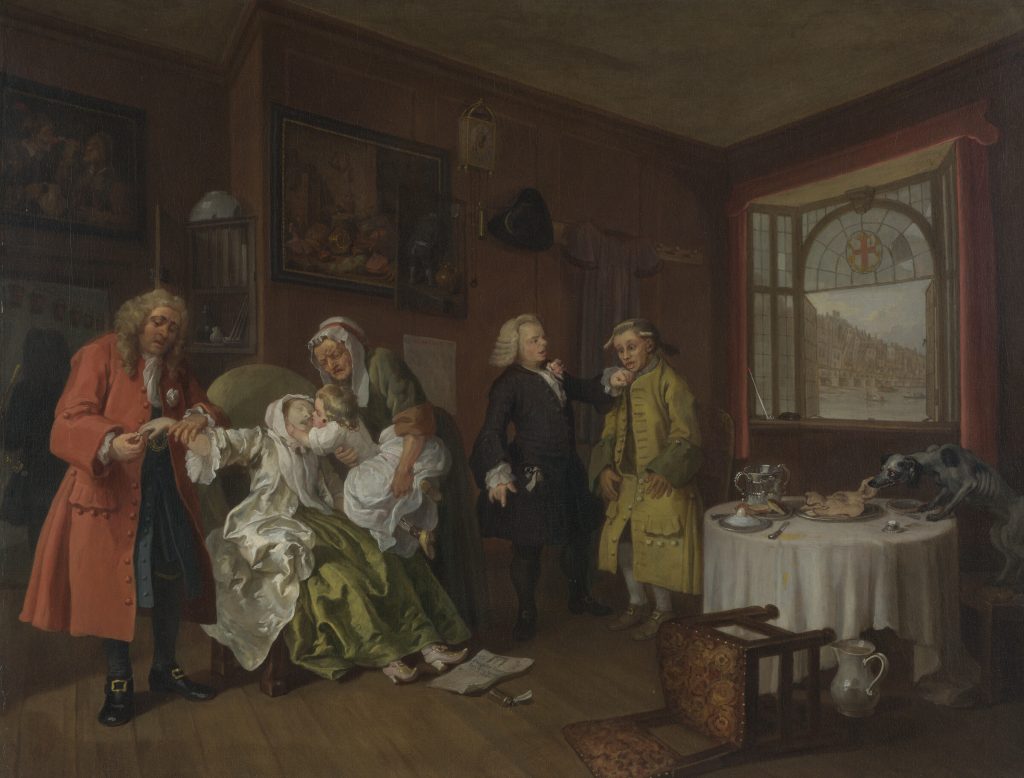
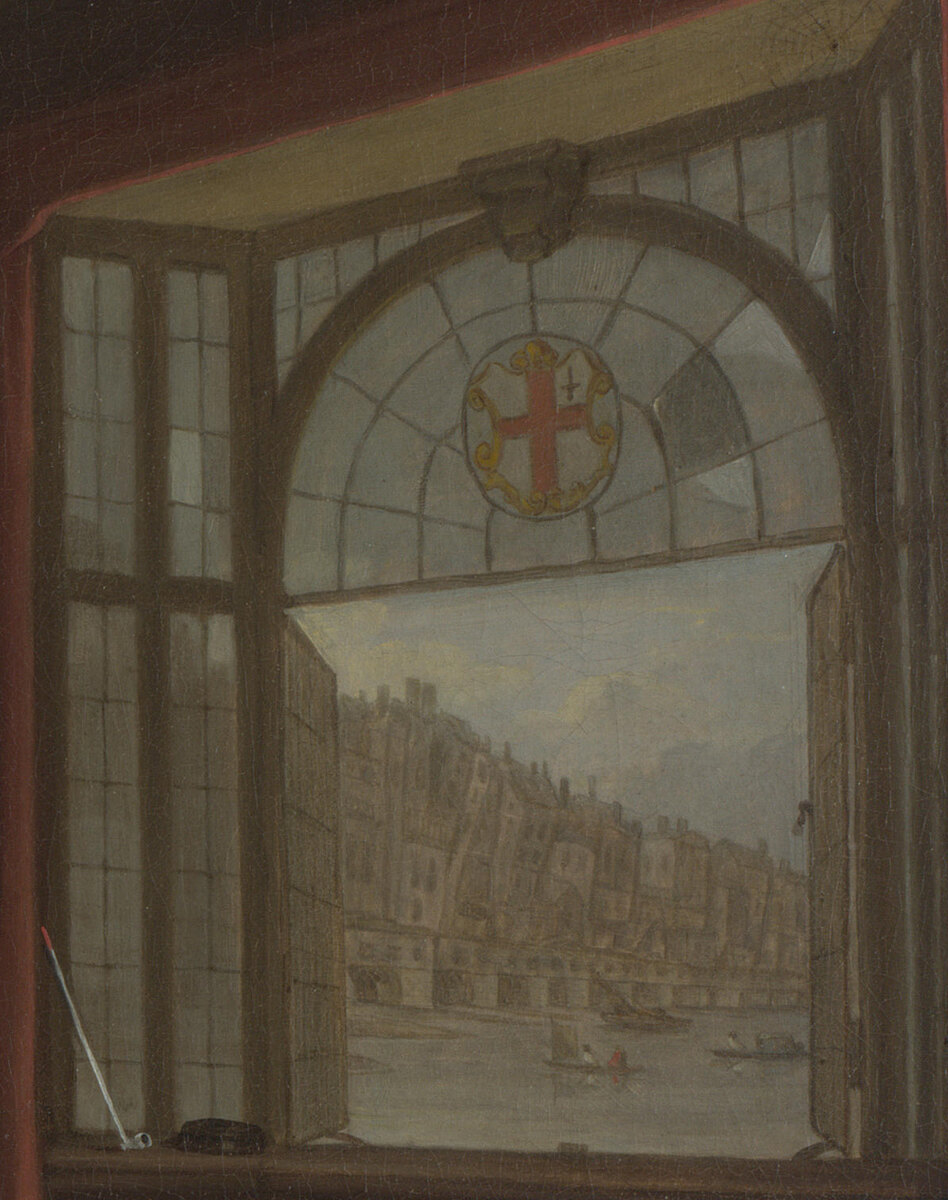
The last room is a plain one. Bare boards, a bare table, wooden panelling, a window on the river. Through it you can see old London Bridge with its houses, which means we are in the City, in the Alderman's own house, where the money in Room 1 came from. The Countess has come home to her father to die.
Hogarth called the picture The Lady's Death, and he composed it as the answer to the first. Room 1 was a deal. This is the account.
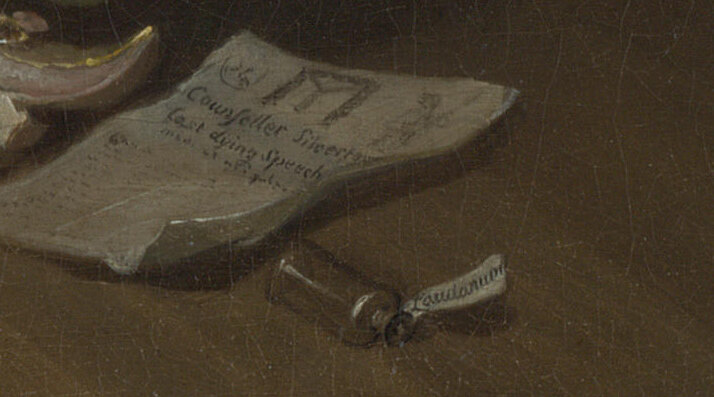
The evidence is on the floor, as it always is with Hogarth. A pamphlet, of the kind sold at hangings, is titled Counsellor Silvertongue's Last Dying Speech. He was hanged at Tyburn for the killing in the bagnio. Beside it lies an empty bottle labelled laudanum. She read of his death and took the bottle. She is dying in the chair, her head fallen back, her lips already blue.
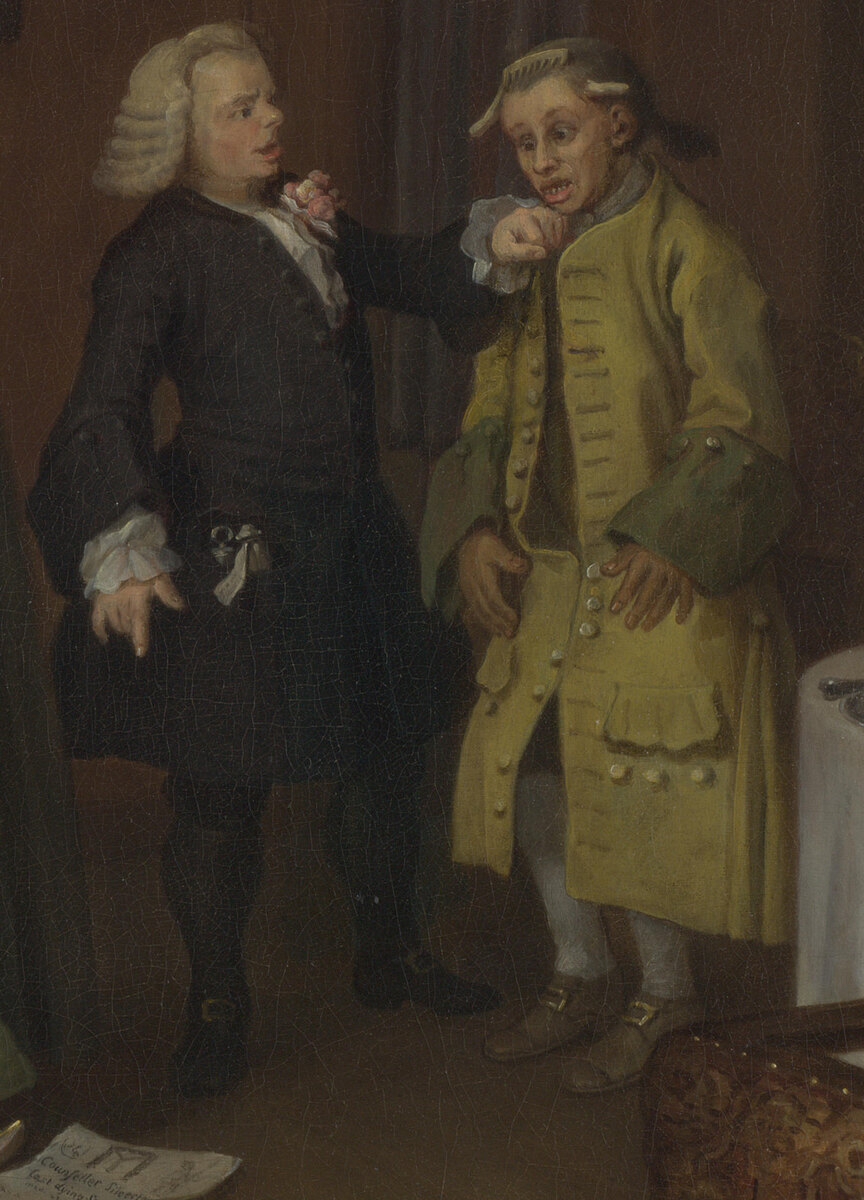
The apothecary, in black, has arrived too late and is shouting at the servant who was sent for the bottle, a slow-witted young man in a yellow coat who stands with his hands open. Somebody has to be blamed and it will be him. Nobody is looking at the woman in the chair.
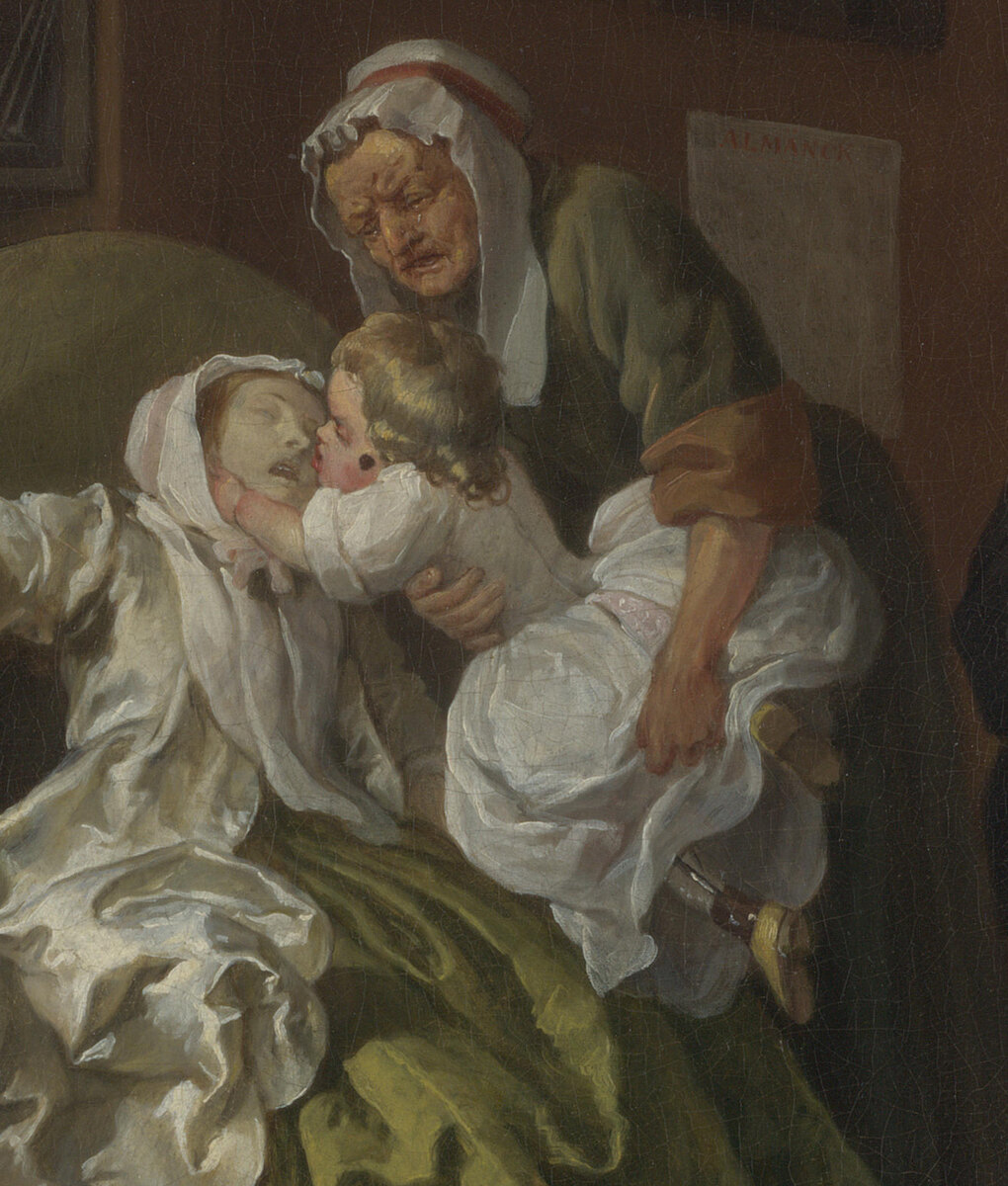
An old nurse lifts the Countess's child to kiss her mother goodbye. It is a girl, and she is the only person in six paintings who is entirely innocent, and she has inherited everything. There is a brace on her leg and a black patch on her cheek: the disease from Room 3, passed from the Viscount to his daughter. She is also a girl, which means the title dies with her father. The Earl's family tree from Room 1 ends here, on a bare floor by the river.
It is the funniest tragedy in art, and this is the room where the laughing stops.
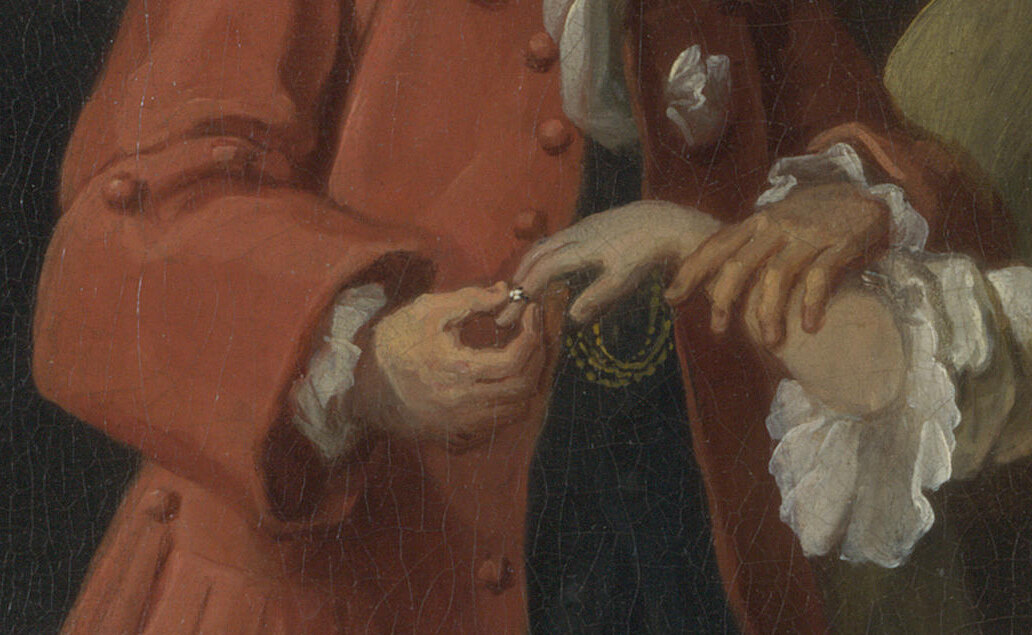
The Alderman is not looking at his daughter either. He is holding her hand, and he is pulling the wedding ring off her finger. The usual explanation is that a suicide's goods were forfeit to the Crown, and the ring is gold; he is saving what he can. He is doing, at the end, exactly what he did at the beginning: attending to the value of the transaction. Hogarth gives him no villainy, only habit. That is worse.
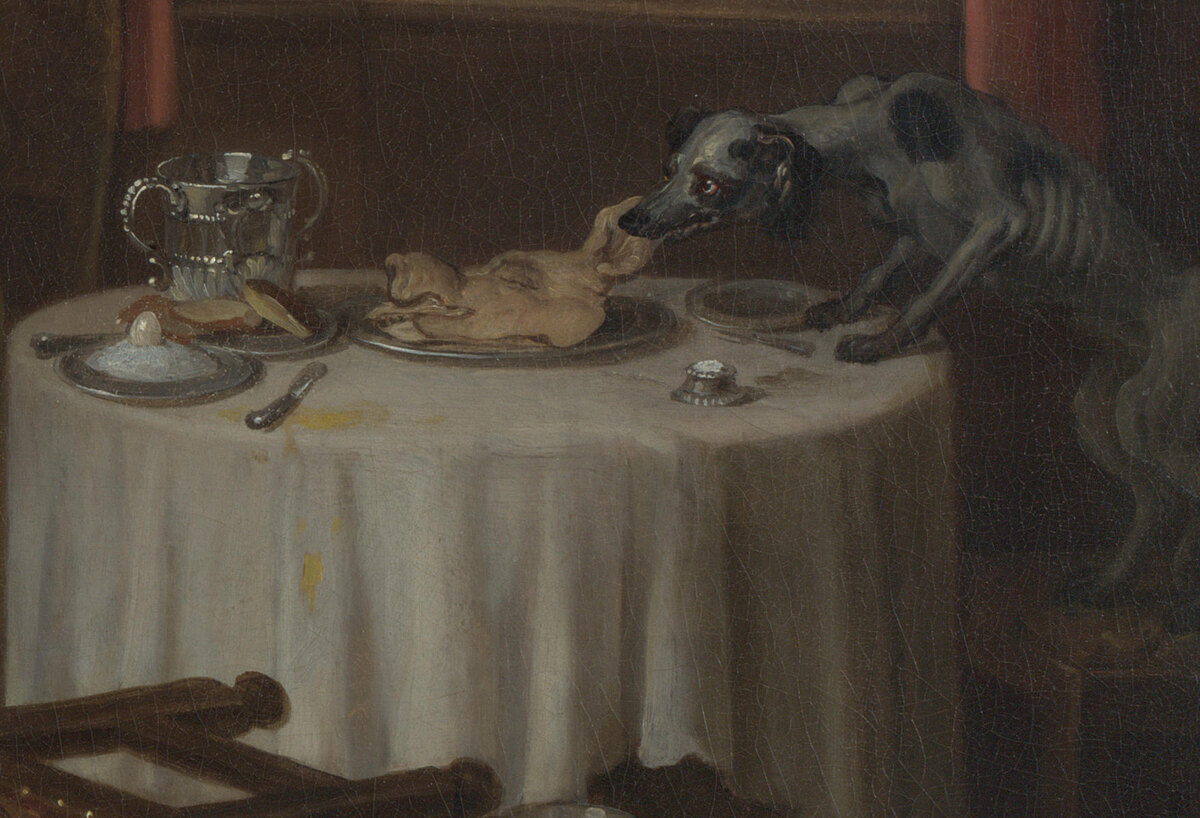
On the table the dinner has been laid, an egg, a pig's head and not much else, because the Alderman is careful with money, and a dog so thin its ribs show has climbed up and is stealing the pig's head. It is the last joke of the series and it is the same joke as the chained dogs in Room 1: the animals tell the truth. The paintings on the wall are Dutch, a drunkard relieving himself and a still life, cheap and coarse, the Alderman's taste against the Earl's Italian martyrdoms. Neither man ever bought a picture for pleasure.
The series began with a contract and ends with an inventory. The Earl wanted money and got a dead son and a title that will die with a sick granddaughter. The Alderman wanted a title and got his daughter back in a chair, and kept the ring. The two young people were never asked, and they are both dead. The lawyer was hanged. The only survivors are the professionals: the apothecary, the nurse, the steward walking out of Room 2 with his bills.
Hogarth's point, which is why the six rooms still work, is that nobody in them is a monster. The Earl is vain, the Alderman is careful, the Viscount is a fool and the Countess is bored, and those four ordinary faults, given money and a contract, produce a hanging and two funerals. He painted it in 1743 for a public that arranged marriages exactly like this one. They bought the prints in thousands and did not stop.
The original hangs with the other five in the National Gallery in London, where the series has been since the Gallery opened in 1824. Our hand-painted reproduction of The Lady's Death is painted in oil on canvas from the National Gallery original, and the six scenes can be ordered singly or as a set to hang in order. Hung in order, the six make one story along a wall. More Hogarth in our William Hogarth collection.
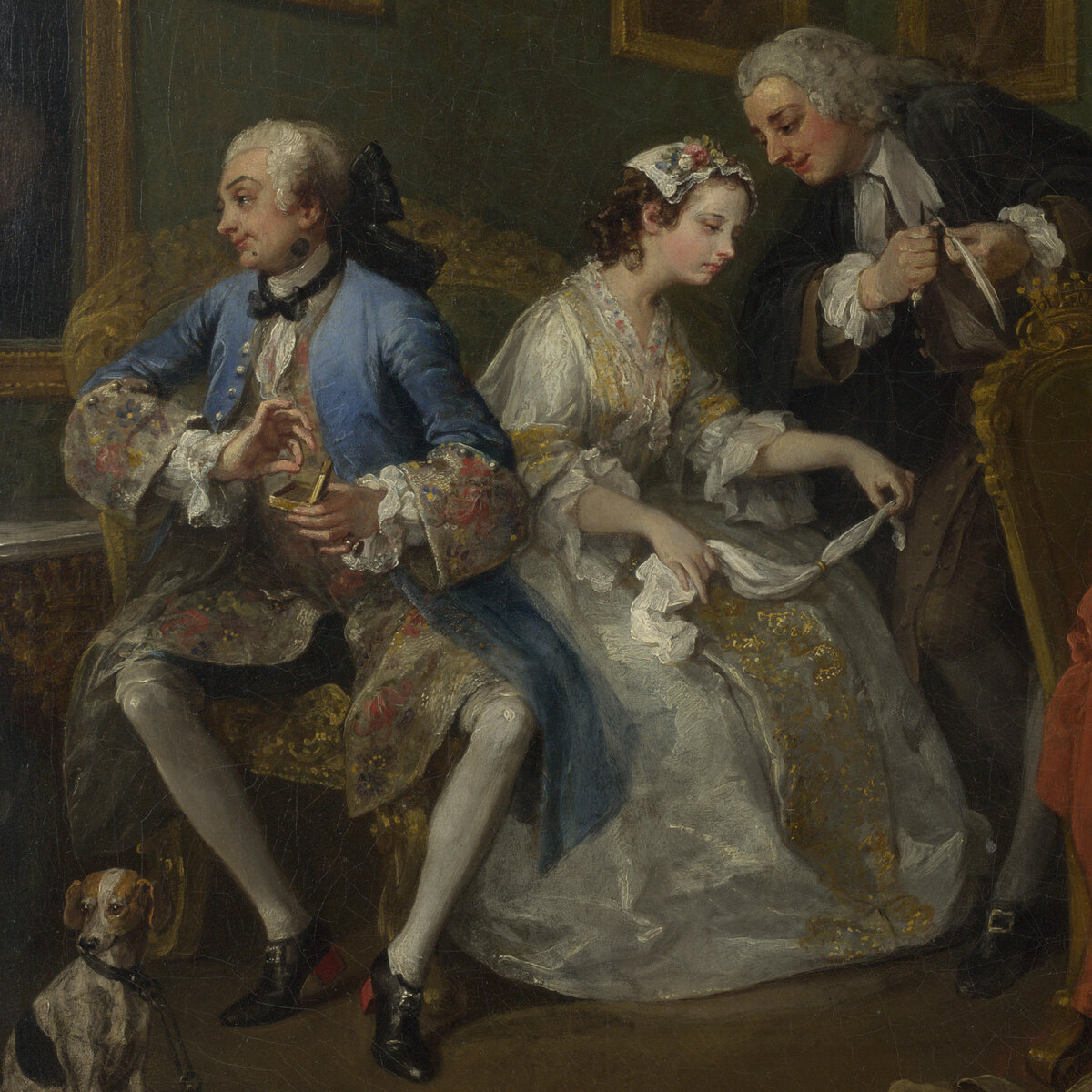
Visible details, documented facts and interpretation are kept separate throughout this article. Hogarth left no written key to the series; readings of individual objects follow the National Gallery and Paulson and are marked as readings.