Loading cart…
No products in the cart.

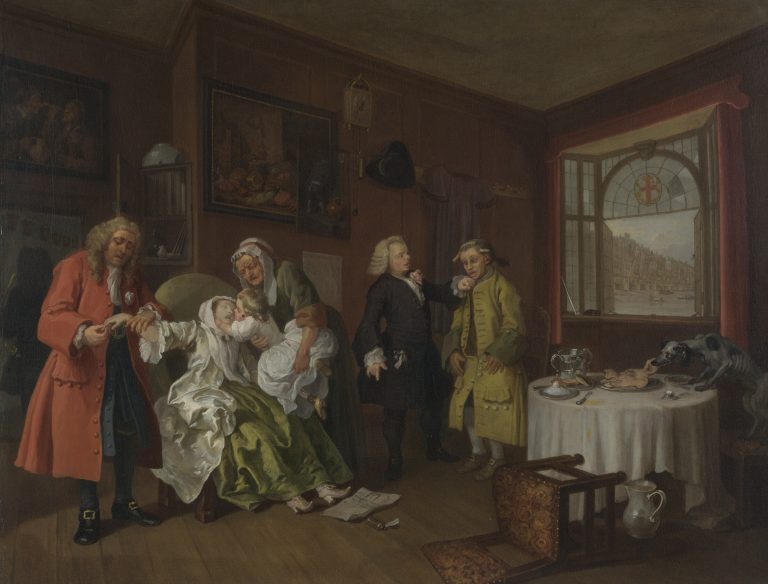
c. 1743 · Oil on canvas · National Gallery, London
Save articles to your collection
Log in or create a free account, and this article will be waiting in your Private Collection.
Log in or sign upRoom 5 ended with a husband dying, a lover escaping through a window and the law coming through the door. Room 6 is quieter. We are back in the house of the bride's father, the Alderman from Room 1, near the river in the City of London. Silvertongue is gone. Her husband is gone. The marriage ends where the bargain began.
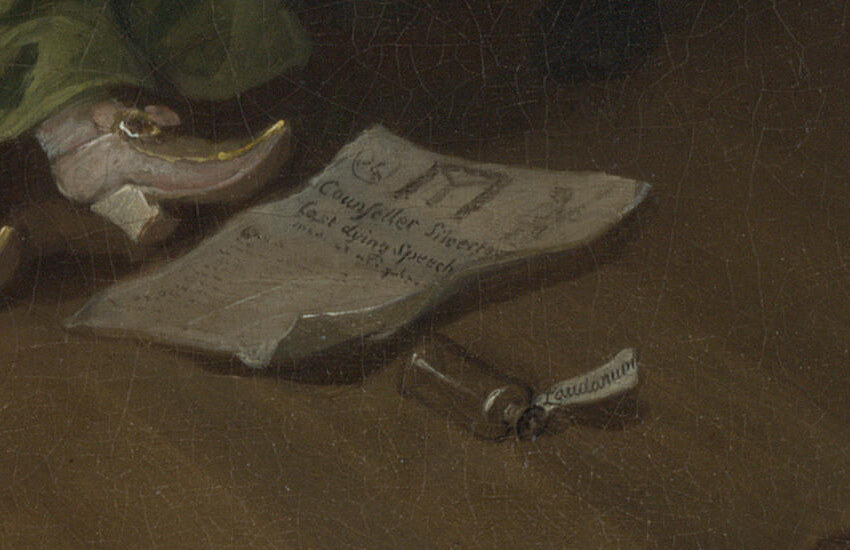
Start at the Countess's feet. A printed sheet lies on the floor, and you can read its title: Counsellor Silvertongue's Last Dying Speech. Sheets like this were sold in the streets after a hanging. The National Gallery tells us what it reports: Silvertongue has been hanged at Tyburn for murdering her husband.
He escaped through the window in Room 5. He did not escape what came after.
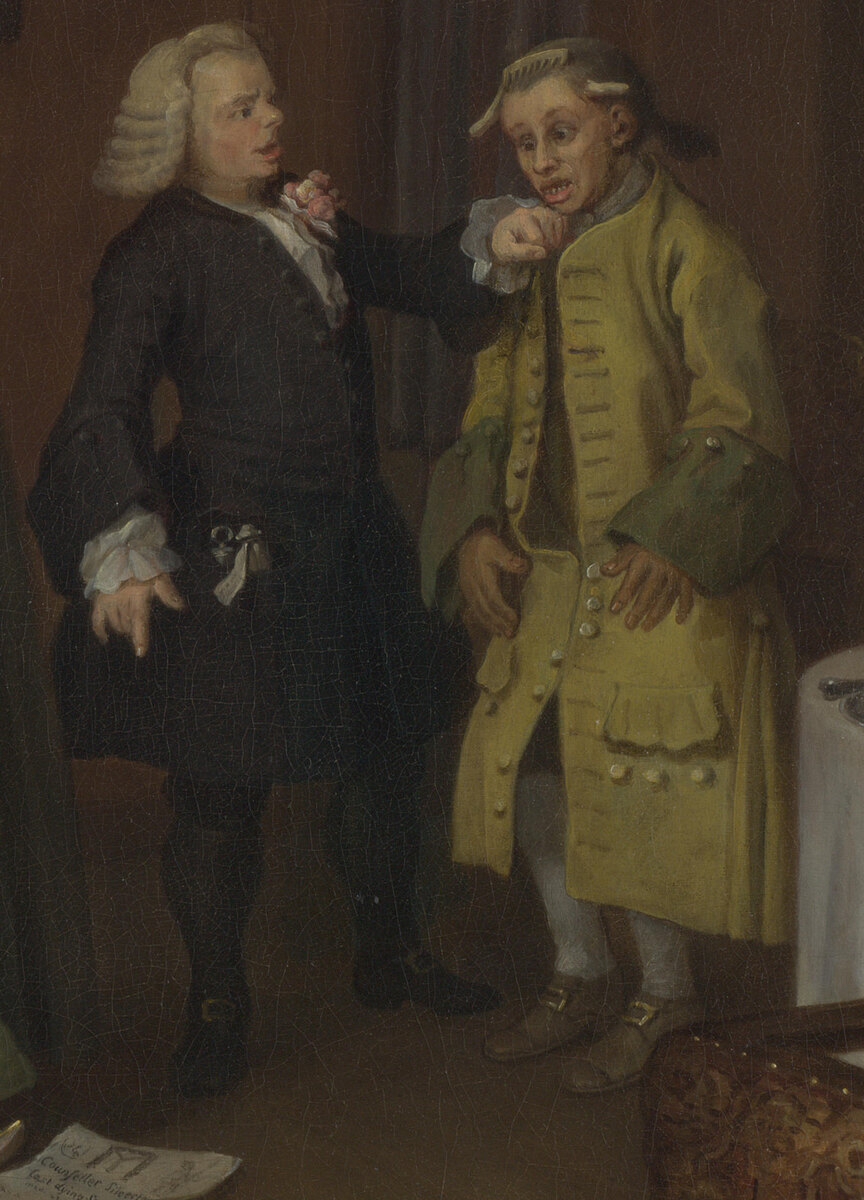
Beside the paper lies a small empty bottle. The National Gallery says the Countess has taken laudanum, an opium medicine, after reading of Silvertongue's execution. Behind her chair, the apothecary seems to be scolding one of the household's servants. In the National Gallery's reading, he is the one who fetched the bottle.
Hogarth paints this without drama. There is no struggle and no speech. Just a paper, a bottle and a woman slumped in a chair.
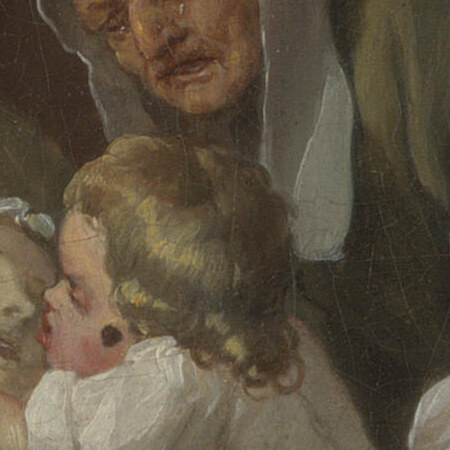
An old nurse lifts a small child up to the Countess, and the child reaches up to her face. This is the baby whose coral teether hung from the back of her chair in Room 4. We are finally allowed to see the child, at the very end.
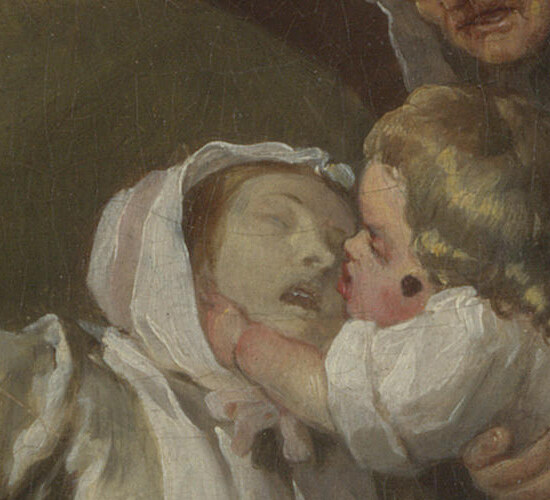
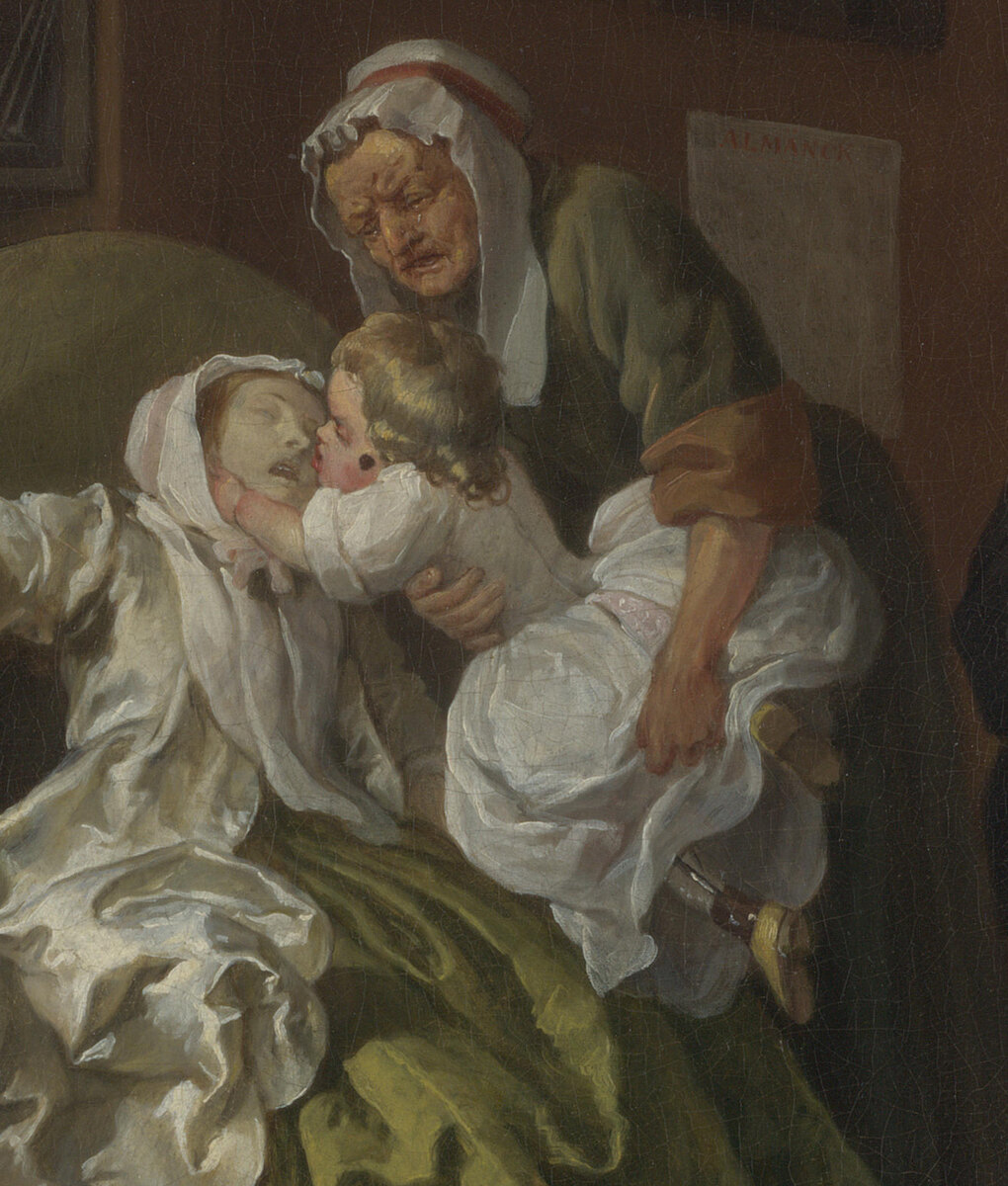
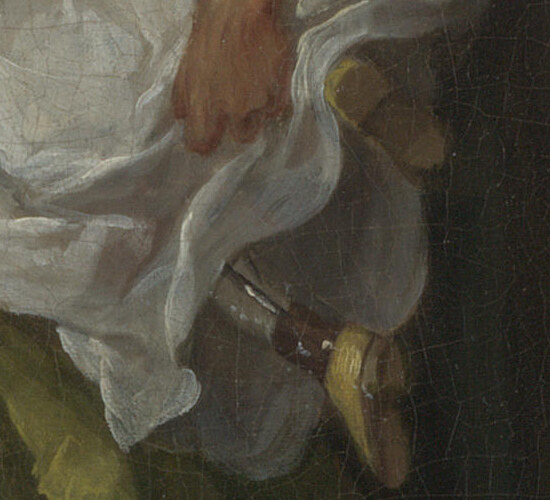
Look closely, carefully. There is a dark spot on the child's cheek. The National Gallery reads the spot, the sunken bridge of the nose and the braces on the child's legs as signs of congenital syphilis, the disease passed on before birth. The mark we first saw on the groom's neck in Room 1 has reached the next generation.
On the left stands a man in a red coat. You have met him before. He is the Alderman, the bride's father, the man who peered at the marriage contract through his spectacles in Room 1. He was there when the deal was signed. He is here at the end.
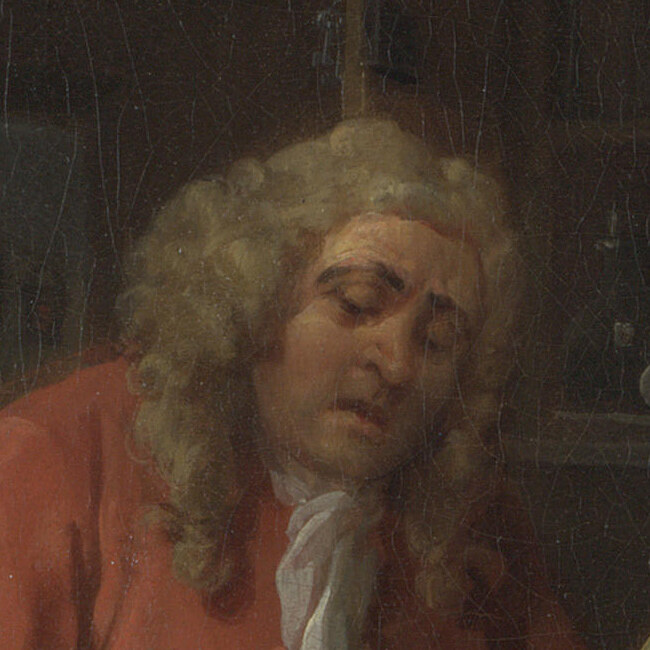
He is holding his daughter's hand. Look closer at what his fingers are doing. He is not holding it. He is taking the ring off her finger.
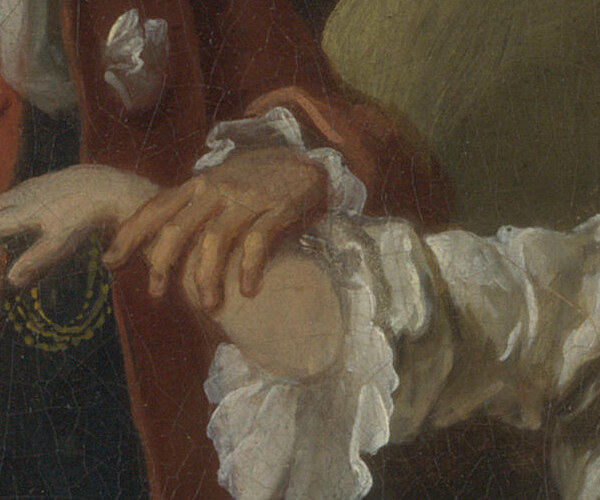
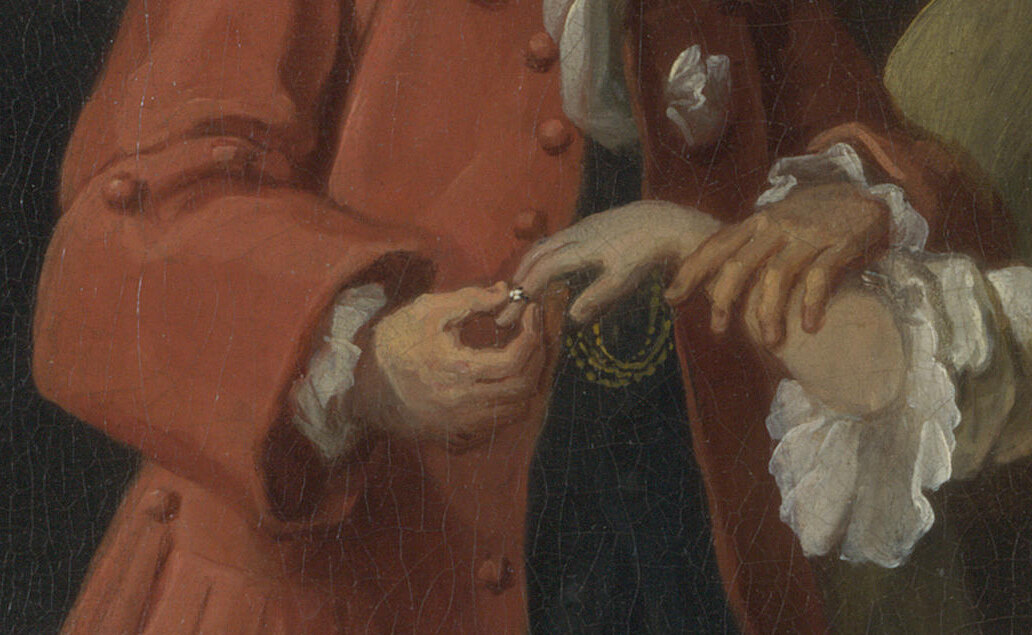
The National Gallery puts it bluntly: he removes the ring rather than troubling himself to say goodbye. Many writers add a legal reason. In Hogarth's England, the goods of a person who took their own life could be forfeited to the Crown. A ring on her finger might be lost. A ring in his pocket would be saved.
Remember the bride in Room 1, threading her ring along her handkerchief while the men negotiated. The story that began with a father, a contract and a ring ends with the same father taking the ring back.
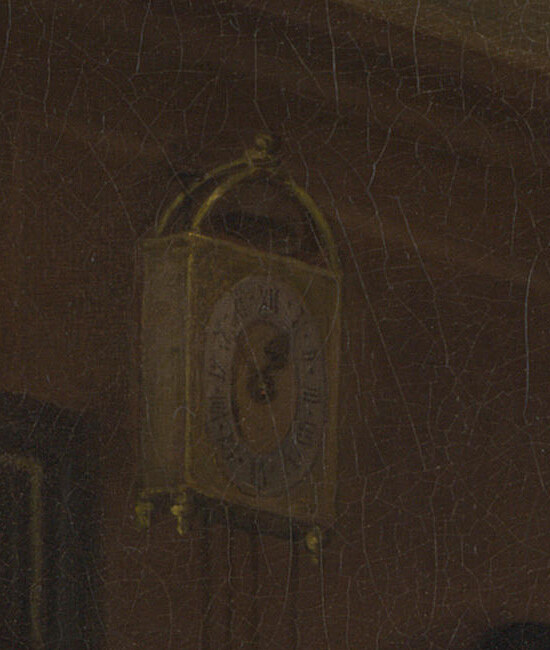
Look around the father's house and you will see none of the splendour of the earlier rooms. The furniture is plain. The clock on the wall is a simple box, nothing like the fish-and-Buddha fantasy of Room 2. On the table is a sparse meal, a boiled egg on rice, and a starving dog is helping itself to a pig's head. The pictures on the walls are cheap Dutch scenes of ordinary low life.
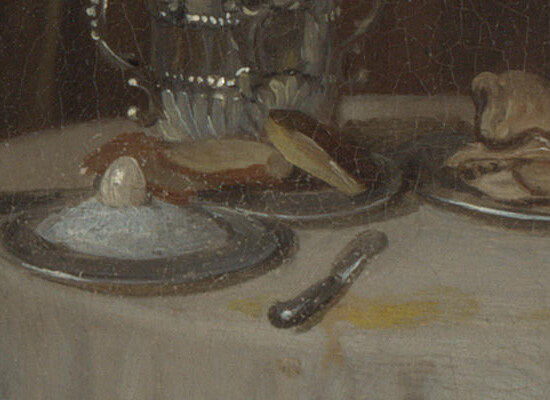
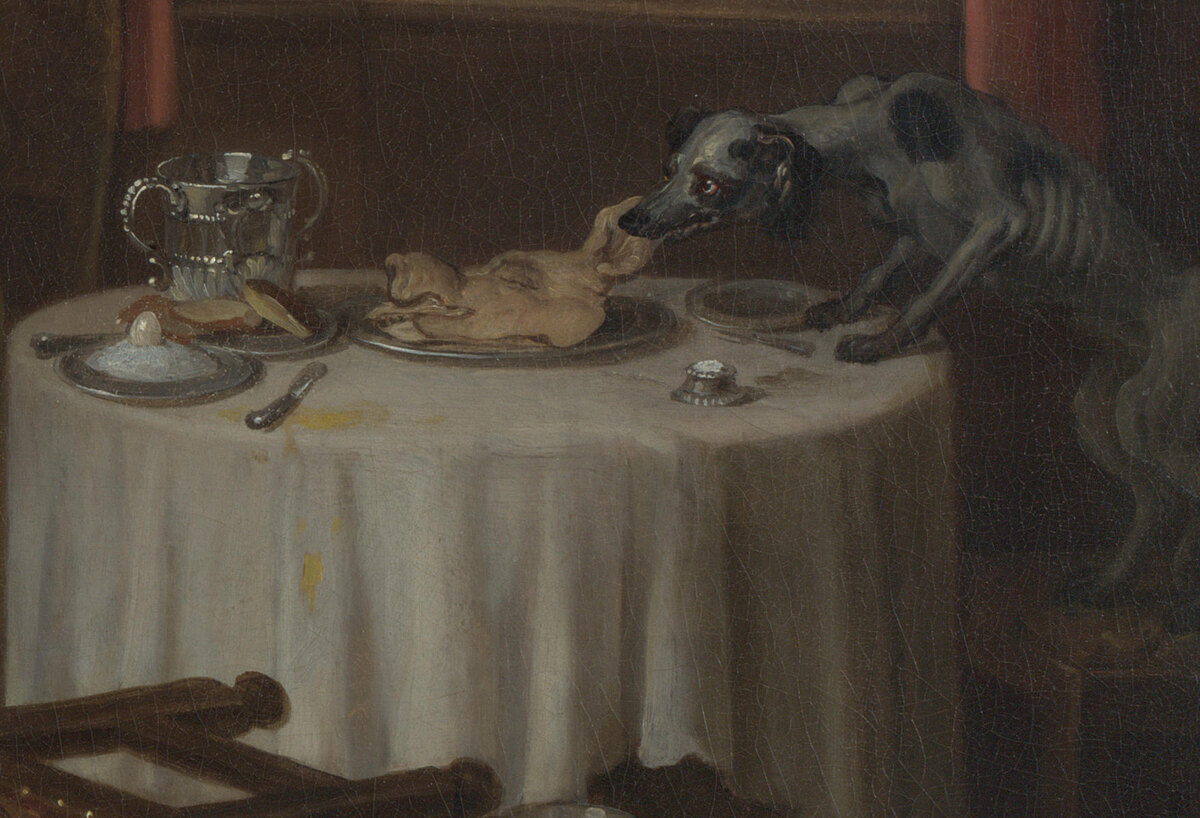
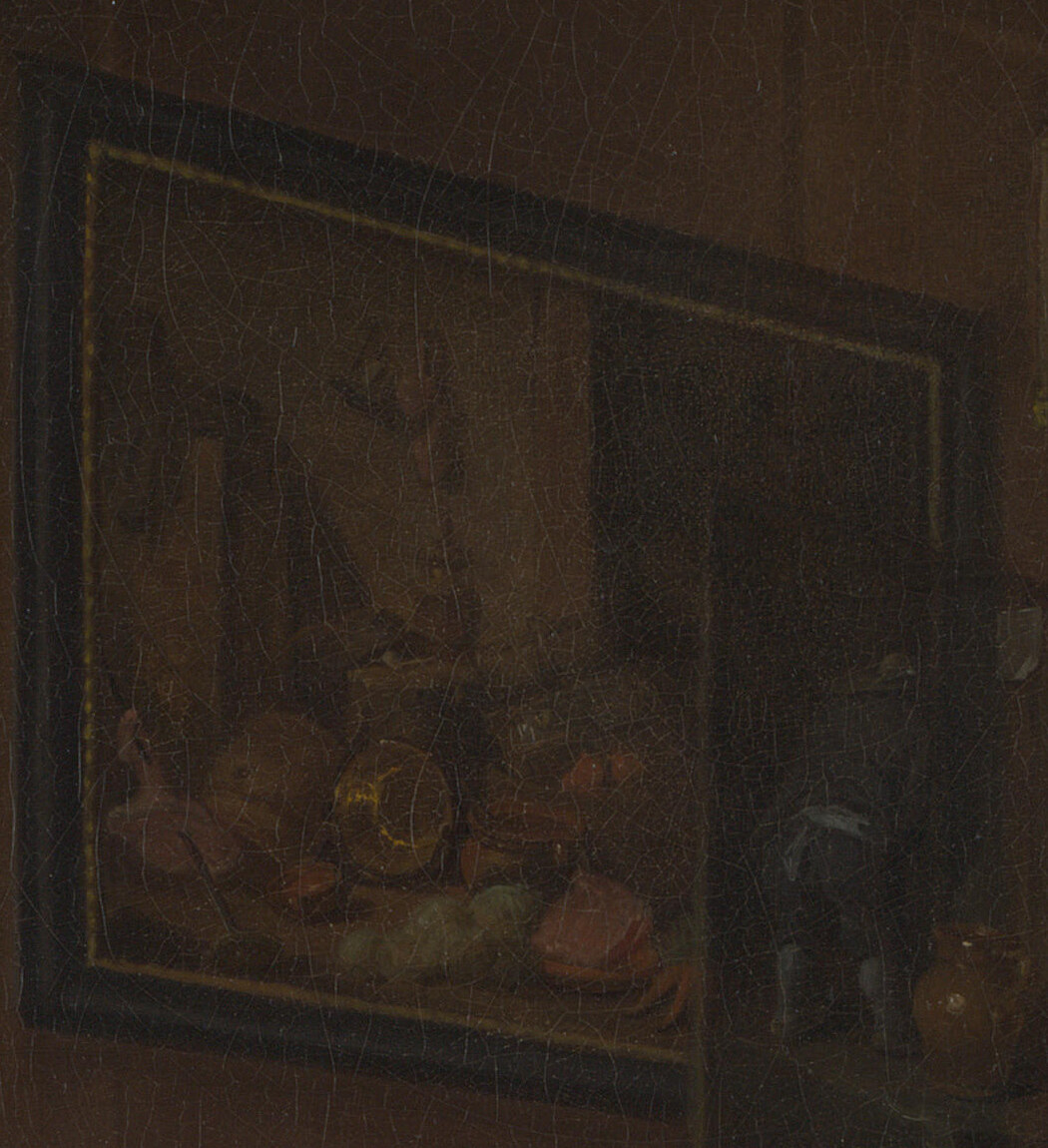
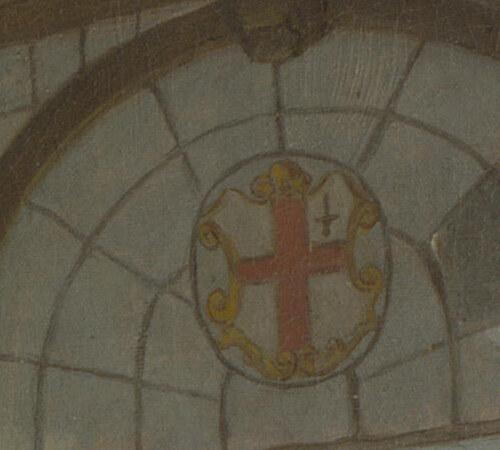
Through the window you can see old London Bridge, still covered in houses, and in the glass the arms of the City of London, the father's world of trade. This is where the money that bought the title came from. It was never spent here.
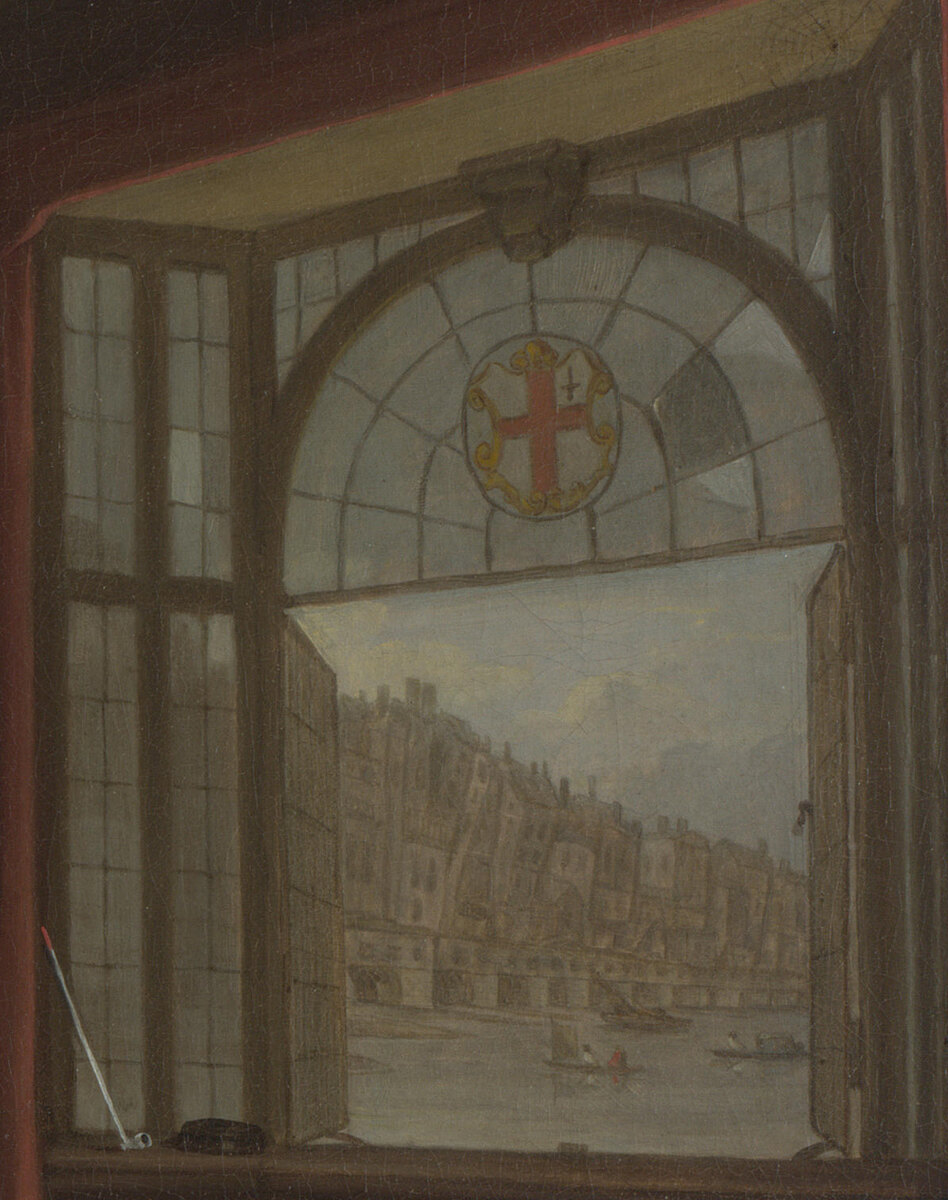
Look again at the broadside on the floor. Hogarth was building towards it from the start. The National Gallery points out a tripod perched on top of the doctor's cabinet in Room 3, a quiet echo of the gallows whose report now lies at the Countess's feet. The doctor's room was warning us three rooms ahead.
If you want to check, go back to Room 3 and look above the skeleton.
The ending is not simply that everyone is punished. Look at how the consequences have travelled: from a contract into a house, from a black spot into a doctor's room, from a ticket into a bagnio, from a sword to a gallows, and from one generation to the next.
Money can be inherited. Titles can be inherited. But consequences can be inherited too.
ByMuseum
Hogarth had a bad bargain of his own. In 1751 he put the six paintings up for sale by sealed bid. Only one buyer turned up, John Lane, and he bought the whole series for 120 guineas, a fraction of what Hogarth had hoped for. Half a century later the banker John Julius Angerstein paid a thousand guineas for them, and when his collection was bought for the nation to found the National Gallery, which opened in 1824, the six rooms went with it. They still hang there together.
Six paintings. Six rooms. The marriage began with a father, a bargain and a ring. It ends with the same father taking the ring away.
Was this marriage destroyed by the people inside it, or by the bargain that began it?
The original hangs in the National Gallery in London with the other five rooms. Our hand-painted reproduction of The Lady's Death is painted in oil on canvas from the National Gallery original, and the six scenes can be ordered singly or as a set to hang in order.
This is the last of The Six Rooms of a Bad Marriage. Return to Room 1 and watch the ring from the beginning.
Enjoyed this story?
Save articles to your collection
Log in or create a free account, and this article will be waiting in your Private Collection.
Log in or sign upWhat is visible in the painting, what the National Gallery says, and what ByMuseum reads into it are kept apart. Hogarth left no written key to the series.