Loading cart…
No products in the cart.

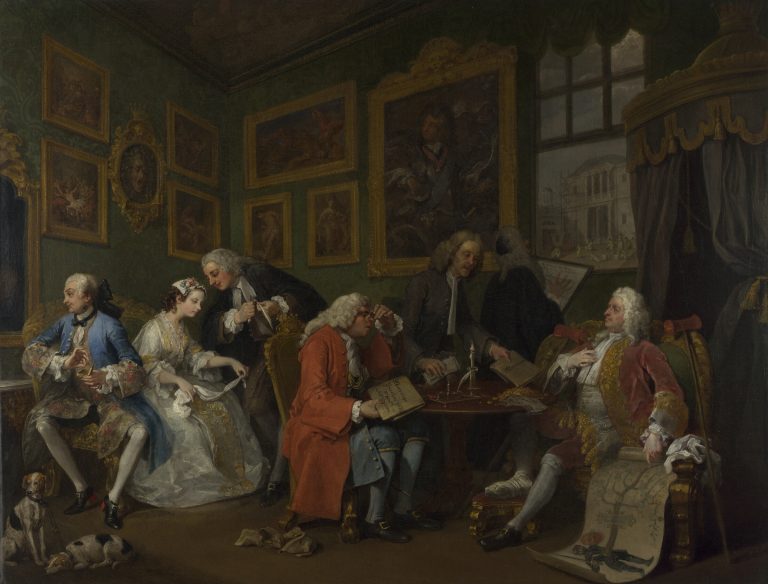
c. 1743 · Oil on canvas · National Gallery, London
Save articles to your collection
Log in or create a free account, and this article will be waiting in your Private Collection.
Log in or sign upStart with the two people this painting is supposed to be about. They are about to be married, and they are sitting side by side on a settee in the corner. They are also as far apart as two people on one settee can get.
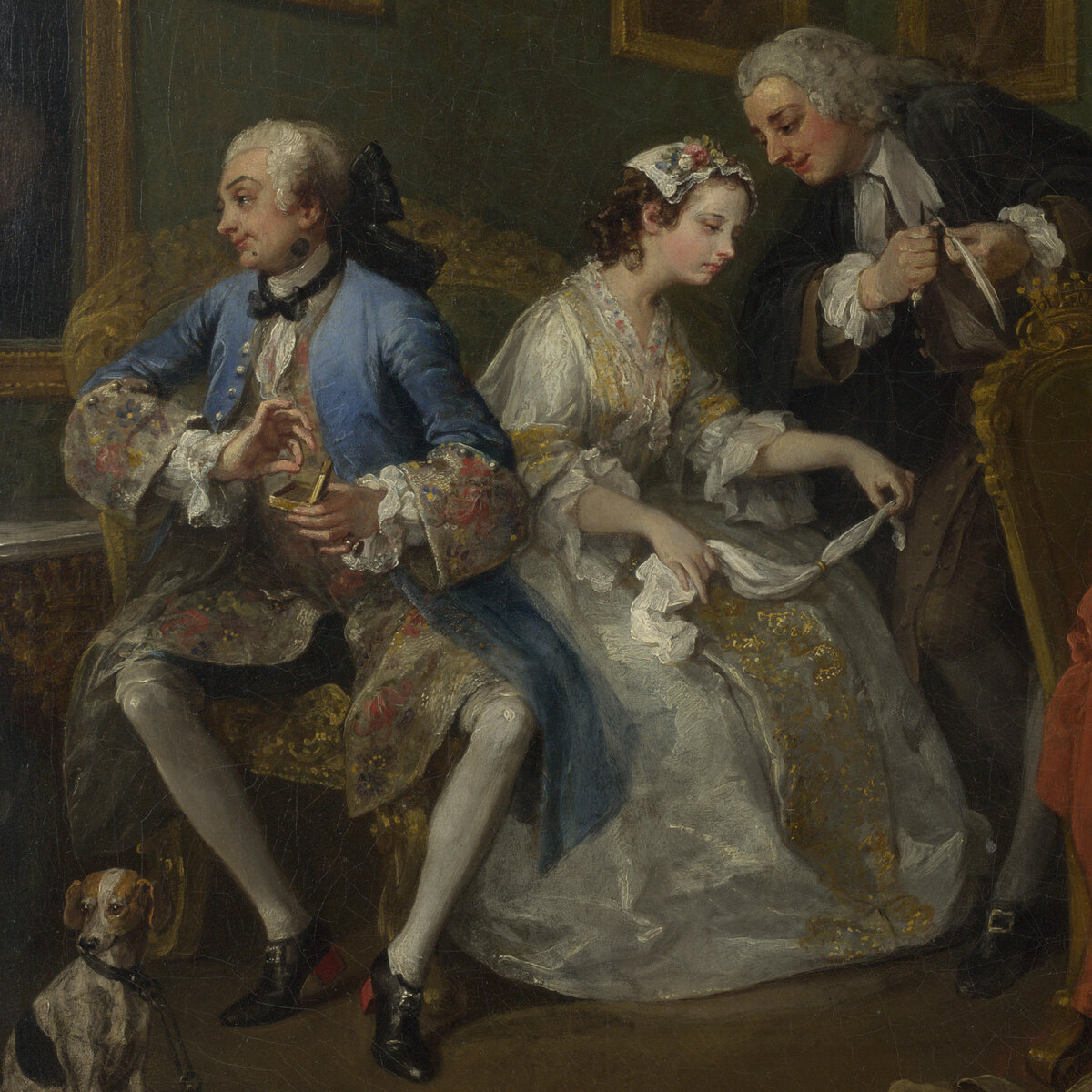
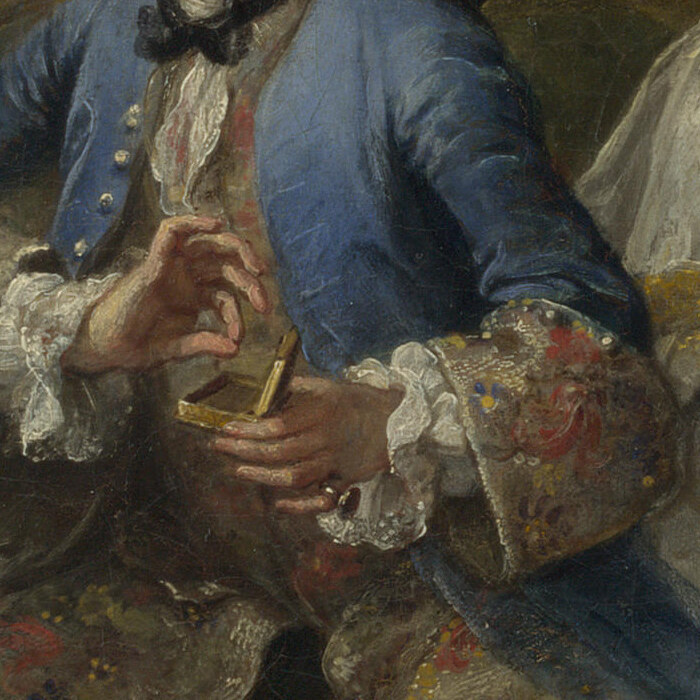
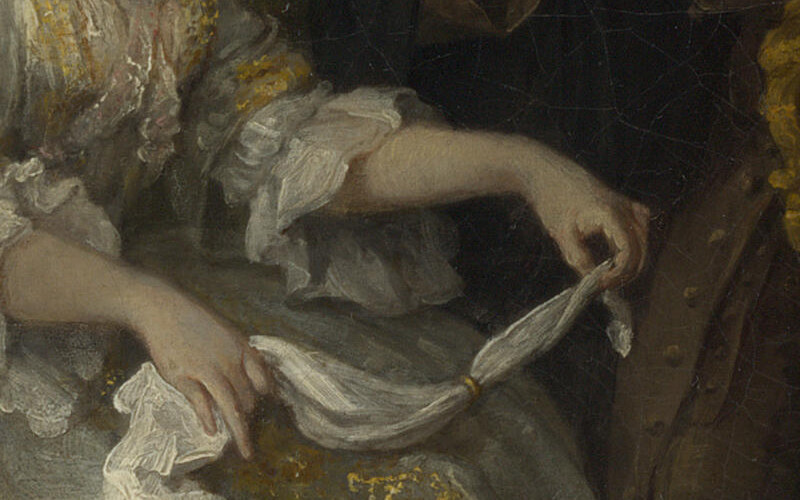
The groom, a young Viscount, has turned his back on her completely. He is looking at himself in a mirror and taking a pinch of snuff. The bride looks down, threading her wedding ring along a handkerchief, round and round, the way you fiddle with something when you are waiting for an ordeal to be over.
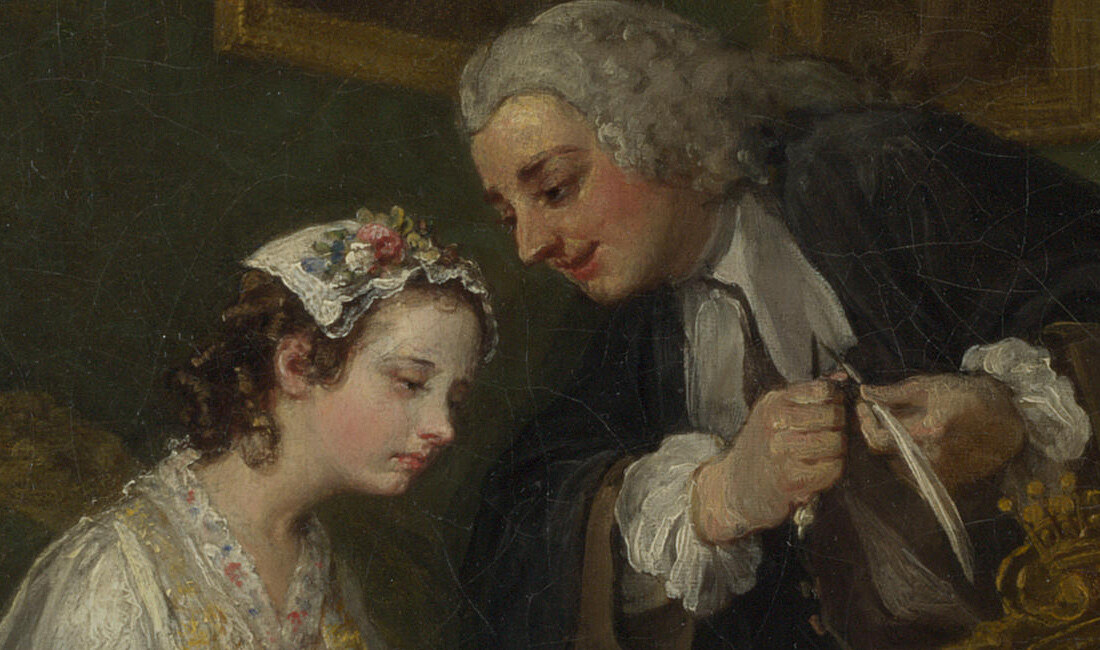
And someone is leaning in to talk to her. It is not the groom. It is the lawyer, sharpening a quill and whispering in her ear. The National Gallery gives him his name: Silvertongue. He is the most attentive man in the room, and he is not the one she is marrying.
Now look at the middle of the room, where the real business is happening. Two fathers sit at a table, and between them is the reason everyone is here: a marriage settlement, a large parchment contract, with money already poured out beside it.
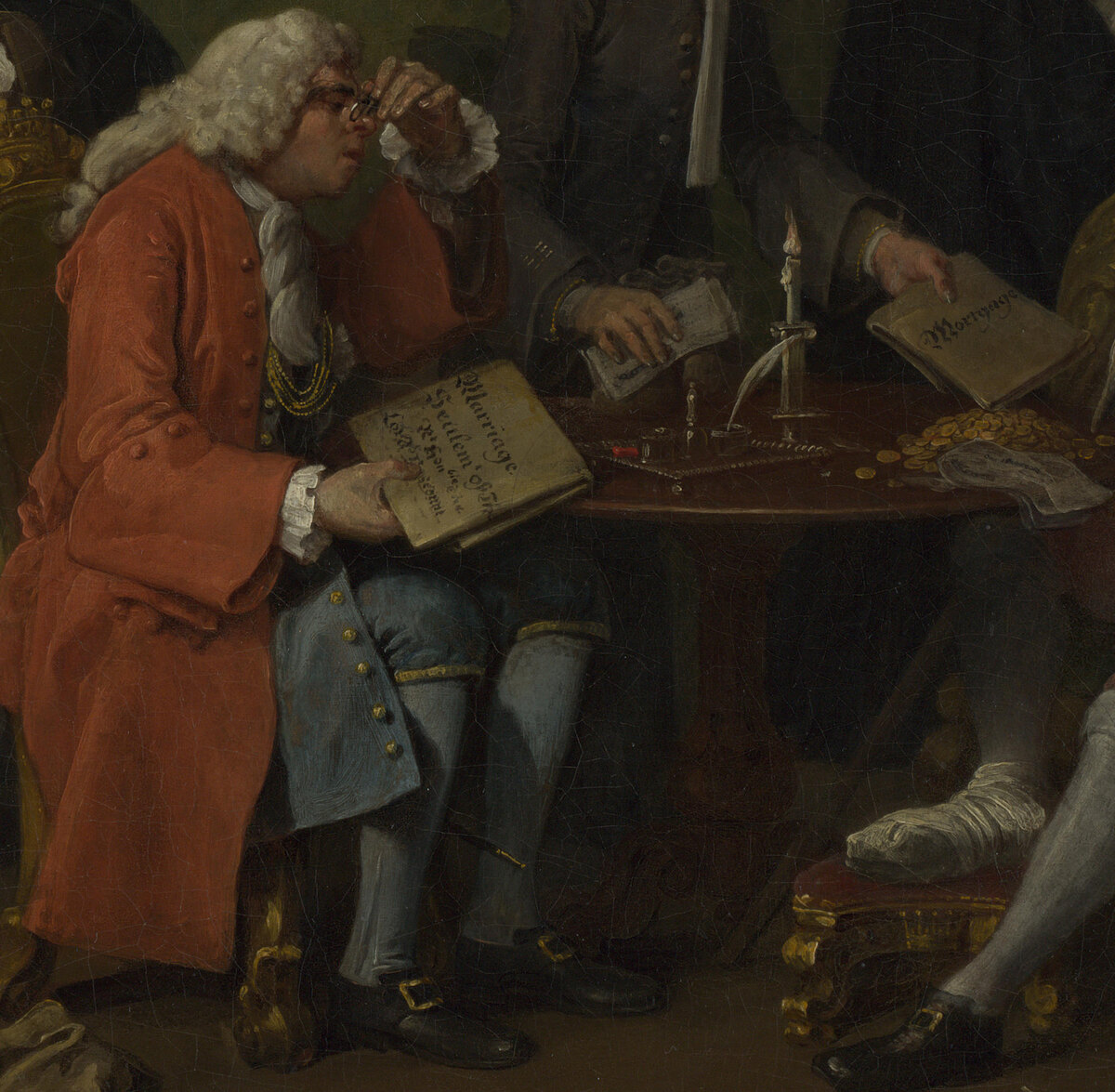
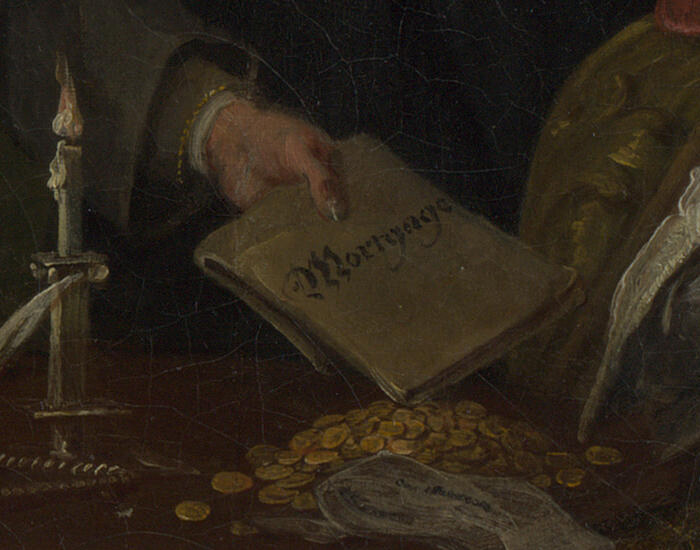
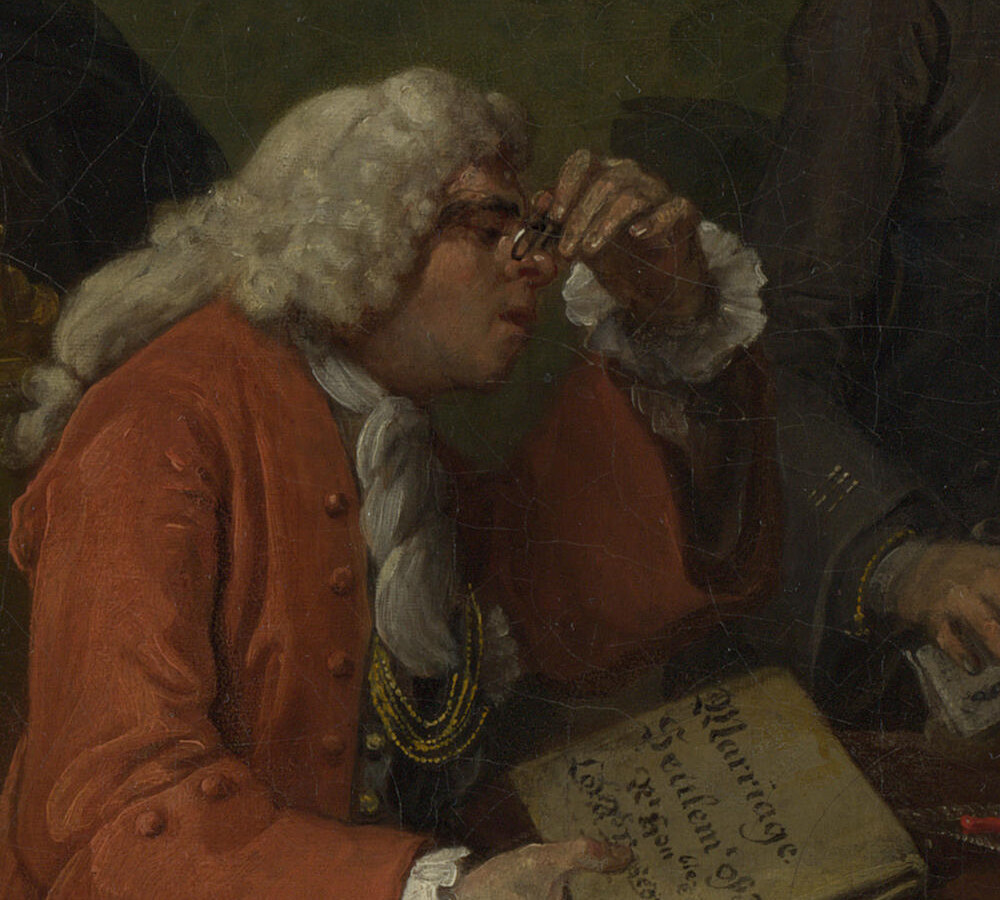
One of the papers being handed across actually says Mortgage. On one side of the table sits the bride's father, a rich City merchant. He wears the gold chain of an Alderman of the City of London and peers at the contract through his spectacles, the way a man reads a deal, not a love letter.
On the other side, in velvet and lace, sits the groom's father, the Earl of Squander. Hogarth gives him a name that tells you everything. The bargain is simple. The merchant's family gets a title for his daughter. The Earl gets the merchant's money.
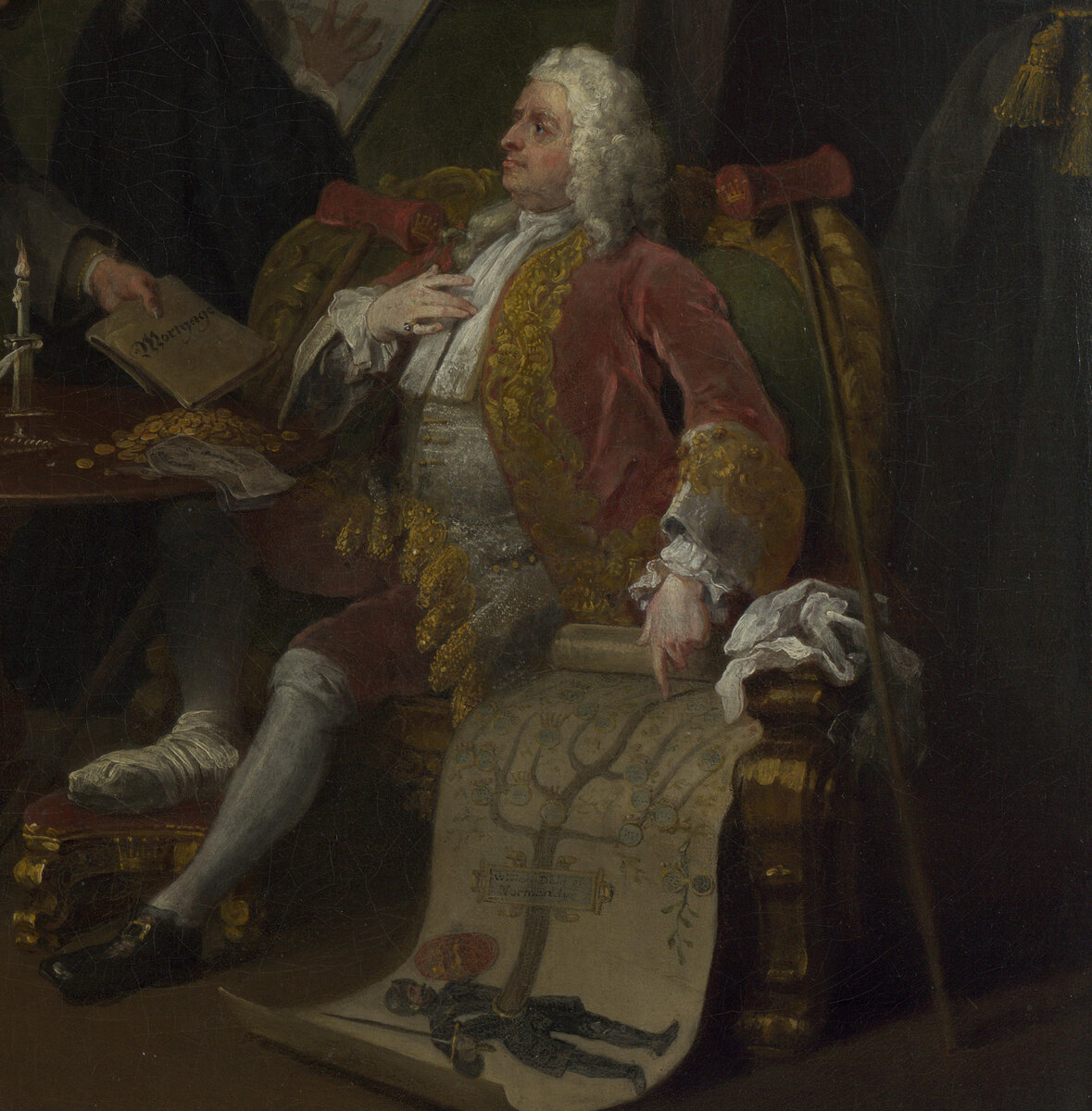
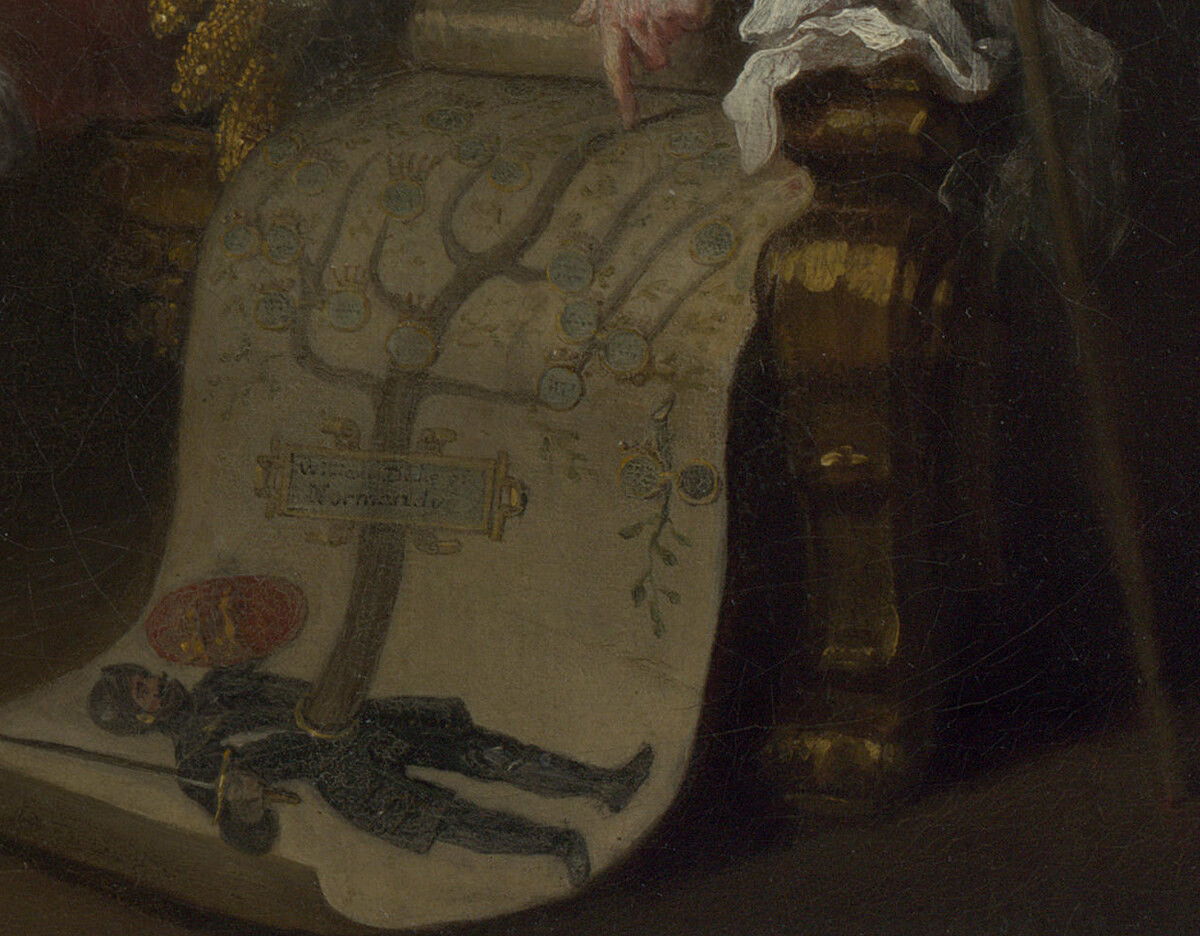
The Earl is selling the one thing he has left: his ancestry. He points to a family tree unrolled across the floor and rests his other hand on his heart, as if to show where the noble blood is. Look at the bottom of the tree. It grows out of a knight in armour, the National Gallery says, William the Conqueror himself. Whether the tree is true is not the point. The point is that it is for sale.
His foot, wrapped in bandages, rests on a stool. He has gout, the illness of rich men who eat and drink too well.
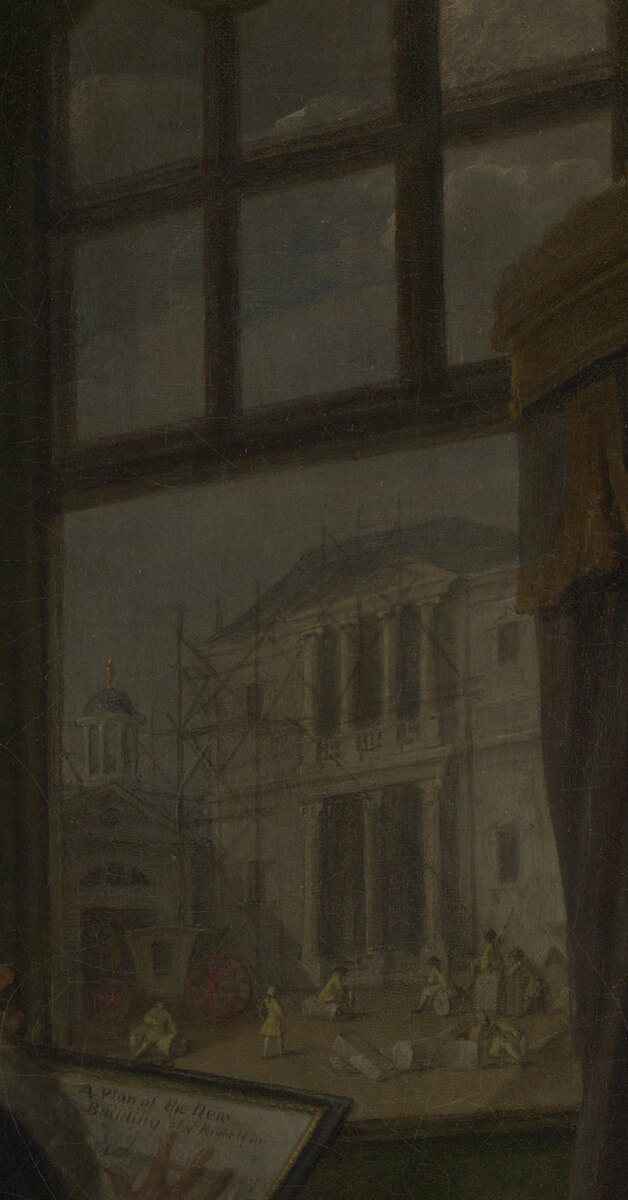
Through the window, a grand new building stands half finished, with scaffolding still on it. The National Gallery reads the unfinished house as a sign of the Earl's money troubles. A man does not marry his son to a merchant's daughter when the money is flowing.
Hogarth hangs the walls with dark old master paintings, the kind of expensive gloom that fashionable collectors bought. Most are scenes of suffering and violence. One of them, right above the bride, is a screaming Medusa, the woman from Greek myth with snakes for hair.
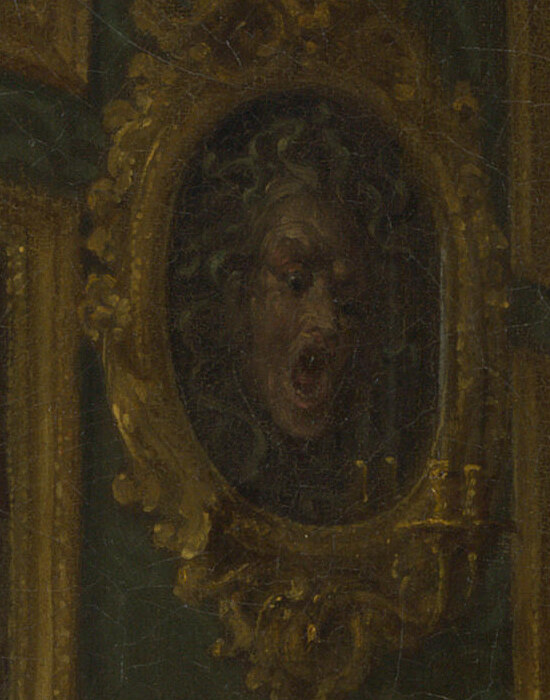
The National Gallery suggests the Medusa screams for the bride, who sits quietly below with a handkerchief and cannot. It is one of Hogarth's favourite tricks: the people stay polite, and the pictures on the wall say what they feel.
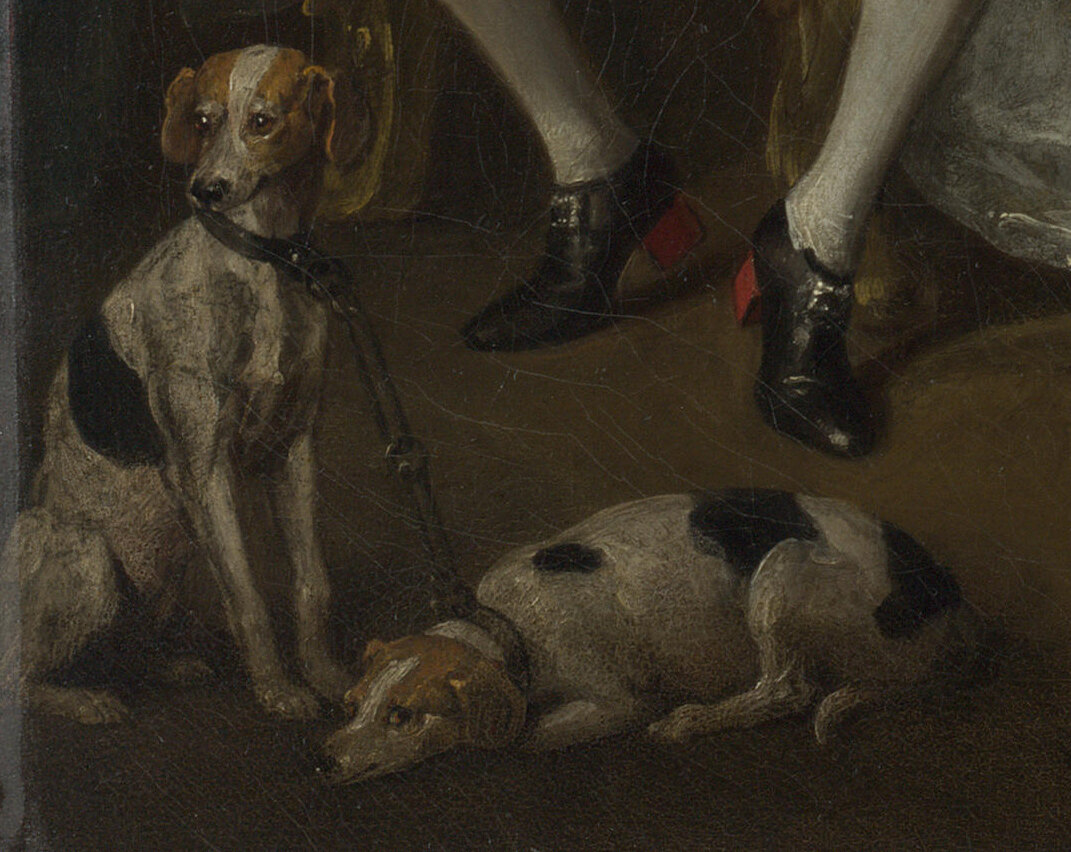
At the couple's feet, two dogs are chained together by the neck. One is resting, one looks away. The National Gallery reads them as a picture of the bonds of matrimony being arranged above them. Nobody in the room notices the joke. You are meant to.
Go back to the groom one last time. Look at his neck, just below the ear. There is a small dark mark there, like a black patch on the skin. Nobody in the painting is looking at it. Hogarth painted it anyway.
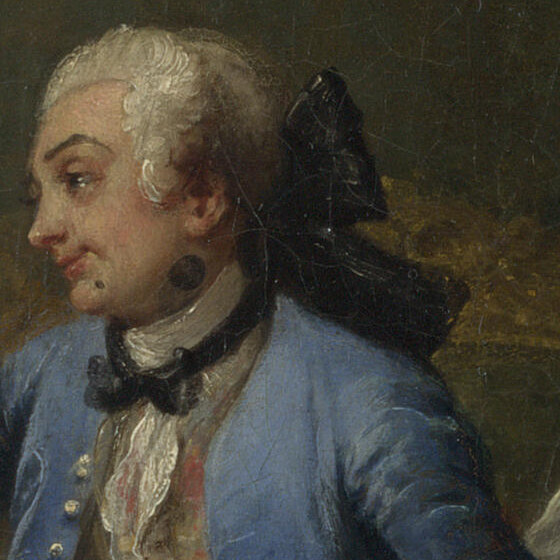
Do not try to solve it yet. Just remember it. It is the clue with the longest future in the whole series.
Count the people in the room who are interested in this wedding. The fathers are interested in the contract. The lawyer is interested in the bride. The groom is interested in the mirror. The bride is interested in her handkerchief. Nobody is interested in the marriage.
Hogarth painted the series around 1743 and called it Marriage A-la-Mode, fashionable marriage, borrowing the title of a comedy by John Dryden from 1672. When he advertised the engravings, he promised the public a variety of Modern Occurrences in High Life. A few years later Samuel Johnson's Dictionary defined à la mode as "according to the fashion; a low word". Hogarth was showing his customers the fashion, and making it look low.
The first room gives us the deal. The second shows what the deal begins to build.
The original hangs in the National Gallery in London with the other five rooms. Our hand-painted reproduction of The Marriage Settlement is painted in oil on canvas from the National Gallery original, and the six scenes can be ordered singly or as a set to hang in order.
This is Room 1 of The Six Rooms of a Bad Marriage.
Enjoyed this story?
Save articles to your collection
Log in or create a free account, and this article will be waiting in your Private Collection.
Log in or sign upWhat is visible in the painting, what the National Gallery says, and what ByMuseum reads into it are kept apart. Hogarth left no written key to the series.