Loading cart…
No products in the cart.

1868 · Oil on canvas · Private Collection
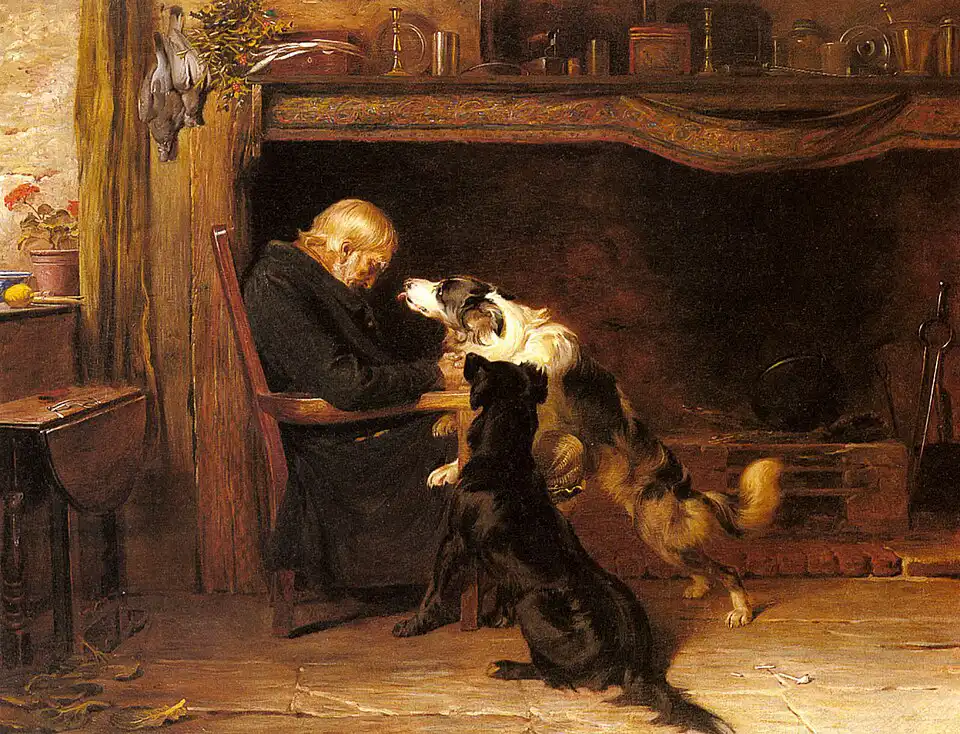
The Long Sleep was completed in 1868, a period during which Briton Rivière was consolidating his reputation as a painter of animals and human subjects in intimate domestic settings. Rivière had trained with considerable attention to anatomical accuracy, and by the late 1860s he was already earning recognition at the Royal Academy for works that combined sentimental narrative with careful naturalism. This painting was produced at a time when Victorian audiences were deeply responsive to imagery that explored themes of innocence, protection, and the quiet rhythms of home life. The subject of a sleeping child watched over by a loyal dog resonated powerfully with the cultural values of the era, reflecting widespread Victorian idealization of childhood purity and the moral constancy attributed to dogs as symbols of devotion. The work fits naturally into the broader sequence of animal and figure paintings that Rivière developed across the 1860s and into the following decades. His ability to render animal fur with convincing texture while simultaneously conveying emotional nuance in human figures was already apparent in works of this period. The Long Sleep attracted attention for its quiet restraint, avoiding melodrama in favour of a stillness that invited contemplative viewing. Although the painting has passed through private hands rather than resting in a permanent public institution, it has been referenced in discussions of Rivière's early career development, marking a moment when the artist was refining his signature approach to scenes that placed animals and people in emotionally charged proximity.
Rivière organizes the composition around a contrast between the horizontal repose of the sleeping child and the alert vertical presence of the dog standing guard. This diagonal relationship between stillness and watchfulness creates a gentle visual tension that draws the eye across the canvas without disrupting the overall sense of calm. The lighting in the work is soft and diffused, likely derived from a single interior source, casting warm tones across the child while leaving the dog partly in shadow, reinforcing the creature's role as a protective sentinel on the threshold between light and dark space. Rivière applies paint with a careful layering technique that gives the fabric of the child's clothing a tactile believability, while the dog is rendered with the kind of precise attention to coat texture and muscular structure that became a hallmark of his mature style. The palette is restrained, favouring muted warm ochres, cream whites, and soft browns that create a harmonious unity between the two subjects and their shared environment. Rivière avoids the high-contrast drama favoured by some of his contemporaries, instead relying on tonal subtlety to communicate emotional depth. The dog is depicted in a posture of attentive calm rather than agitation, its gaze directed outward from the pictorial space as though scanning for any disturbance. This compositional choice reinforces the painting as an image of sustained devotion rather than momentary action, aligning it with Rivière's consistent interest in exploring loyalty as a visual and narrative subject across his career.
The Long Sleep engages with one of the most resonant themes in Victorian culture, namely the perceived innocence of childhood and the moral exemplar offered by the devoted animal companion. In Victorian moral philosophy and popular literature, dogs were frequently cast as paragons of unconditional loyalty, creatures whose fidelity exceeded that which could often be found among human relationships complicated by self-interest. By pairing a sleeping, defenceless child with a watchful dog, Rivière taps into this symbolic vocabulary to produce an image that functions simultaneously as a genre scene and as a quiet moral statement. The sleep of the child becomes a metaphor for vulnerability, and the dog standing over the child transforms into an emblem of protective love, asking the viewer to consider the value of steadfast guardianship as an ethical ideal. The title itself carries additional resonance. The phrase long sleep invokes not only the natural rest of a child but gestures toward deeper associations with peace, safety, and even the Victorian preoccupation with the boundary between sleep and death. Rivière handles this ambiguity with tact, ensuring the image remains warm and life-affirming rather than morbid, but the layered implication gives the painting a contemplative weight that elevates it beyond simple sentimentality. For contemporary viewers the work offers a window into the emotional priorities of Victorian domestic culture, where the home was understood as a sanctuary and the relationships within it, including those between humans and animals, were regarded as morally instructive models for a wider social order.