Loading cart…
No products in the cart.

1882 · Oil on canvas · Bury Art Museum, Bury, United Kingdom
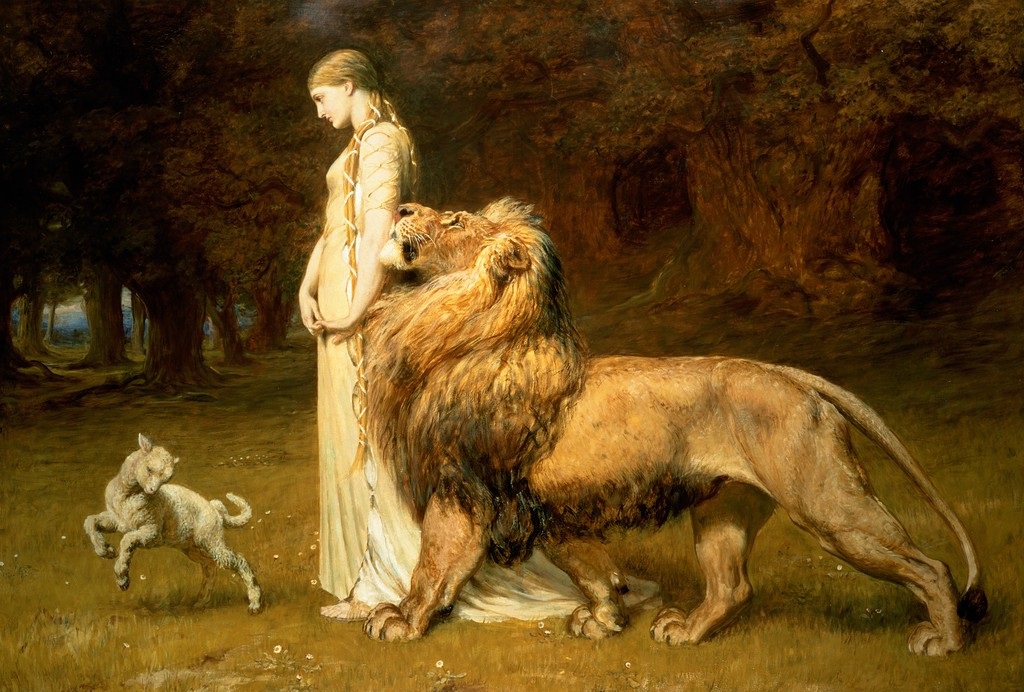
Painted in 1882, Una draws on one of the most celebrated episodes in Edmund Spenser's sixteenth century allegorical epic The Faerie Queene, in which the character Una, who represents Truth and the true church, is abandoned by her guardian knight and left alone in the wilderness. She is subsequently befriended and protected by a lion, who is moved by her innocence and beauty to abandon his savage nature and become her companion. Riviere, for whom the theme of a human figure befriended by a lion was both artistically natural and personally resonant, would have been drawn to this subject both for its literary prestige and for the opportunity it provided to combine a sensitively rendered female figure with one of his favored animal subjects. The Spenserian source material gave the work cultural and literary credentials that would have appealed to Royal Academy audiences, while the composition allowed Riviere to demonstrate the range of his skills. The painting entered the collection of Bury Art Museum, where it remains one of the more distinctive Victorian works in the collection.
The composition presents Una as a slender, pale figure in a landscape setting, her posture gentle and contemplative, with the lion positioned close beside her in an attitude of calm companionship rather than threat. Riviere renders the lion with the same careful anatomical study that characterizes his other large cat paintings, but here the animal is softened in expression and posture to communicate docility and protectiveness rather than predatory power. The relationship between the two figures is expressed through proximity and body language rather than through any dramatic action, the lion leaning slightly toward Una and the woman resting without evident fear in the presence of the animal. The landscape behind them is lush and green, suggesting a wilderness that is benign rather than threatening, which reinforces the allegorical reading of the scene. Riviere uses a warm, sunlit palette that gives the image a sense of pastoral calm, and his handling of Una's white robes against the tawny gold of the lion creates a pleasing tonal contrast that anchors the composition.
The story of Una and the lion in The Faerie Queene is an allegory of innocence protected by nature, a reading of the natural world as responsive to moral virtue in a way that conventional human society may not be. For Riviere, this theme would have resonated deeply with his broader artistic project of exploring the relationship between human beings and animals as one of empathy and mutual recognition rather than simple hierarchy or threat. The painting suggests that the animal world, when encountered by a figure of genuine innocence and moral clarity, responds with loyalty and protection rather than violence. For Victorian audiences, familiar with Spenser as a canonical figure of English literary heritage, the painting would have been legible as both an illustration of a beloved text and a meditation on the themes of truth, purity, and the redemptive possibilities of the natural world. Riviere gives the allegory a gentle warmth that avoids the more didactic or heavy-handed qualities that Victorian moralizing painting sometimes risked.