Loading cart…
No products in the cart.

c. 1743 · Oil on canvas · National Gallery, London
Save articles to your collection
Log in or create a free account, and this article will be waiting in your Private Collection.
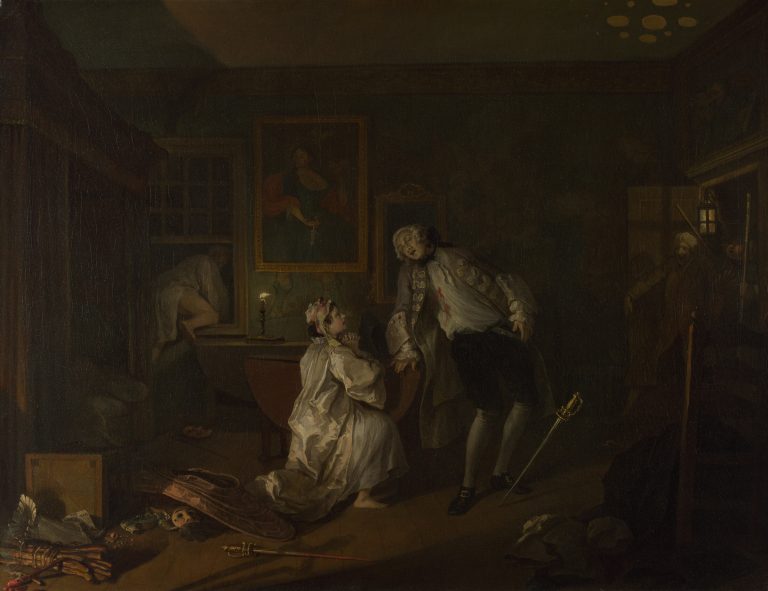
Log in or sign upIn Room 4, Silvertongue offered the Countess a ticket to a masquerade. Room 5 begins after the masquerade. It is night, the only light comes from the fire and a candle, and we have walked in on the worst moment of the whole story.
Start on the floor, where the evening was thrown off in a hurry. A mask lies there, with a hooped underskirt, fashionable shoes and a pile of discarded clothes. The ticket from Room 4 has led here.
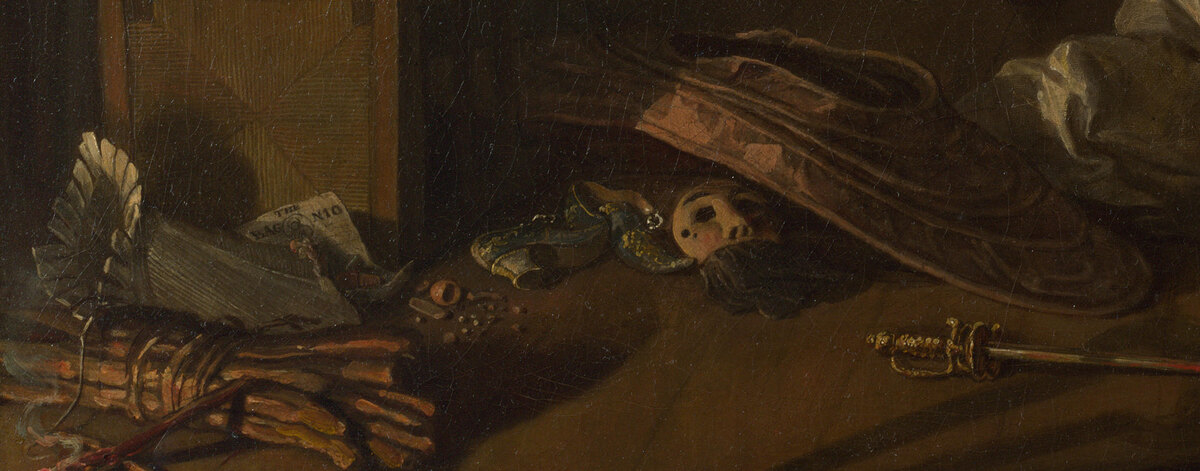
In the corner, the Countess's corset has knocked over a chair, and its lace has fallen across a bundle of firewood by the hearth. It is starting to smoulder. The National Gallery connects it to an old proverb about starting fires you cannot control.
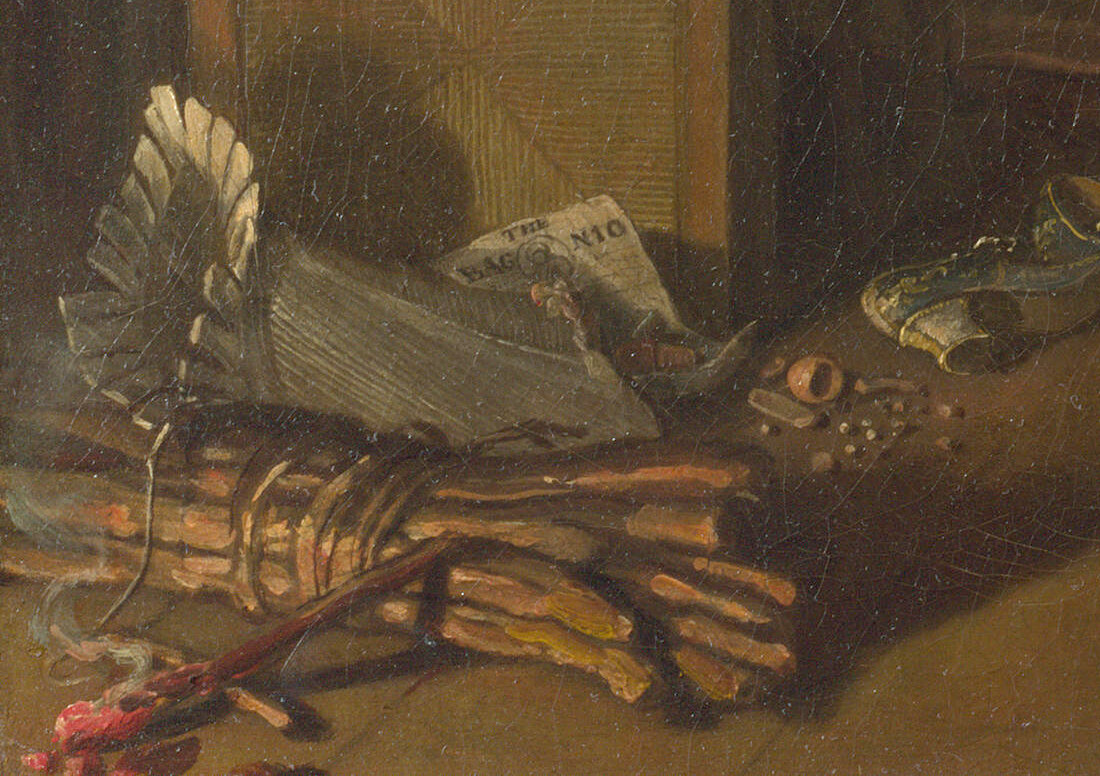
A bagnio was a Turkish bathhouse, but by Hogarth's day the name often meant something less innocent: a place where rooms could be taken for the night, no questions asked. The National Gallery names this one: the Turk's Head. The bed is rumpled. A candle burns on the table, its flame bent sideways by a draught.
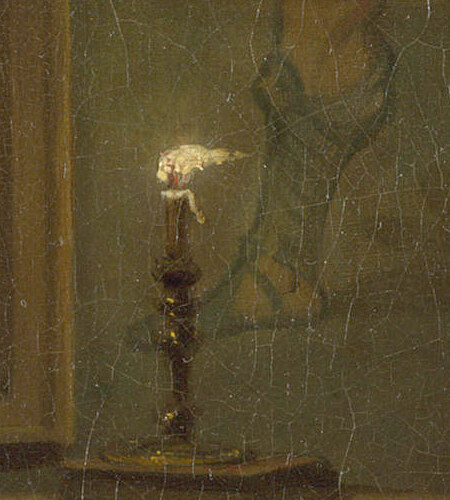
That draught matters. It is coming from two directions at once, an open window and an open door. Keep both in mind.
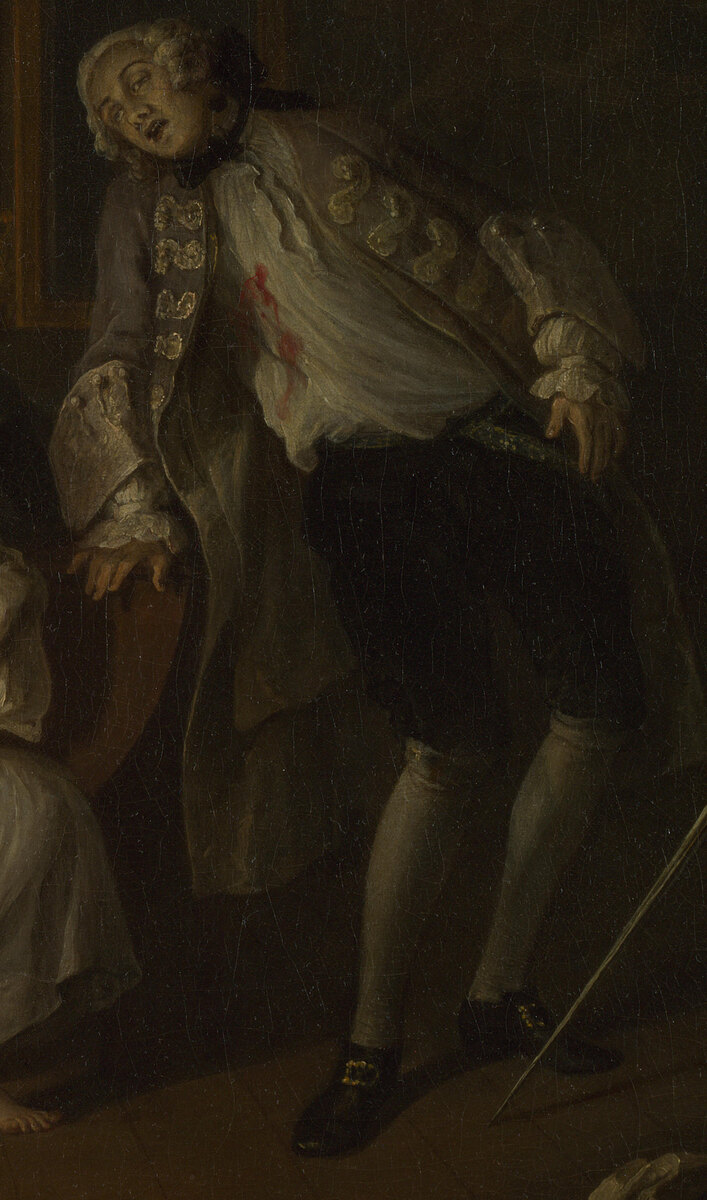
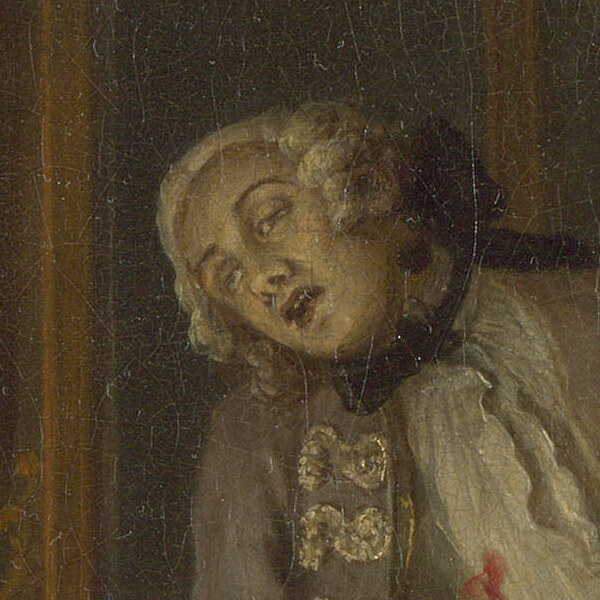
In the middle of the room stands the young Earl, the husband, and he is dying. He has been stabbed. His knees are buckling, his head rolls back, and blood is on his shirt. And there, on his neck, is the black spot we first saw at the wedding. It is the last time we will see it on him.
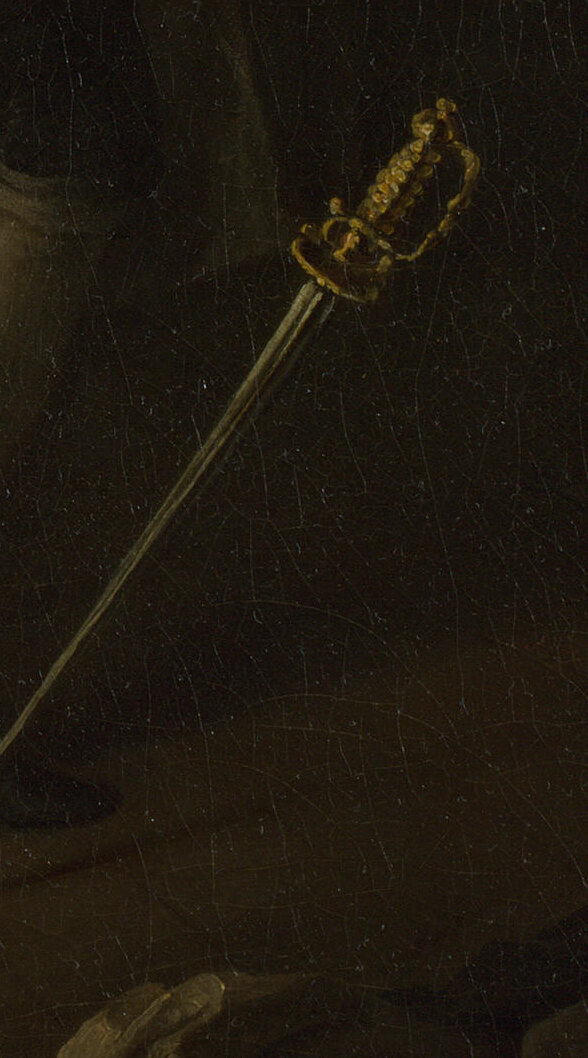
On the floor lies a sword stained with blood. The National Gallery says plainly whose it is: Silvertongue's, and that he fatally wounded the Earl. Look at the sword's shadow on the floorboards. It falls in the same long, awkward line as the dying man's legs.
How the Earl found them, and what happened in the seconds before, the painting does not show. Hogarth gives us the result, not the scene.
Now look left. Climbing out of the window in his nightshirt, half in and half out, is Silvertongue. The man who whispered at the wedding and handed over the ticket is leaving the way he came into this story: quietly, and by the side.
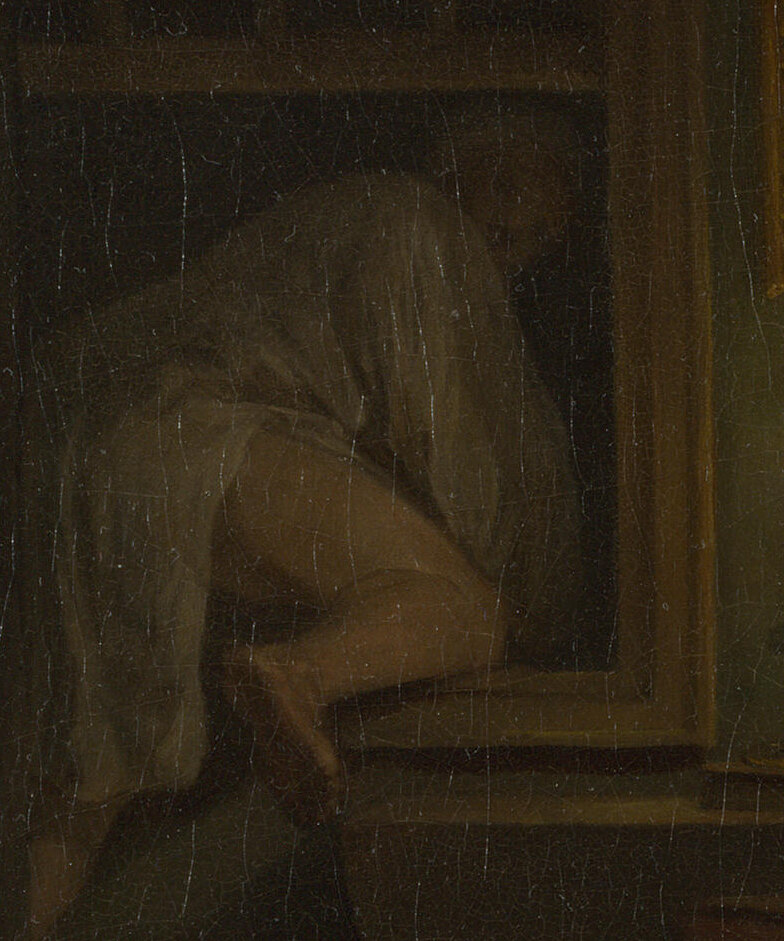
On the opposite side, the door has burst open. In come the owner of the bagnio, a constable with his staff of office, and a night watchman holding his lantern high. Authority has arrived.
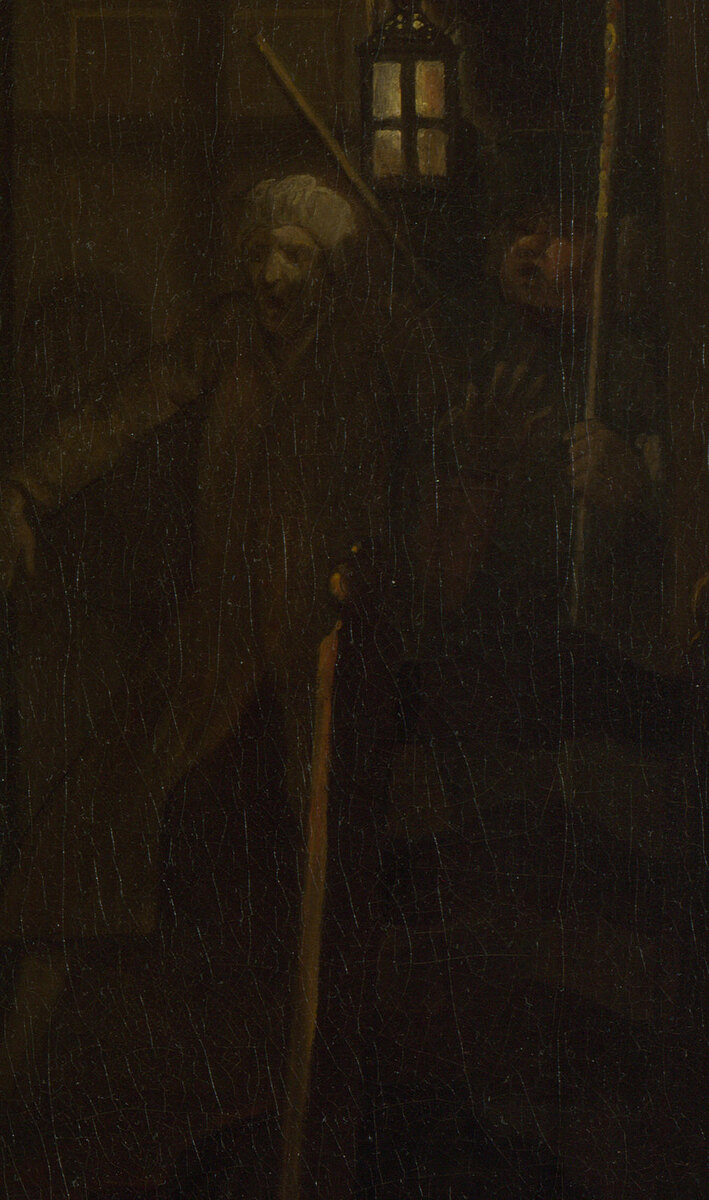
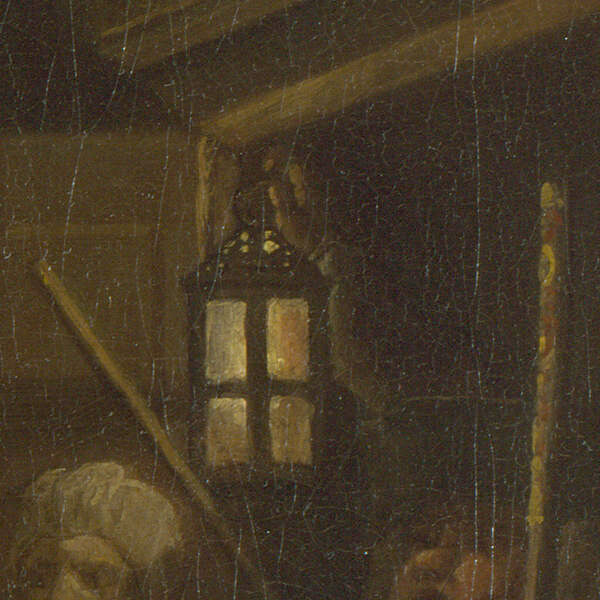
Here is the painting's real design. One opening is escape. The other is consequence. Silvertongue goes out through the window, the law comes in through the door, and the draught between them bends the candle.
In the middle, on her knees in her nightgown, is the Countess. She has slid down in front of her husband with her hands clasped. The National Gallery sees tears on her cheek.
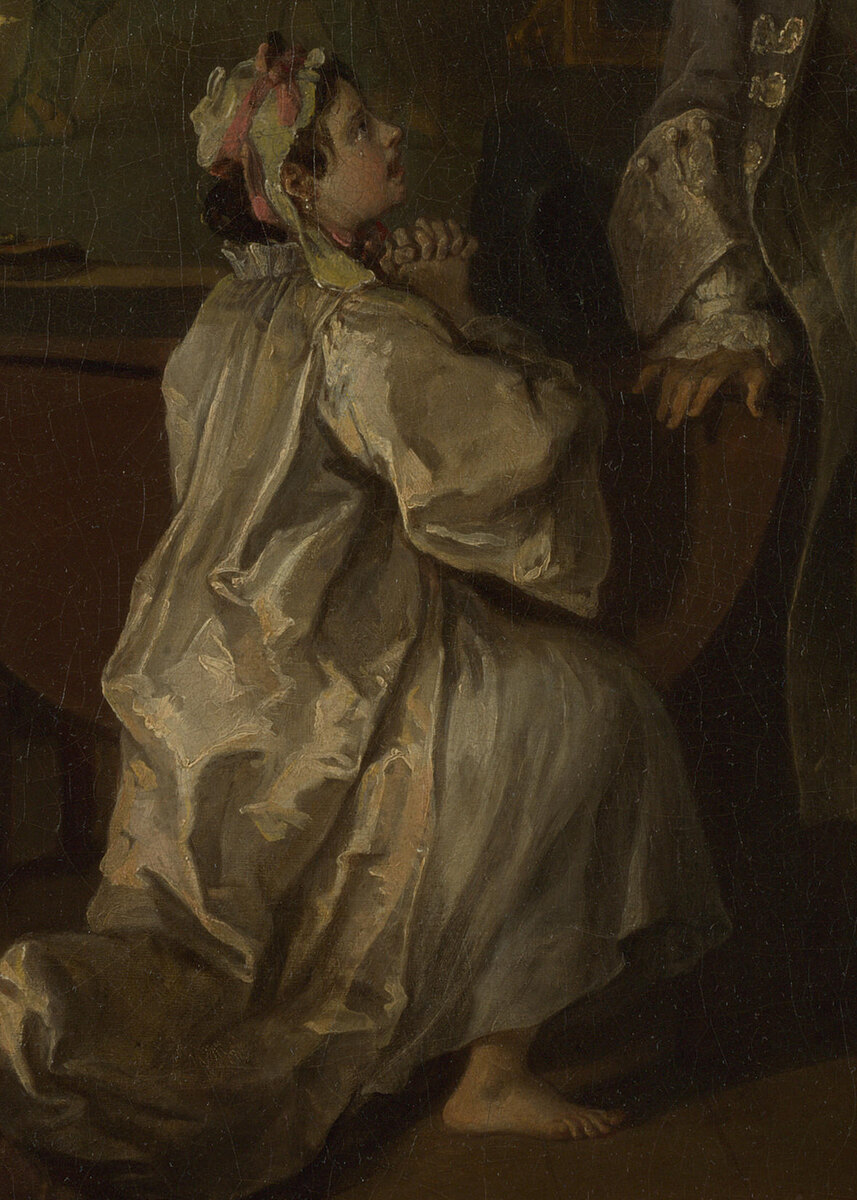
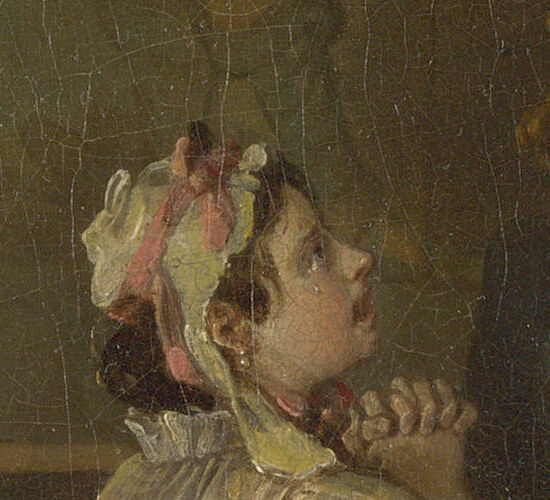
We are not told what she feels, and we should not decide for her. What the composition shows is where she is: alone in the middle of the room, the one person who has neither a window nor a door.
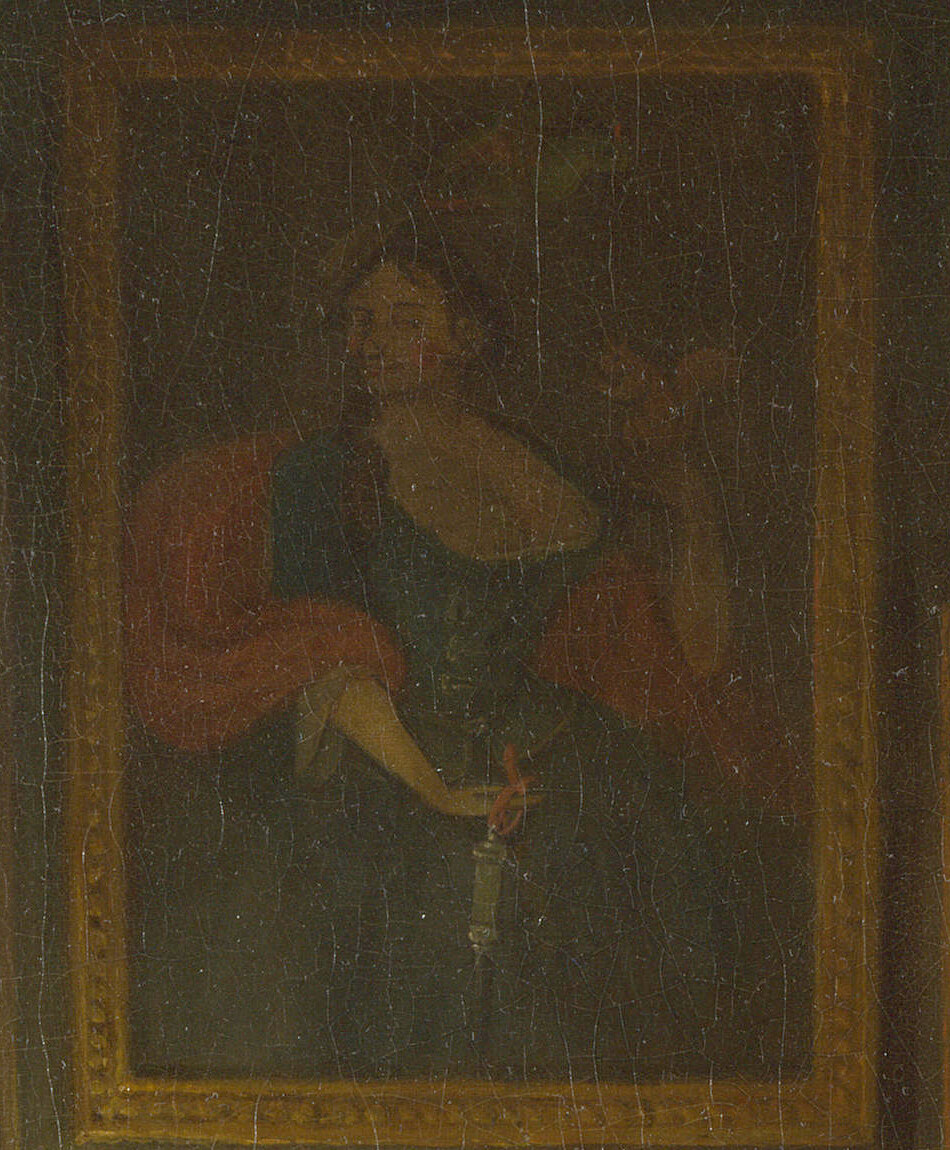
Even here, Hogarth hangs pictures that comment on the action. Above the scene is a tapestry of the Judgement of Solomon, the story of a king who settles a bitter quarrel by threatening to cut a child in two. On the wall hangs the portrait of a fashionable woman holding a squirrel, and the National Gallery points out the rude joke hidden below her waist.
Count the exits. The lover has the window. The law has the door. The husband is leaving the only way left to him.
So who is really trapped in this room?
In Room 4, Silvertongue offered her a ticket. In Room 5, he is already halfway out of the window. One room remains.
The original hangs in the National Gallery in London with the other five rooms. Our hand-painted reproduction of The Bagnio is painted in oil on canvas from the National Gallery original, and the six scenes can be ordered singly or as a set to hang in order.
This is Room 5 of The Six Rooms of a Bad Marriage.
Enjoyed this story?
Save articles to your collection
Log in or create a free account, and this article will be waiting in your Private Collection.
Log in or sign upWhat is visible in the painting, what the National Gallery says, and what ByMuseum reads into it are kept apart. Hogarth left no written key to the series.