Loading cart…
No products in the cart.

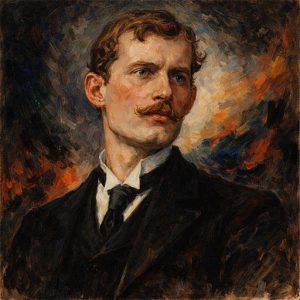
The late nineteenth century was a period of profound transformation across Europe. Industrialization reshaped cities, Darwinian thought unsettled religious certainty, and a new psychology, embodied in the work of Sigmund Freud and others, turned the human gaze inward toward anxiety,…
The late nineteenth century was a period of profound transformation across Europe. Industrialization reshaped cities, Darwinian thought unsettled religious certainty, and a new psychology, embodied in the work of Sigmund Freud and others, turned the human gaze inward toward anxiety, desire, and the unconscious. Norway, though geographically peripheral to the great capitals of art, was not insulated from these upheavals. Christiania, as Oslo was then known, was a city caught between provincial conservatism and the pull of continental modernity. It was into this charged atmosphere that Edvard Munch was born on December 12, 1863, in the small town of Loten. His father, a military doctor of intense religious conviction, shaped the household with a severity tinged by grief. Munch lost his mother to tuberculosis when he was only five years old, and his beloved sister Sophie died of the same disease when he was fourteen. Death, illness, and an almost suffocating awareness of human fragility became not merely biographical footnotes but the very architecture of his creative vision. These early losses gave Munch a subject matter that no academy could assign, and a sense of urgency that no comfortable studio life could replicate.
Munch studied at the Royal School of Art and Design in Christiania and later traveled to Paris, where he encountered the work of Paul Gauguin, Georges Seurat, and the Post-Impressionists. These encounters freed him from the naturalism that dominated Scandinavian painting and opened the door to a more expressive use of color and line. He also spent formative time in Berlin, where he became central to a circle of writers and intellectuals that included the playwright August Strindberg. His major project, the Frieze of Life, conceived in the 1890s, was an ambitious cycle of paintings exploring love, anxiety, and mortality as interlocking forces in human experience. Munch suffered a severe nervous breakdown in 1908 and spent months in a Copenhagen clinic, after which his palette brightened somewhat, though the emotional intensity never left his work. He spent the final decades of his life at Ekely, his estate outside Oslo, working prolifically until his death in January 1944. He bequeathed his entire remaining estate to the city of Oslo, a gift that formed the foundation of the Munch Museum. His influence on twentieth-century art, from German Expressionism to the raw emotionalism of later figurative painters, remains direct and unmistakable.
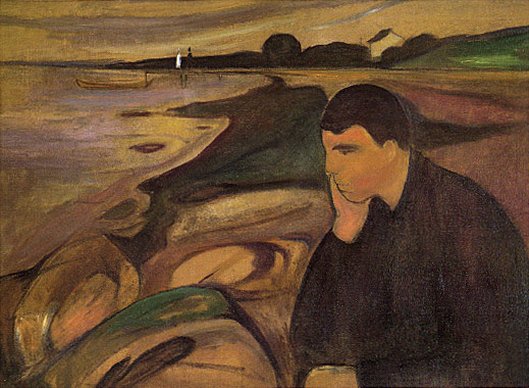
The technical language of Edvard Munch is one of deliberate distortion in service of emotional truth. Where academic painting of his era prized faithful representation, Munch bent form to feeling. His brushwork is varied and highly expressive, ranging from long undulating strokes that cause entire landscapes to pulse and vibrate, to short agitated marks that convey psychological unrest. He worked frequently in oil on canvas but also explored tempera, pastel, and printmaking with equal commitment. Color in his paintings functions less as description than as mood. Acid yellows, blood reds, cold blues, and sickly greens are deployed not to reproduce what the eye sees under neutral light but to evoke what the nervous system registers under emotional pressure. Contour lines in his compositions frequently echo and repeat across backgrounds, giving his skies and water the character of living tissue rather than inert scenery. This technique, visible most dramatically in his most celebrated works, anticipates many of the strategies that would define Expressionism as a European movement in the early twentieth century.
Each card links to its own article with full analysis and reproduction details.
 #1
#1
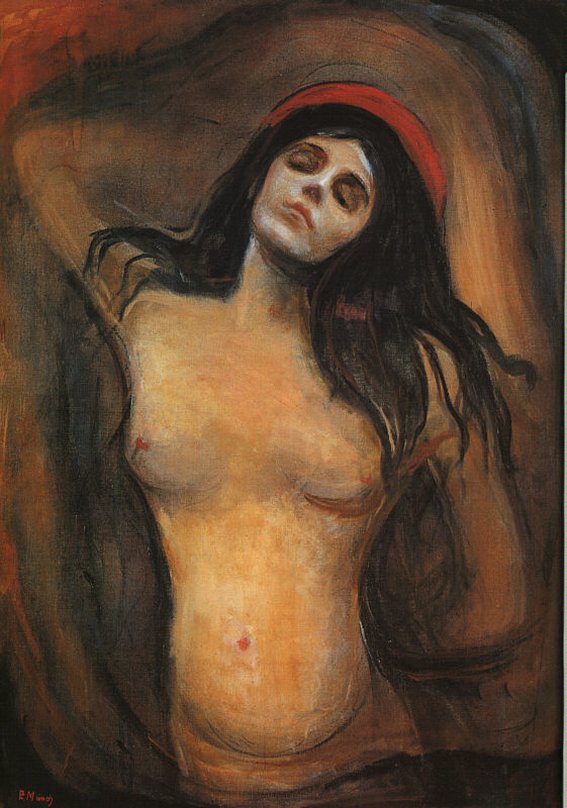 #2
#2
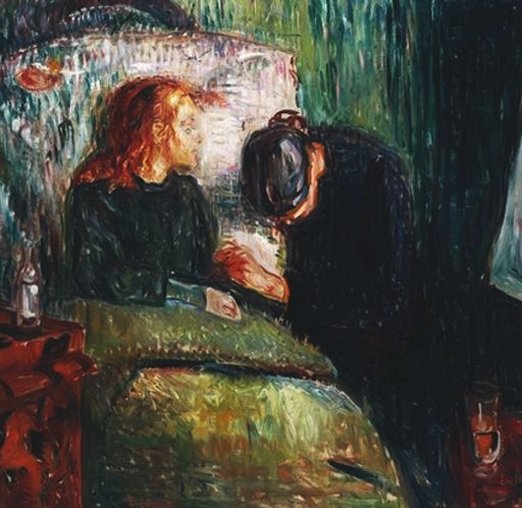 #3
#3
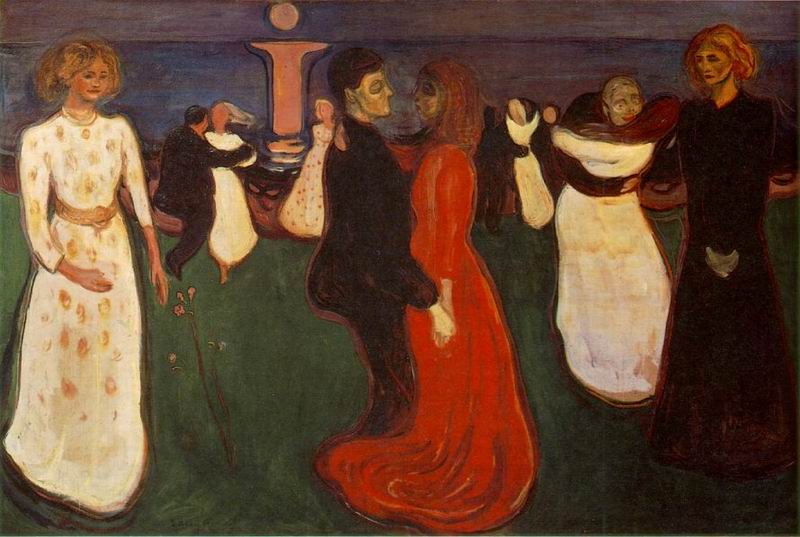 #4
#4
 #5
#5
A print can reproduce colors. What it cannot reproduce is texture, depth, and the physical presence of oil paint on canvas. Edvard Munch technique depends on these.
At ByMuseum, every reproduction is painted by hand using oil on canvas. There is no inkjet, no digital print. The brushwork is real. The result looks like a painting because it is one.