Loading cart…
No products in the cart.

1893 · Tempera and crayon on cardboard · National Museum, Oslo
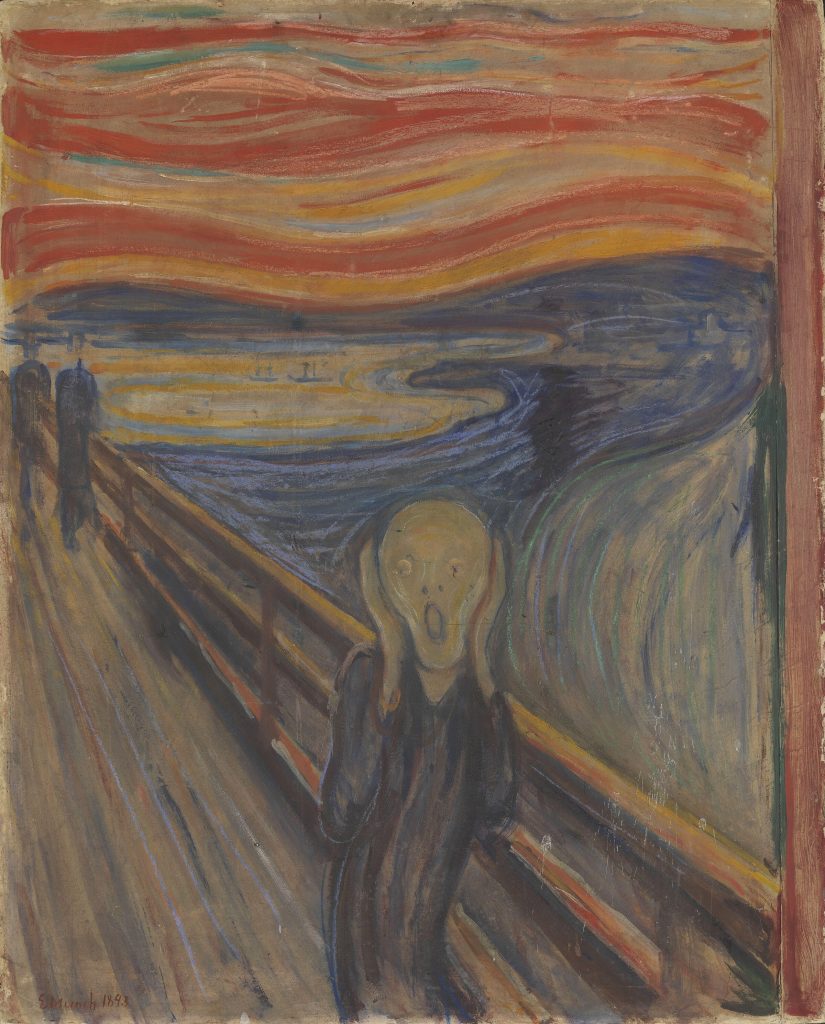
I was walking along the road with two friends. The sun was setting. Suddenly the sky turned blood red. I stopped and leaned against the fence, dead tired. Over the blue-black fjord and the city hung blood and tongues of fire. My friends walked on, and I stood there trembling with fear, and I felt a great, unending scream pass through nature.
Edvard Munch, diary, Nice, January 1892, our translation
That is the whole story, in Munch's own words, written a year before he painted it. The road is real: it runs along Ekeberg hill above Oslo, which was then called Kristiania, and from it you look down on the fjord and the city. The slaughterhouse was nearby, and so was the asylum where his sister Laura was a patient. The two friends were real. The sky, he insisted, was real too.
What he painted from that memory is the best-known image of fear ever made, and it is not a picture of a person screaming. Read the diary again: the scream is in nature. The figure is hearing it.
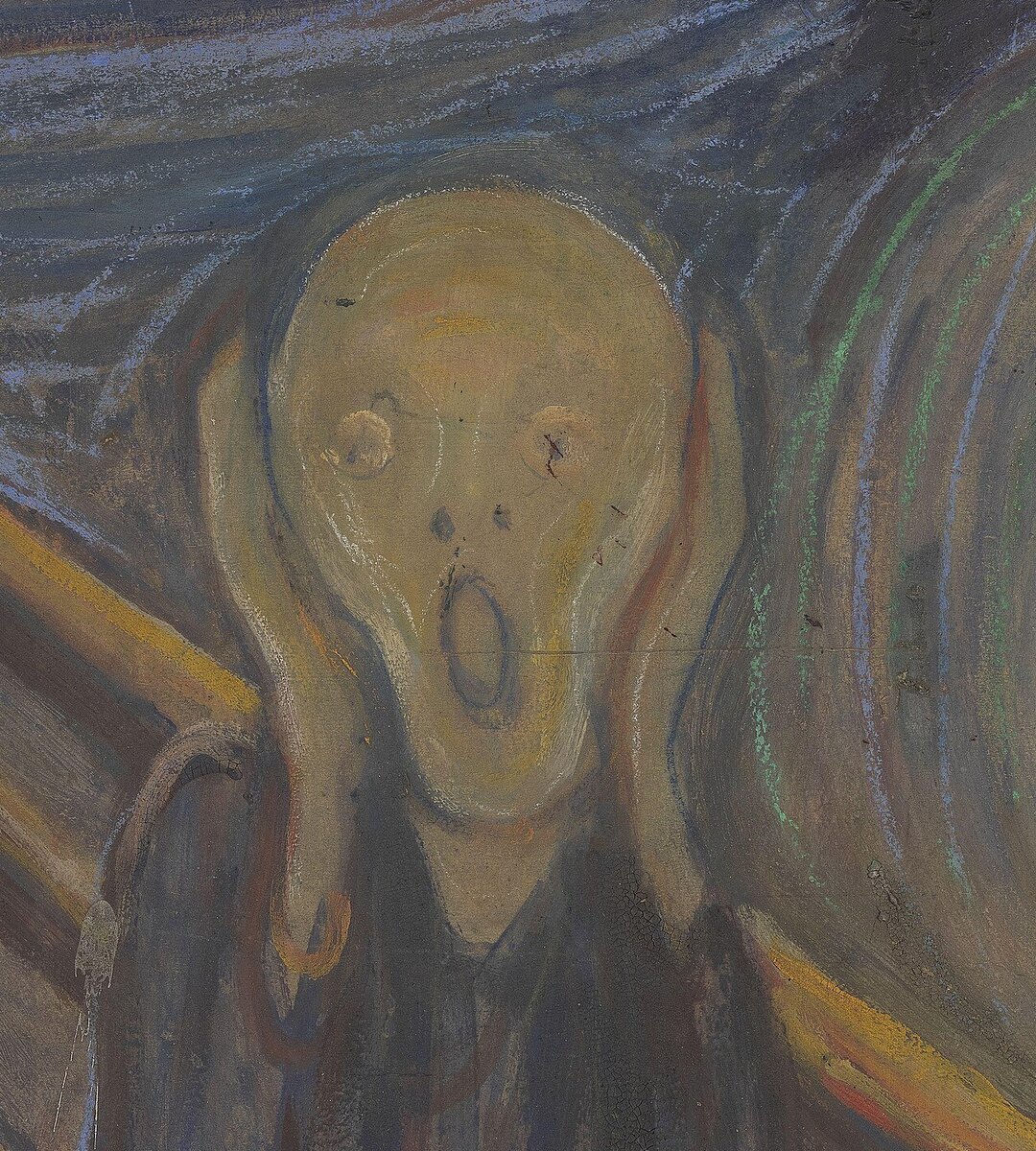
The face is a skull with the skin still on. No hair, no eyebrows, no sex, no age, the eyes two dark holes and the mouth a third, and the hands clamped over where the ears should be. Munch had seen a Peruvian mummy in the ethnographic museum in Paris, folded in its grave with its hands to its face, and the resemblance has been pointed out since the 1970s. But the important thing about the face is what it is doing: it is blocking sound. The scream is outside.
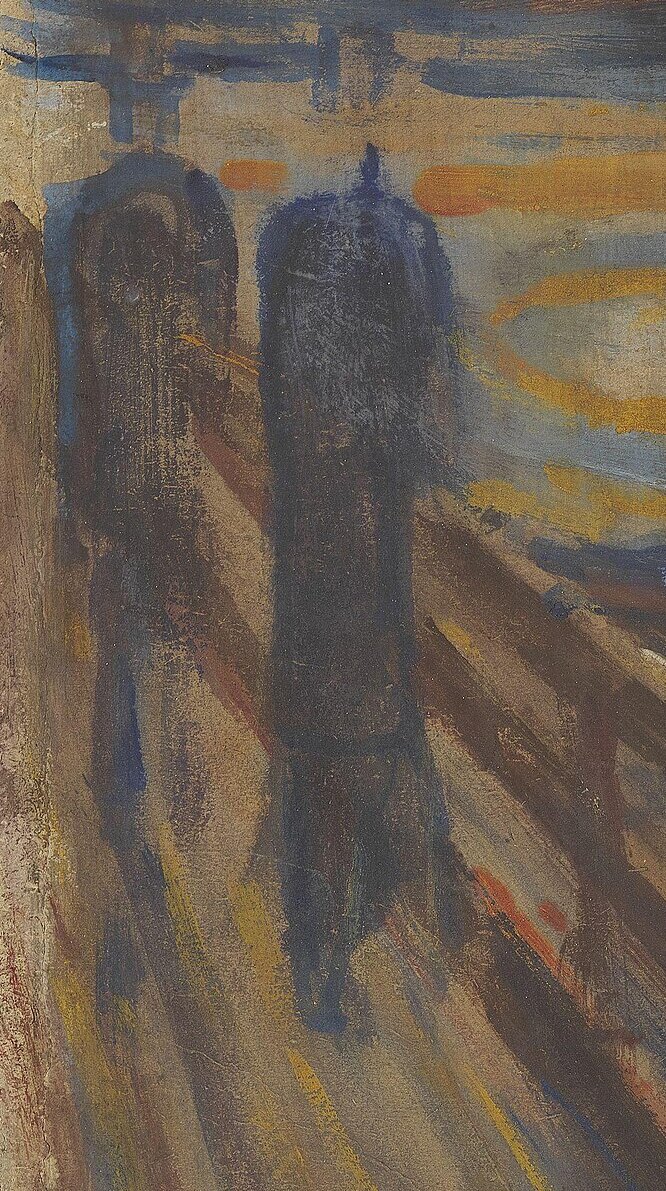
At the left, two figures in hats walk away along the railing. They are the friends from the diary, and they are the second half of the picture's meaning: they heard nothing. The bridge runs diagonally into the distance and takes them with it, in straight lines, while everything else in the painting, the sky, the fjord, the figure, is made of curves. The straight lines are the world as it is. The curves are the world as it felt.
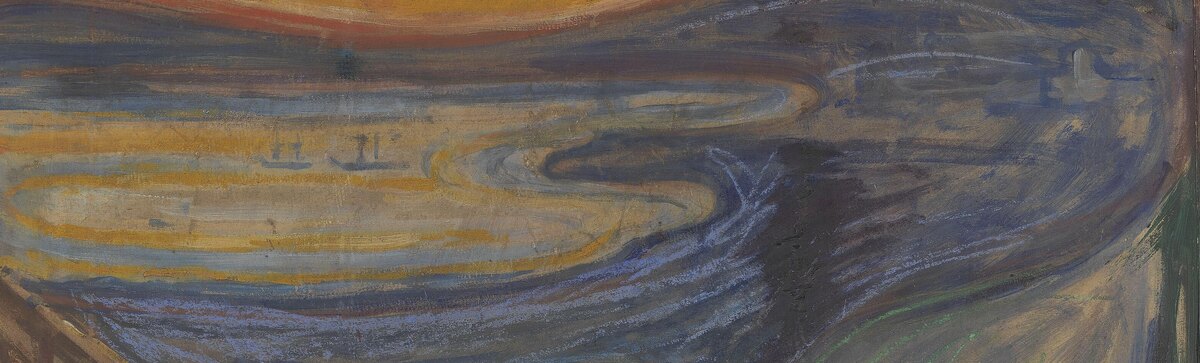
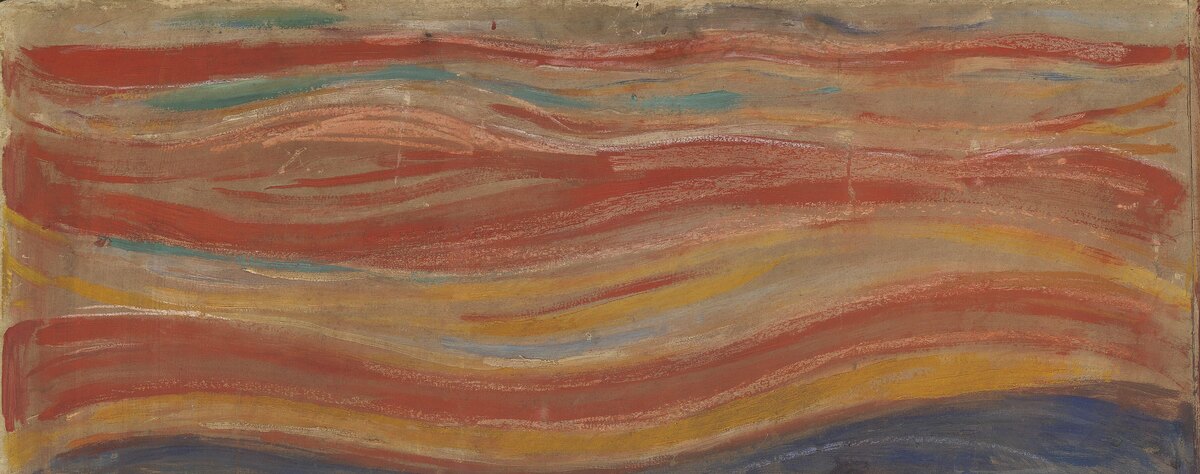
The sky is red because Munch said it was, and two explanations have been offered for why. In 2004 a group of astronomers argued that it was the afterglow of the eruption of Krakatoa in 1883, which reddened sunsets across Europe for months, and that Munch had seen one from Ekeberg. In 2017 Norwegian meteorologists offered a better fit: nacreous clouds, the rare mother-of-pearl clouds that form over Oslo in winter and look exactly like waving bands of fire. Munch, who was not a meteorologist, said only that the sky turned to blood and he was afraid.
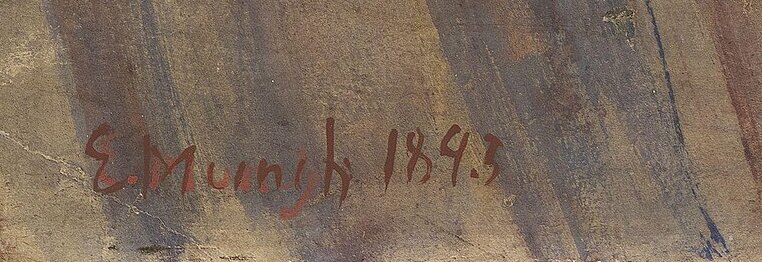
There is one more thing in the sky. At the top left, in pencil, almost invisible, someone wrote in Norwegian: could only have been painted by a madman. For a century it was assumed to be a vandal. In 2021 the National Museum compared the handwriting and concluded that Munch wrote it himself, probably after hearing the painting discussed at a meeting in 1895 where a medical student said as much. He went home and wrote it on the sky.
There are four painted versions and a lithograph. This one, in tempera and crayon on cardboard, is the first, from 1893, in the National Museum in Oslo. A second, in crayon, and a fourth, from 1910, are in the Munch Museum across the city. The third, a pastel of 1895, was the one Munch's friend Thomas Olsen bought, and in 2012 his son sold it at Sotheby's in New York for 119.9 million dollars, at that time the most ever paid for a work of art at auction.
It has also been stolen twice. In February 1994, on the morning the Winter Olympics opened at Lillehammer, two men climbed a ladder into the National Gallery, took this painting in under a minute and left a note thanking the museum for the poor security; it was recovered in May. In August 2004 armed men walked into the Munch Museum in daylight and took the 1910 version and the Madonna off the wall in front of the visitors; both came back, damaged, in 2006. The 1893 painting has been behind glass ever since.
Munch told you: it is a picture of a moment when the world became unbearable and a man could not make it stop. He was thirty, his mother and his favourite sister were dead of tuberculosis, his father had died three years before, his sister Laura was in the asylum below the hill, and he was drinking. The painting belongs to a series he called The Frieze of Life, about love, anxiety and death, and it is the anxiety panel.
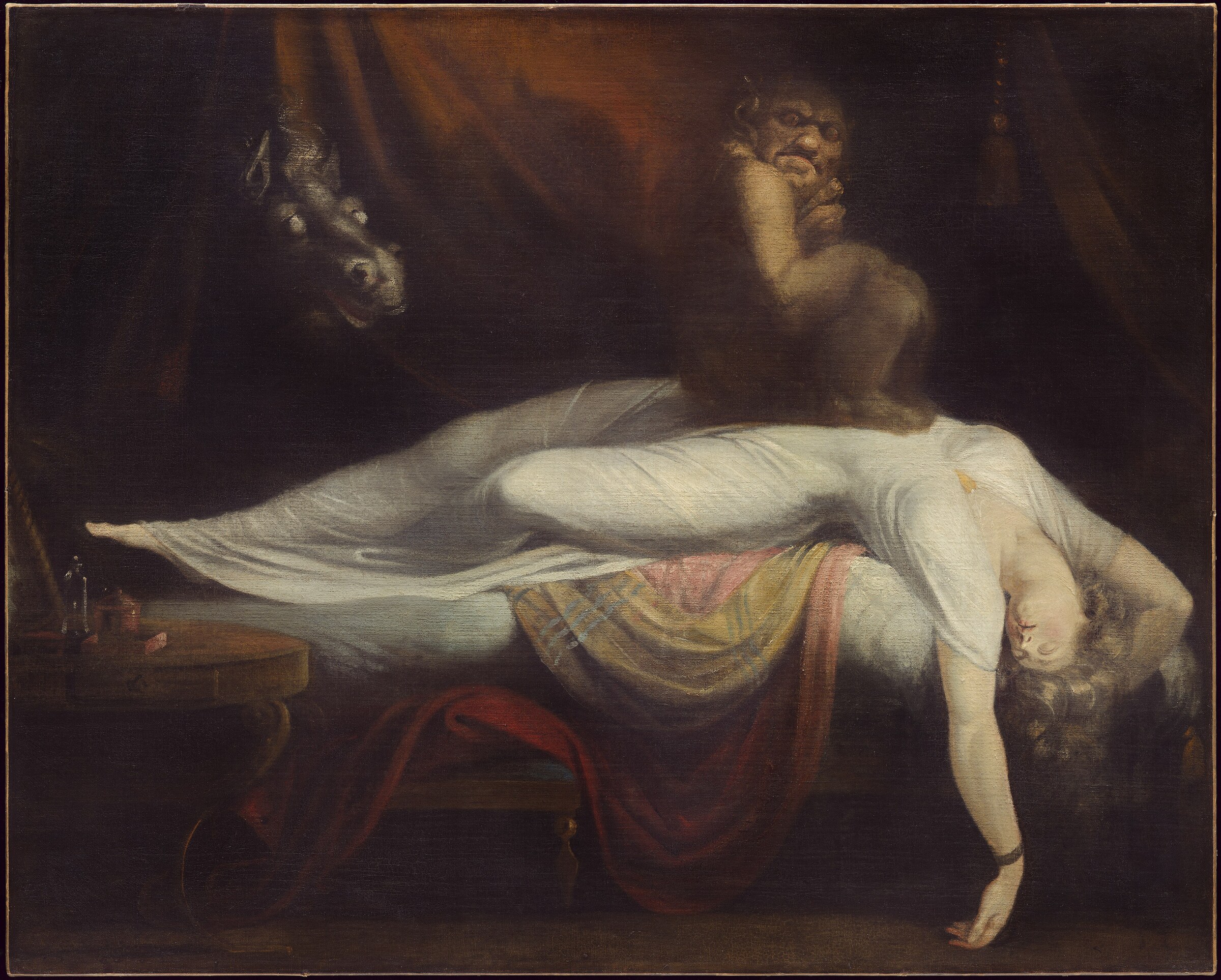
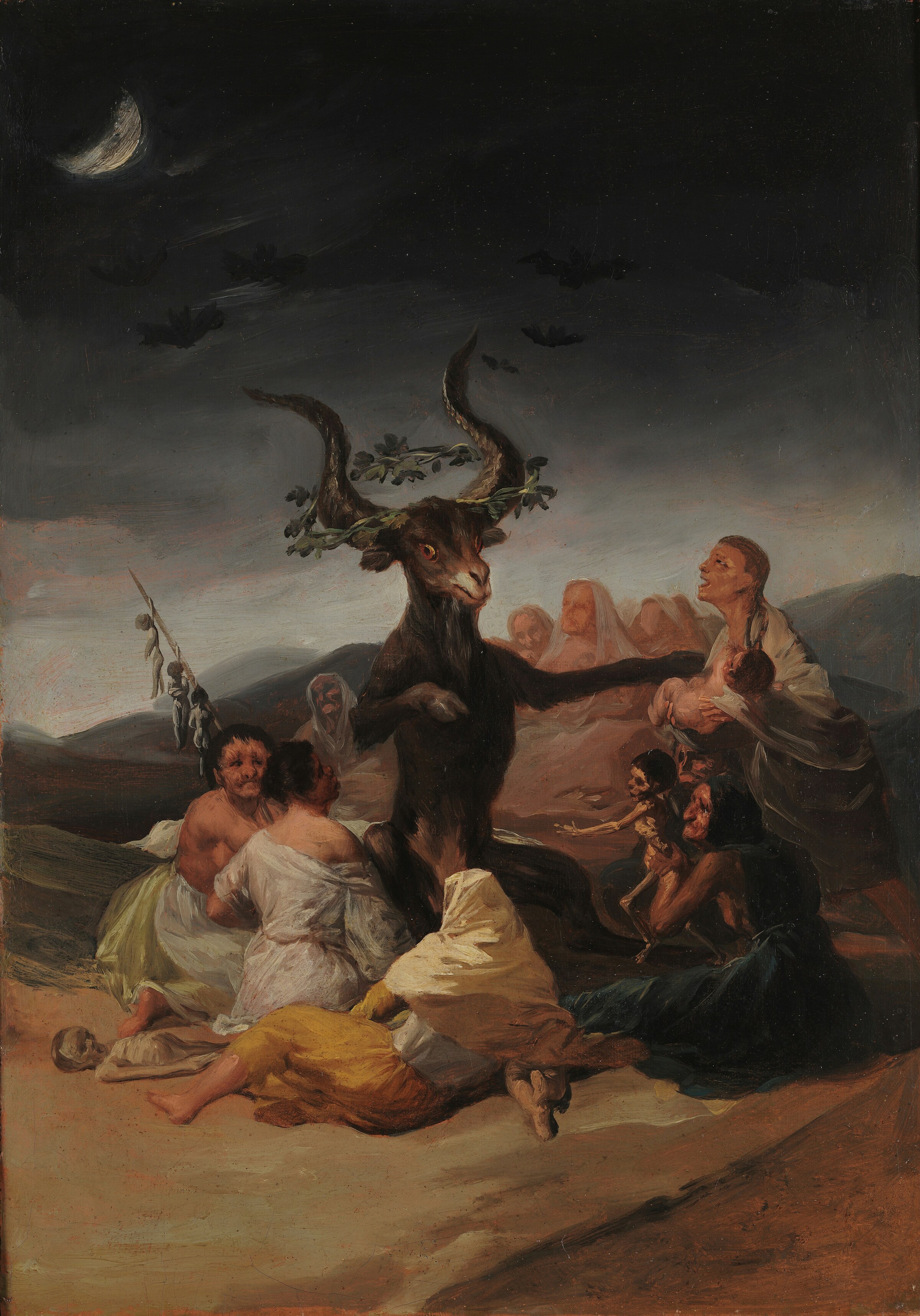
What it has become is larger than that. It is the face of the twentieth century, borrowed by every generation for its own panic, and it is now an emoji. None of that is in the painting, but the painting does not mind; it was always about a scream that everyone can hear except the people walking past. Fuseli's sleeper, a hundred years earlier, at least had a demon to blame. Munch's figure has nothing but the sky.
In the National Museum in Oslo, in the new building on the harbour that opened in 2022, where it hangs in the Munch room with Madonna and The Sick Child. It is tempera and crayon on cardboard, 91 by 73.5 centimetres, and it is fragile: the cardboard has warped and the paint is thin, which is why it lives behind glass in low light.
It is, for obvious reasons, one of the most ordered paintings we make, and one of the hardest to paint well: the sky must be done in long unbroken strokes or it dies. Our hand-painted reproduction of The Scream is painted in oil on canvas from the Oslo original, with the bands of the sky laid in wet. More Munch in our guide to Edvard Munch, and the rest of the frightening ones in the Haunted Gallery.
Munch's diary is given in our own translation from the Norwegian. Visible details, documented facts and interpretation are kept separate throughout this article.