Loading cart…
No products in the cart.

The Odyssey in Paintings · Part 2 of 3
After the cyclops, the enchantments. The middle of the Odyssey is the part everyone remembers and the part painters have painted most: a witch on an island, a song across the water, a nymph who would not let him go, a princess doing laundry. It is also the part where Odysseus loses every one of his men.
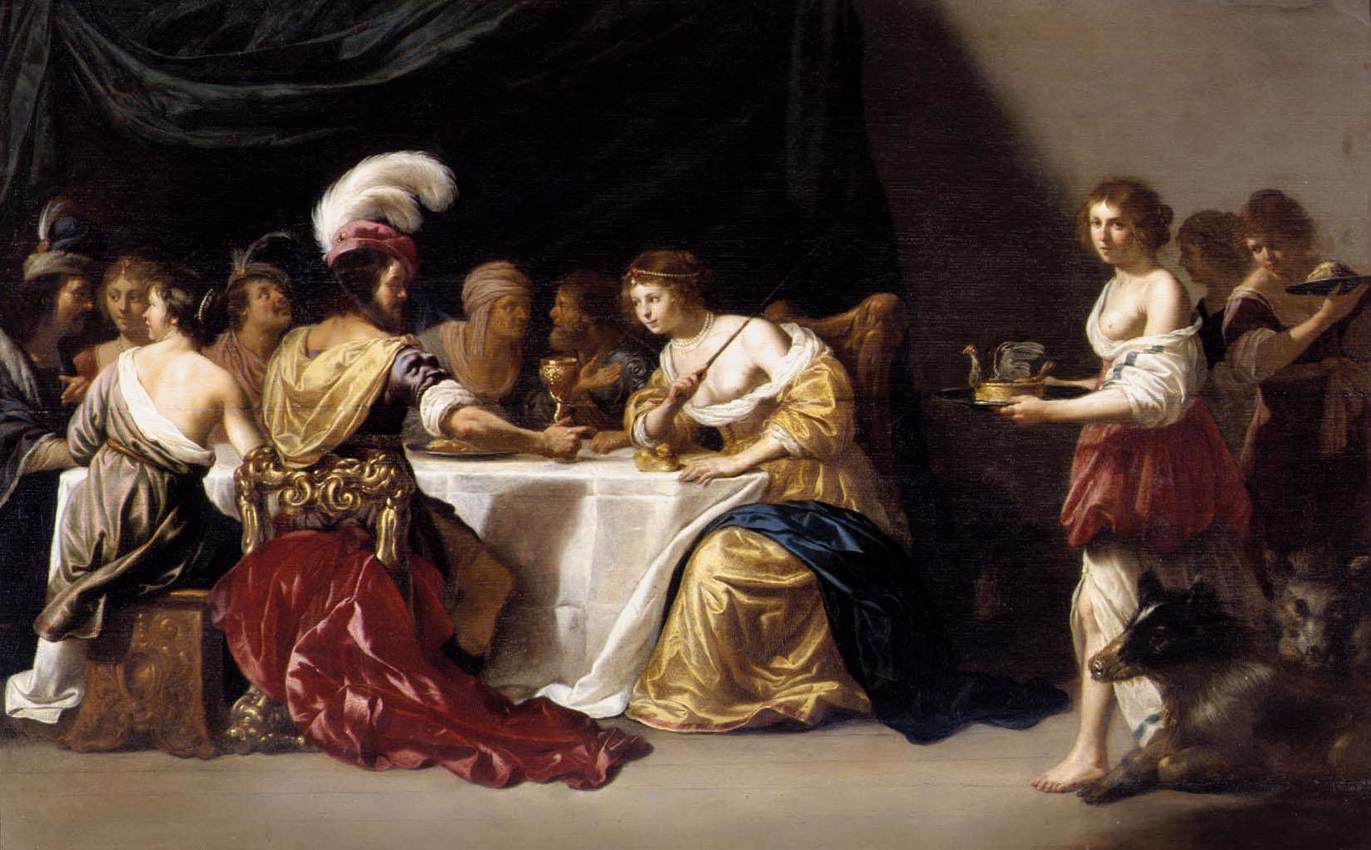
Odysseus reached Circe's island with one ship left of twelve. He sent half his crew inland to a house in a clearing, where wolves and lions came fawning like dogs, and a woman singing at a loom invited them in for a drink. She put something in it. When they had drunk she touched them with her wand and they became pigs, still with the minds of men.

She led them in and sat them on chairs and benches, and mixed for them cheese and barley and yellow honey in Pramnian wine, and put a drug in the food to make them forget their own country.
Homer, Odyssey, translated for this article
Odysseus went after them with a herb from the god Hermes in his belt, moly, black-rooted and white-flowered, that made him immune. When the wand did nothing he drew his sword, and Circe, astonished, knew him: this was the man she had been told would come. She restored his men, and he stayed a year in her bed and at her table, until his crew reminded him he had a home.
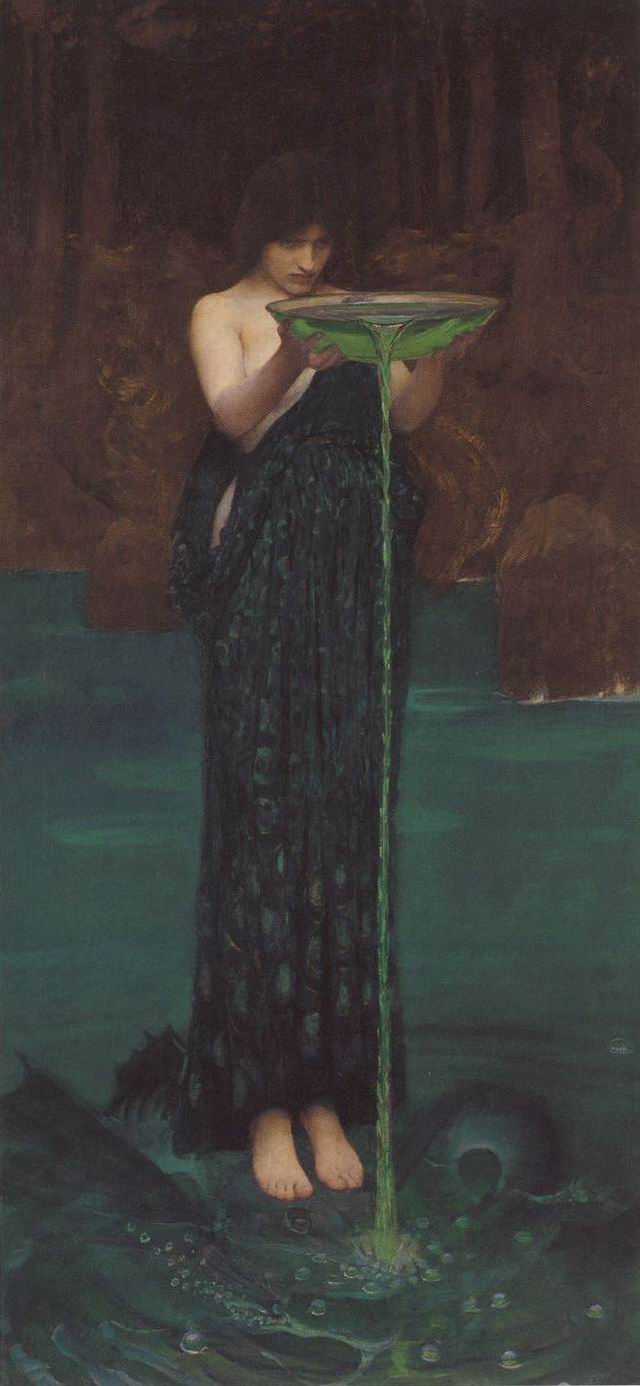
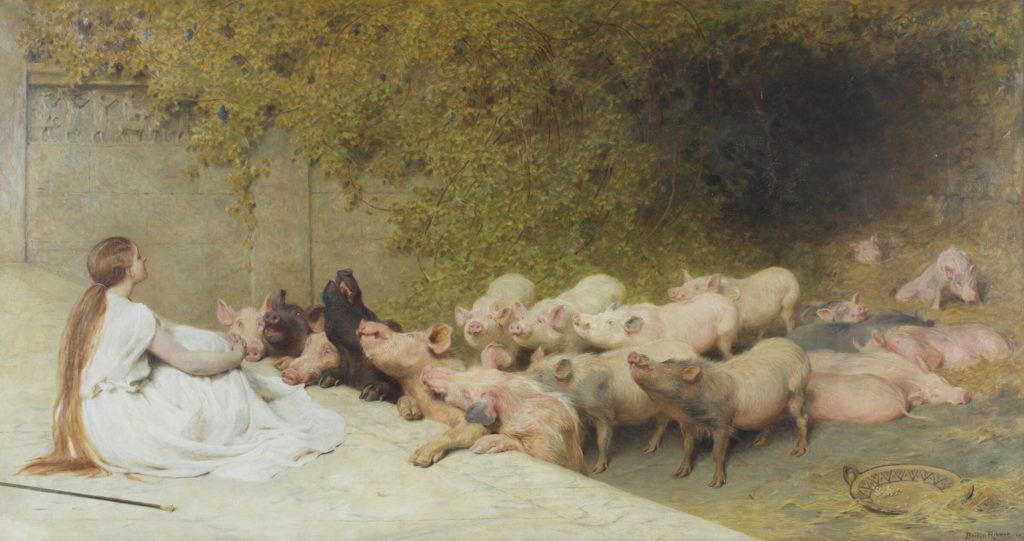
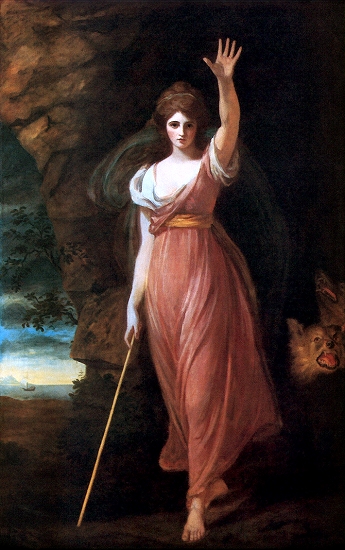
Circe is the painters' favourite woman in Homer because she is the only one with real power and the only one who uses it badly and then well. Waterhouse painted her three times. Rivière painted the pigs. John Collier gave her a leopard and a lion and no clothes. George Romney painted the young Emma Hart, later Lady Hamilton and Nelson's mistress, as Circe with her wand, and the picture made her famous before she had done anything at all.
Circe told him he could not go home without first going to the land of the dead to ask the blind prophet Tiresias the way. So he sailed to the edge of the world, dug a trench, poured in the blood of black sheep, and the ghosts came up to drink: Tiresias, who told him the future; his mother, who had died of missing him, and whom he tried three times to hold and could not; Agamemnon, murdered by his wife; and Achilles, who told him that he would rather be a poor man's field hand alive than king of all the dead.
Do not try to console me for death, glorious Odysseus. I would rather be above ground and serve as the hired man of another, some landless man with little to live on, than be lord over all the dead who have perished.
Homer, Odyssey, translated for this article
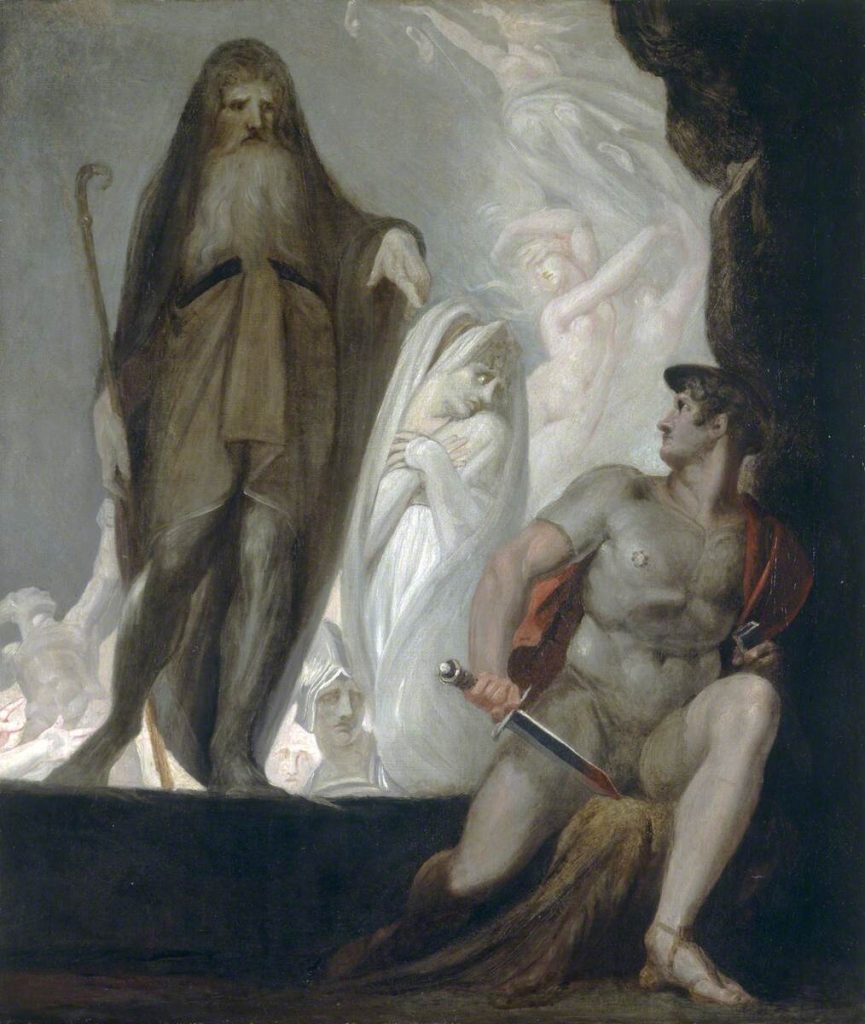
Painters have mostly left this episode alone; it is a poem of voices, not of things to see. Fuseli, who painted nightmares for a living, is the exception, and his Teiresias is all muscle and shadow. It is the hinge of the story. Odysseus learns what home has become in his absence, and what waits for him there, and goes anyway.
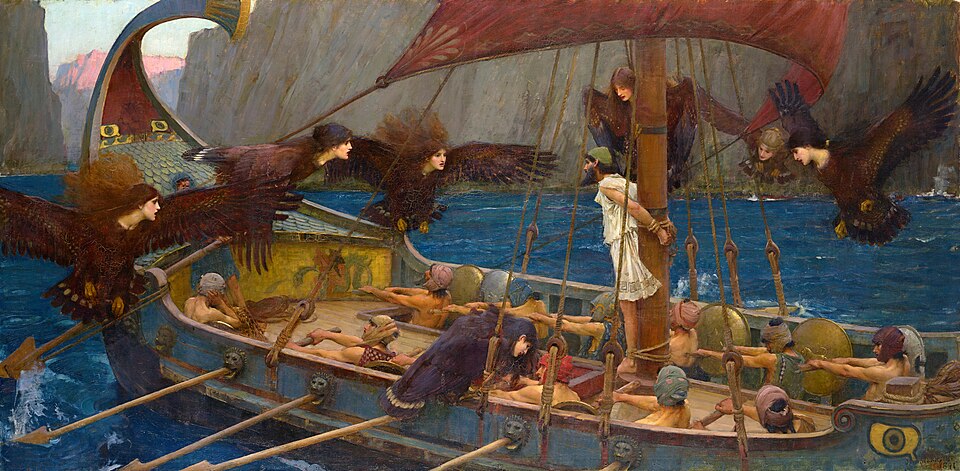
Circe had also told him about the Sirens. Their island lay on his route, and their song was such that no man who heard it ever went home; the shore was heaped with the bones of listeners. She told him what to do, and he did it: he stopped his crew's ears with wax, had himself tied to the mast, and ordered that if he begged to be released they should tie him tighter.
Come here, famous Odysseus, great glory of the Greeks, and stop your ship, so that you can hear our voices. No one has ever sailed past us in his black ship without listening to the honey of our song, and going on his way knowing more than he did.
Homer, Odyssey, translated for this article
What they promise is not sex but knowledge: they know everything that happened at Troy, everything that happens on the earth. Odysseus, who wants to know everything, begs to be untied. The crew tie him tighter, and row, and the song fades. He is the only man in the poem who heard it and lived.

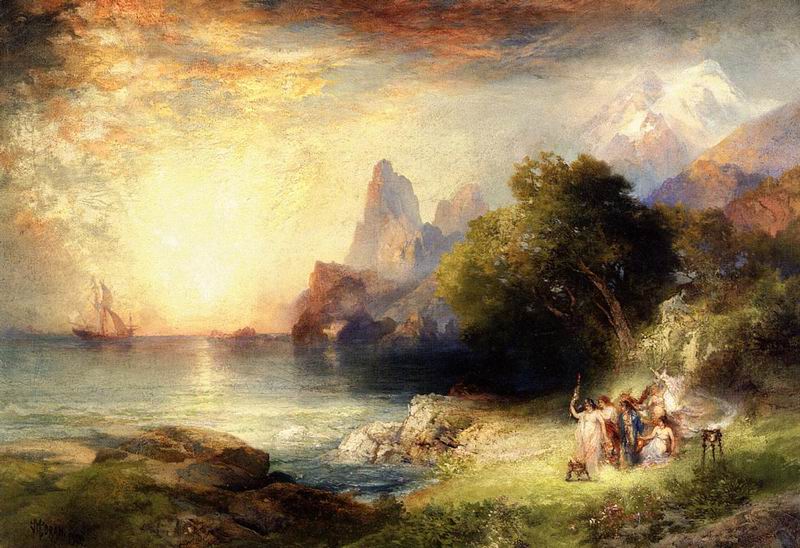
The Victorians could not leave the scene alone. Waterhouse kept the vase-painting harpies. Herbert Draper, in 1909, made them mermaids who grow legs as they climb aboard, which is a different painting about a different danger. Thomas Moran, the painter of Yellowstone, set the whole thing at sunset on a rock the size of a cathedral.
Then the strait. On one side Charybdis, a whirlpool that swallowed the sea three times a day and spat it back; on the other, in a cave in the cliff, Scylla, six heads on six necks, each with three rows of teeth. Circe had told him to hug Scylla's side and lose six men rather than risk the whole ship in the whirlpool. He did not tell the crew. He lost six men.

Then Scylla snatched six of my companions out of the hollow ship, the strongest and the best. I looked back at the ship and my men and saw their hands and feet already lifted high above me, and they cried out to me and called my name for the last time.
Homer, Odyssey, translated for this article
Henry Fuseli, the Swiss painter of Gothic terror who worked in London, painted it in the 1790s as a scene from a dream: the hero alone, the sea a black funnel, the monster a shape in the rock. A century later the Symbolists came back to the strait and took the ship away altogether. Ary Renan painted the two monsters as one night sea, the whirlpool a wave with a body in it, Scylla a woman clinging to her rock. Adolf Hirémy-Hirschl, in 1910, painted a naked man on a spar in a wall of water, and called it Between Scylla and Charybdis: the phrase, not the story.
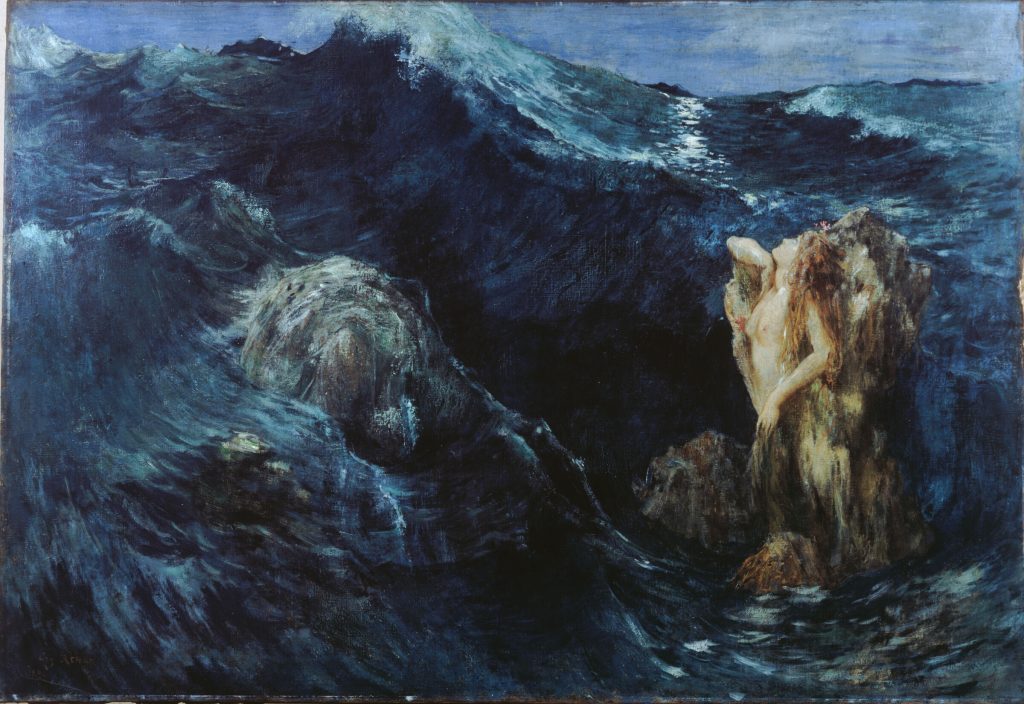
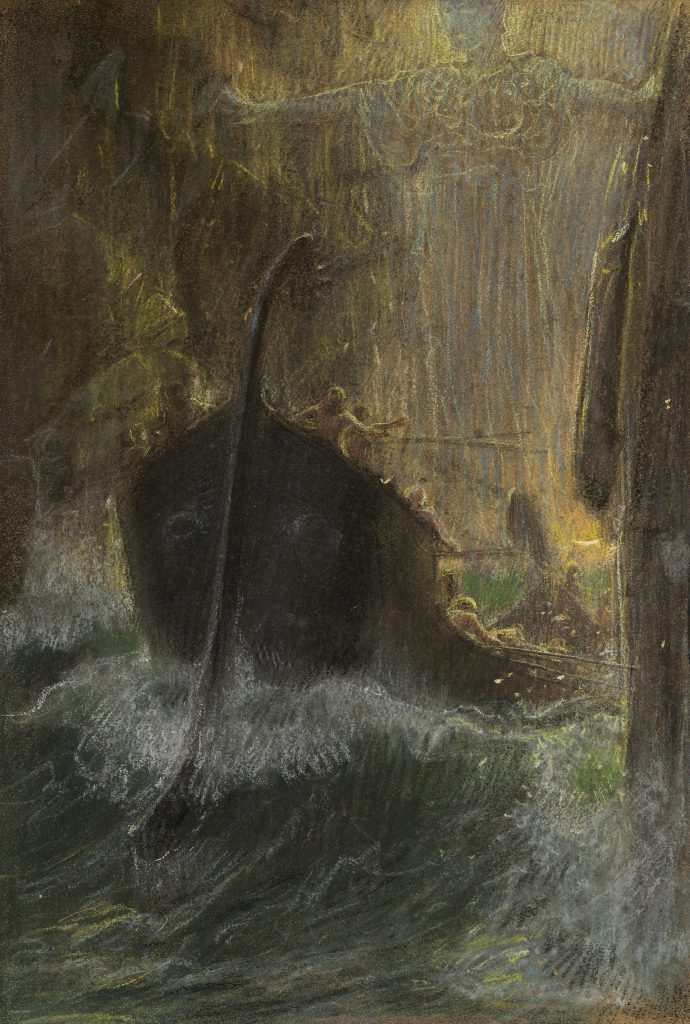
The last of the crew died for a meal. Becalmed on the island of the Sun god, forbidden to touch his cattle, they starved for a month and then, while Odysseus slept, killed and ate them. The Sun demanded justice. Zeus struck the ship with lightning when it sailed, and every man drowned except the one who had not eaten. Odysseus floated for nine days on the keel, back through Charybdis, and was washed up on the island of Calypso.
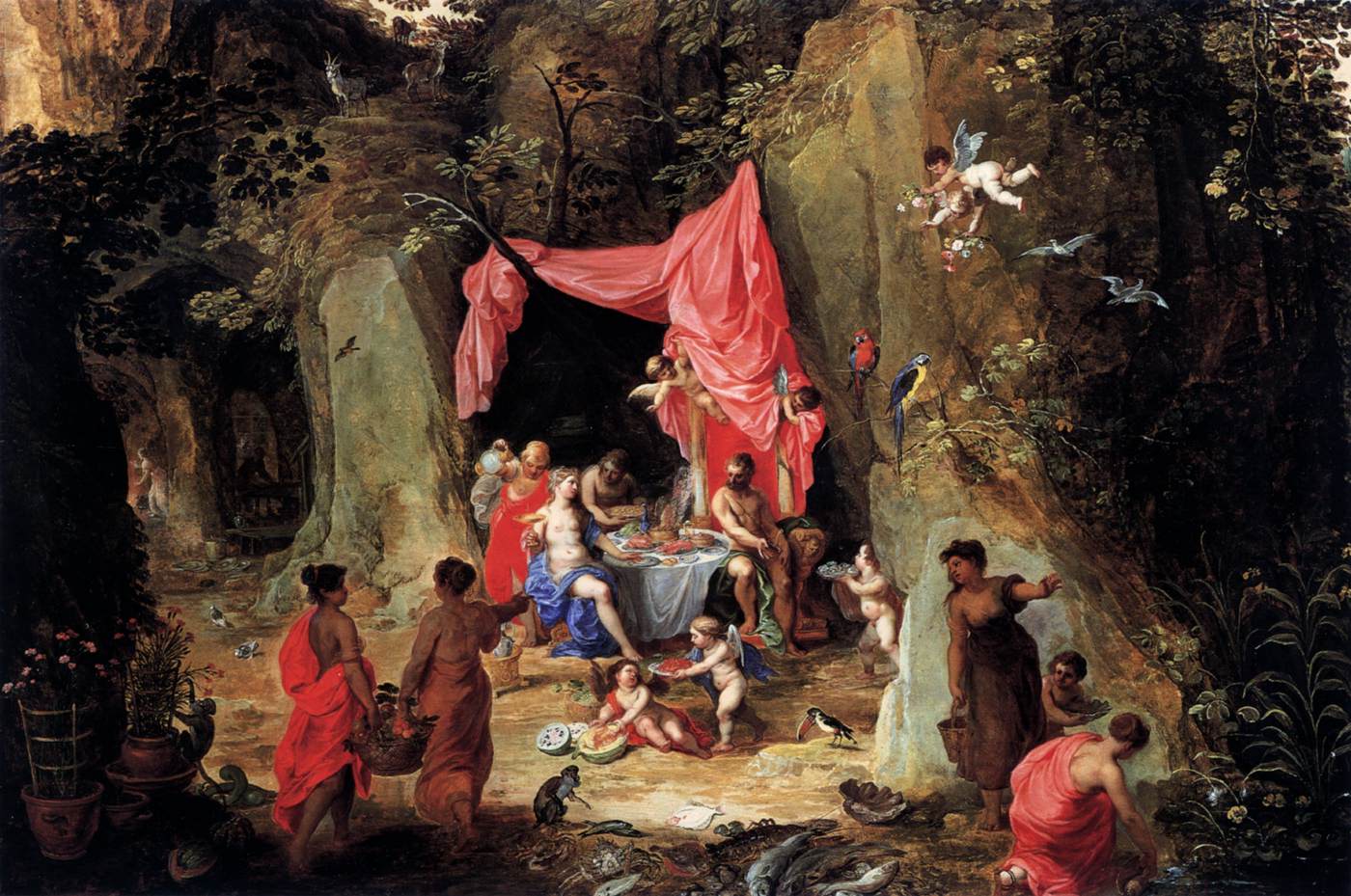
Calypso was a goddess, and she loved him. She kept him seven years in her cave on Ogygia, offered him immortality if he would stay, and he went every day to the shore and looked at the sea. Painters have mostly painted the offer: Hendrick van Balen, a colleague of Rubens, made the island a banquet in a garden. Böcklin painted the refusal.
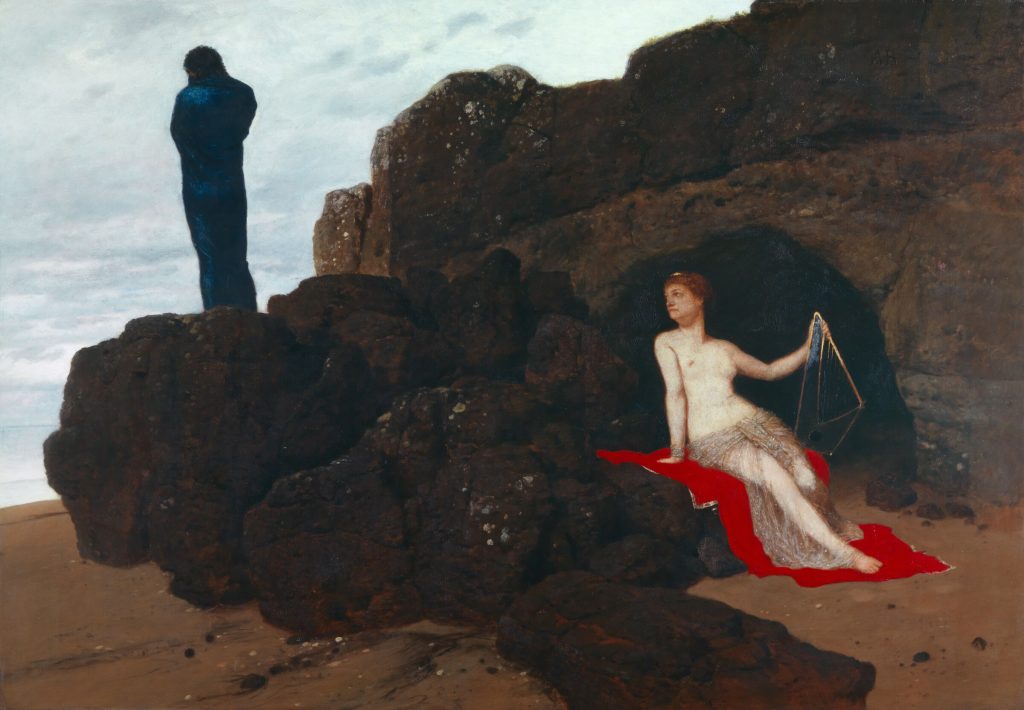
Goddess, do not be angry with me. I know very well that wise Penelope is less to look at than you, for she is mortal and you are ageless and immortal. Even so I wish and long every day to go home and see the day of my return.
Homer, Odyssey, translated for this article
When Athena finally shamed Zeus into ordering his release, Calypso gave him an axe and let him build a raft. Poseidon smashed it. He swam for two days and nights and came ashore, naked and half dead, in the mouth of a river on the island of the Phaeacians, and slept under a bush.
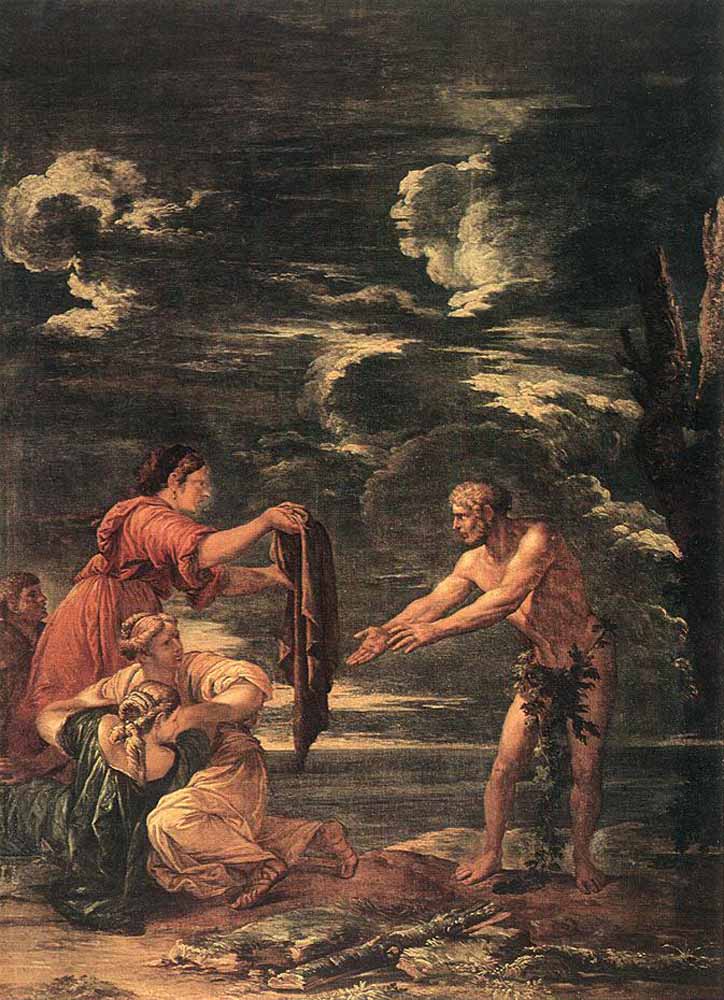
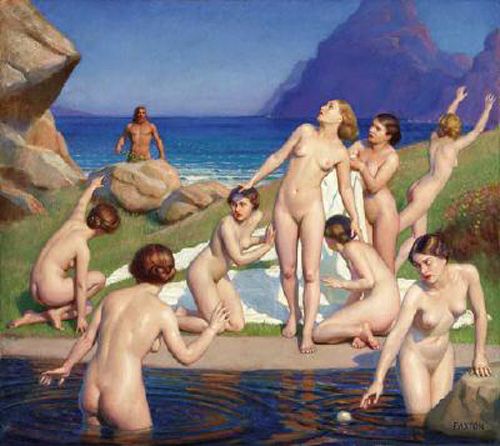
He was woken by girls laughing. The princess Nausicaa had come down to the river with her maids to wash the household linen, and after the washing they played ball, and the ball went in the water, and they screamed, and a naked man covered in salt came out of the bushes holding a branch in front of him. The maids ran. Nausicaa did not.
I am at your knees, lady. Are you a goddess or a mortal? If you are a goddess, I think you must be Artemis; if you are a mortal woman, three times blessed are your father and your mother.
Homer, Odyssey, translated for this article
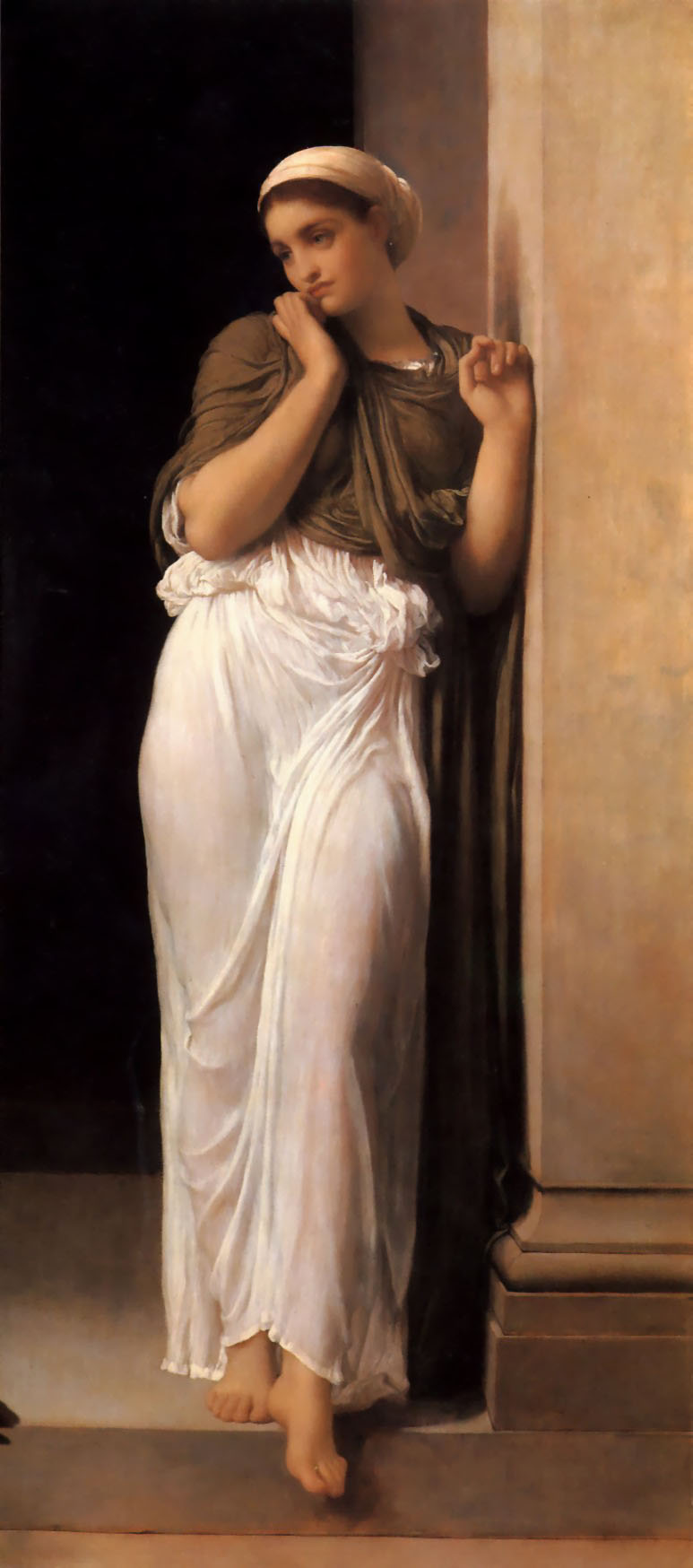
It is the most charming scene in the poem, and painters have treated it as a courtship, which it almost is: Nausicaa has been dreaming of a husband, and here is the cleverest man in the world at her feet. Salvator Rosa made it a wild landscape. Frederic Leighton, in the 1870s, painted the girl alone, listening, the ball forgotten. She gives him clothes and shows him the way to her father's palace, where a bard sings of Troy and the stranger weeps, and finally says who he is.
The Phaeacians, who are the best sailors in the world, load him with gifts and carry him home in one night, asleep on the deck, and lay him on the beach of Ithaca without waking him. Rubens painted the landing. When Odysseus wakes, he does not recognise his own island. He has been away twenty years.
Every painting shown is available as a hand-painted oil reproduction; click any image.