Loading cart…
No products in the cart.

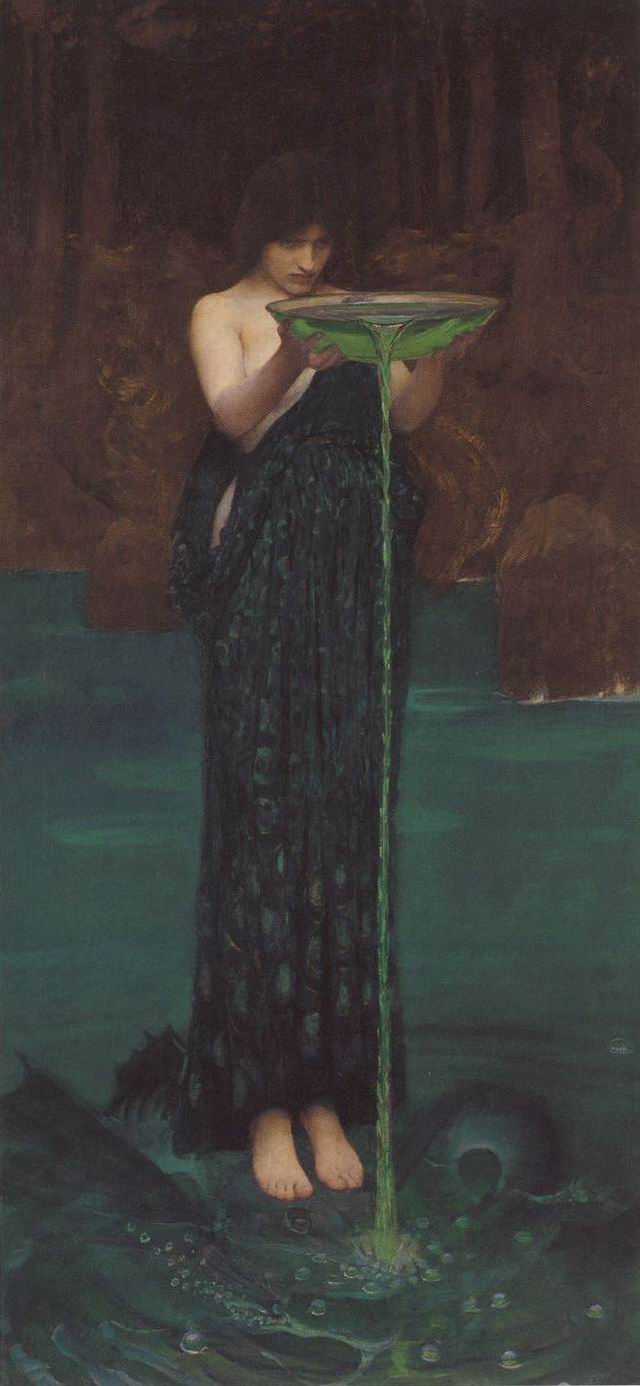
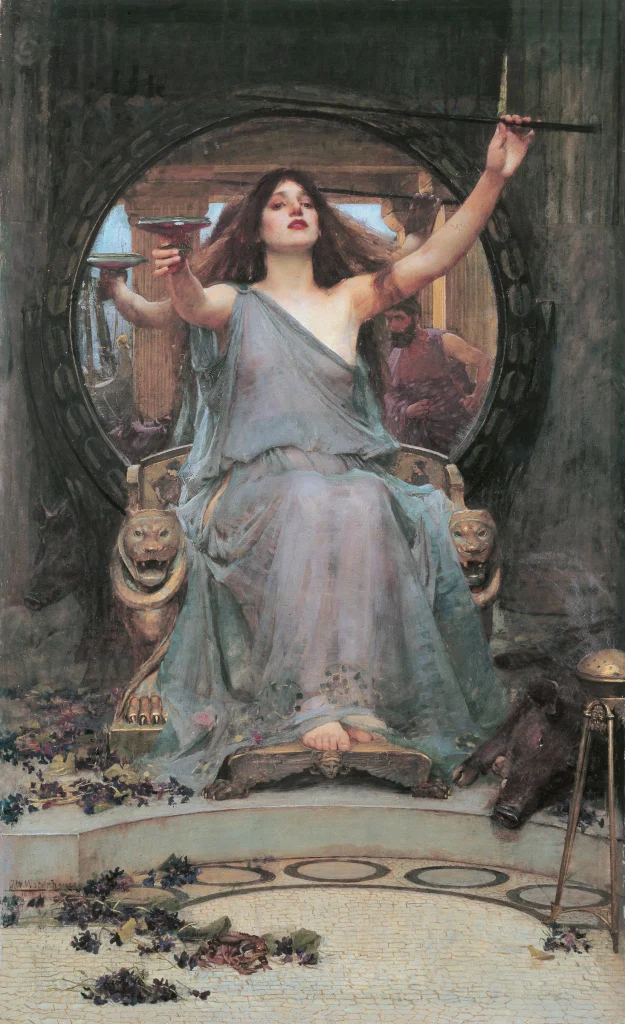
1891 · Oil on canvas · Gallery Oldham, Oldham, England
Save articles to your collection
Log in or create a free account, and this article will be waiting in your Private Collection.
Log in or sign upCirce sits frontally on a throne, lifts her wand and extends a shallow cup beyond the picture's imagined boundary. John William Waterhouse does not show the meeting from a safe distance. He places the viewer where Ulysses stands, directly in the path of the drink.
Her raised chin and steady gaze make the offer feel like a test rather than an invitation. The frontal symmetry gives Circe authority, while the cup breaks that symmetry by advancing into our space. The painting turns a scene from Book 10 of Homer's Odyssey into a personal confrontation.

The circular mirror solves the painting's central narrative problem. Circe can face the viewer while Ulysses, also called Odysseus, remains visible as he approaches. His reflection appears at her right shoulder with a sword at his side.
The geometry makes our position precise. We occupy the space in front of Circe, close to the place from which Ulysses would be reflected. Waterhouse therefore gives the spectator his role. We know the cup is dangerous, and we also know that the armed hero has arrived prepared to resist it.

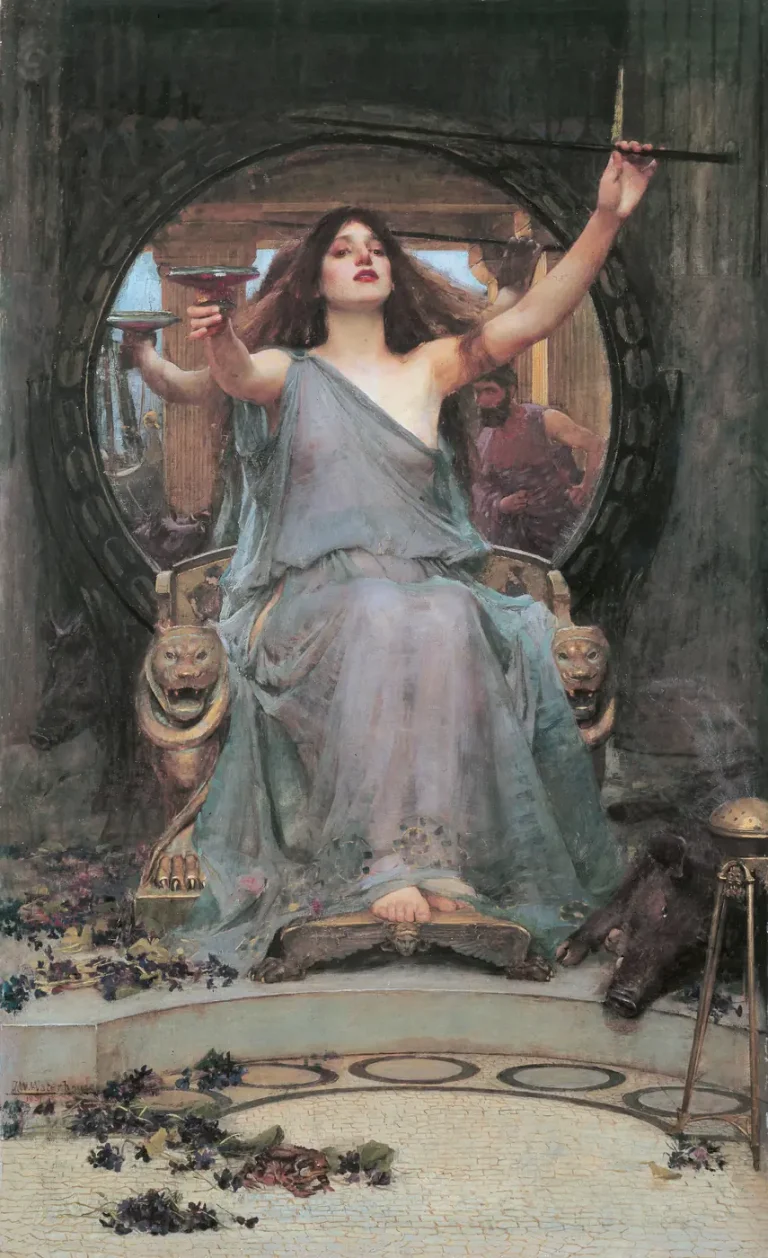
The cup carries the drug. Its dark red contents sit in a broad, shallow vessel held level with Circe's face. Because her arm projects toward us, the cup becomes the closest and most urgent object in the upper half of the painting.
The wand explains what follows. In the poem, Circe strikes the drugged men with her wand and drives them into pens after turning them into swine. Waterhouse separates the two instruments across her outstretched arms, giving the pose the balance of a ritual.


Waterhouse includes the consequence of the spell at Circe's feet. One dark swine lies beside the tripod on the right. Another animal is partly concealed near the left side of the throne. They represent men from Ulysses' crew who have already accepted Circe's hospitality and lost their human form.
The hero has an advantage they lacked. Hermes has given him the protective herb moly and instructed him how to confront Circe. The reflected sword confirms that he enters the encounter with knowledge and a plan.

And she prepared me a potion in a golden cup, and put therein a drug, with evil purpose in her heart.
Homer, Odyssey, Book 10
Paired carved lions form the arms and front supports of the throne. Their open mouths and fixed eyes give Circe a visual guard, while their gold surfaces stand out against her pale blue-grey drapery.
The throne makes her both sorceress and ruler. She is not shown hiding a trick in a domestic interior. She presides over a carefully ordered space and displays the means of transformation openly. Waterhouse balances the softness of skin and cloth against hard carved forms, claws and teeth.

Waterhouse scatters cut stems, dark flowers and leaves across the patterned floor. A toad sits among them near the centre. These details connect Circe's power to gathered plants and prepared substances, rather than presenting magic as an unexplained burst of light.
The floor also marks the boundary between her domain and ours. Its circular patterns echo the great mirror above, while the fallen vegetation leads the eye inward toward the throne. The artist signs and dates the work at the lower left, close to the plants.

Waterhouse exhibited Circe Offering the Cup to Ulysses at the New Gallery in 1891. Charles Edward Lees bought it in 1892. His daughter Marjory Lees later gave it to Gallery Oldham in 1952, where it is recorded under accession number 3.55/9.
The museum lists the painting as oil on canvas and gives its dimensions as 148 by 92 centimetres. Display arrangements can change, so visitors should consult Gallery Oldham or the current Art UK record before travelling to see it.
Circe can be read as a Victorian image of the dangerous enchantress, but the painting gives her more than decorative menace. She controls the composition, meets the gaze directly and makes no attempt to conceal the cup or wand. Ulysses is protected, armed and informed, so the tension comes from two powerful figures who understand the contest.
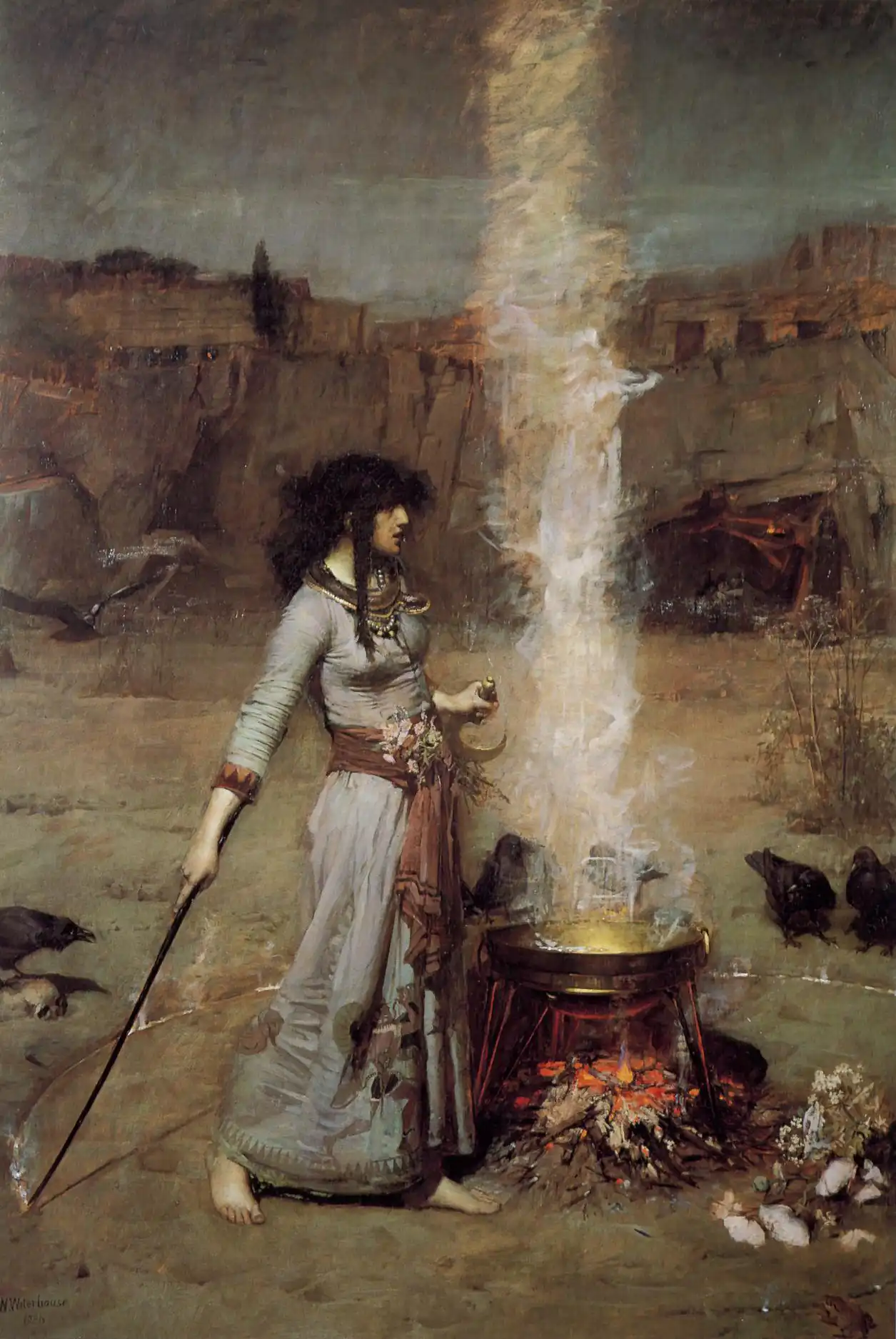
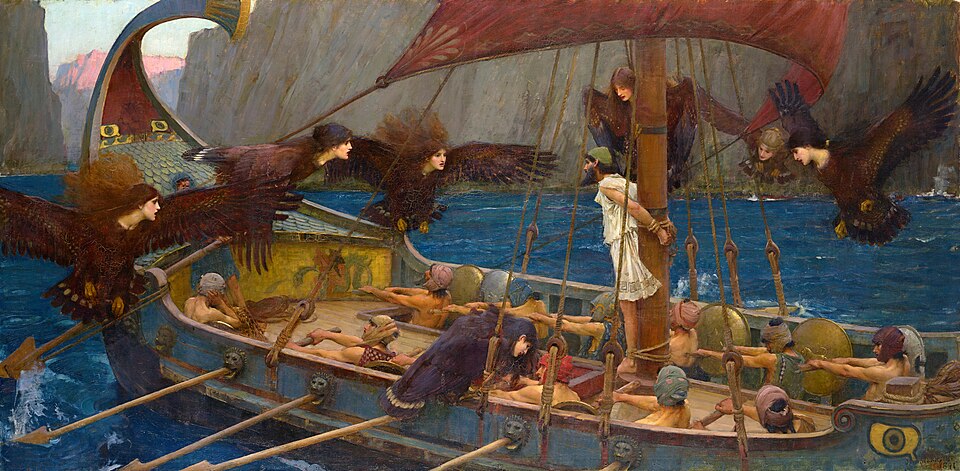
Waterhouse returned to Circe in Circe Invidiosa the following year. He also explored ritual and enchantment in The Magic Circle, while Ulysses and the Sirens presents another dangerous episode from the hero's voyage. Together, the works show how he repeatedly used myth to stage moments of decision.
Follow the rest of the voyage in our Odyssey paintings collection, or meet Circe's fellow enchantresses in magic and witchcraft paintings.
Enjoyed this story?
Save articles to your collection
Log in or create a free account, and this article will be waiting in your Private Collection.
Log in or sign up