Loading cart…
No products in the cart.

1881 · Oil on canvas · Art Institute of Chicago, Chicago, United States
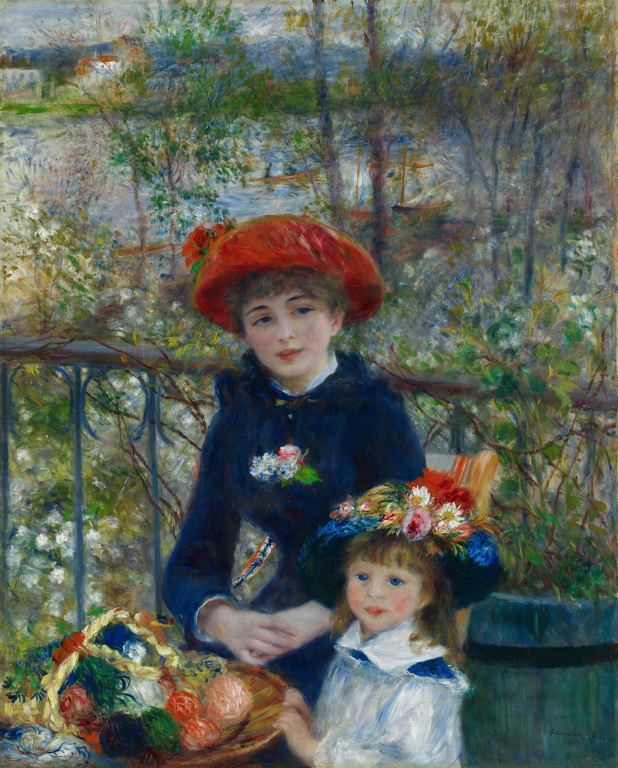
Two Sisters (On the Terrace) was painted in the spring of 1881 at the Restaurant Fournaise on the island of Chatou, a popular destination along the Seine west of Paris frequented by boaters, artists, and weekend visitors. Renoir was deeply engaged with this location during the early 1880s, and this work was painted around the same period as several other significant canvases connected to the riverside social scene there. The two models were not actual sisters but were posed together to suggest a familial relationship that adds warmth and narrative suggestion to the image. The older figure wears a fashionable hat adorned with flowers, while the younger girl holds a basket of wool in colors that echo the surrounding landscape and the bright accents of the older figure clothing.
The painting was purchased by the Chicago art collector Charles L. Hutchinson and eventually entered the collection of the Art Institute of Chicago, where it has remained a central work in the museum holdings. It was exhibited in Paris at the seventh Impressionist exhibition in 1882, where the critic Charles Ephrussi praised its freshness and the skill with which Renoir unified its varied elements. The work has been reproduced extensively and has become one of the most recognized Renoir compositions in North American collections. Its combination of human subjects, decorative detail, and natural landscape reflects the wide range of Renoir interests during one of his most productive periods.
The composition is built around the contrast and harmony between the two figures, with the older woman occupying a dominant position in the upper portion of the canvas and the younger girl anchoring the lower left foreground. The older figure gaze is directed slightly away from the viewer, suggesting a momentary pause in activity rather than a formal pose, while the child looks more directly outward with an open and candid expression. Behind them, the blue-green waters of the Seine and the foliage of the riverbank create a loosely brushed backdrop that recedes convincingly without competing for attention with the figures. Renoir handled the background with deliberate softness, allowing the figures to stand out through the greater definition and saturation of their coloring.
The basket of multicolored wool in the foreground serves an important compositional function, introducing warm reds, blues, and yellows that anchor the lower portion of the picture and create visual rhymes with the flowers on the hat above. This kind of deliberate color orchestration is characteristic of Renoir compositional method, in which decorative and structural functions overlap. The handling of the older figure hat, with its loosely indicated blooms, demonstrates the confident, suggestive brushwork that Renoir developed through years of painting en plein air. The light throughout the canvas is warm and consistent with an outdoor spring afternoon, falling evenly on the figures and lending their skin tones a soft glow that became one of Renoir most recognizable technical signatures.
The painting engages with themes of femininity, domesticity, and leisure that recurred throughout Renoir career, presenting its female subjects in a setting that blends the natural world with the pleasures of social life along the Seine. The terrace setting was itself a culturally loaded space in the Paris of the 1880s, associated with a relaxed middle-class enjoyment of the outdoors that was distinct from both aristocratic formality and working-class labor. By placing his figures in this environment, Renoir situates them within a specific social world while keeping the tone light and approachable. The suggestion of a sisterly bond, even though the relationship is fictive, adds a layer of emotional warmth that invites the viewer to imagine a broader story beyond the painted moment.
The work also reflects Renoir ongoing interest in the relationship between human figures and the natural world. The colors of the two figures clothing and accessories are carefully chosen to harmonize with the greens and blues of the landscape behind them, creating the impression that the women belong naturally to their outdoor setting rather than being placed against it as in a studio portrait. This integration of figure and environment was a central concern of Impressionist painting and one that Renoir pursued with particular consistency. The painting communicates a sense of contentment and ease that goes beyond mere surface pleasantness, suggesting a philosophical position on the value of beauty, nature, and human connection in everyday life.