Loading cart…
No products in the cart.

1781 · Oil on canvas · Detroit Institute of Arts
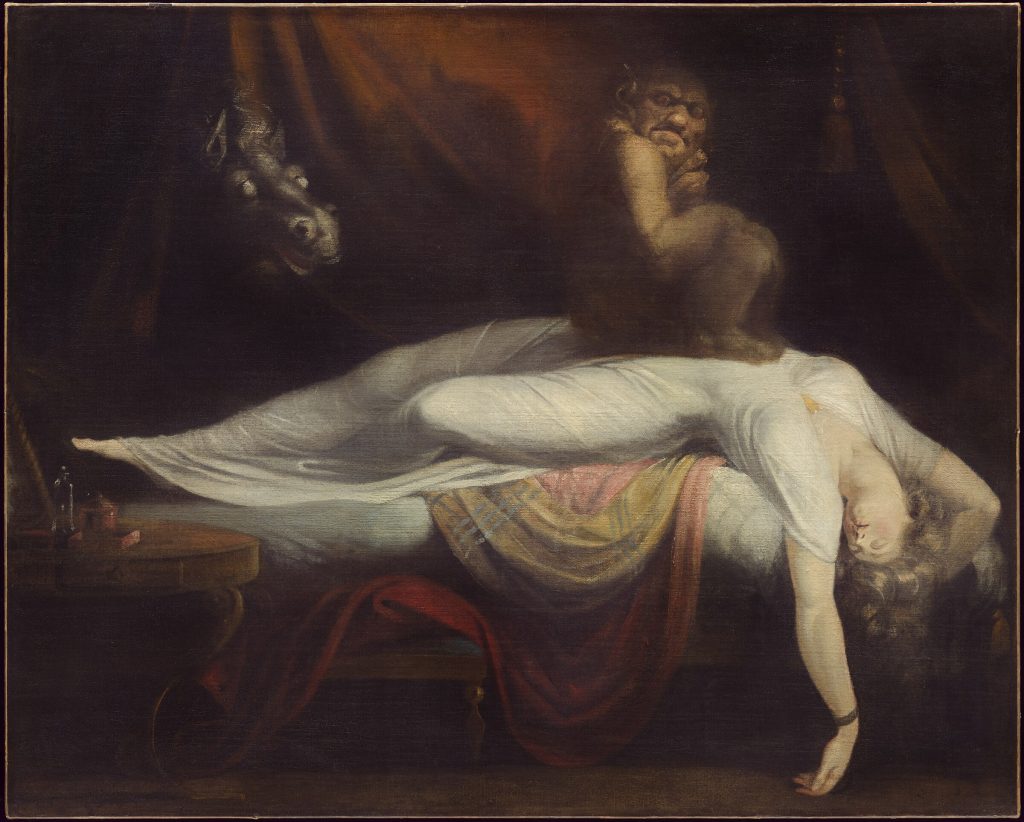
It starts with the weight. Anyone who has had sleep paralysis knows it: you wake, or think you wake, and cannot move, and something is sitting on your chest. Every culture has a name for the something. In Old English it was the mare, which is where the word nightmare comes from; in German the Alp; in Latin the incubus, the one who lies on top. Henry Fuseli, a Swiss pastor's son who had read all of them, painted it in 1781, and it is the reason we picture the thing the way we do.
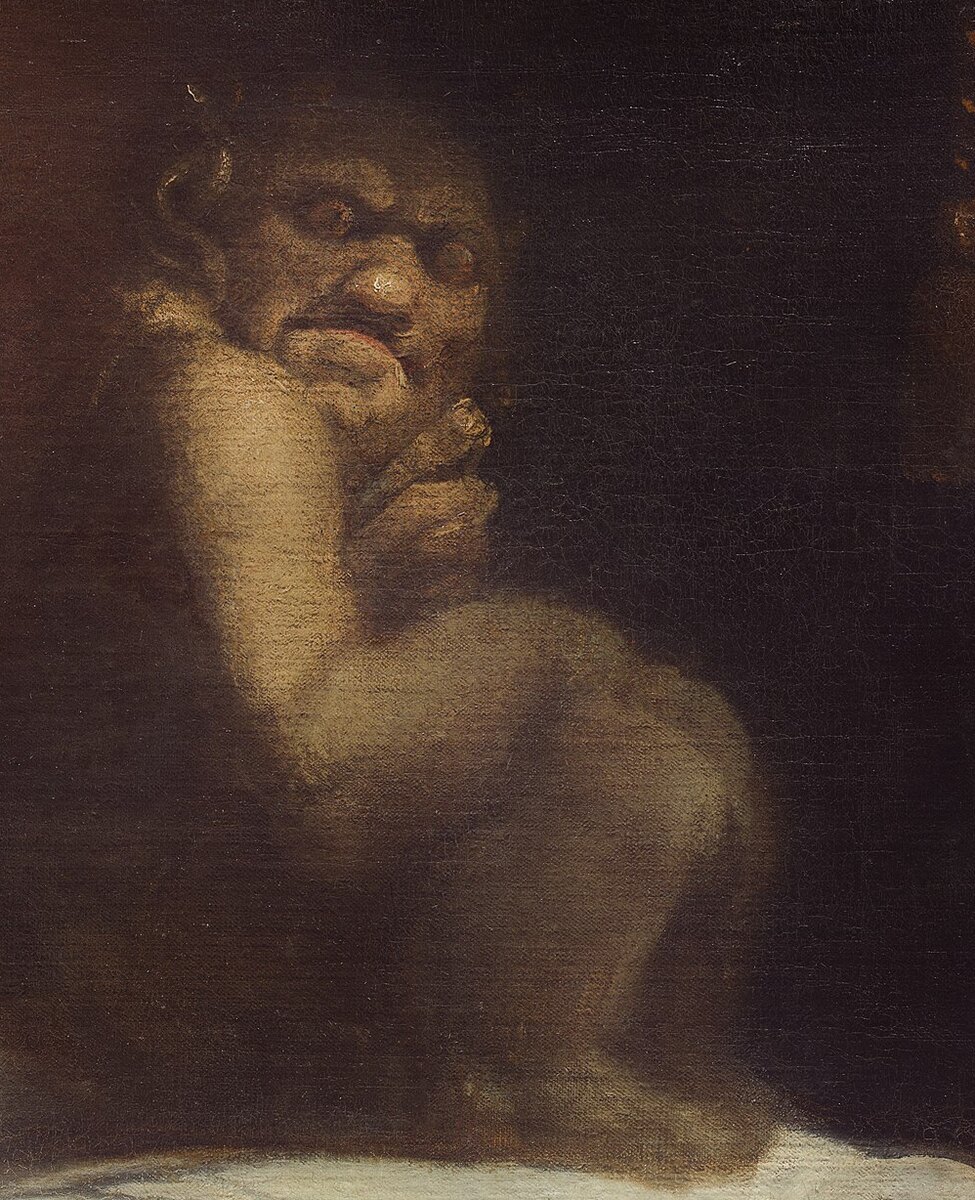
The demon squats on the sleeper's stomach with his knees up, a small, muscular, ape-faced thing with pointed ears, and he does the one thing that makes the picture unbearable: he turns and looks at the viewer. He knows you are there. Fuseli painted him in thick brown paint against the white of the sheet, and gave him an expression that is not evil exactly. It is satisfied.
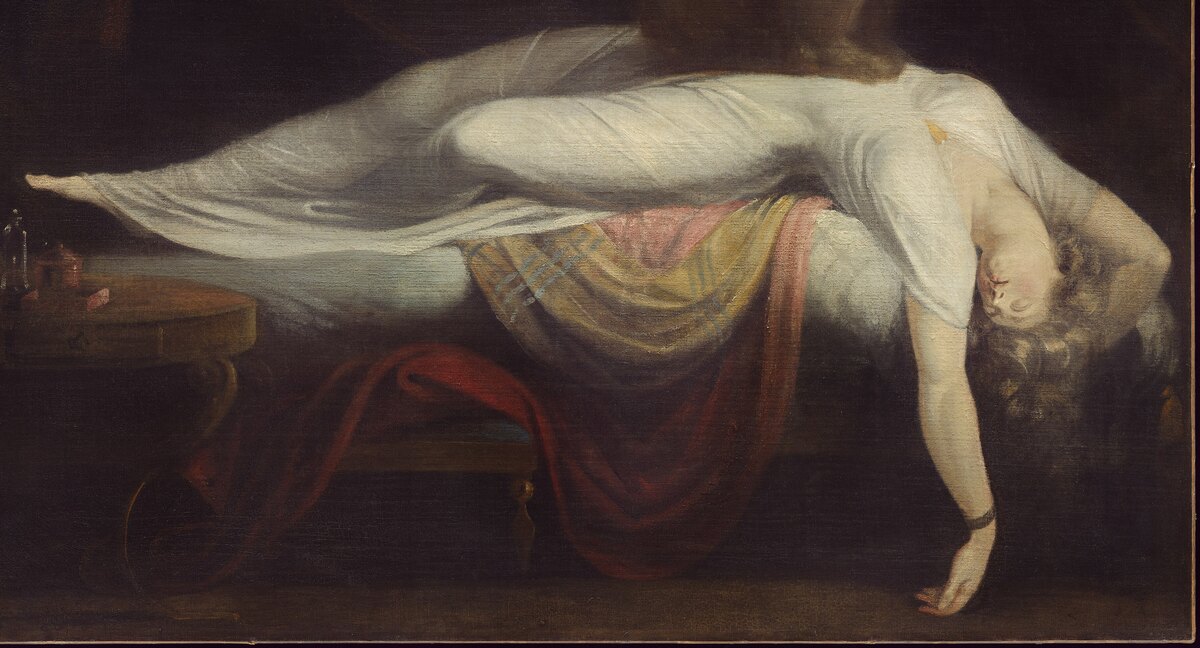
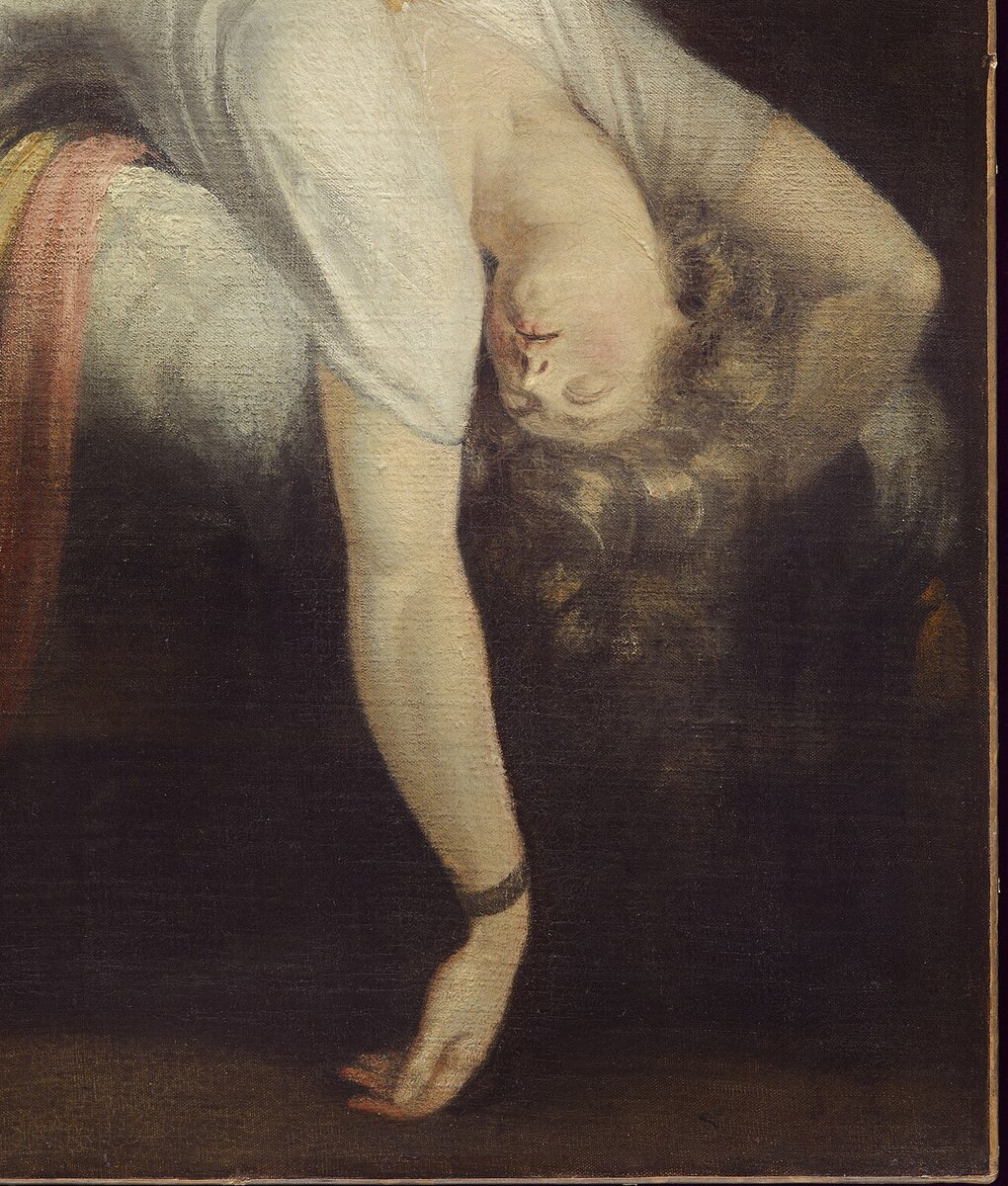
She lies across the bed rather than along it, in a white nightgown, with her head fallen back over the edge and one arm trailing to the floor. It is the pose of a fainting saint or a dead Christ, and Fuseli, who had spent eight years in Rome drawing Michelangelo, knew exactly where it came from. She is not being attacked. She is dreaming, and the dream is sitting on her.
On the back of the canvas Fuseli painted a portrait of a young woman, unfinished, and it is generally taken to be Anna Landolt, the niece of his friend Lavater, whom he had wanted to marry in Zurich in 1779 and whose family said no. He wrote a letter about her that year describing a dream in which he had her in his bed. Whether the sleeper is Anna is not provable, and whether the incubus is Fuseli is the kind of question the painting invites and does not answer.
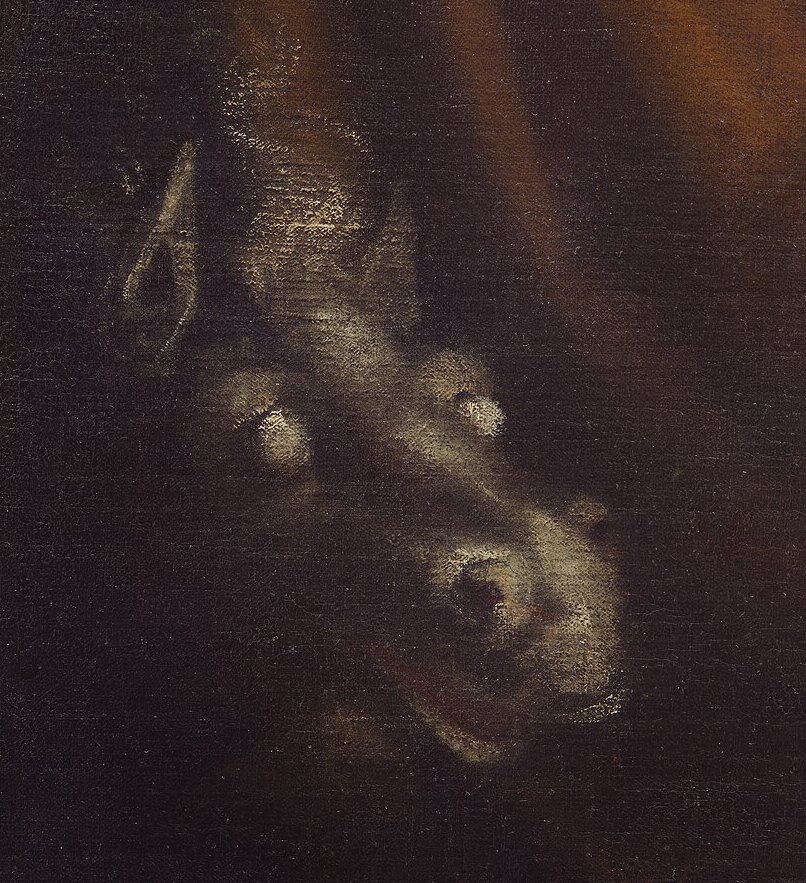
Behind the curtain a horse's head pushes into the room, with eyes like boiled eggs. It has no place in the folklore of the incubus, and it is the thing in the painting people remember. Ever since, writers have pointed out that it makes a pun: night-mare. Fuseli, who wrote his poems in German, probably did not intend it; the horse seems to have come from the same place as the rest of the picture, which is to say from nowhere sensible. The etymology is a coincidence and the horse is a nightmare anyway.
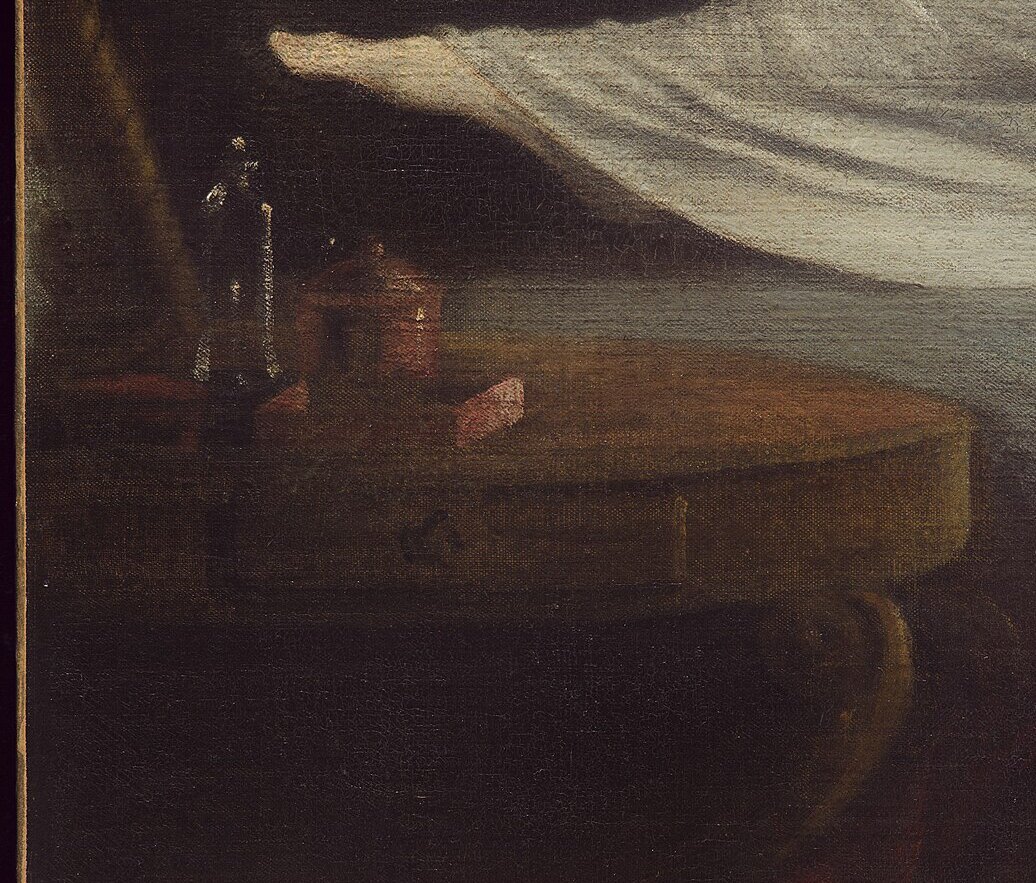
At the left a small table holds a mirror, a book and two small bottles, which have been read as laudanum, the opium tincture that eighteenth-century people took to sleep and that gave them, in return, exactly this kind of night.
The painting was shown at the Royal Academy in 1782, and the reaction was the one Fuseli wanted. Horace Walpole wrote a single word beside it in his catalogue: shocking. Thomas Burke engraved it the next year and the print sold in numbers no other Academy picture of the decade could match; Fuseli was paid twenty pounds for the painting and the publisher made hundreds from the engraving. Political cartoonists borrowed it within a year, putting prime ministers on the bed and their enemies on their chests, and they have never stopped.
So on his Nightmare through the evening fog
Erasmus Darwin, The Botanic Garden, 1791, with the engraving as its illustration
Flits the squab Fiend o'er fen, and lake, and bog;
Seeks some love-wilder'd maid with sleep oppress'd,
Alights, and grinning sits upon her breast.
Fuseli painted it again around 1790, upright this time, with the horse further in and the sleeper sitting up; that version is in Frankfurt. Mary Shelley knew the image when she wrote the scene in Frankenstein where the creature is found beside Elizabeth's body thrown across the bed. And the Detroit museum's own record notes that a copy of the engraving hung in Sigmund Freud's apartment in Vienna in the 1920s, which is where the picture belongs.
Fuseli said very little about it, and the painting has been explained as a sexual fantasy, a piece of folklore, an illustration of sleep paralysis before medicine had the term, and a joke at the expense of the Academy's taste for pretty women. All of these are probably true at once. What makes it work is that it does not illustrate a story: there is no text you can go and read that tells you what happens next. The demon looks at you, the horse comes in, the woman does not wake, and that is all.
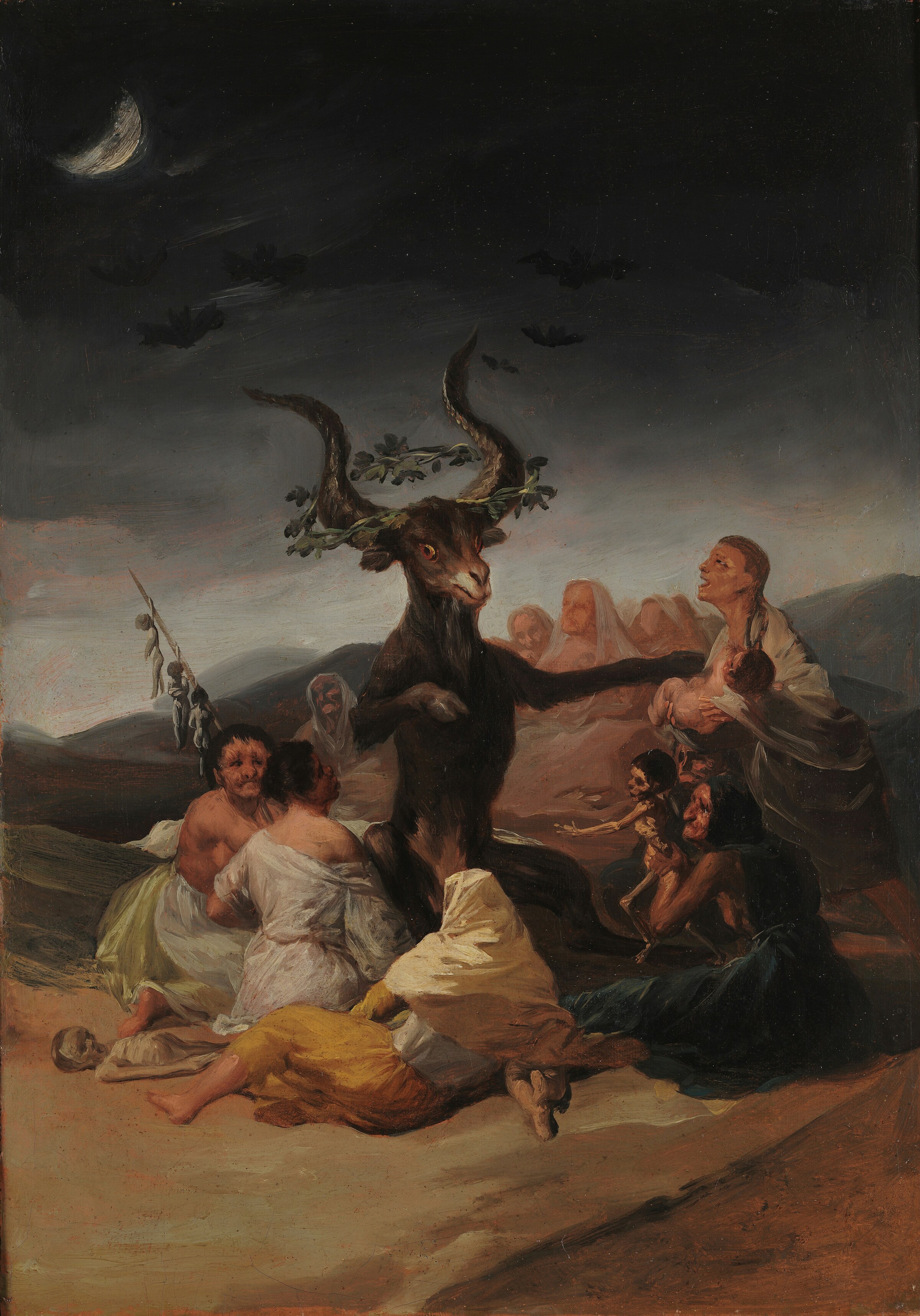
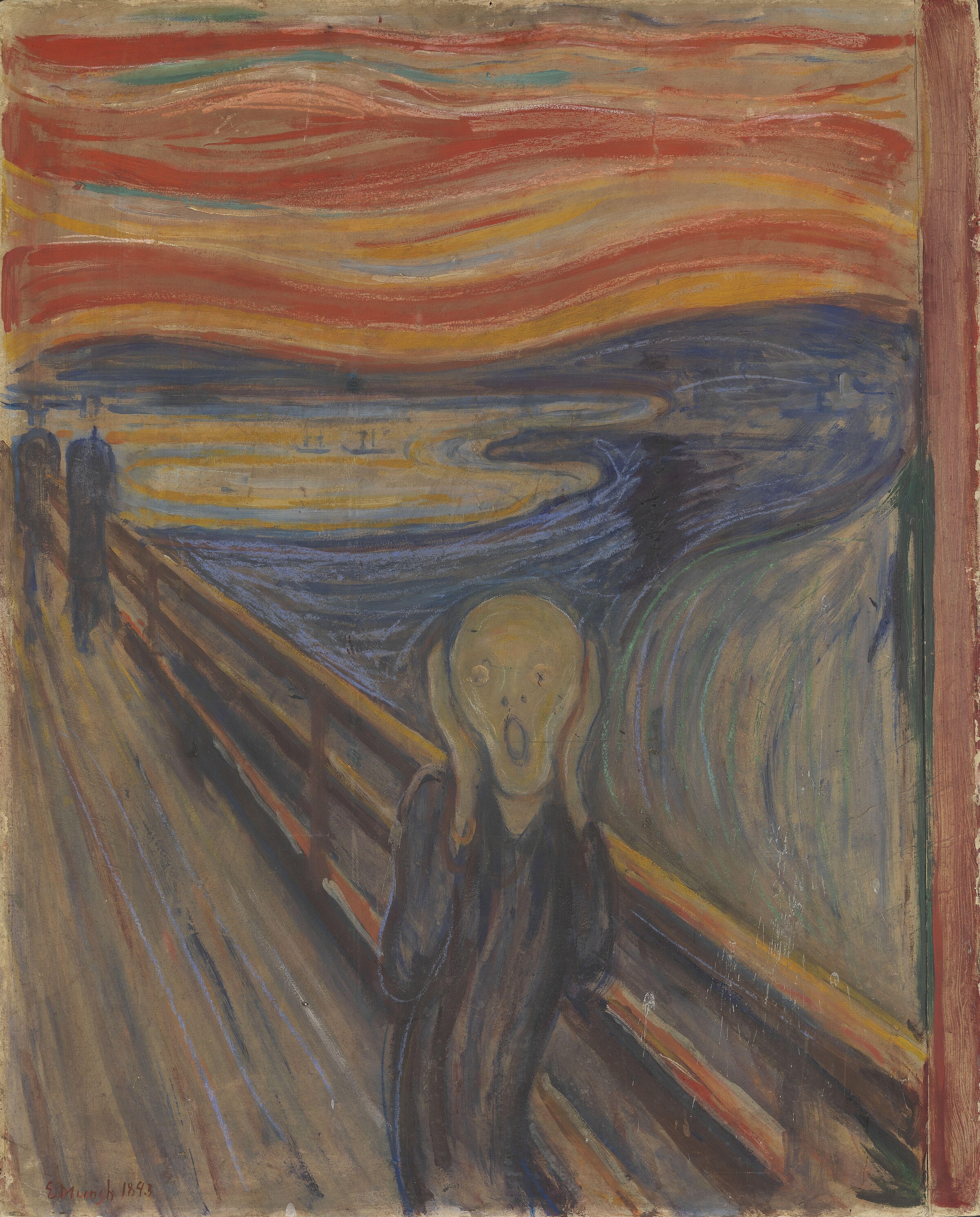
It is the first great painting of the irrational, made ten years before the French Revolution and forty before Goya's Black Paintings, and it belongs at the start of any history of horror. Goya answered it with a goat and a circle of witches; a century later Munch answered it with a scream. All three are in our Haunted Gallery.
In the Detroit Institute of Arts, which bought it in 1955; the Frankfurt version is in the Goethe House. It is oil on canvas, 101 by 127 centimetres, and it is darker in the room than in reproduction: the sleeper is the only bright thing in it.
People order it for exactly the rooms you would expect, and also for bedrooms, which takes a certain confidence. Our hand-painted reproduction of The Nightmare is painted in oil on canvas from the Detroit original, with the darks built up so that the white of the sheet carries the light. More Fuseli in our Henry Fuseli collection.
Visible details, documented facts and interpretation are kept separate. The identification of the sleeper with Anna Landolt is reported as the accepted proposal it is.