Loading cart…
No products in the cart.

1798 · Oil on canvas · Museo Lázaro Galdiano, Madrid
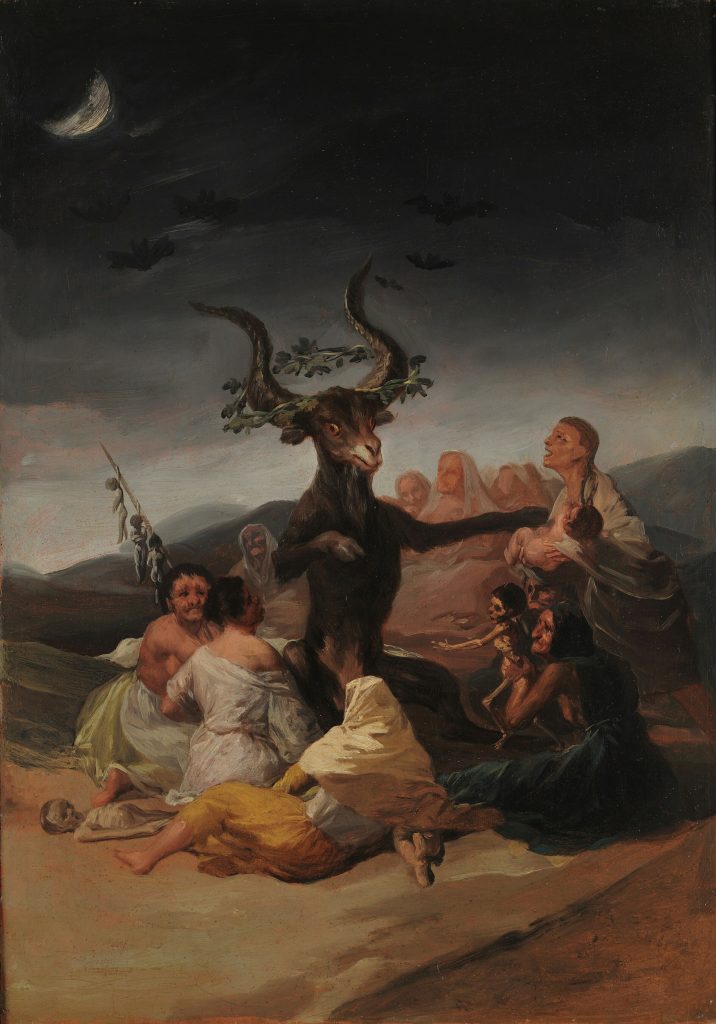
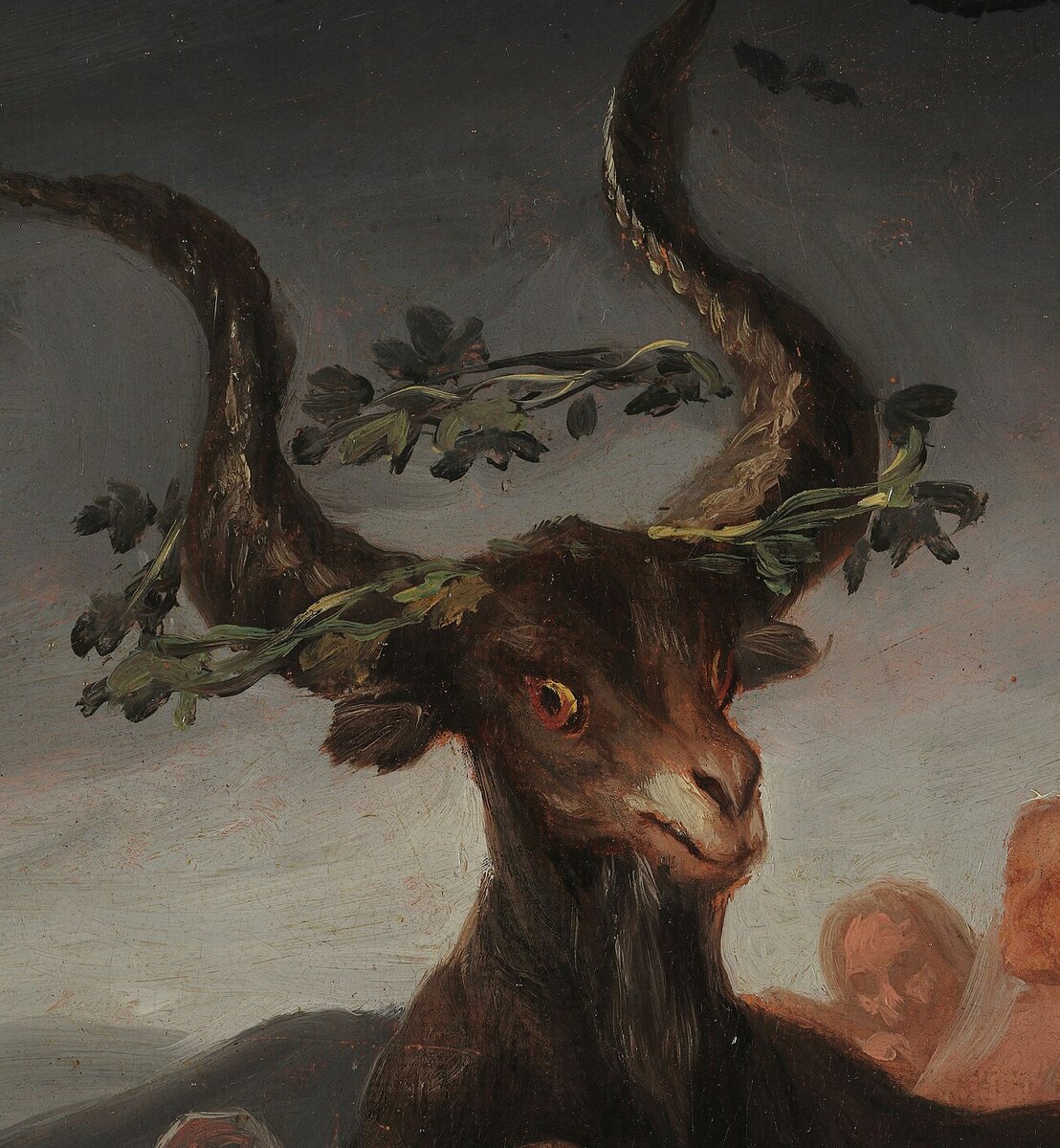
Start with the goat, because everyone in the picture is looking at him. He sits upright in the middle of a moonlit hillside, black, enormous, with a wreath of leaves twisted through his horns and his left hoof raised like a priest's hand. He is the Devil, attending in person, and Goya has painted him with the calm of a good host. The witches around him have brought what he asked for.
Goya painted it in 1798 for a duchess. The Duke and Duchess of Osuna, the most enlightened aristocrats in Madrid, had bought a country house outside the city and asked him for six small pictures of witchcraft to hang in a cabinet there, as a sophisticated joke about the superstitions of the countryside. This is the one that is not a joke.
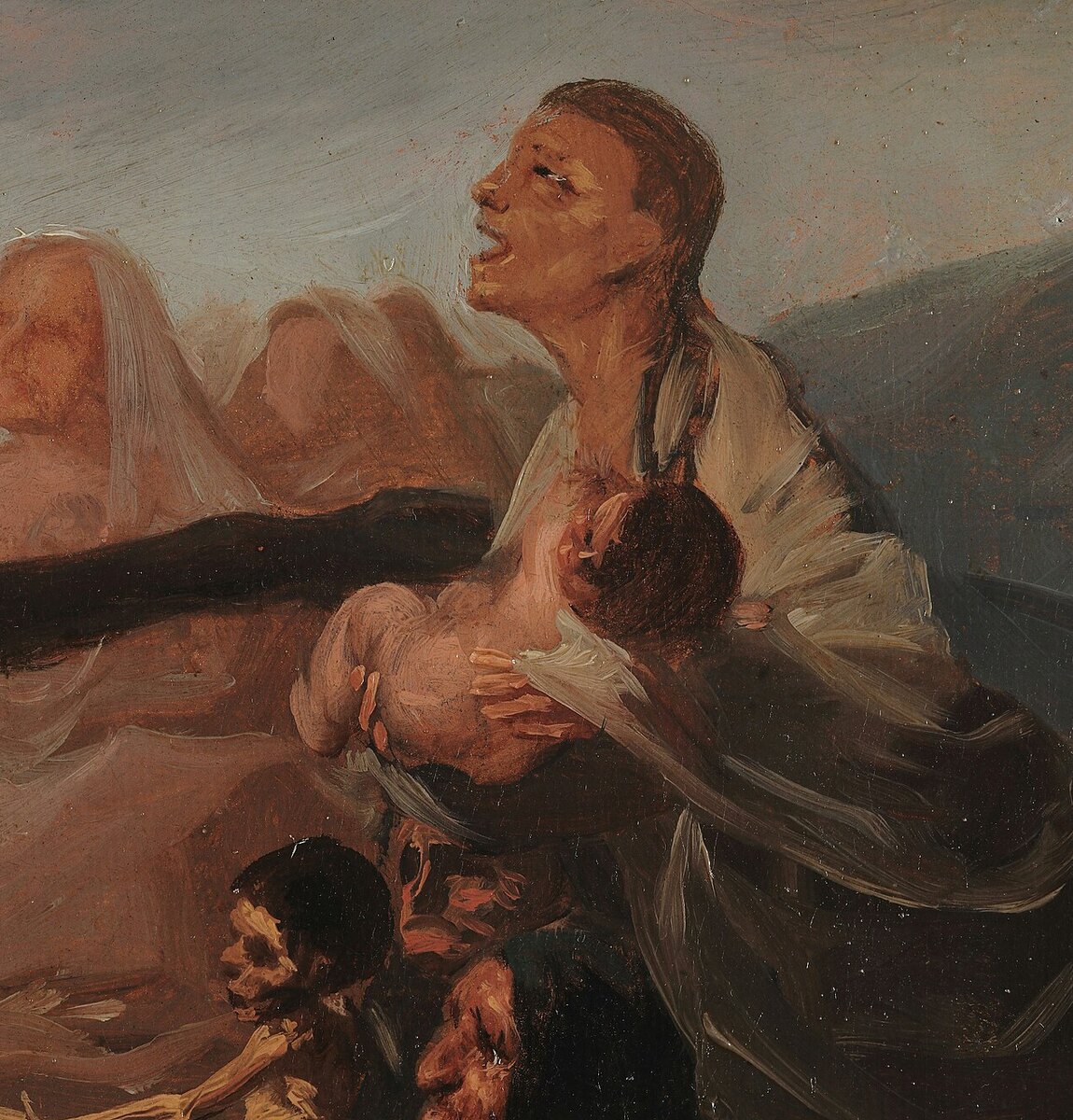
On the right a young woman holds up a plump baby to the goat with both hands, the way you would hand over a parcel. She is smiling. Behind her an old woman in a veil holds a second baby, thin and grey, with the face of a skull. The Devil, in the old confessions extracted by the Inquisition, was paid in children, and Goya paints the transaction as a village scene: the young, the old and the merchandise.
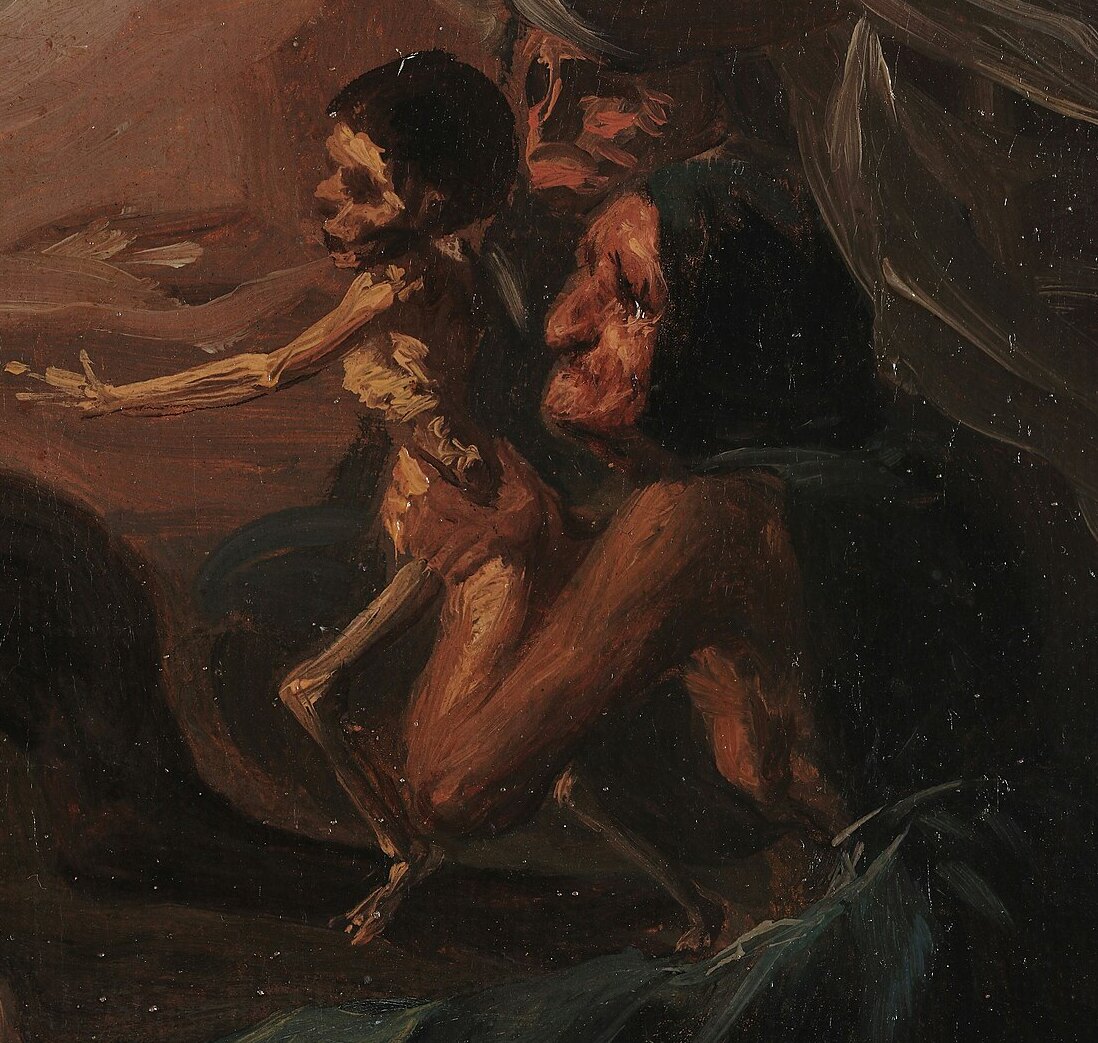
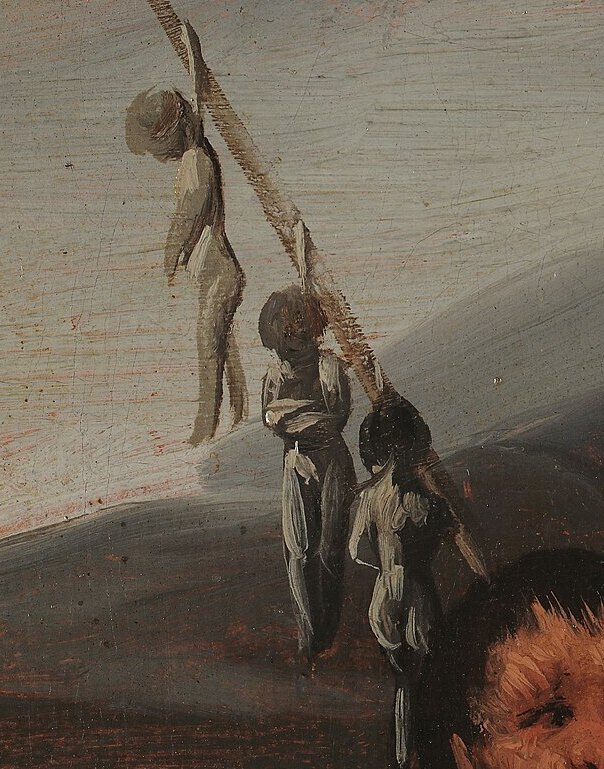
At the left a stick is planted in the ground and three tiny bodies hang from it, and on the ground in front of the witches lies a fourth. These are the children who were handed over last time. Goya does not linger; they are painted in a few strokes, the size of a thumb, and they are the reason the painting is not funny.
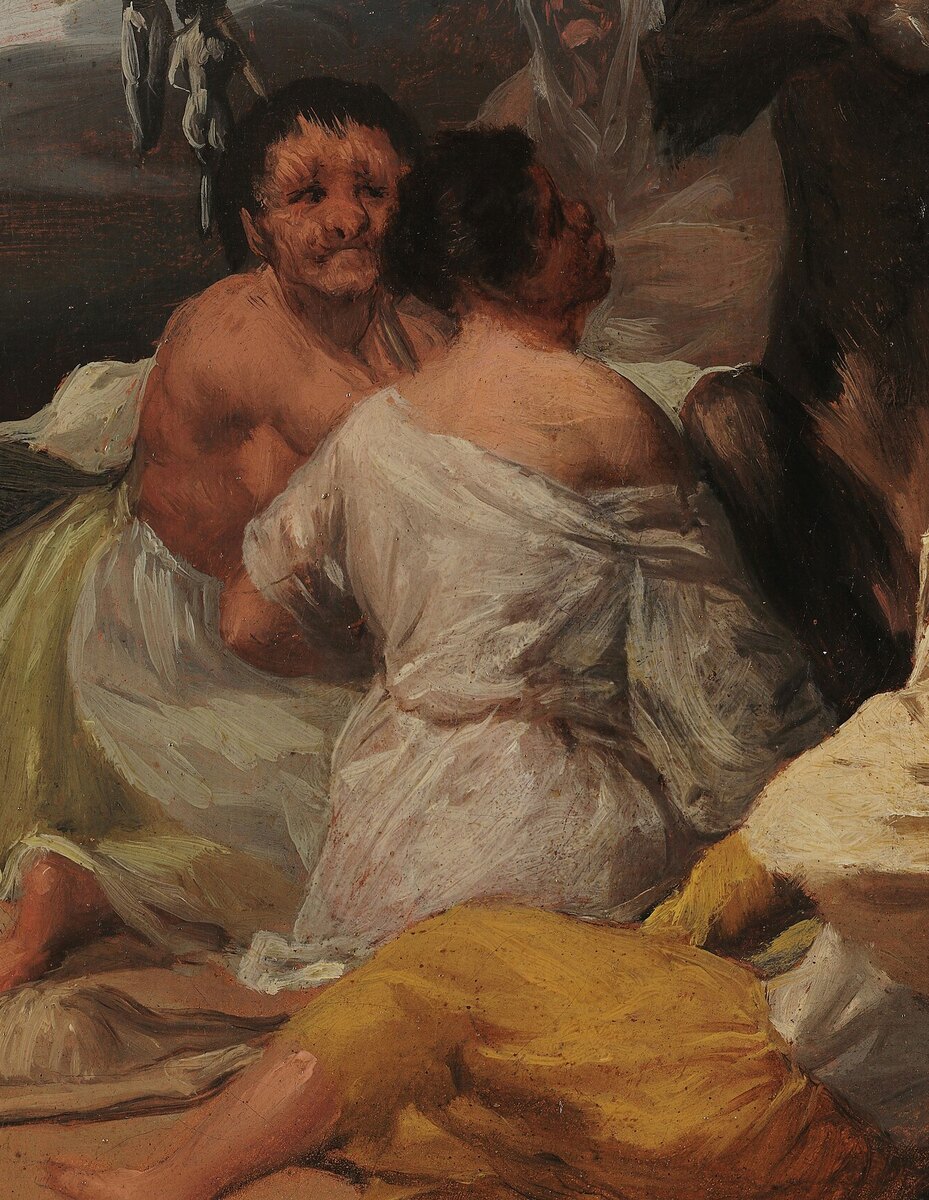
The witches themselves are the shock. They are not hags with hooked noses; they are the women Goya painted in his tapestry cartoons for the royal palaces, the majas and washerwomen of Madrid, sitting on the ground in shawls in a circle as if at a picnic. One has her back to us. That is the point Goya's Enlightenment friends were making about witchcraft: the people who confessed to it, and were burned for it, were ordinary.
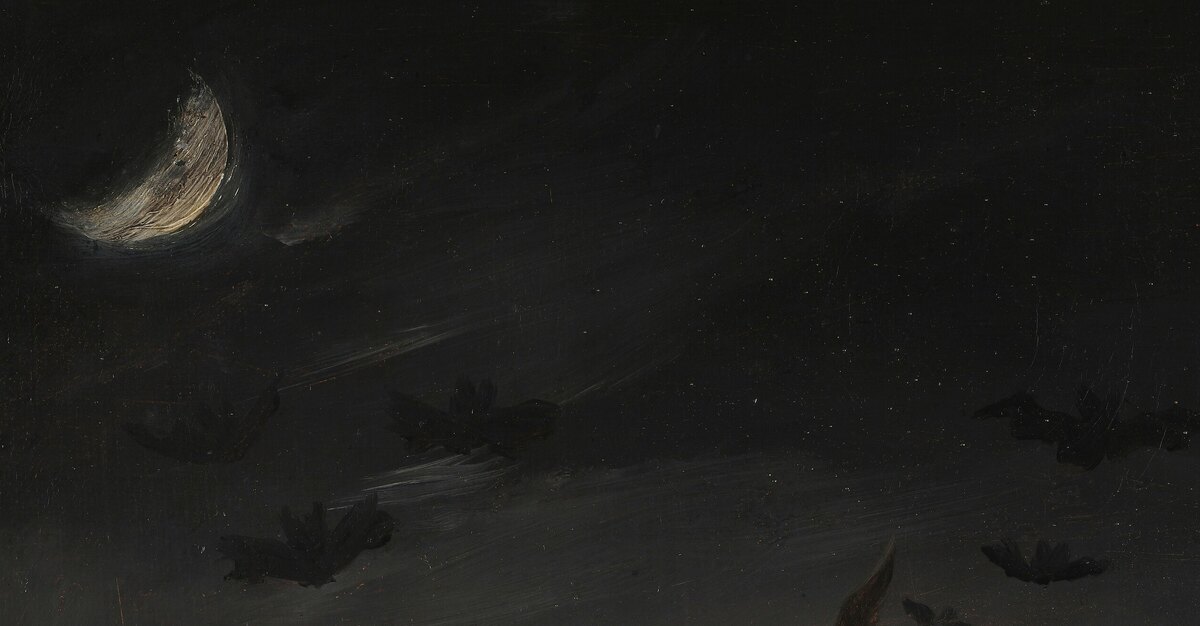
Above them a crescent moon and a scatter of bats, and beyond, the same grey Castilian hills Goya painted behind saints. He gives the sabbath a real landscape and real weather. That is what he had learned from the Inquisition's own records: the sabbaths happened in named fields, on named nights, and the witnesses were sure.
The six Osuna paintings hung together in the duchess's country house, El Capricho, and they are now scattered: The Witches' Flight in the Prado, The Spell here beside this one, The Devil's Lamp in London, the others in private hands or lost. Painted a year before the Caprichos, the etchings in which Goya let witches loose on Spanish society, they are the first time he used the night for what he really wanted to say.
The sleep of reason produces monsters.
Goya, caption to plate 43 of the Caprichos, 1799
The famous line comes from the print he made the next year, of a man asleep at his desk with owls and bats rising behind him. The Osuna pictures are what the monsters look like when they land.
On one level it is exactly what its buyers wanted: an educated laugh at the countryside, painted for people who did not believe in the Devil. On another it is a picture of what belief costs, the children on the stick, and of who pays, the ordinary women in the circle. Goya was fifty-two and had been deaf for five years. His pictures had started to say what he thought.
Twenty-five years later, alone in a farmhouse outside Madrid, he painted the goat again on the wall of his dining room, twice the size, as a black silhouette preaching to a crowd of terrified faces. That is The Great He-Goat, in the Prado, and beside it on the same wall was Saturn eating his son. The Osuna sabbath is the rehearsal, and in some ways it is worse, because the moon is up and you can see everything.
In the Museo Lázaro Galdiano in Madrid, a private collection turned museum in a palace on the Calle de Serrano, where it hangs with The Spell from the same set. It is small, 43 by 30 centimetres, and painted on canvas with the speed of a sketch.
It is a picture for people who like Goya at his darkest and do not need a large wall. Our hand-painted reproduction of Witches' Sabbath is painted in oil on canvas from the Lázaro Galdiano original, and it can be ordered larger than the original if the goat deserves it. More in our Goya collection and the Haunted Gallery.
Visible details, documented facts and interpretation are kept separate throughout this article.