Loading cart…
No products in the cart.

September 1888 · Oil on canvas · Yale University Art Gallery, New Haven
Save articles to your collection
Log in or create a free account, and this article will be waiting in your Private Collection.
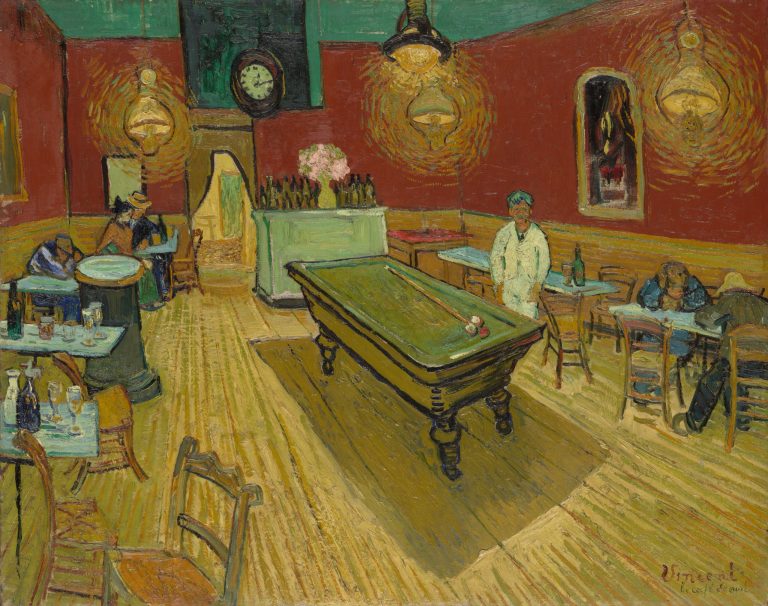
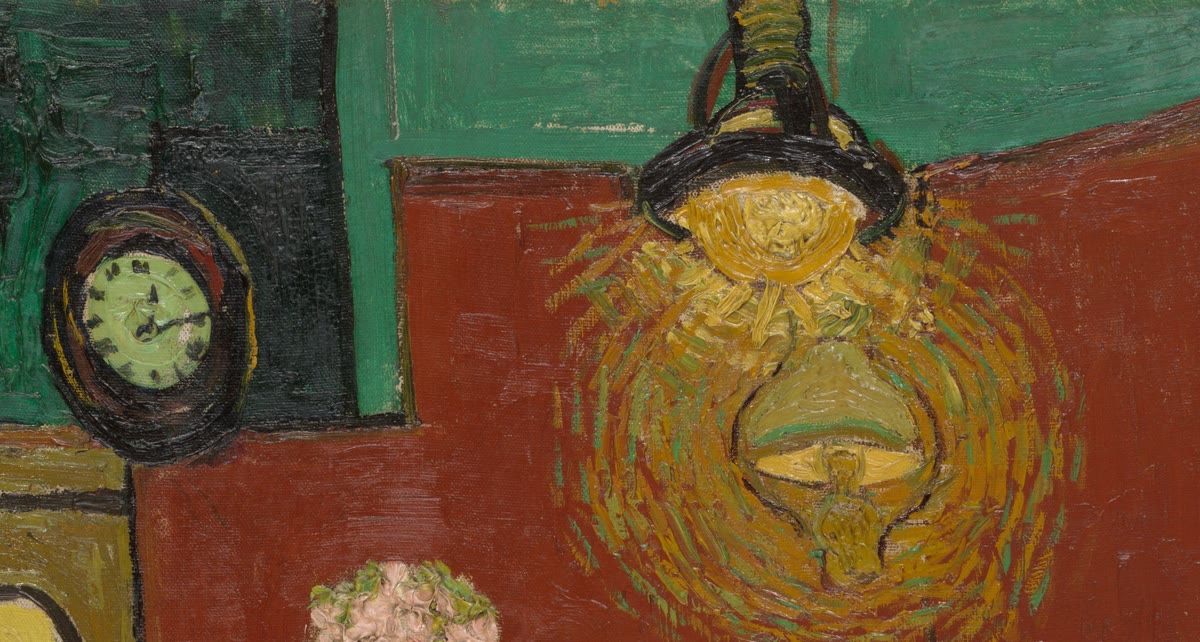
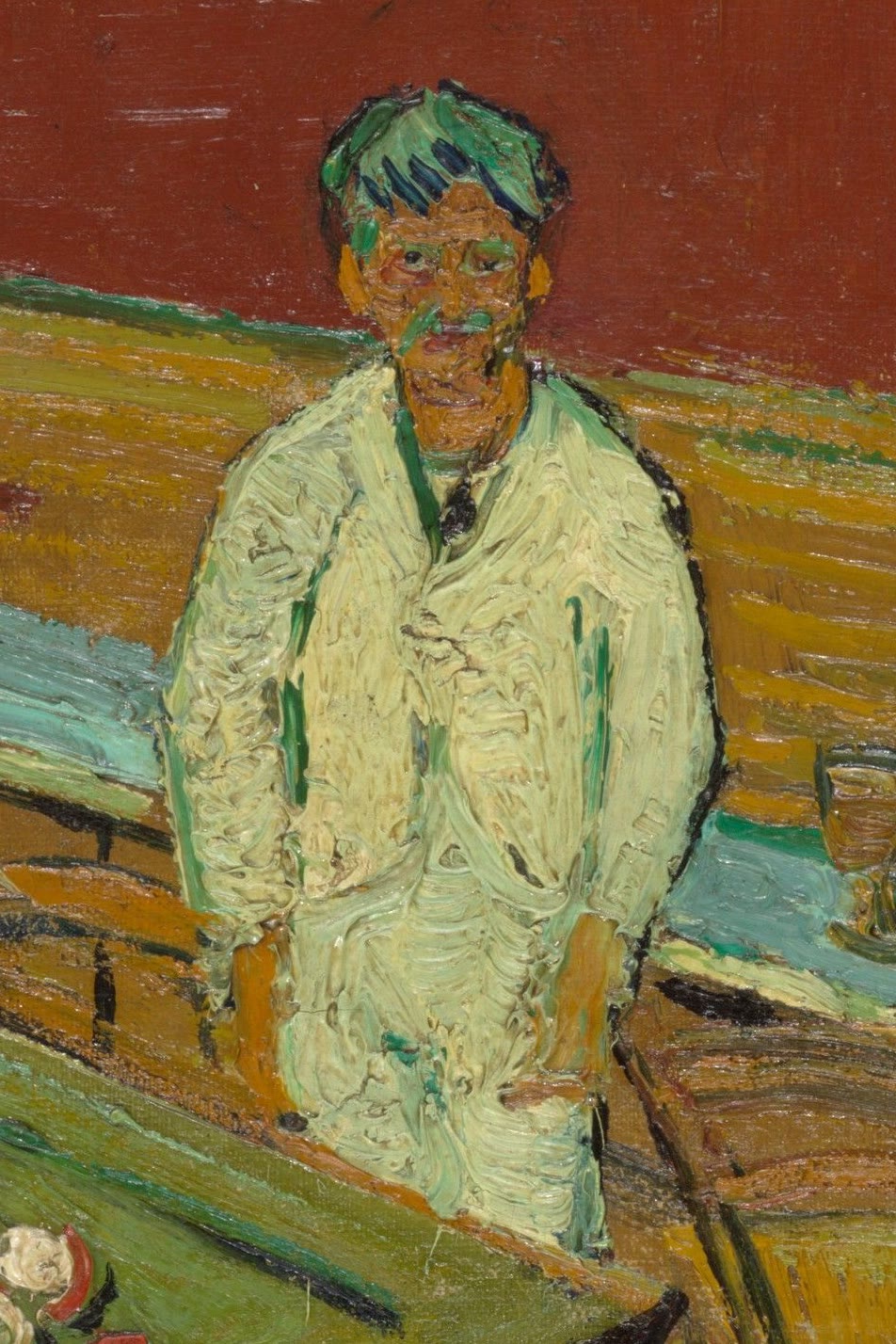
Log in or sign upLook at the clock on the back wall. It is just after midnight in the Café de la Gare, on the Place Lamartine in Arles, September 1888, and nobody is going home. A few men sleep with their heads on the tables. A couple sit close together in the corner. The owner stands by the billiard table in a white coat and looks straight at us, as if we have just walked in.
Van Gogh knew this room well. He had been renting a bed upstairs since May, and he felt the owner had charged him far too much for it. In Arles they called a place like this a night café. It never closed, so the night prowlers, as he called them, the drifters and the men with no money for a room, could sit there until morning. The Night Café is their room.
He painted it on the spot, by gaslight, over three nights. He slept during the day and worked while the café was open, with the drinkers and the sleepers in front of him. The whole thing began as a joke at the landlord's expense.
I'd told him that to get my own back on him for having paid him so much money for nothing, I'd paint his whole filthy old place as a way of getting my money back.
Vincent van Gogh, letter to Theo, 8 September 1888
The landlord was delighted. So was the postman, Joseph Roulin, and so were what Van Gogh called the prowling night visitors.
A week later he moved out and into the Yellow House across the square. The Night Café is his goodbye to the rooms where he first lived in Arles. He also made a version in watercolour to post to Theo, so his brother could see the colours.
This is the painting where Van Gogh stopped trying to copy colour and started using it to make you feel something. He said so himself, in the plainest words he ever wrote about a picture.
I've tried to express the terrible human passions with the red and the green.
Vincent van Gogh, letter to Theo, 8 September 1888
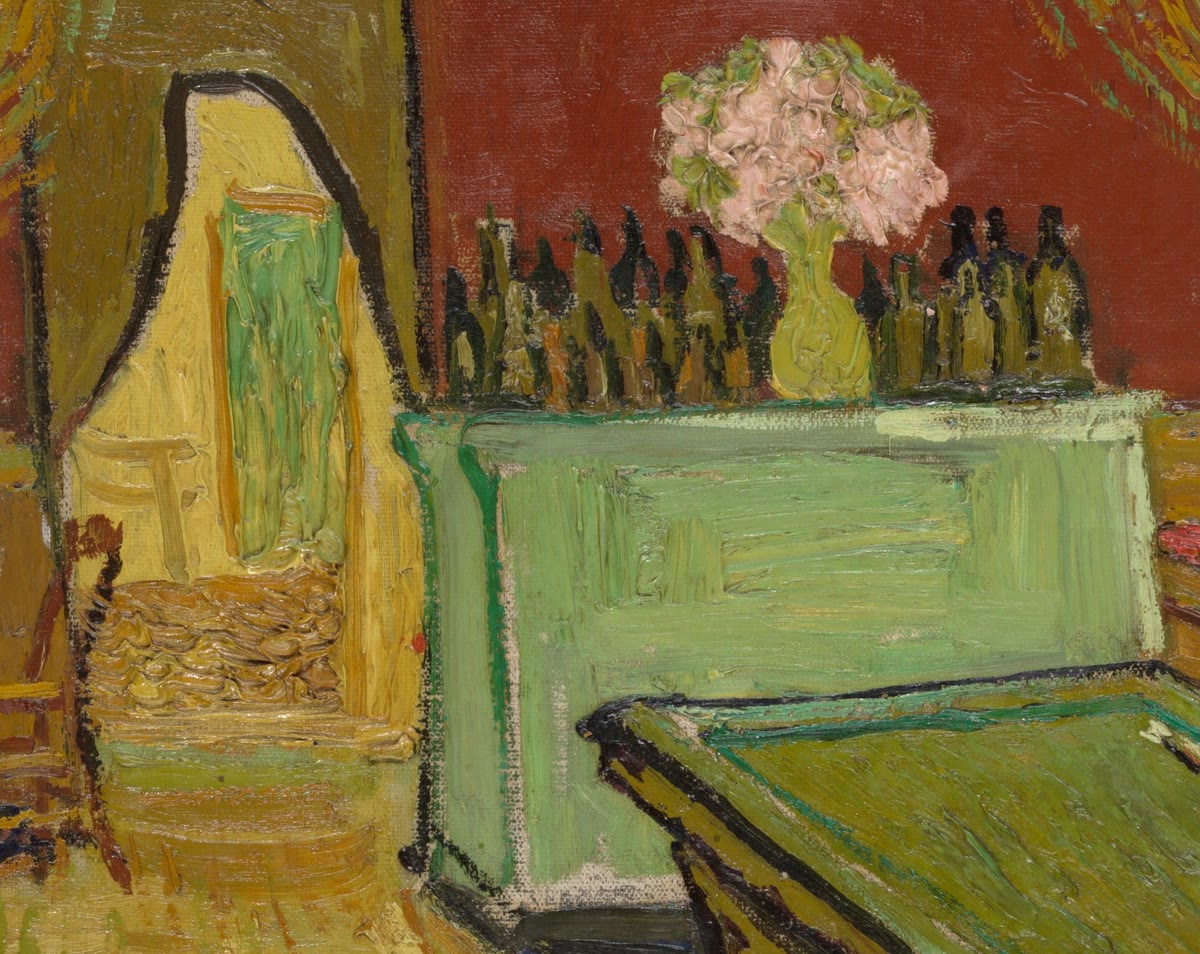
The walls are blood red. The ceiling is green. In the middle stands a green billiard table, and the four lamps hang over it in lemon yellow, each one inside a ring of orange and green strokes. Red and green are complementary colours: they sit opposite each other on the colour wheel, so each one makes the other louder. This is where the meaning of the painting lives: not in the story, but in the colour. The room hums. It is not a comfortable place to be, and it is not meant to be.
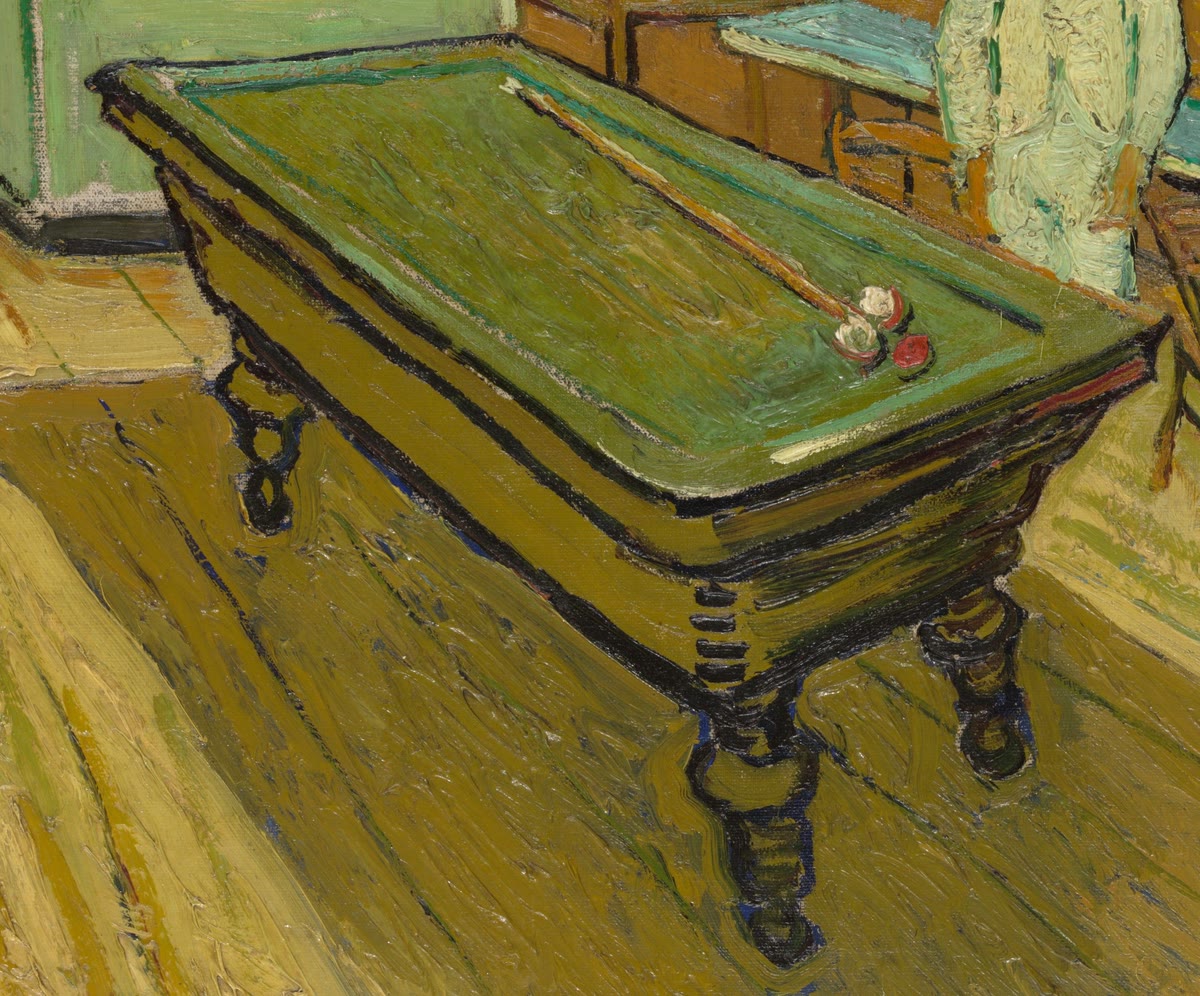
The perspective does the rest. We look down on the room from high up, near the door. The floor tips up toward us so steeply that the room seems to slide, and the long shadow of the table runs across the boards like a stain. Every line of the perspective runs to the curtained doorway at the back, the one way out. A month later he used the same tilted floor in The Bedroom, where it feels calm. Here it feels like vertigo.
The man in white is the owner, Joseph Ginoux, who ran the café with his wife, Marie. Van Gogh described him watching over things from a corner of this furnace. He is the only person in the room standing up, and the only one looking at us.
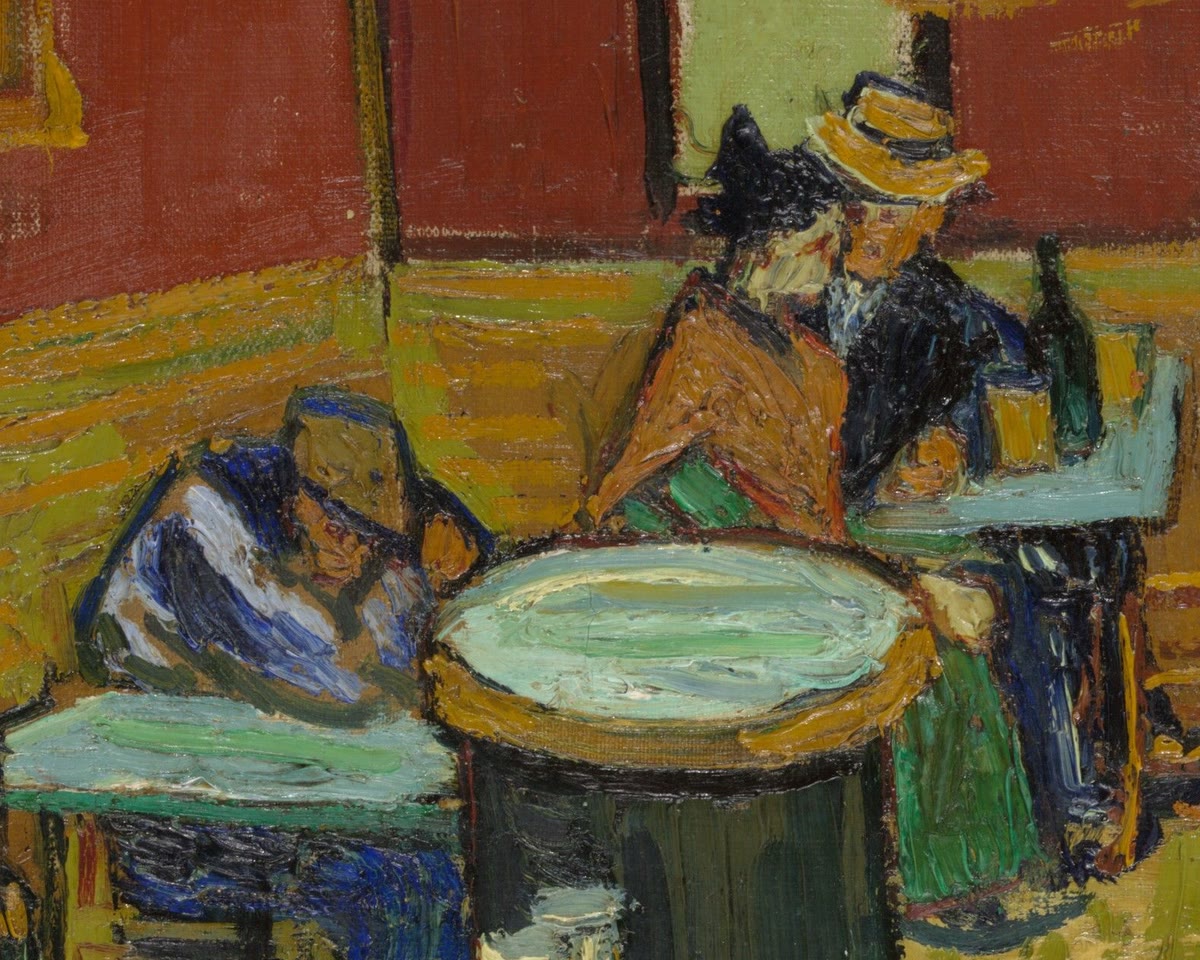
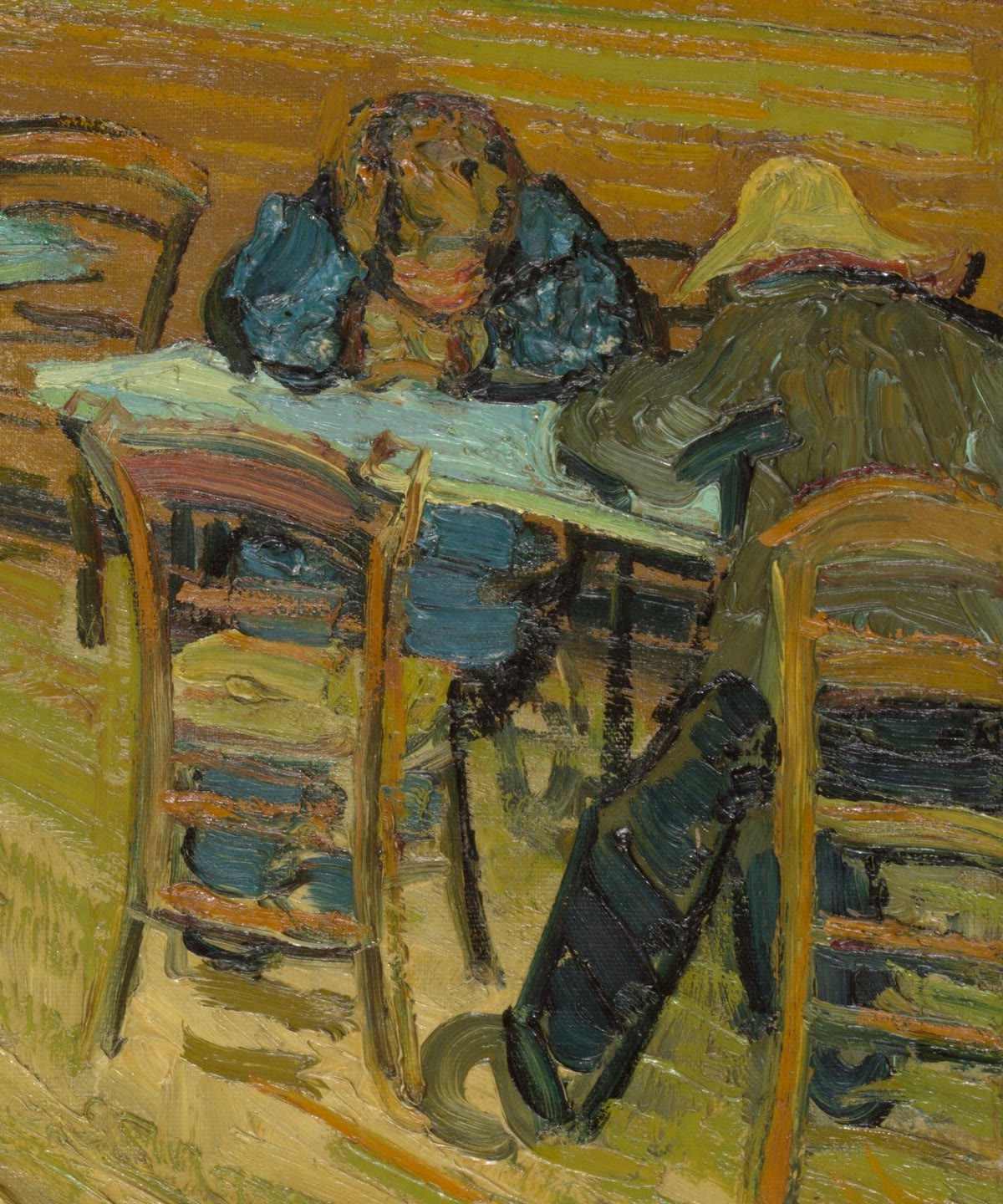
Everyone else has sunk into the edges of the room. On the right, two men have fallen asleep over their table. On the left, a man in blue has put his head down, and behind him a couple lean in close, the only two people in the painting who are together.
Now look at how much of the room is empty: bare boards, empty chairs, glasses left on tables with nobody at them. A room full of people, and almost everyone is alone. Van Gogh saw that too.
Everywhere it’s a battle and an antithesis of the most different greens and reds; in the characters of the sleeping ruffians, small in the empty, high room, some purple and blue.
Vincent van Gogh, letter to Theo, 8 September 1888
Small figures in a big, high room. That is the loneliness of The Night Café, and it is why the painting still feels so modern.
Van Gogh told Theo exactly what he meant, which he rarely did.
In my painting of the night café I've tried to express the idea that the café is a place where you can ruin yourself, go mad, commit crimes.
Vincent van Gogh, letter to Theo, 9 September 1888
And in the same letter he explained how the colour carries that meaning:
All of that in an ambience of a hellish furnace, in pale sulphur. To express something of the power of the dark corners of a grog-shop.
Vincent van Gogh, letter to Theo, 9 September 1888
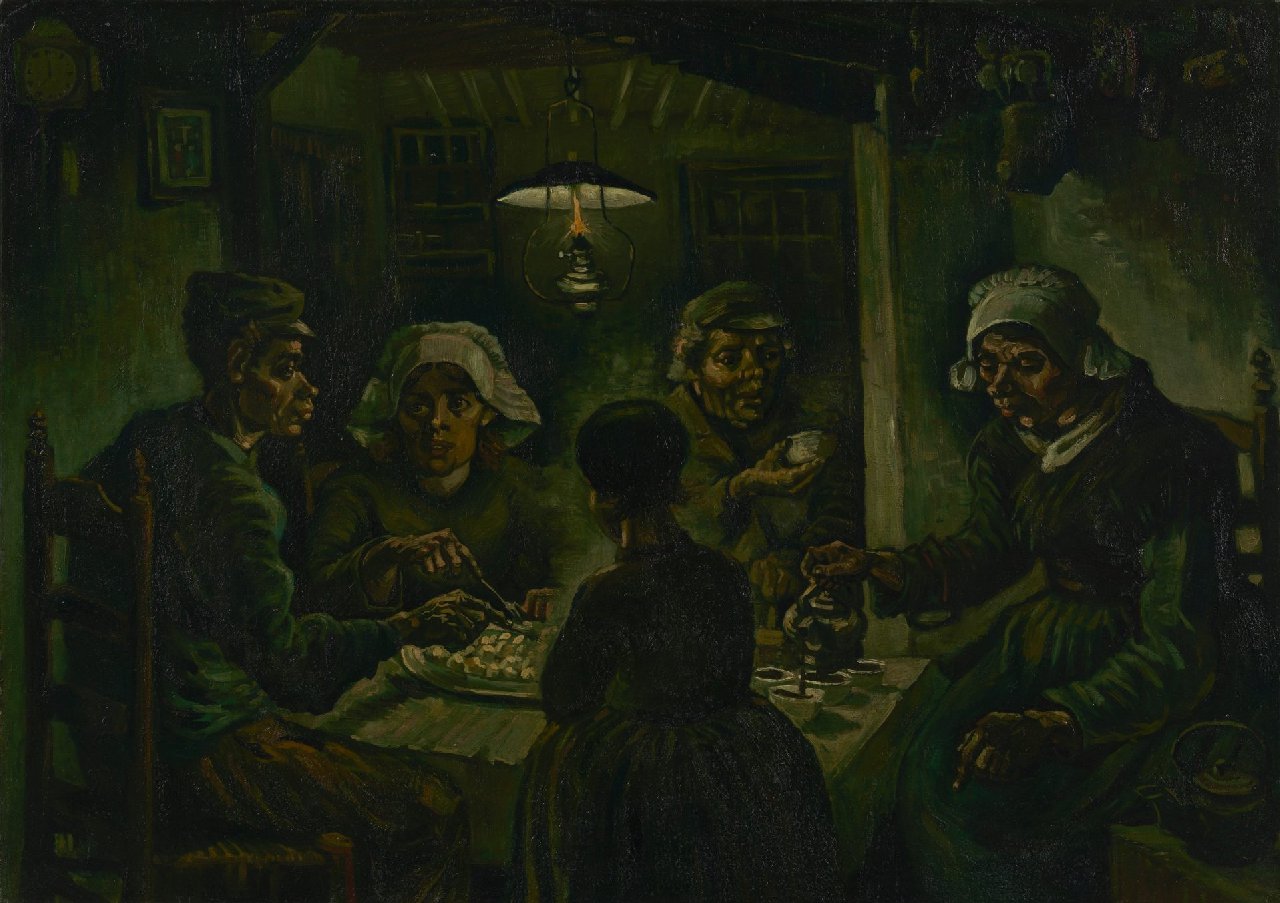
He called it one of the ugliest pictures he had ever made, and he compared it to The Potato Eaters, the dark peasant supper he had painted in Holland three years before. Both are about poor people at the end of the day. But he was not looking down on them. He was one of them: broke, far from home, and living upstairs.
That is the meaning of The Night Café, and it is not a scandalous one. When his friend Émile Bernard took the painting for a picture of a brothel, Van Gogh put him straight.
My night café isn't a brothel, it's a café where night prowlers cease to be night prowlers, since, slumped over tables, they spend the whole night there without prowling at all.
Vincent van Gogh, letter to Émile Bernard, 1888
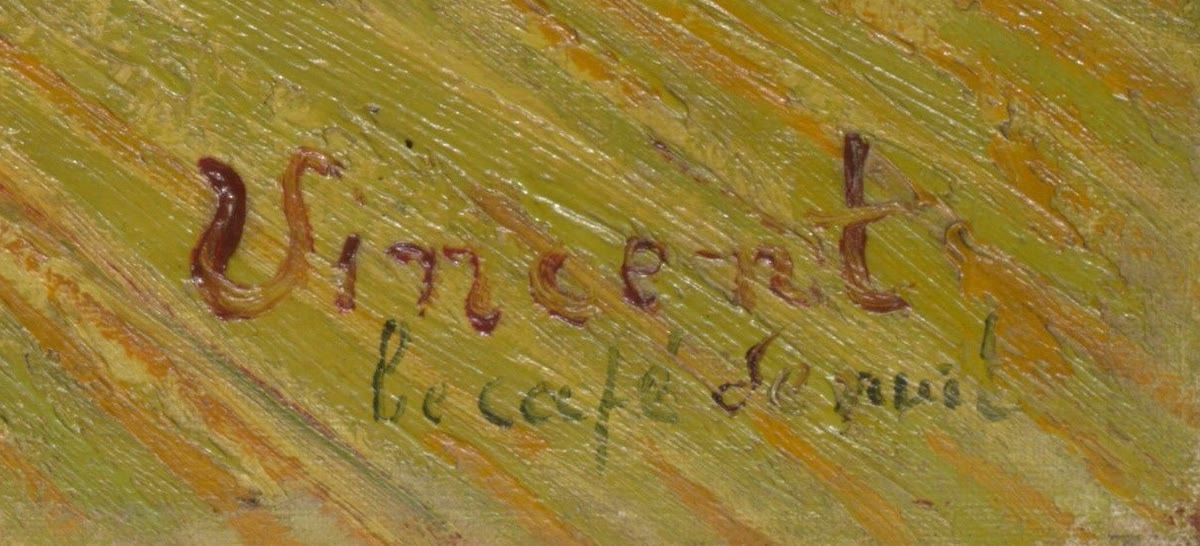
He was proud of it, too. At the bottom right, in red paint, he signed it and wrote its title underneath.
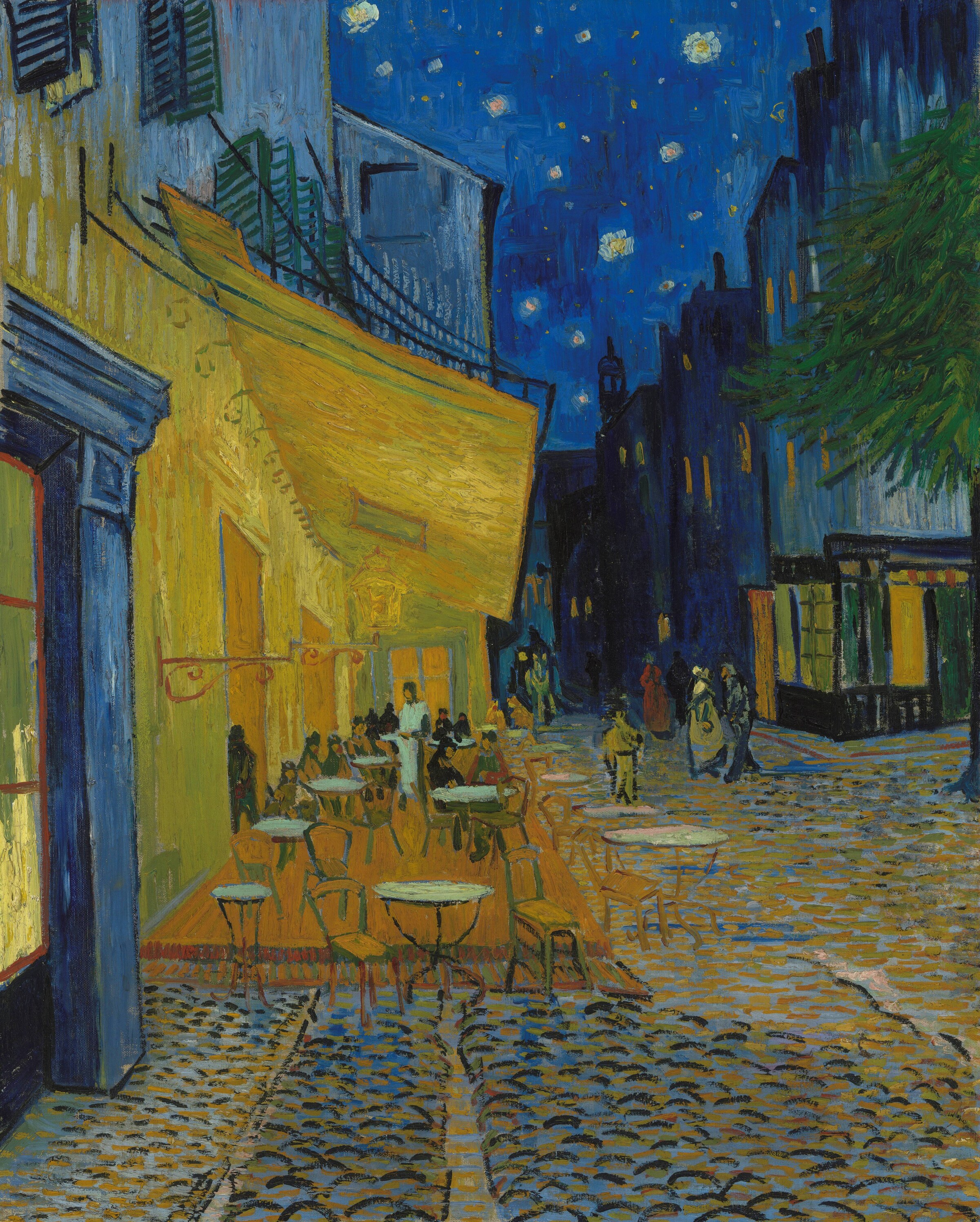
A week or so after he finished it, Van Gogh set up his easel on the Place du Forum and painted another café at night, this time from outside, under the stars. Café Terrace at Night is everything this room is not: open air, blue sky, people enjoying the evening. He painted the inside and the outside of night-time Arles in the same month.
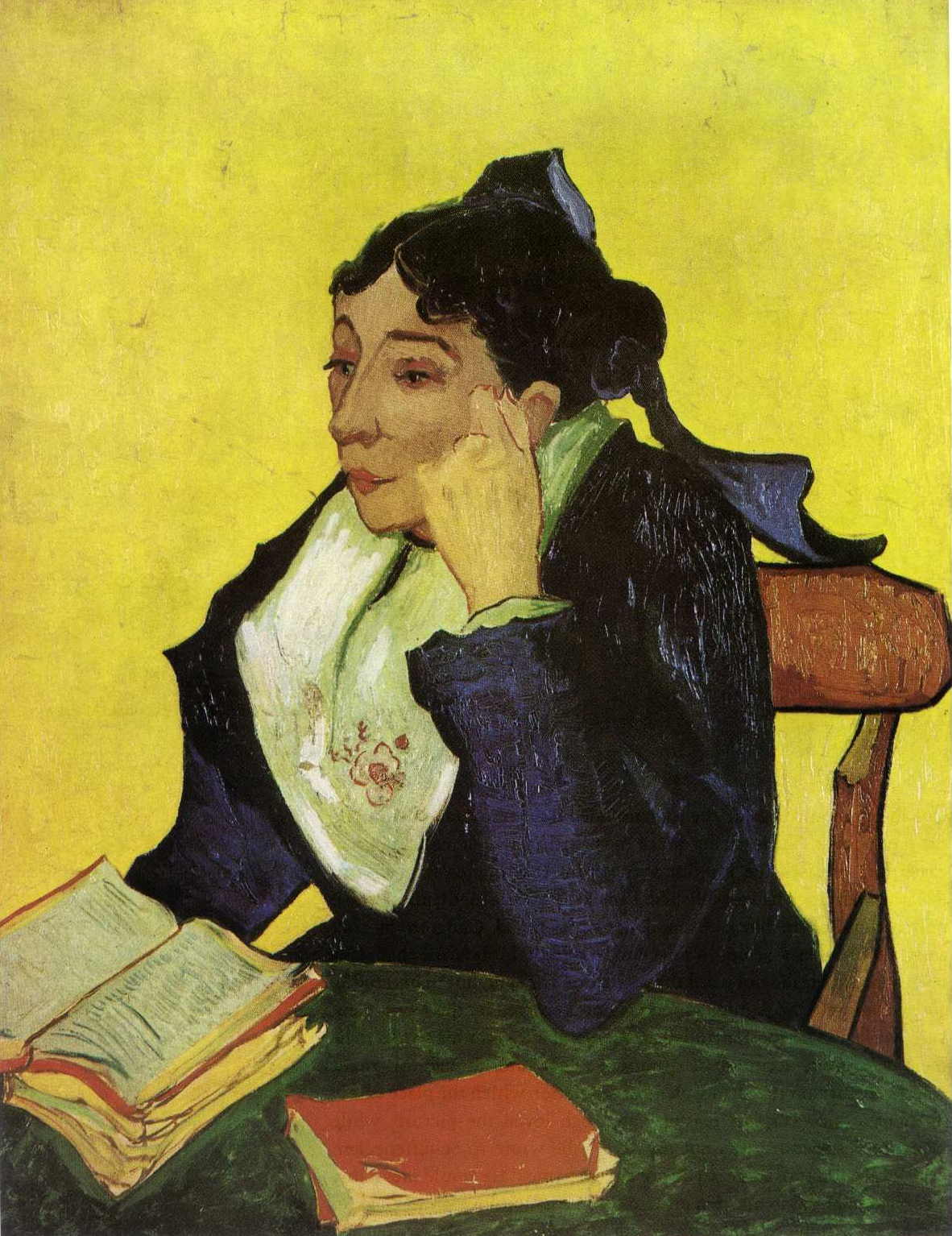
In November, Paul Gauguin came to stay and painted this same room, with Marie Ginoux in the front and the billiard table and the sleepers behind her. Van Gogh painted her too, as L'Arlésienne. The café was now part of both men's work.
At the Yale University Art Gallery in New Haven, Connecticut. It is oil on canvas, 72.4 by 92.1 centimetres.
Its journey there was long. Theo's widow sold it, and in 1908 it went to the Moscow collector Ivan Morozov. After the Russian Revolution the Soviet state took his collection, and in 1933 it sold the painting to the American collector Stephen Clark. When Clark died in 1961 he left it to Yale, his old university. A descendant of Morozov later went to court to get it back, and lost.
It is a big, loud painting, and it works best where there is life around it: a bar, a games room, a dining room that stays up late. Our hand-painted reproduction of The Night Café is painted in oil on canvas, with the lamps built up in thick rings of paint the way Van Gogh made them. More in our guide to Van Gogh.
Enjoyed this story?
Save articles to your collection
Log in or create a free account, and this article will be waiting in your Private Collection.
Log in or sign upLetter quotations follow the translations of Van Gogh Letters (Van Gogh Museum and Huygens ING).