Loading cart…
No products in the cart.

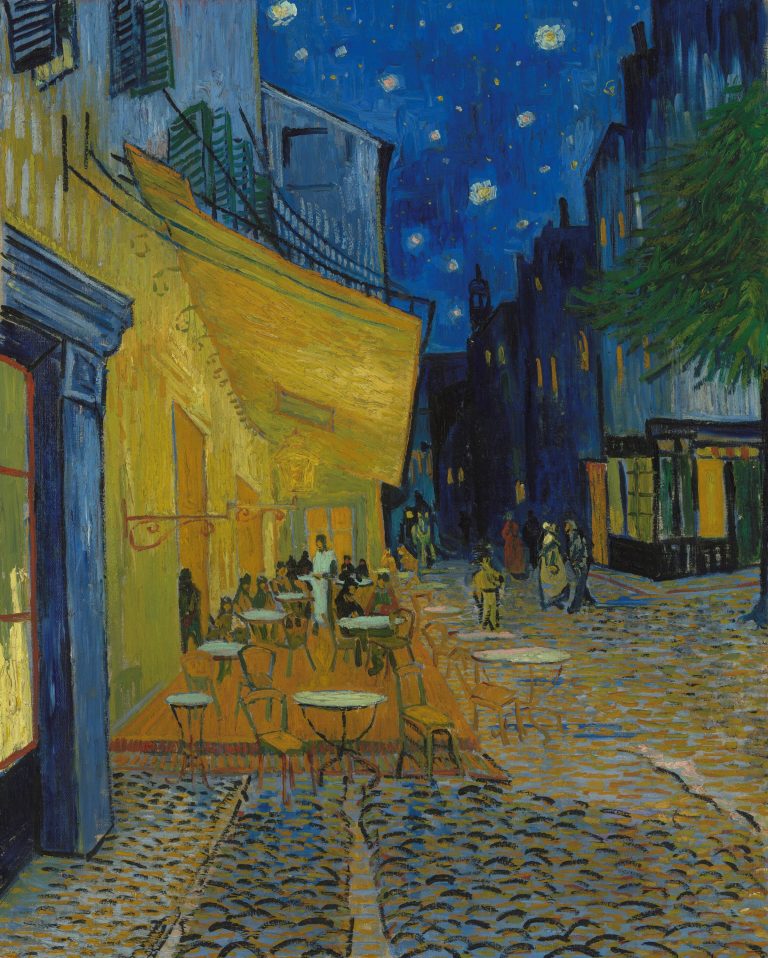
September 1888 · Oil on canvas · Kröller-Müller Museum, Otterlo
Save articles to your collection
Log in or create a free account, and this article will be waiting in your Private Collection.
Log in or sign upIt is a September evening in Arles in 1888, warm enough to sit outside, and a man with red hair has set up an easel on the Place du Forum with candles stuck in the brim of his hat so that he can see the canvas. That last detail may be a legend; the rest is documented. Van Gogh had been in Arles since February, had painted the sunflowers and the harvest, and had decided to try something nobody had done: to paint the night on the spot, in the dark, in colour.
A night painting without black, with nothing but beautiful blue and violet and green, and in this setting the lit square takes on a colour of pale sulphur and lemon.
Vincent van Gogh, letter to his sister Wil, about 9 September 1888, our translation
That is the picture, described before it was finished. He wrote it to his sister, and in the same letter told her that the night was more alive and more richly coloured than the day. Here is the square as he painted it, from the awning to the stars.
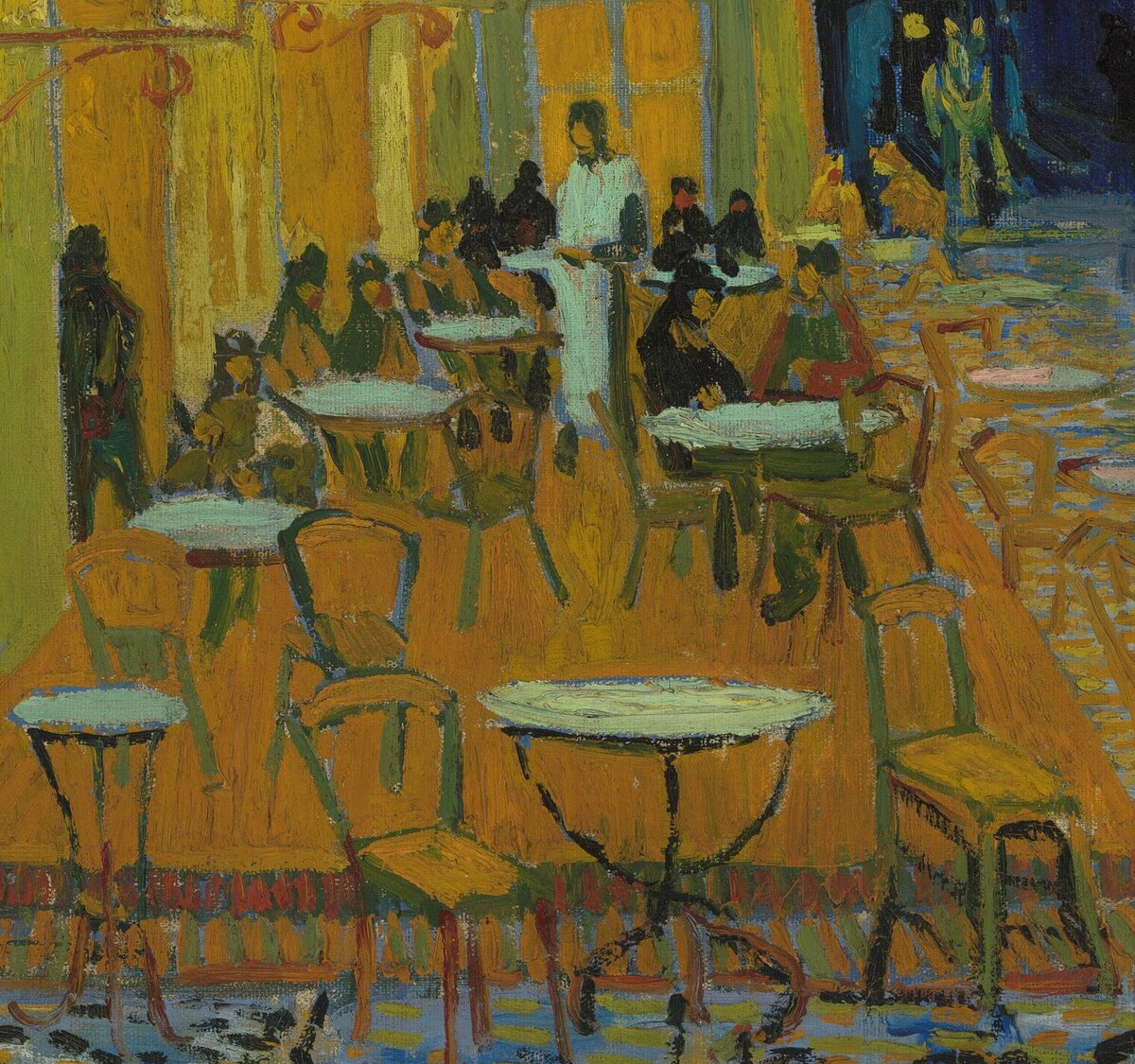
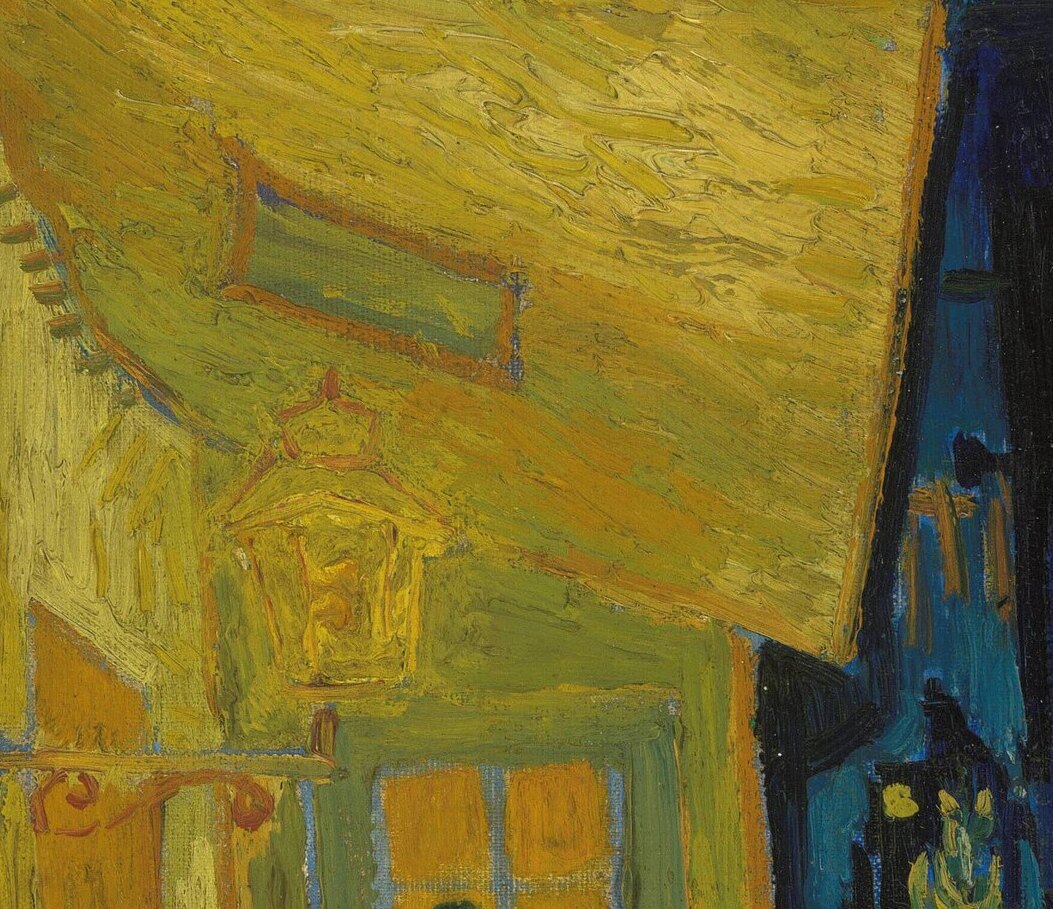
The café is on the right-hand corner of the square, and it still is: it was called the Café Terrasse then and the Café Van Gogh now, painted yellow to match. The big awning is lit from beneath by a gas lamp, and Van Gogh painted the light as colour, a flat yellow that goes green at the edges, with the customers as a few dark strokes at the tables and a waiter in white in the middle of them. There is no black anywhere in the painting; the shadows are blue and violet.
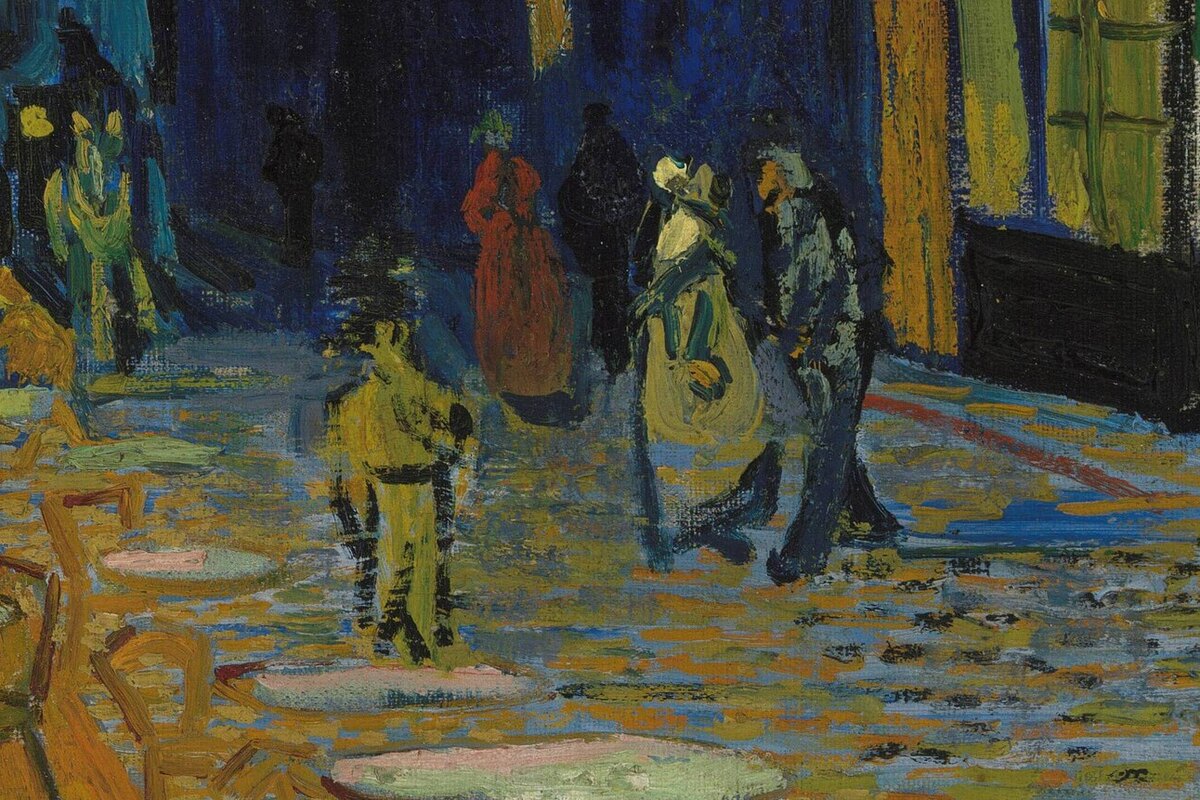
Down the street a couple are walking toward the café and a woman in a pale dress is walking away, and on the far side a doorway is lit. Behind them the houses of the square go dark blue and the church tower is a shape against the sky. Van Gogh lived a few streets away in the Yellow House, and this was his neighbourhood at the hour he liked it best.
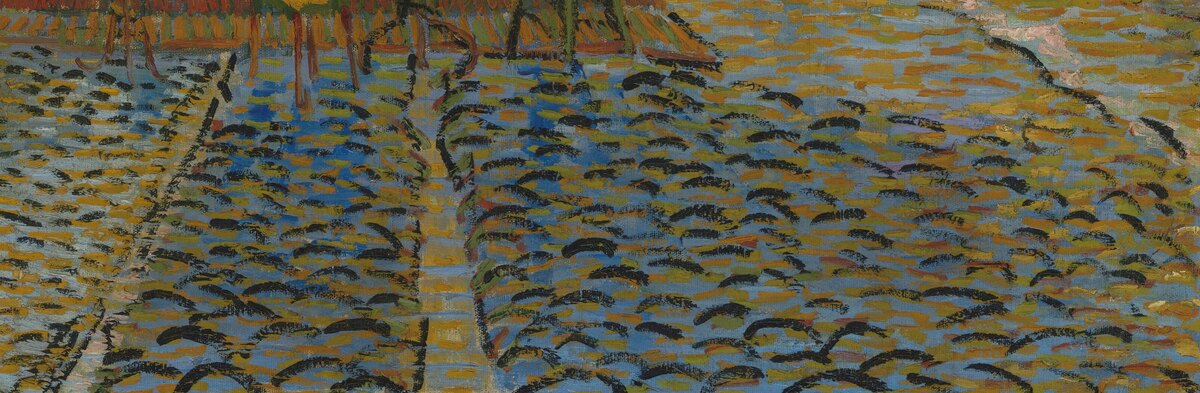
The bottom third of the canvas is cobblestones, and it is the best passage in the picture: each stone a separate stroke, pink and orange where the café light reaches, blue and violet where it does not, with the pavement running away toward the dark. He was learning to paint light by painting what it fell on.
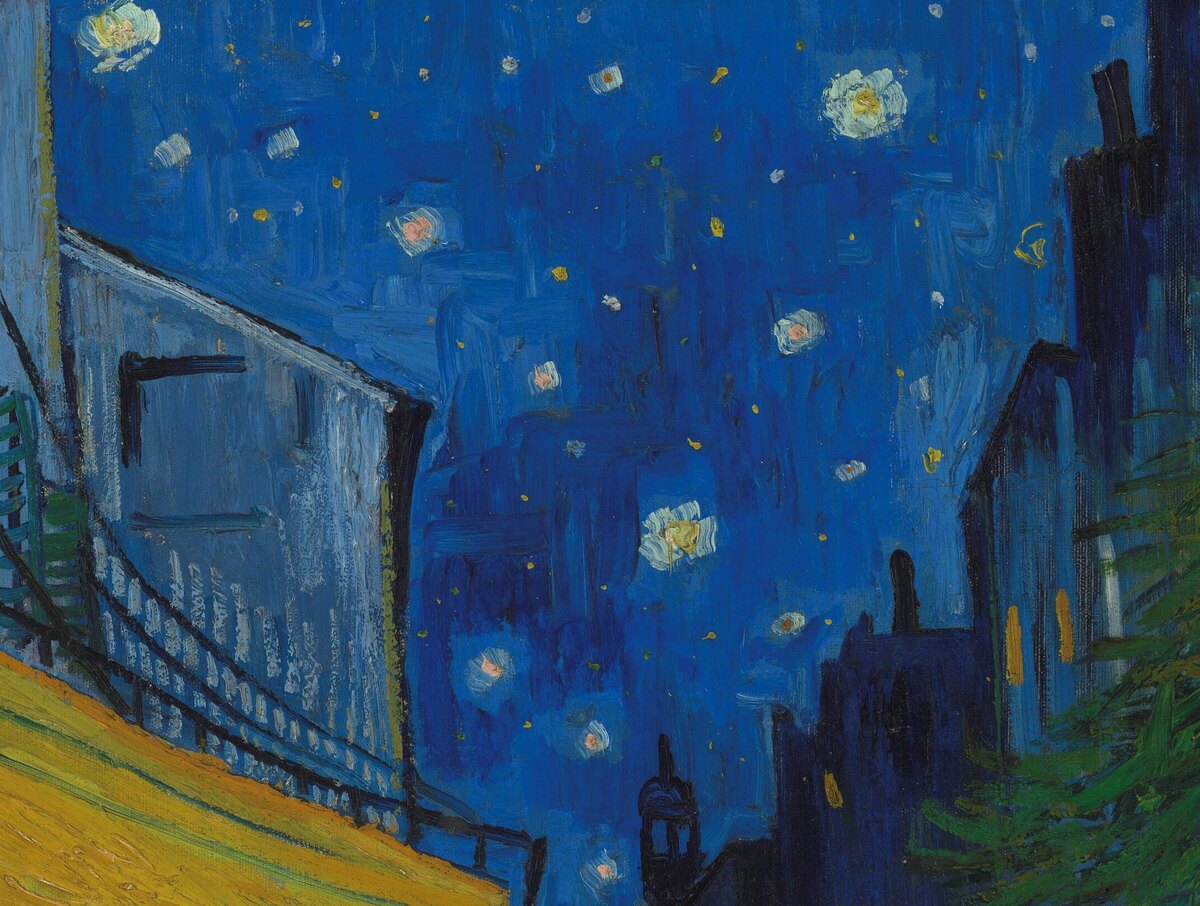
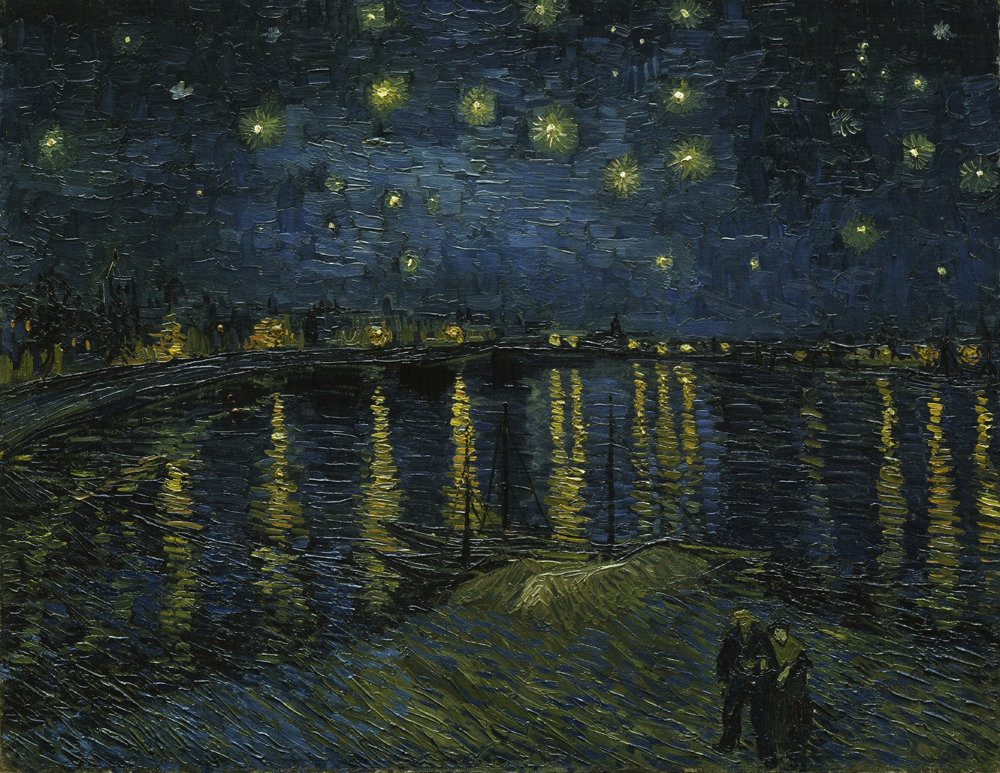
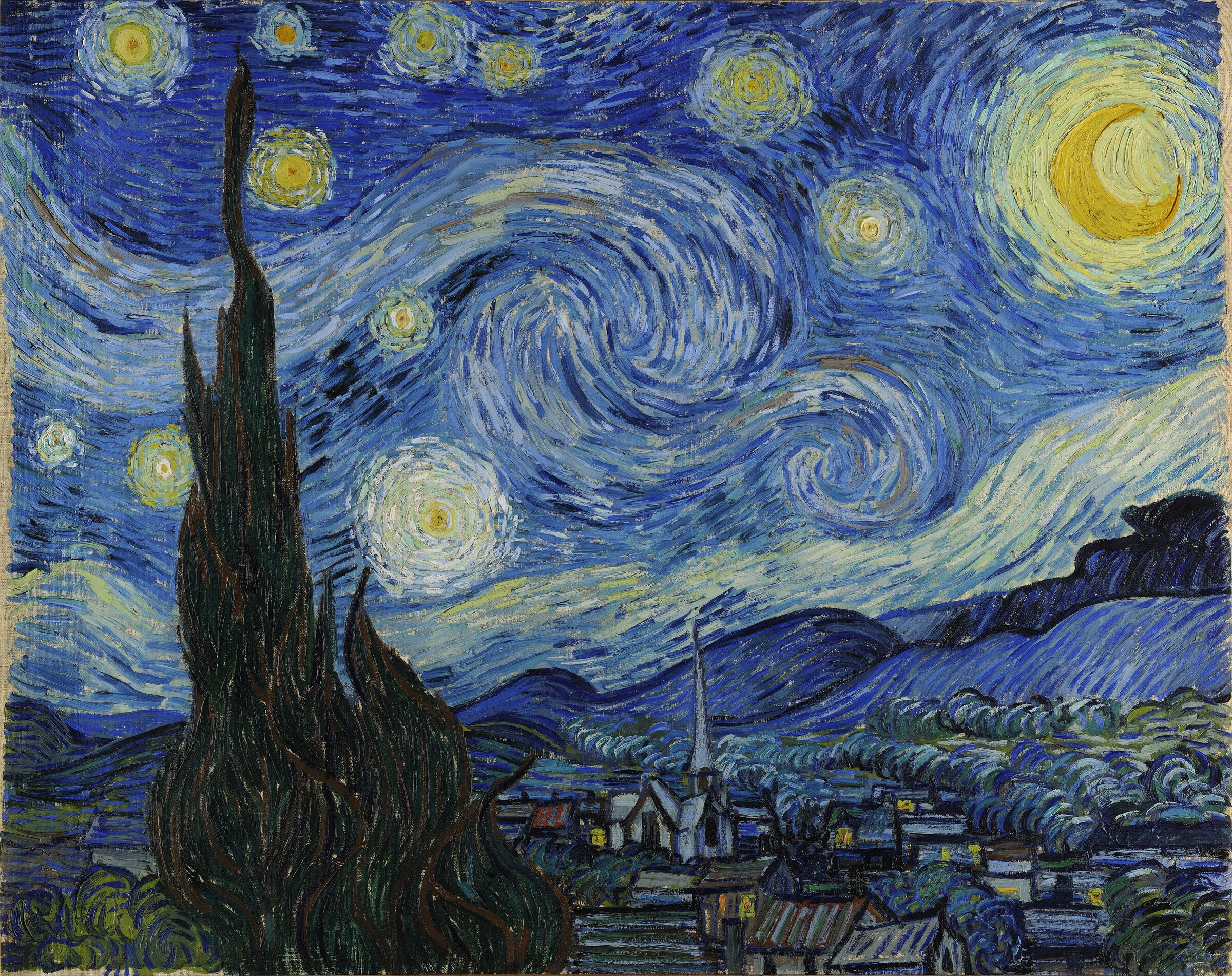
Above it all, the sky, and it is the first time Van Gogh painted stars. They are large white blots in a deep blue, some with a faint halo, over a street that narrows away between the buildings. Astronomers have matched them: the pattern fits the sky over Arles around the sixteenth of September 1888, looking south-east, with the constellation Aquarius over the roofs. He painted what was there. The Rhône picture, a few weeks later, and the great Starry Night the next summer, grew from this one.
One reading, proposed in 2015, sees a Last Supper in it: twelve customers, a central figure in white, a cross in the window frame behind him. Van Gogh was a pastor's son and had tried to be a preacher, and he wrote to Theo that year about painting religious feeling without religious subjects. The theory has not convinced most specialists, and the painting does not need it.
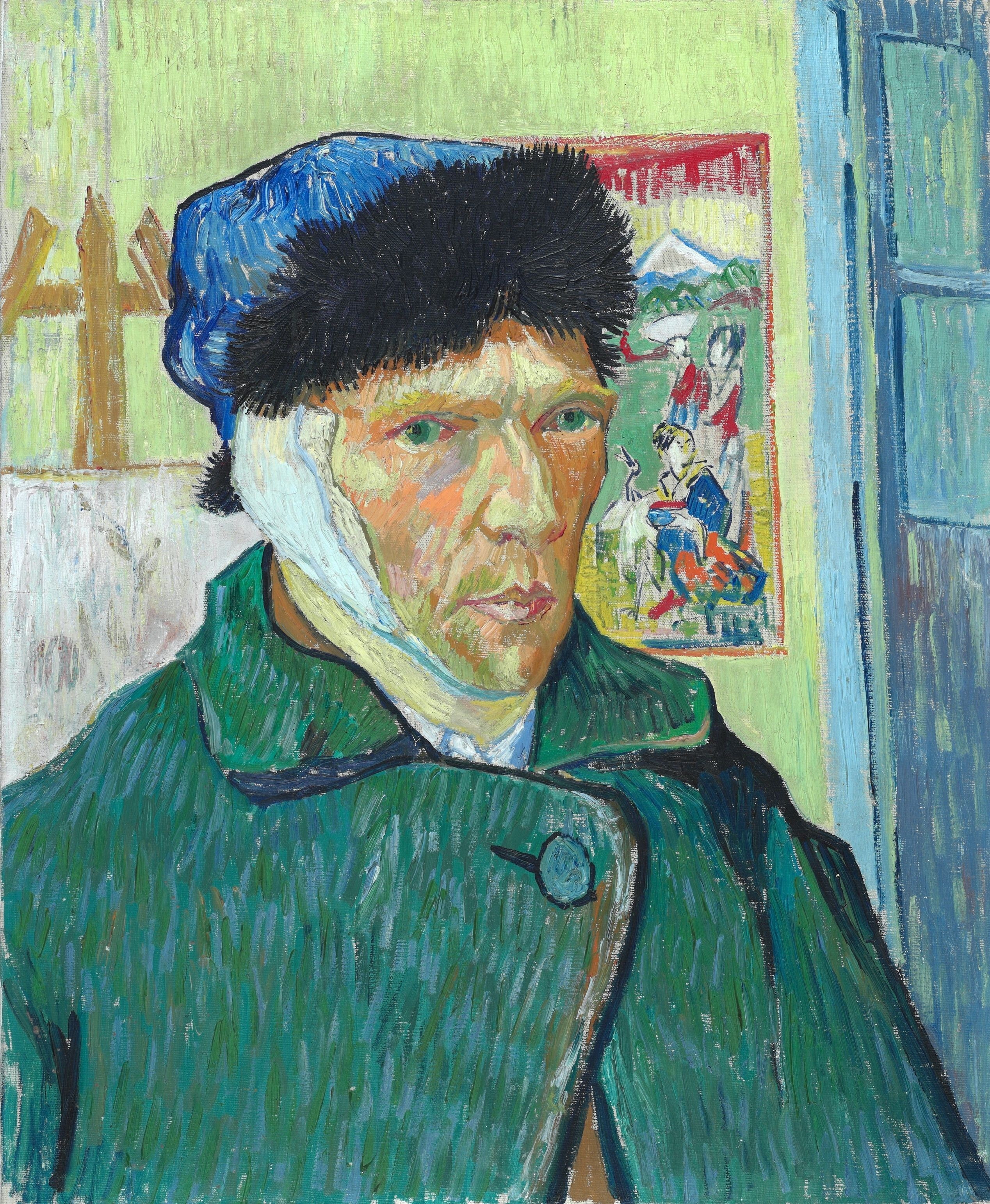
It is a picture about being happy in the evening in a town he loved, painted in the last good month before everything went wrong. Gauguin arrived in October; by Christmas Van Gogh had cut his ear and the Yellow House was over. The café is still there and the square is the same shape, and people go to sit at the tables under the awning and look up, which is the only meaning a painting like this needs.
He never signed it. He described it to his sister, mentioned it to Theo, and left it with the rest of the Arles work. It went to the collector Helene Kröller-Müller in 1912, and it has been in her museum in the woods at Otterlo since it opened.
In the Kröller-Müller Museum at Otterlo in the Netherlands, in the middle of a national park, which owns the second-largest collection of Van Goghs in the world. It is oil on canvas, 80.7 by 65.3 centimetres.
It is a painting for kitchens and dining rooms, where the yellow does its work in the evening. Our hand-painted reproduction of Café Terrace at Night is painted in oil on canvas from the Otterlo original, with the cobbles laid stroke by stroke. More in our guide to Van Gogh.
Enjoyed this story?
Save articles to your collection
Log in or create a free account, and this article will be waiting in your Private Collection.
Log in or sign upLetters are quoted in our own translation. The Last Supper reading (Jared Baxter, 2015) is reported as a proposal, not a finding.