Loading cart…
No products in the cart.

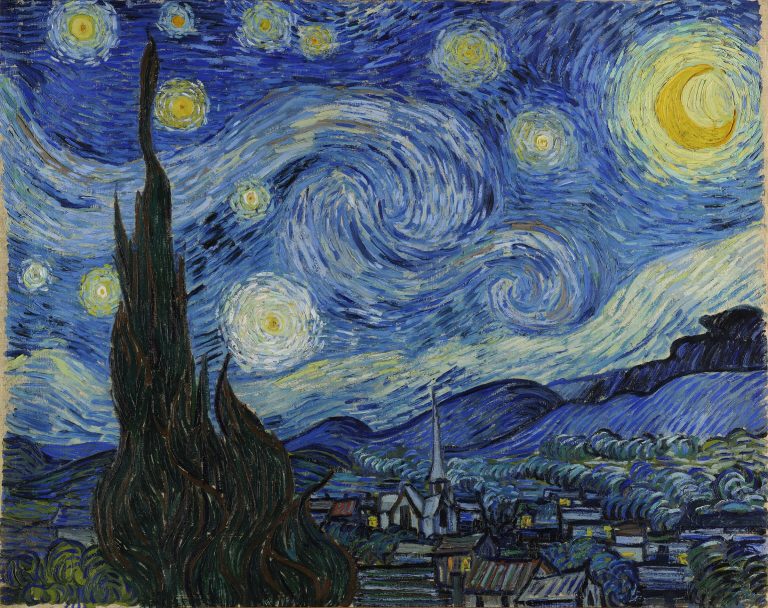
June 1889 · Oil on canvas · Museum of Modern Art, New York
Save articles to your collection
Log in or create a free account, and this article will be waiting in your Private Collection.
Log in or sign upEverything in the picture was seen from one window, and the window had bars. In May 1889, five months after he cut his ear, Van Gogh admitted himself to the asylum of Saint-Paul-de-Mausole outside Saint-Rémy-de-Provence, and was given a bedroom on the first floor facing east. He was not allowed to paint in it. He looked out of it before dawn, went down to the studio they gave him on the ground floor, and painted what he remembered.
This morning I saw the countryside from my window a long time before sunrise, with nothing but the morning star, which looked very big.
Vincent van Gogh, letter to Theo, about 31 May 1889, our translation
So the painting is a memory of a view, made a floor below it, with the bars left out. Some of what is in it was outside the window and some was not. Here is which is which.
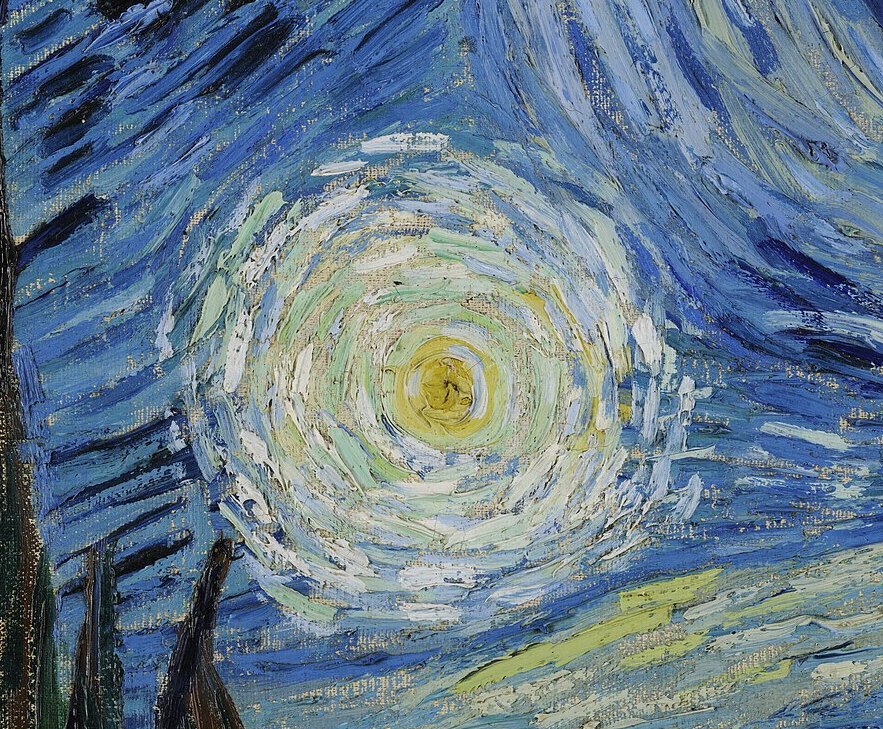
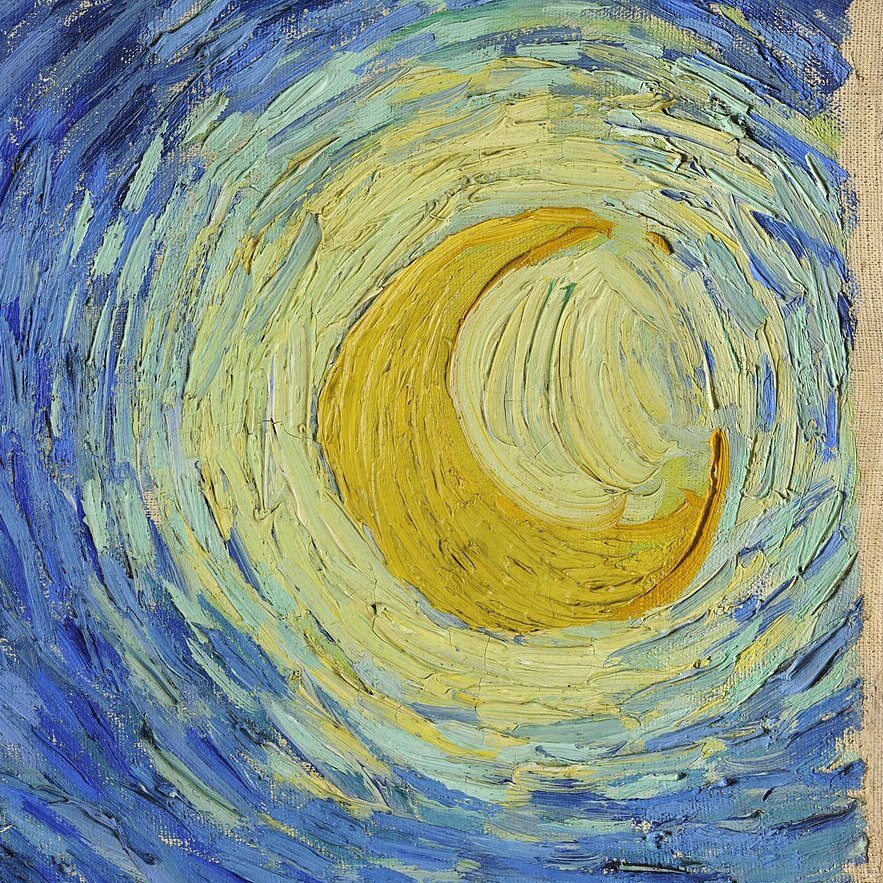
The big star at the left, the one with the largest halo, is Venus, the morning star from the letter, and astronomers have confirmed that it stood in the eastern sky before sunrise that June exactly where he put it. The hills on the horizon are the Alpilles, which are outside the window. The moon was real, though it was not that shape: in mid-June it was a few days past full, and he painted a crescent, which is a decision, not a mistake.
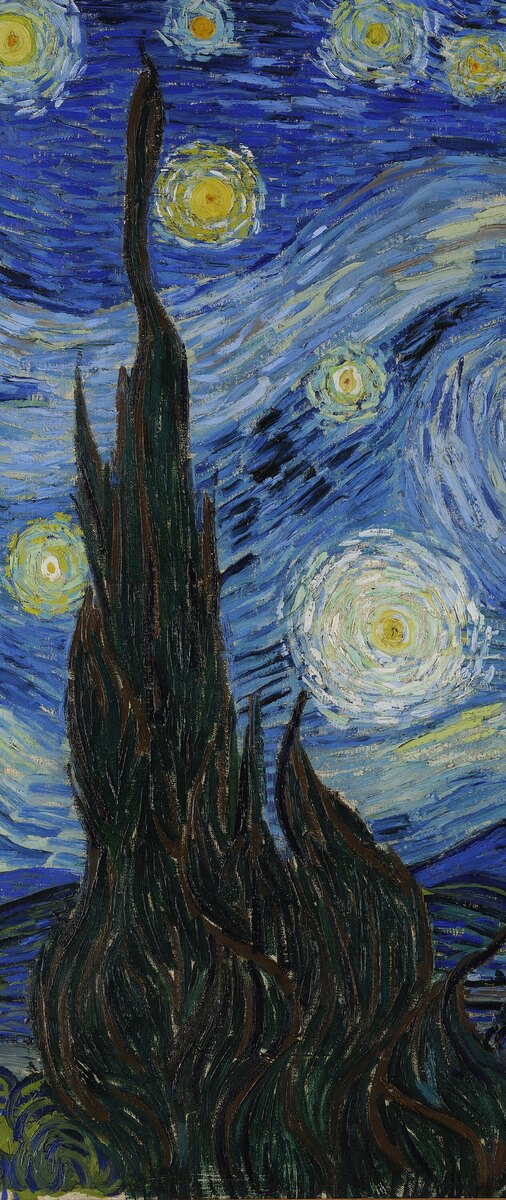
The cypress was there too, though not that big. He had been thinking about cypresses since he arrived; he wrote to Theo that they were as beautiful in line and proportion as an Egyptian obelisk, and that nobody had painted them the way he saw them. Here one fills the left side of the canvas from ground to sky, black-green, in strokes that go up like flame. It is the one thing in the painting that is bigger than the sky.
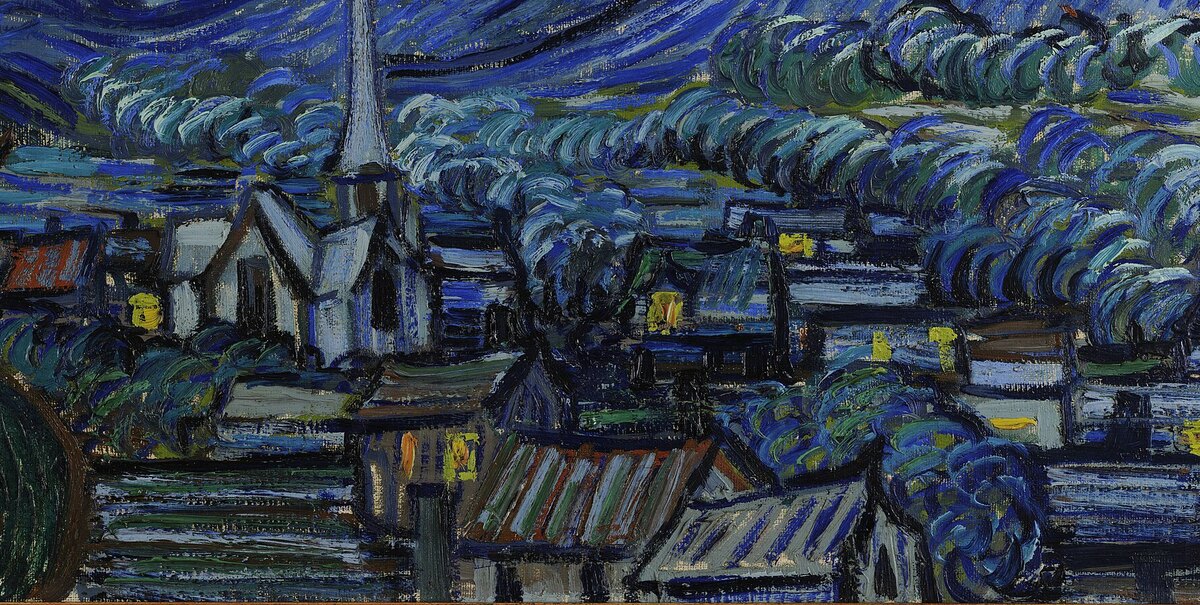
The village was not outside the window. Saint-Rémy was to the north, out of sight, and the steeple he painted, thin and pointed, is a church from the Netherlands he had grown up with, not the squat Romanesque towers of Provence. He put a town where there was a field, and gave it his own church. The lights in the windows are the only warm colour in the lower half.
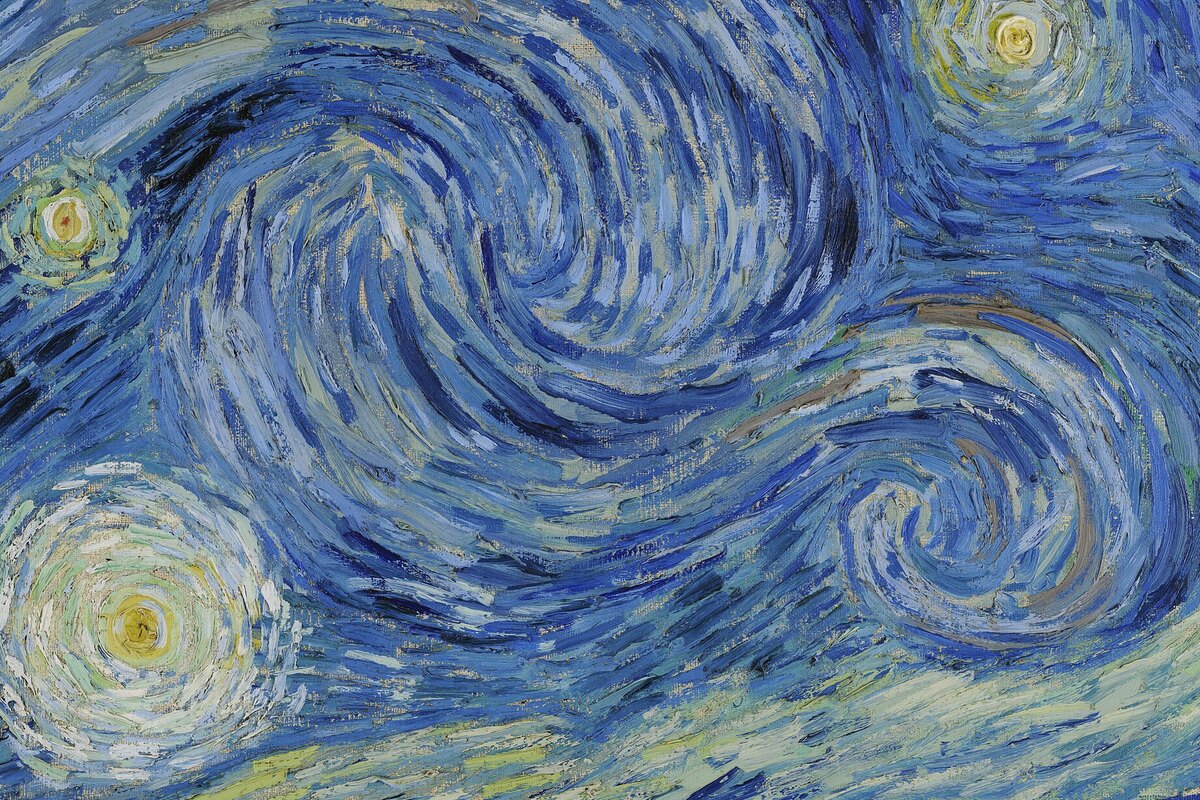
And the sky, of course, does not do that. The great double spiral in the middle, rolling from left to right and curling back on itself, is the thing the painting is famous for and the thing that was not there. He painted it from inside. Physicists have measured the strokes and found that they follow the mathematics of turbulent flow with uncanny accuracy, which is a nice fact and not an explanation; the Alpilles were not spinning that night. The eleven stars each have their own halo of concentric strokes, so that the whole sky is made of rings.
Not much. He sent it to Theo in Paris with the summer's work and mentioned it once or twice as a study, and in a letter that autumn he counted the paintings of that period that he thought had gone wrong and put the night effect among them. He thought the stars were too big. It was not exhibited in his lifetime, and when Theo's widow, Jo, began to sell the collection she kept it for years before letting it go for a modest sum.
It reached New York in 1941 through the bequest of Lillie P. Bliss to the Museum of Modern Art, where it has been the most visited object ever since, and the most reproduced painting in the world after the Mona Lisa. The man who painted it thought it had not come off.
He told Theo, a year earlier in Arles, that he had a terrible need for religion, and that when he had it he went out at night to paint the stars. The painting is that: not a picture of the sky but of a man looking at it, from a locked building, and finding it moving. The swirl is not in the sky and the church is not in the valley, but the feeling is exact, and that is why a painting he thought had failed has become the picture people mean when they say Van Gogh.
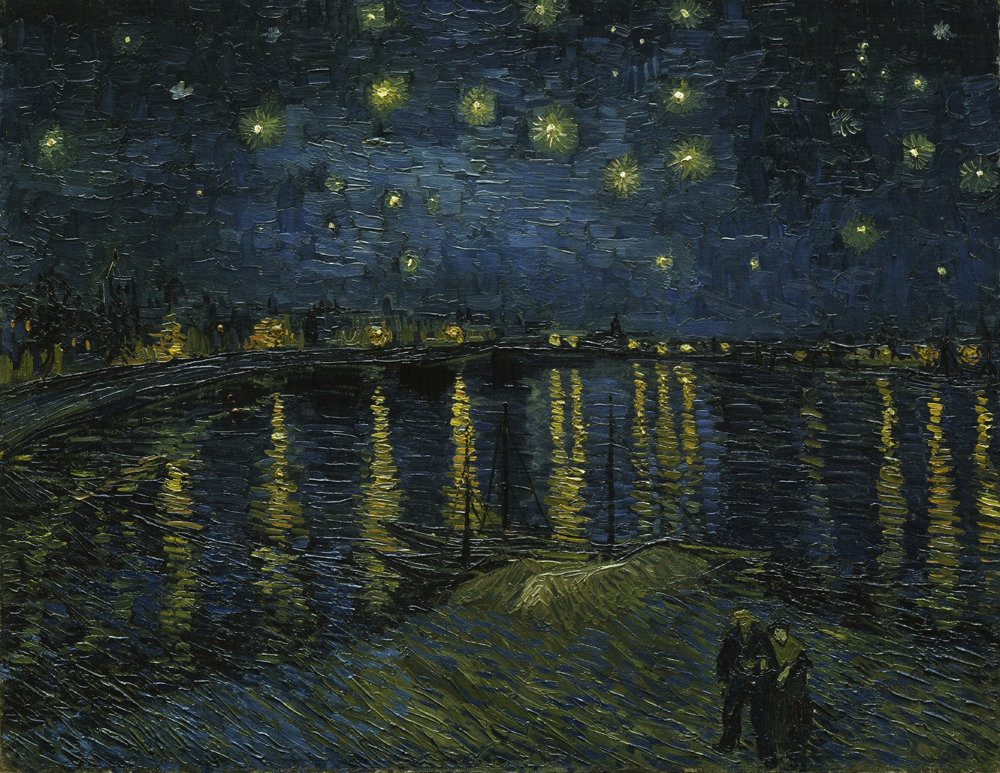
He had painted the stars once before, calmer, over the Rhône at Arles the previous September, with a couple walking on the bank and the gaslights of the town in the water. That one is in Paris. Put them together and you see what a year in the asylum did to his sky.
In the Museum of Modern Art in New York, on the fifth floor, usually with a crowd in front of it. It is oil on canvas, 73.7 by 92.1 centimetres, smaller than most people expect, and painted so thickly that the strokes throw shadows.
It is the most ordered painting we make, and the one our painters are proudest of, because the sky has to be built stroke by stroke in the same order Van Gogh laid it, or the rings do not read. Our hand-painted reproduction of The Starry Night is painted in oil on canvas from the MoMA original, and it is one of the few paintings that is better in a copy with real impasto than in any print. More in our guide to Van Gogh.
Enjoyed this story?
Save articles to your collection
Log in or create a free account, and this article will be waiting in your Private Collection.
Log in or sign upLetters are quoted in our own translation from the Van Gogh Museum edition. Visible details, documented facts and interpretation are kept separate throughout.