Loading cart…
No products in the cart.

1888 · Oil on canvas · Private collection
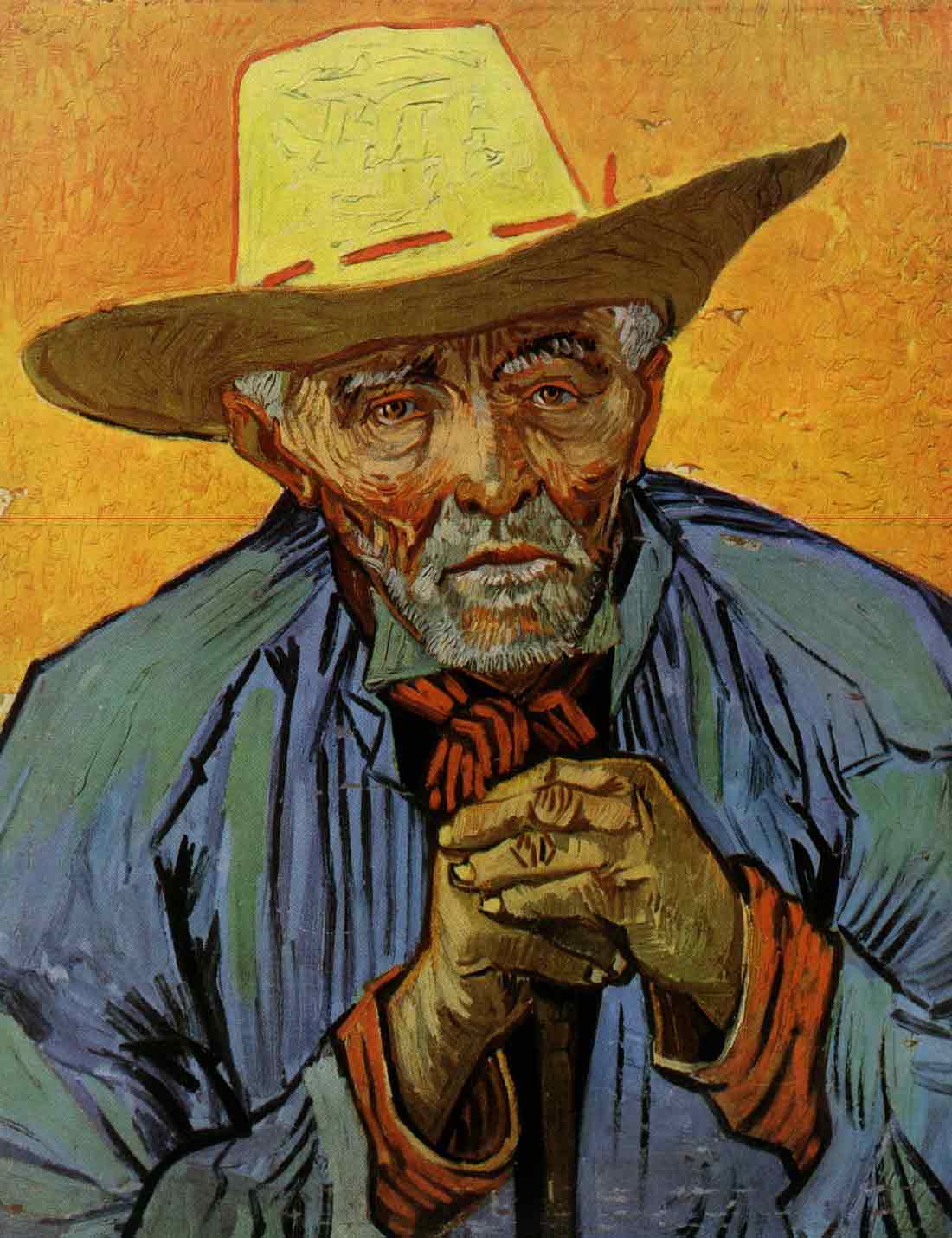
Van Gogh painted Patience Escalier, an old shepherd and gardener he met in Arles, in August 1888. He made two portraits of the old man, both in the same month. He described Escalier as a figure from the Camargue who worked in the fields under the blazing sun and wrote that he wanted to paint a man burned by the sun as Vincent had been burned by the sun himself. The portraits of ordinary working people in Arles belong to a sustained attempt Van Gogh made throughout his career to paint the dignity of labor and the beauty of faces marked by age and weather.
The painting shows the old shepherd in his wide-brimmed hat against an intensely colored background of blue-green and orange, the same complementary color contrast Van Gogh used throughout his Arles palette. The face is painted with close observation of its specific character: the weathered skin, the direct gaze, the closed lips. The background is not naturalistic but chosen for its color relationship with the figure. Van Gogh was using color expressively, not descriptively, in all his portraits of this period, placing figures against backgrounds that enhanced the emotional impact of the face rather than describing its actual environment.
Like The Potato Eaters and all his paintings of working people, this portrait argues for the dignity and visual interest of faces that academic painting had considered beneath its attention. Van Gogh saw in the old shepherd the same subject matter that Millet had found in French peasants and Rembrandt had found in Amsterdam tradesmen: the full humanity of an ordinary person.