Loading cart…
No products in the cart.

c. 1662 · Oil on canvas · The Metropolitan Museum of Art, New York, United States
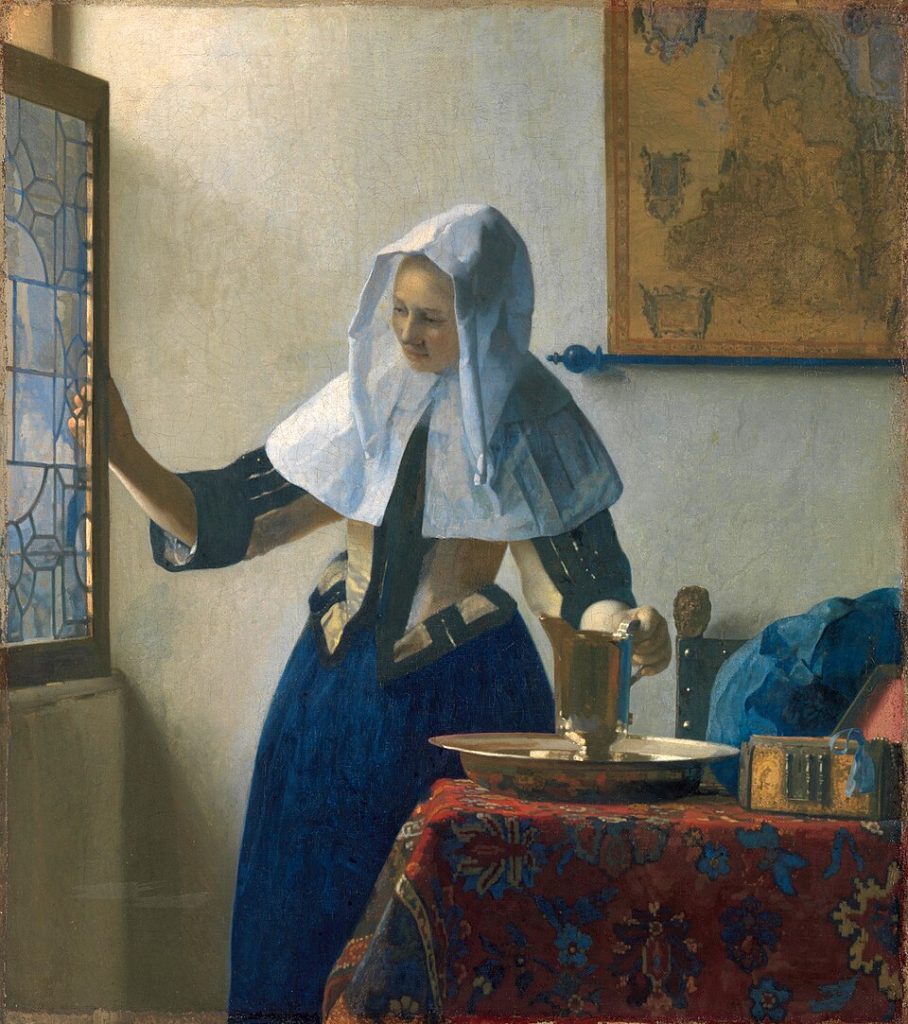
Woman with a Water Pitcher entered the collection of the Metropolitan Museum of Art in New York in 1889, becoming one of the first paintings by Vermeer to enter an American public collection and playing a significant role in introducing the painter to American audiences during the late nineteenth century revival of interest in his work. The painting had previously passed through several European collections, and its history before the nineteenth century is not fully documented. The rediscovery and reattribution of Vermeer to the canon of great Dutch painters was a gradual process that unfolded largely during the second half of the nineteenth century, driven in part by the advocacy of the French critic Theophile Thore-Burger, who systematically cataloged and promoted Vermeer work after encountering it in Dutch and Belgian collections during the 1850s and 1860s. By the time the painting reached New York, Vermeer reputation was firmly enough established that the acquisition was recognized as significant. The work has been studied extensively in relation to questions of dating and compositional development, with most scholars placing it in the early 1660s on the basis of stylistic comparison with other works from that period. The silver pitcher and basin depicted in the painting are objects consistent with the kind of domestic silverware owned by prosperous Dutch households of the seventeenth century, and their careful rendering reflects Vermeer interest in the pictorial challenge of representing reflective metal surfaces.
The composition is organized around a simple but beautifully resolved tension between the vertical plane of the window and wall and the horizontal plane of the table surface with its cloth, pitcher, and basin. The young woman stands at the left of the composition, one hand resting on the windowsill and the other holding the handle of the silver pitcher. Her head is turned slightly toward the window, and her gaze is directed outward or slightly downward, giving her an air of quiet preoccupation. The window itself is partially open, and the cool light that enters through it falls across the woman face, her white linen cap, and the objects on the table with the graduated softness that is one of the defining qualities of Vermeer pictorial language. The map on the wall in the background is a recurrent element in Vermeer interiors, appearing in several works from this period and reflecting the cultural prominence of cartography in Dutch domestic life. The silver pitcher and basin are rendered with exceptional care, capturing the way light bends and scatters across curved metal surfaces while maintaining the overall luminous coherence of the scene. The woman blue dress and yellow jacket reverse the color scheme found in several other Vermeer works, suggesting that he deliberately varied the chromatic emphasis across his compositions to achieve different pictorial effects. The restrained color palette and the careful balance of warm and cool tones give the painting a quality of serene equilibrium that feels both effortless and deeply considered.
The act of opening a window in a Dutch interior painting carried a range of symbolic associations that Vermeer audience would have recognized intuitively. Windows mediated between the private domestic sphere and the public world outside, and the gesture of opening a window could signify openness, moral transparency, and the admission of light understood both literally and metaphorically as divine grace or spiritual clarity. The pitcher and basin were conventional attributes of purity and cleanliness in the visual language of Dutch domestic painting, and their presence in the composition reinforces the impression of domestic virtue and ordered household management. These associations do not reduce the painting to a simple moral allegory, but they give the scene a resonance that extends beyond its surface as a straightforward record of a woman performing a household task. The identity of the woman is unknown, as is typical of Vermeer interior figures, and this anonymity allows her to function as a representative type of the virtuous Dutch housewife rather than as a specific individual. The map on the back wall introduces a note of worldly reference into the domestic interior, gesturing toward the broader commercial and geographic horizons that shaped Dutch prosperity and self-understanding during the Golden Age. The painting as a whole communicates a sense of morning calm, purposeful order, and the quiet dignity of everyday domestic life, themes that recur throughout Vermeer interior scenes and that reflect the values prized by the prosperous urban households who formed his primary audience.