Loading cart…
No products in the cart.

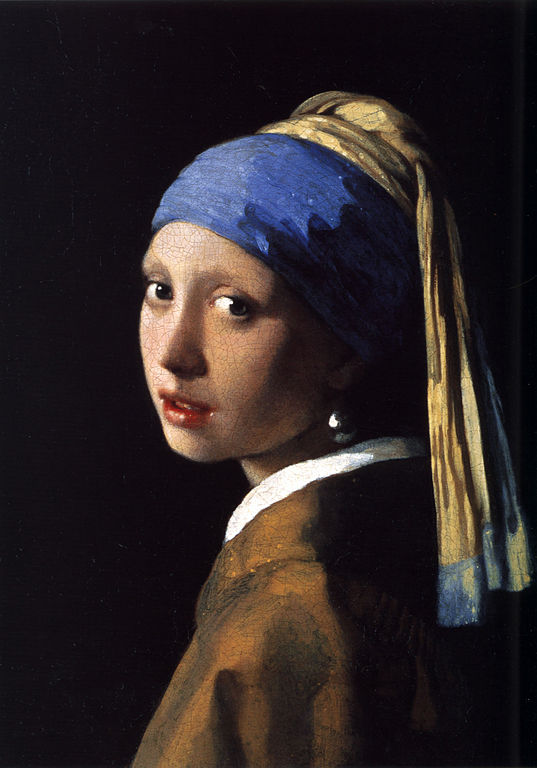
c. 1665 · Oil on canvas · Mauritshuis, The Hague, Netherlands
Save articles to your collection
Log in or create a free account, and this article will be waiting in your Private Collection.
Log in or sign upJohannes Vermeer painted Girl with a Pearl Earring around 1665 in Delft, in the Dutch Republic. Unlike most formal portraits of the period, this work is not believed to be a commissioned likeness of a specific individual but rather a tronie, a Dutch term for a character study or idealized head used to demonstrate painterly skill. Tronie paintings were popular in seventeenth-century Dutch and Flemish art as independent works that could be sold on the open market rather than to a specific patron. The identity of the model has never been established with certainty, and various theories have been proposed over the centuries, including suggestions that she may have been a member of Vermeer own household. The painting first appears in documented records at an auction in The Hague in 1881, where it was purchased for a very modest sum by Arnoldus des Tombe. He later bequeathed it to the Mauritshuis in 1902, where it has remained and become the centerpiece of the collection. The painting underwent significant restoration and technical analysis in the 1990s, which revealed details about Vermeer technique and the original vibrancy of the colors before centuries of varnish had dulled the surface.
Vermeer positioned the figure against a dark, almost black background, a choice that creates a dramatic sense of emergence, as though the girl is stepping forward out of darkness into light. The face is turned slightly over the shoulder toward the viewer, and the lips are parted in a way that suggests the subject is about to speak or has just finished speaking, a device that creates an immediate sense of intimacy and engagement. The light in the painting falls from the upper left, illuminating the left side of the face in a warm, diffuse glow while the right side recedes into shadow. Vermeer was known for his exceptional handling of light, and in this work the transitions between illuminated and shadowed areas are extraordinarily subtle. The large pearl earring in the right ear catches a single point of reflected light, suggesting its lustrous surface with remarkable economy of means. The blue and yellow turban, colors that appear frequently in Vermeer work, creates a visual contrast that anchors the composition. The painting is relatively small in scale, which makes its emotional impact even more striking. The technique throughout is precise and controlled, with thin, carefully blended layers of oil paint building up to a surface of exceptional smoothness.
Girl with a Pearl Earring carries rich symbolic and cultural significance. The pearl earring itself is a central element, as pearls in the seventeenth century were associated with purity, femininity, and wealth, and a single large pearl earring of the scale depicted would have been an object of considerable value and status. Some art historians have suggested that the earring may in fact be made of glass rather than pearl, which would add a layer of illusion to a painting already concerned with surfaces and appearances. The direct gaze of the subject, combined with her slightly parted lips and over-the-shoulder turn, has been interpreted as an invitation to connection, a moment of arrested intimacy between subject and viewer. The painting has accumulated enormous cultural weight over the centuries, culminating in Tracy Chevalier 1999 novel of the same name and the 2003 film adaptation, both of which introduced the work to entirely new global audiences. In contemporary culture, the image functions as a symbol of quiet beauty and feminine interiority. Owning a hand-painted oil reproduction allows collectors to engage daily with this quality of intimate attention that defines the original.
Enjoyed this story?
Save articles to your collection
Log in or create a free account, and this article will be waiting in your Private Collection.
Log in or sign up