Loading cart…
No products in the cart.

1657 · Oil on canvas · Rijksmuseum, Amsterdam, Netherlands
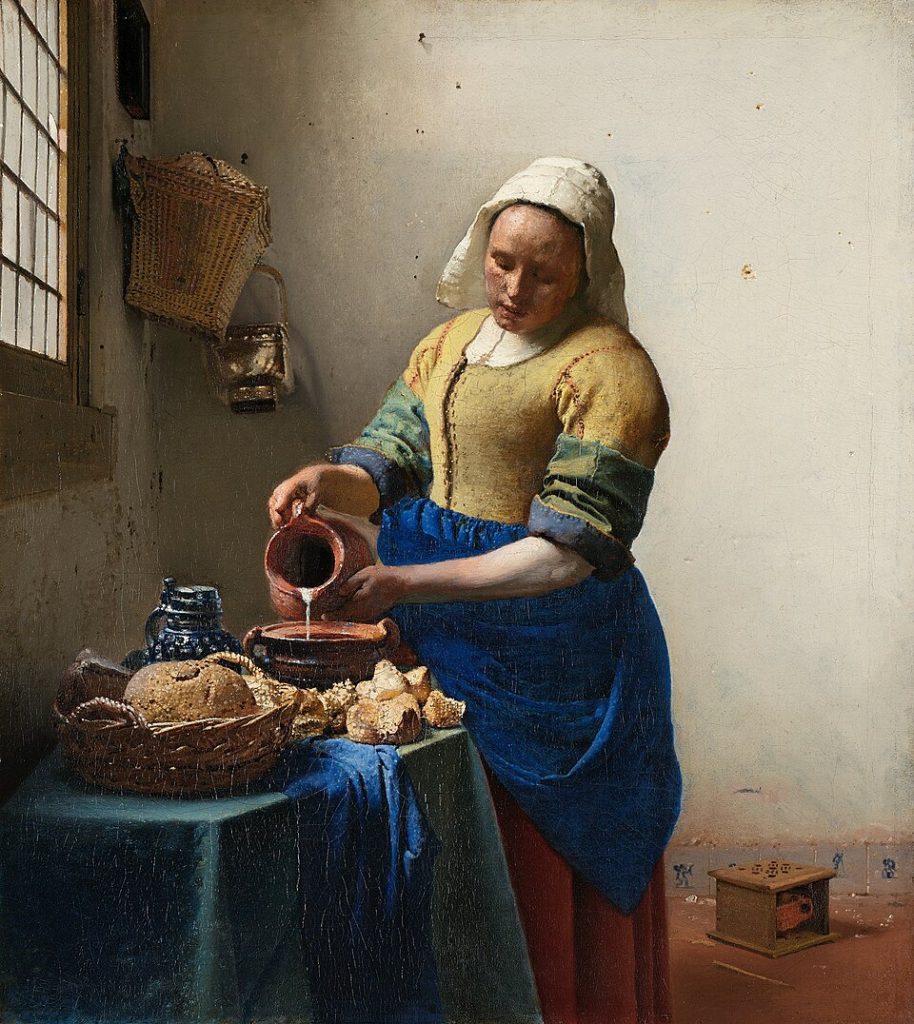
The Milkmaid is one of the earliest and most technically accomplished works from Vermeer Delft period, painted around 1657 when the artist was refining his approach to interior genre scenes. The painting has a well-documented provenance stretching back to seventeenth century Amsterdam, where it appeared in the sale of the collection of Jacob Dissius in 1696, a sale that included a large number of Vermeer works and serves as a critical anchor for establishing the artist market presence during his lifetime. After passing through several prominent Dutch and later European collections, the painting was acquired by the Rijksmuseum in 1908, where it has remained as one of that institution most celebrated holdings. The relatively small size of the canvas belies the visual impact the painting exerts in person, and it draws some of the largest crowds of any single work in the museum. Technical examination of The Milkmaid has yielded rich information about Vermeer working methods. Infrared reflectography revealed that Vermeer originally included a basket hanging on the wall and a figure visible through the window, both of which were removed to simplify the composition. Pointillist-like dots of paint are visible in the bread and the stream of milk, a technique associated with the use of a camera obscura or with careful observation of light diffraction on irregular surfaces. The painting surface is exceptionally well preserved, and the gradations of light across the white cap, the rough linen apron, and the glazed earthenware jug remain vivid and precisely observed. Scholars have noted that Vermeer attention to the maid coarse linen and rough bread indicates a deliberate choice to dignify a working-class subject with the same painterly care typically reserved for aristocratic portraiture.
The composition of The Milkmaid is built around a triangular arrangement anchored by the figure of the maid, who dominates the picture plane with a solidity and gravitas unusual in genre painting of the period. The window on the left delivers a cool, directional light that rakes across the scene, illuminating the upper body of the maid and casting subtle shadows across her forearms and the objects on the table. The stream of milk falling from the jug into the earthenware bowl below is one of the most admired passages in Vermeer body of work, capturing the physical properties of liquid with a precision that feels almost scientific. The table in the foreground is laden with bread, a wicker basket, and ceramic vessels, each rendered with close attention to surface texture and the way light behaves differently on rough versus smooth materials. Vermeer palette in this painting is more varied and saturated than in many of his later works. The maid yellow bodice and blue apron are set against the warm ochre of the wall, creating a color harmony that feels both natural and carefully constructed. The lower register of the painting, near the foot warmer on the tiled floor, is handled with softer focus, suggesting that Vermeer was directing the viewer gaze upward toward the figure and the act of pouring. The rough plaster of the wall, the nail hole with its shadow, and the damaged lower edge of the window frame all contribute to a sense of authentic domestic space rather than idealized interior. This combination of precise observation and compositional intelligence defines the particular quality of the painting.
The Milkmaid engages with questions of labor, virtue, and the moral significance of everyday domestic work within the cultural framework of seventeenth century Dutch society. In the Dutch Republic of Vermeer era, the kitchen maid occupied a specific social role, and her diligence and propriety were considered reflections of the household moral order. Vermeer presents this figure not as a comic or diminished type, as kitchen servants often appeared in Flemish genre painting, but as a person of concentrated attention and quiet authority. Her gaze is directed downward toward her task, and there is nothing in her posture or expression that invites mockery or condescension. This dignified treatment was noted by contemporaries and has been interpreted by modern scholars as a reflection of Dutch Protestant values around the sanctity of honest labor. The still life of bread on the table carries additional symbolic resonance within the Dutch tradition of embedded meaning in everyday objects. Bread was a common symbol of sustenance, charity, and the Eucharist in Northern European visual culture, and its prominent placement in the foreground may enrich the painting with a layer of moral or spiritual significance beyond its immediate narrative function. The milk itself, a symbol of nourishment and purity in Dutch iconographic traditions, reinforces this reading. Whether Vermeer intended these associations as primary meanings or whether they functioned as ambient cultural references for contemporary viewers is a matter of scholarly debate. What is clear is that the painting rewards sustained looking, offering both immediate visual pleasure in its handling of light and texture and deeper engagement with the values and beliefs of the society that produced it.