Loading cart…
No products in the cart.

1886 · Oil on canvas · Tate Britain, London, United Kingdom
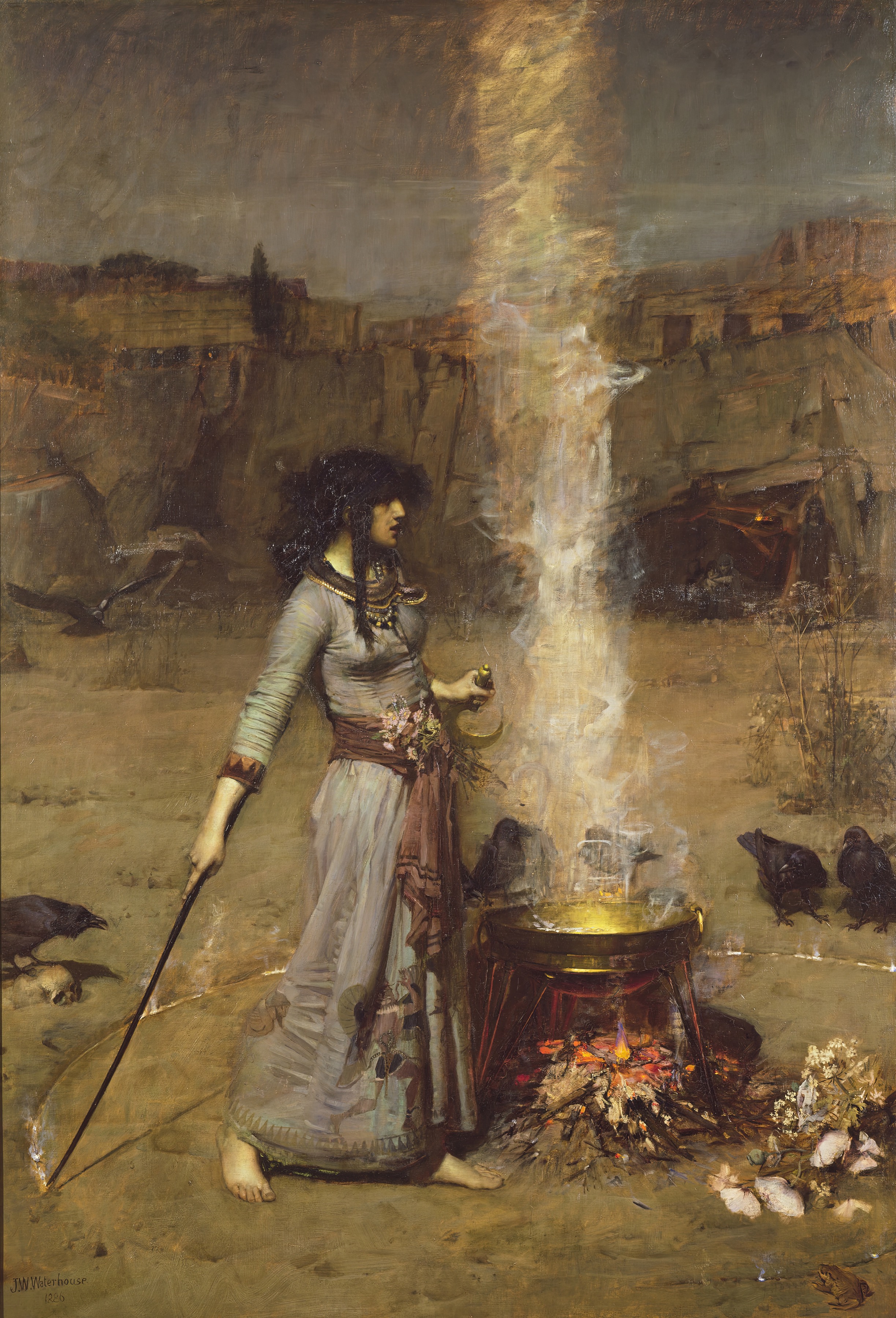
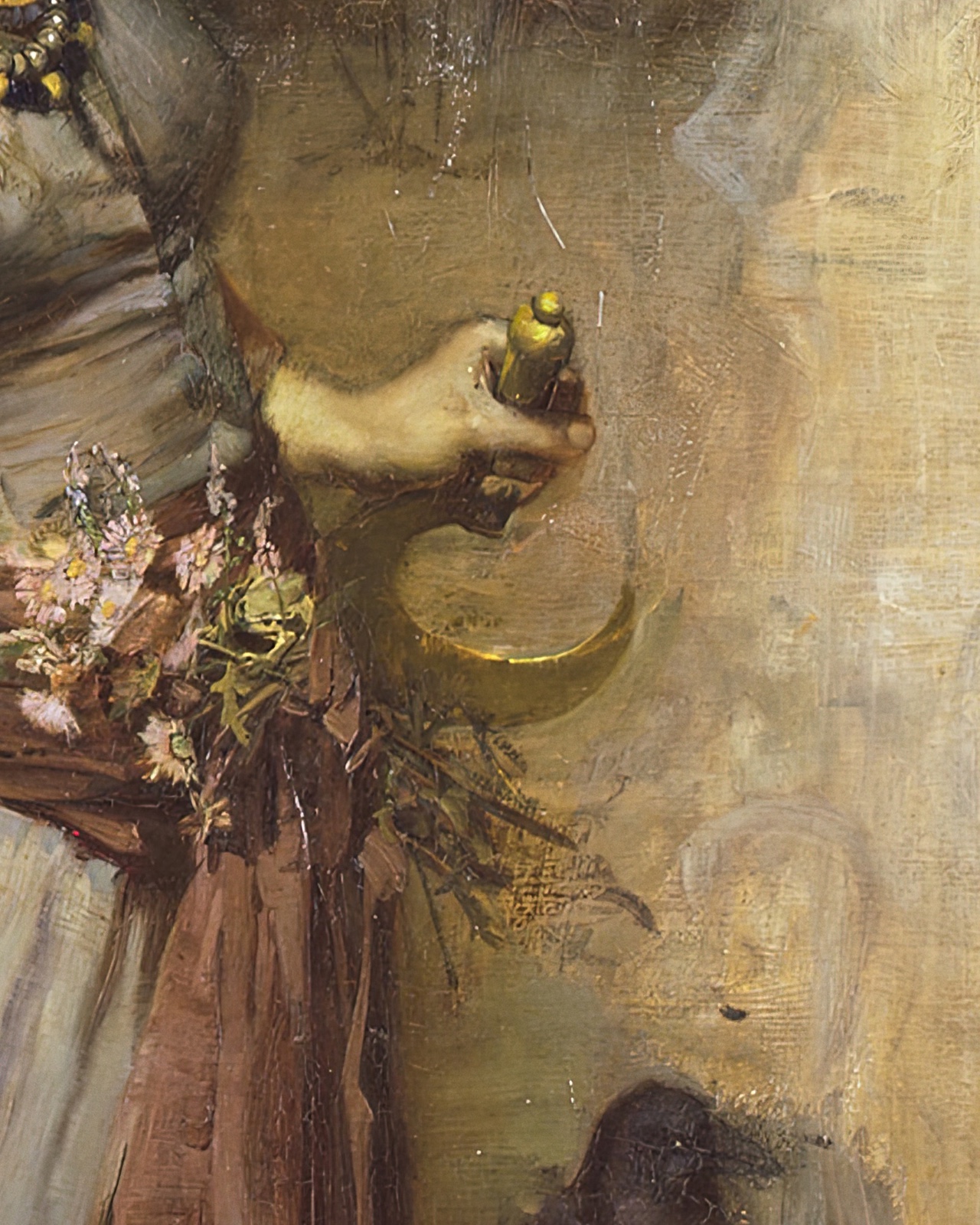
The sorceress stands barefoot beside a burning cauldron. One arm extends down along a wand, while the other holds a crescent-shaped blade. Her mouth is slightly open, suggesting speech or chanting, although a still image cannot tell us what she says.
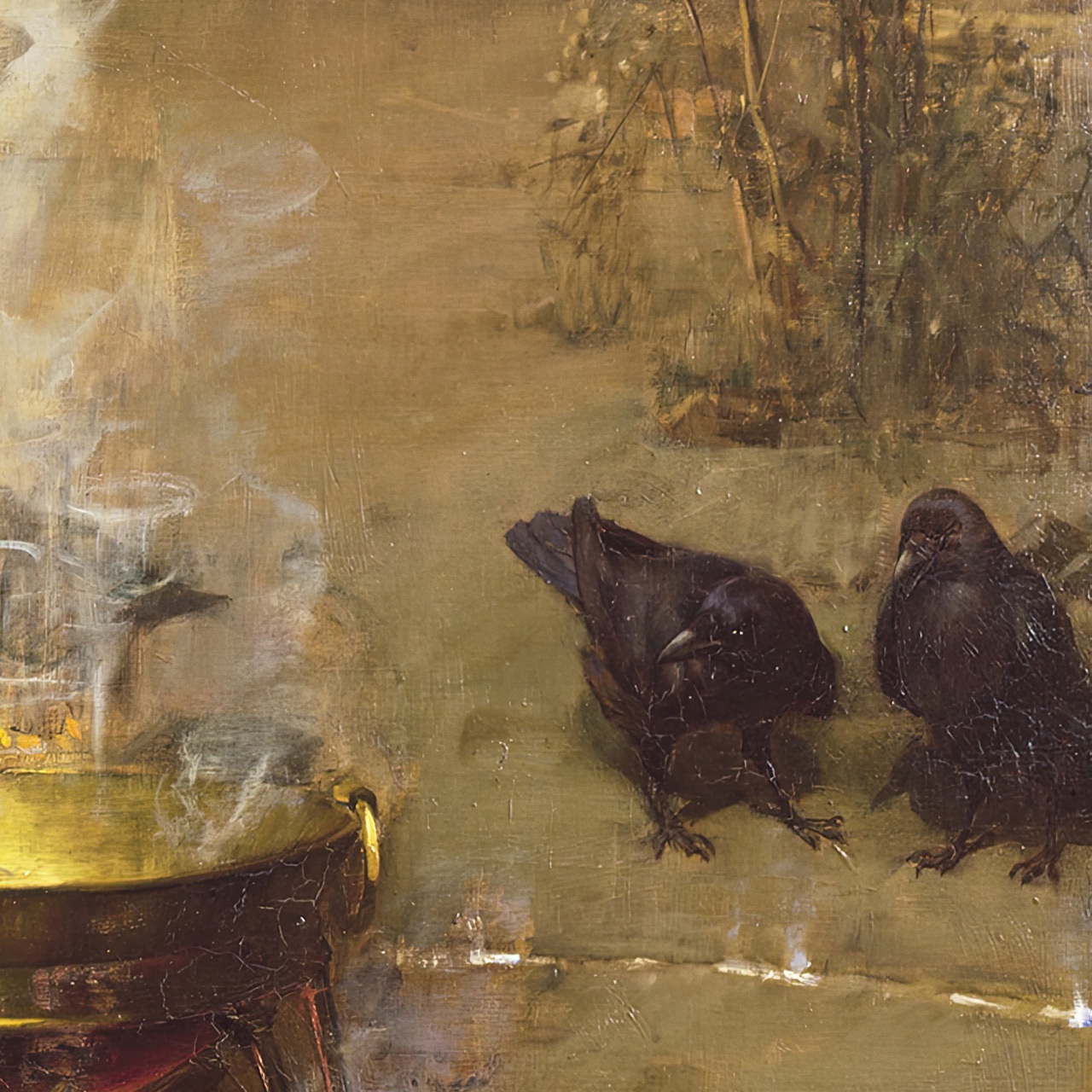
Her upright body anchors the scene. Around her, almost everything changes direction: the wand slopes toward the foreground, birds turn toward the ritual, flames break into points, and smoke twists upward. Her concentration holds these movements together.
The large Tate painting provides the main reference for this close reading. The smaller blue version and the oil study, shown below, reveal different treatments of the same subject.
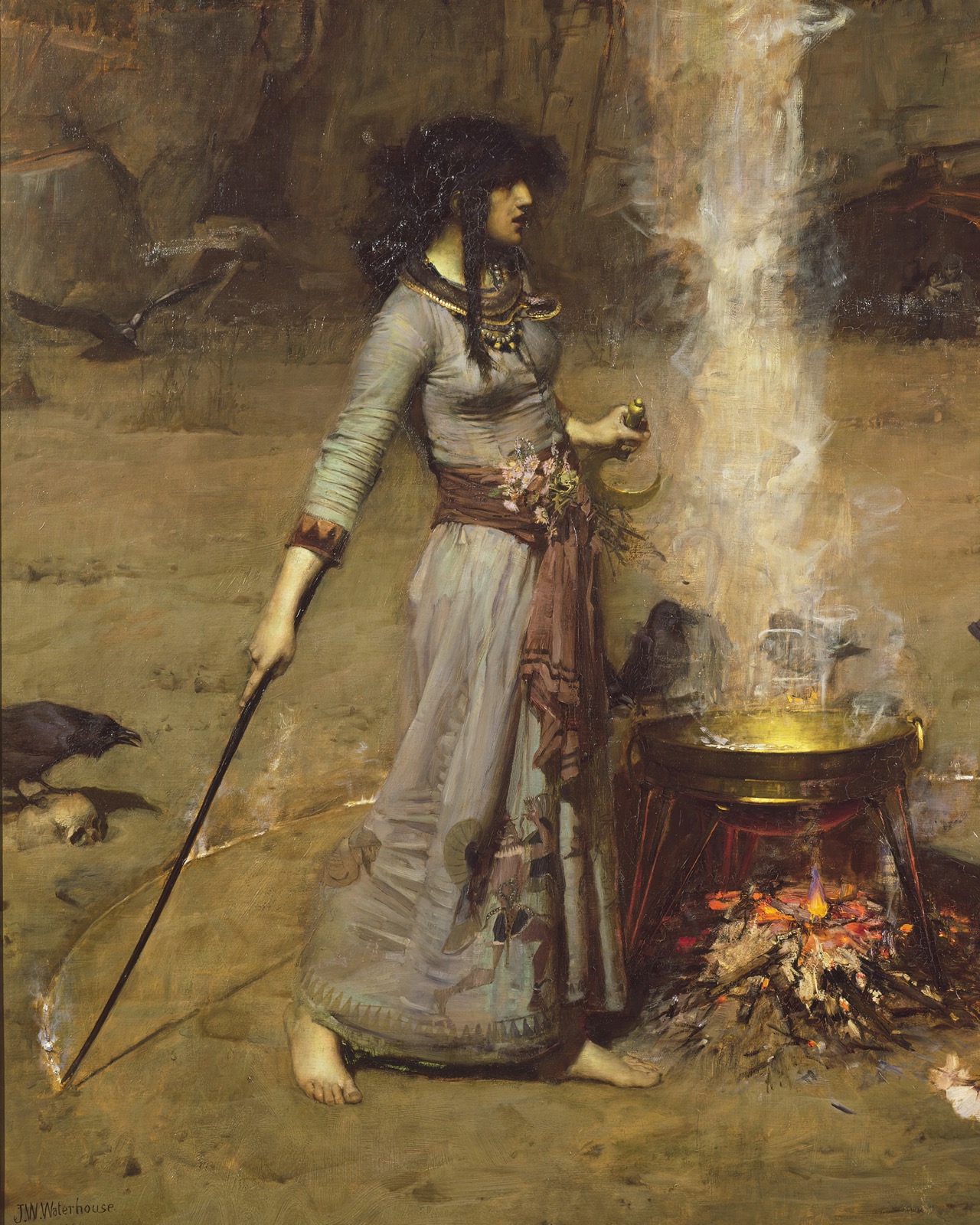
The circle gives the landscape an inside and an outside. It places the woman and cauldron within a marked space, while the surrounding creatures become part of the world beyond it. That arrangement invites a protective reading, although the painting leaves the precise purpose of the ceremony open.
The wand makes the boundary feel active. Its tip reaches toward a bright mark on the earth, so the line appears to be taking shape as we watch. Waterhouse has chosen an unfinished action: the viewer arrives while the ritual is underway.
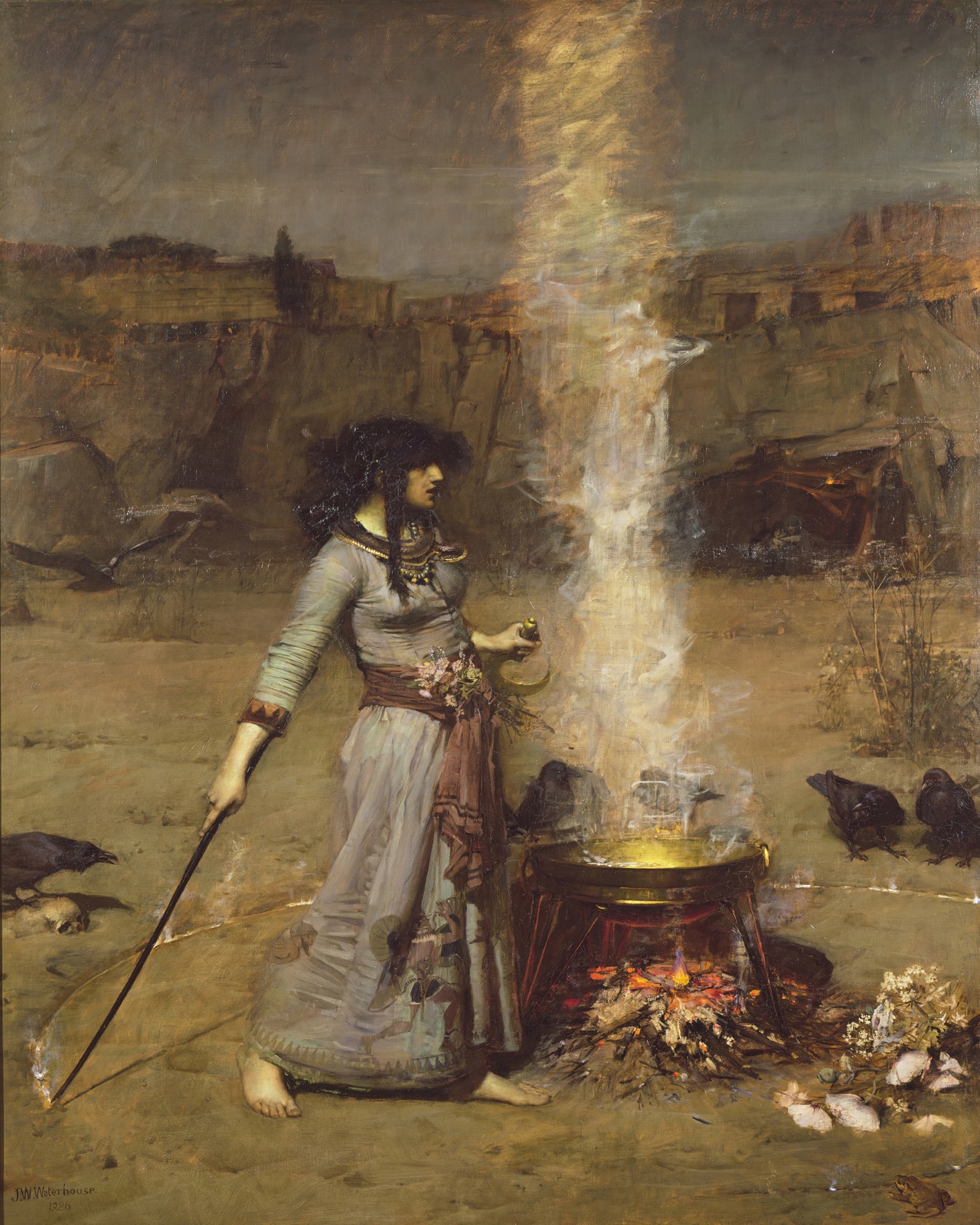
There is also a visual connection between the circle on the ground and the curve around the woman's neck. One encloses her working space; the other rests against her body.
The serpent is easy to mistake for part of the woman's elaborate collar. Its curved body follows the neckline, bringing a living creature into the place where we expect jewellery. Look at how comfortably it rests there: the woman shows no visible reaction to it.
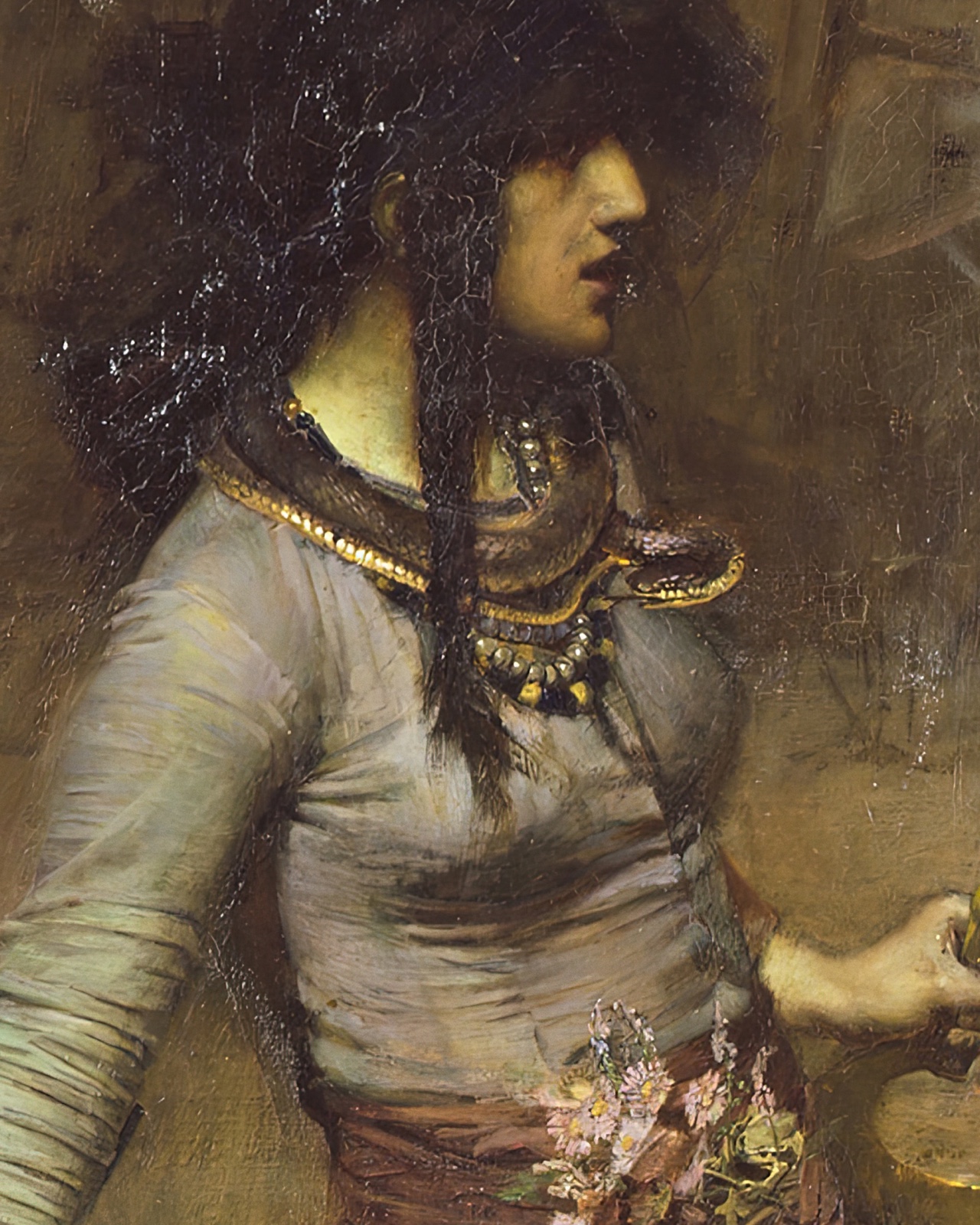
Christie's catalogue proposes that the snake represents an ouroboros, a serpent associated with the cycle of life and death. It presents this as a likely interpretation, rather than a confirmed explanation from Waterhouse. Catalogue discussion
That reading connects the snake with the painting's repeated circular shapes. Even without accepting a specific symbolic identity, its placement matters. The birds remain around the woman, but the serpent touches her. The composition distinguishes between creatures held at a distance and one admitted into intimate contact.
The ravens form a scattered audience near the ground. Some stand upright, others lower their heads, and an airborne bird introduces movement behind the sorceress. Their dark bodies punctuate the pale earth and draw the eye around the ritual space.
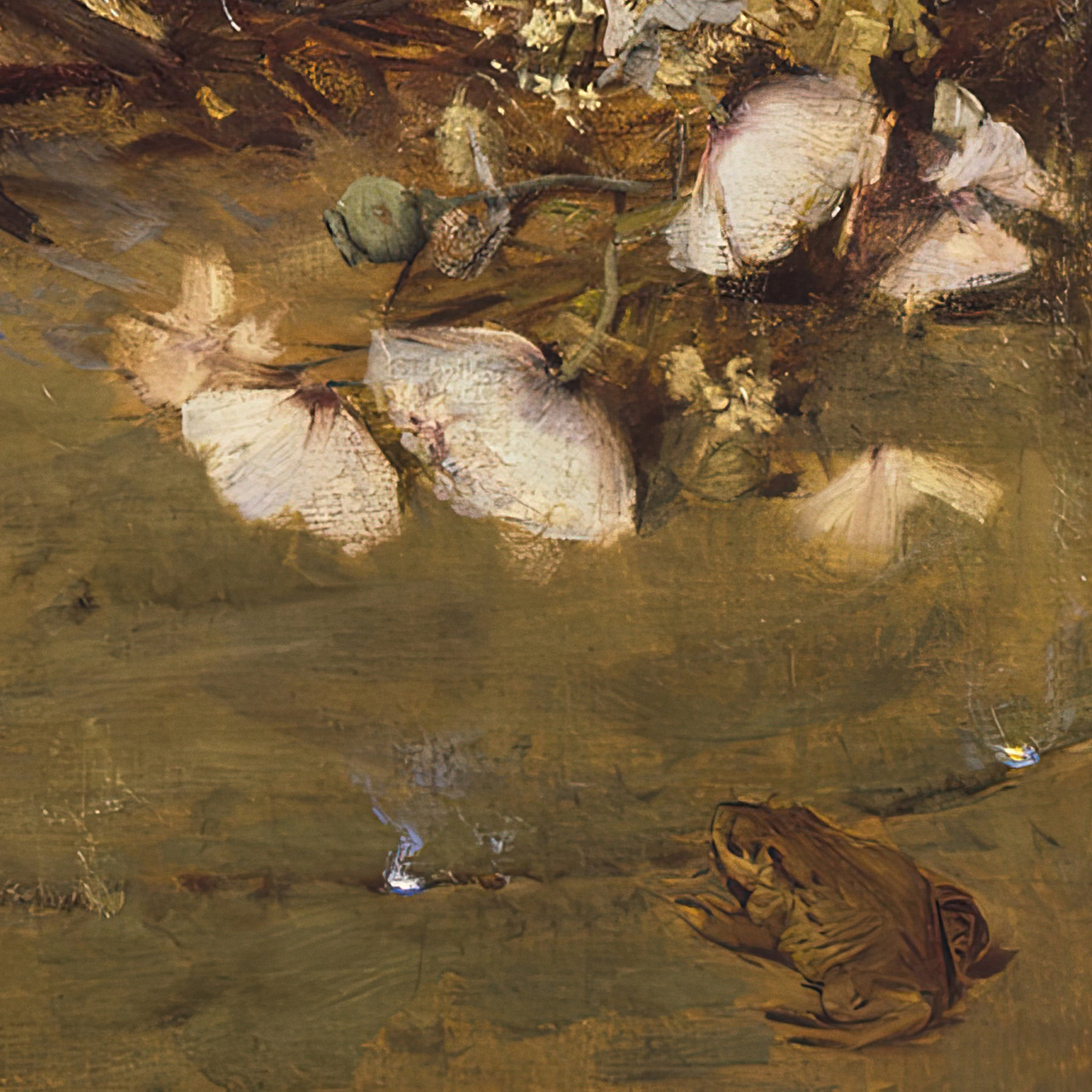
At the lower left of the Tate composition, one bird stands on a skull. This pairing brings death into the foreground before the viewer has identified any particular myth. The small toad near the lower right is much less conspicuous, rewarding a slower inspection of the picture's edges.
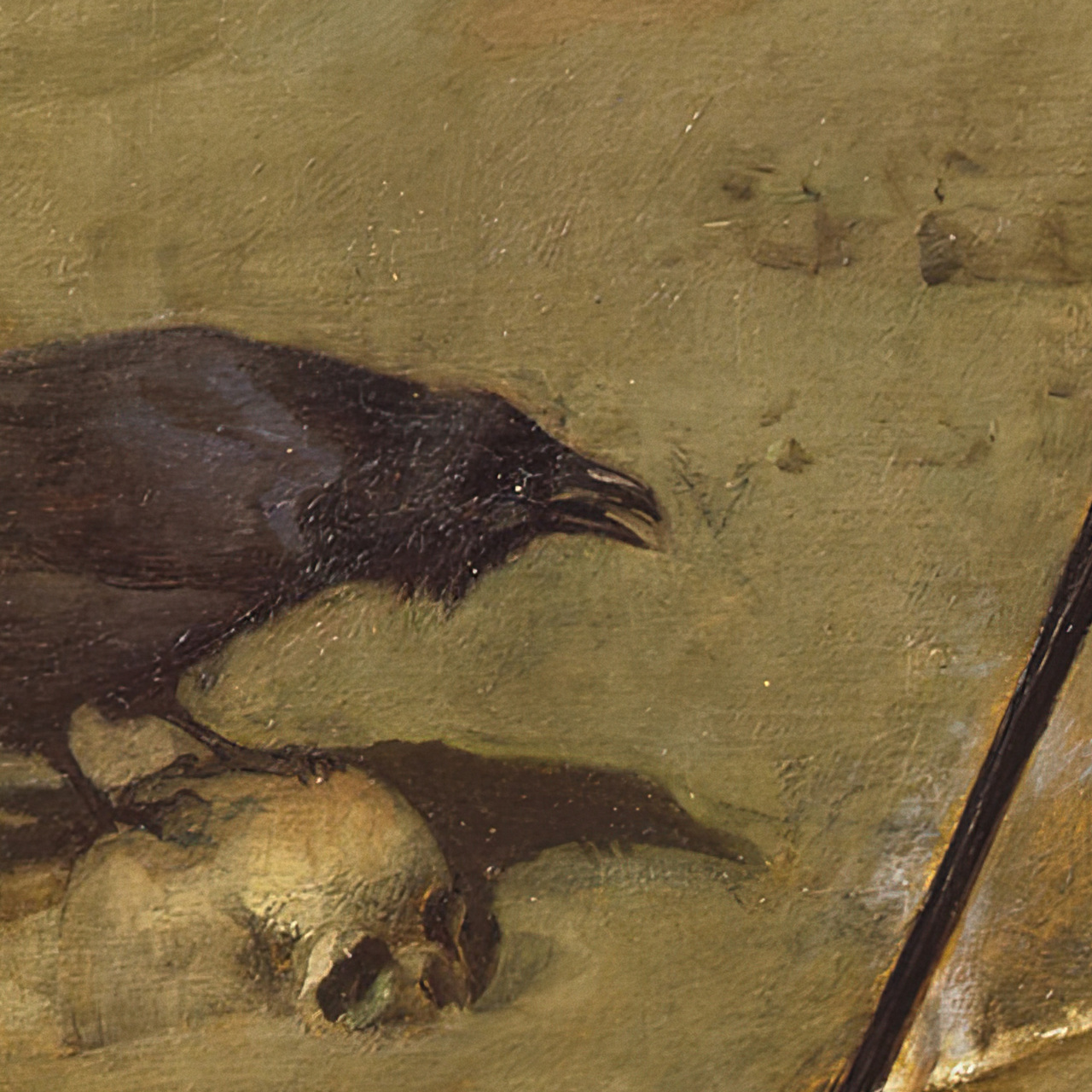
Christie's counts seven ravens in its discussion of the composition. Some birds are partly obscured, making the group easier to read in a full reproduction than in a tightly cropped detail. Catalogue discussion
Together, these creatures give the woman an audience at a different scale from the distant human figures. Their attention helps direct ours toward her actions.
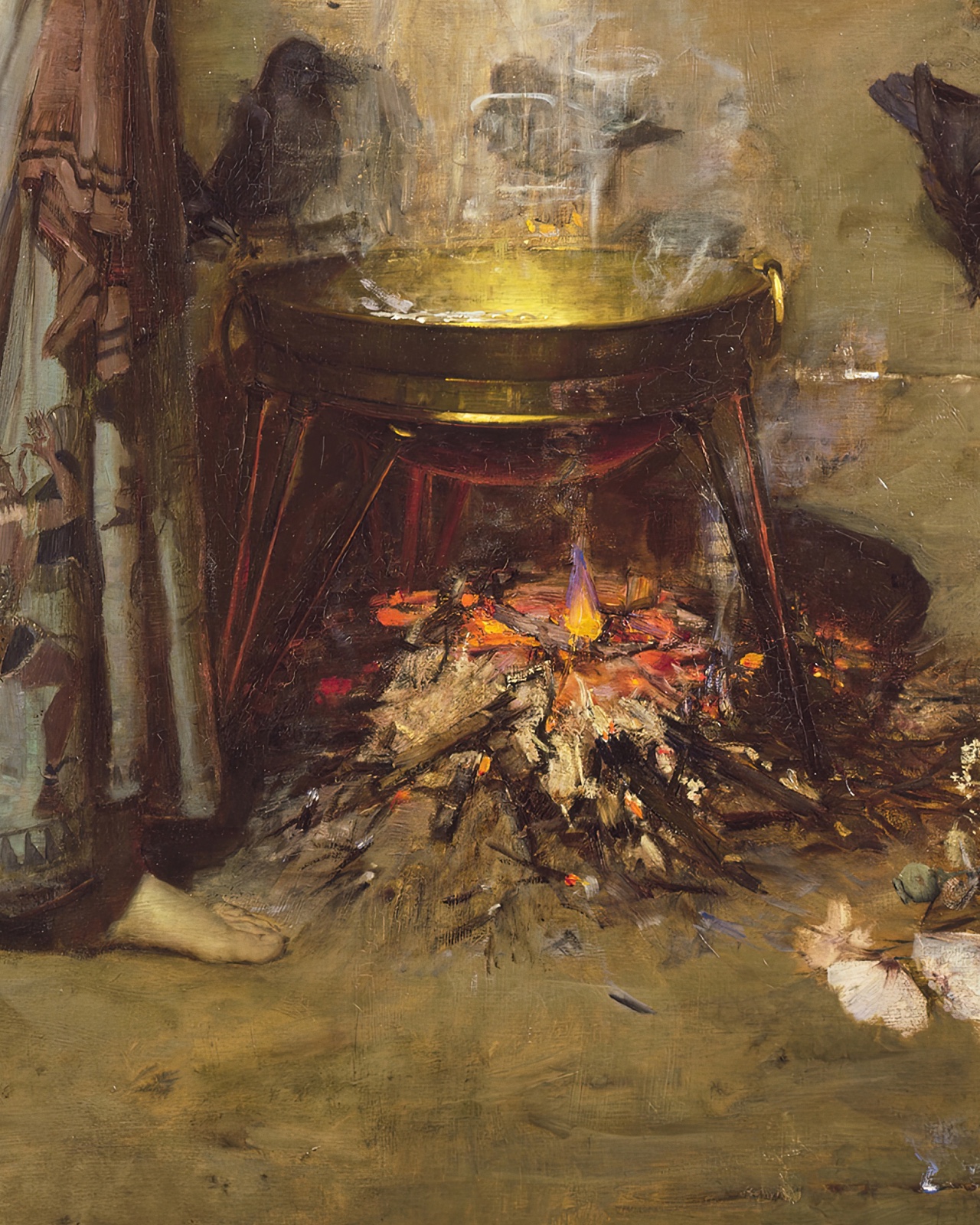
The smoke occupies a remarkable amount of the canvas. Beginning above the bright vessel, it rises past the woman's face and into the landscape overhead. Its pale colour makes it a second vertical presence beside her dark hair and more solid body.
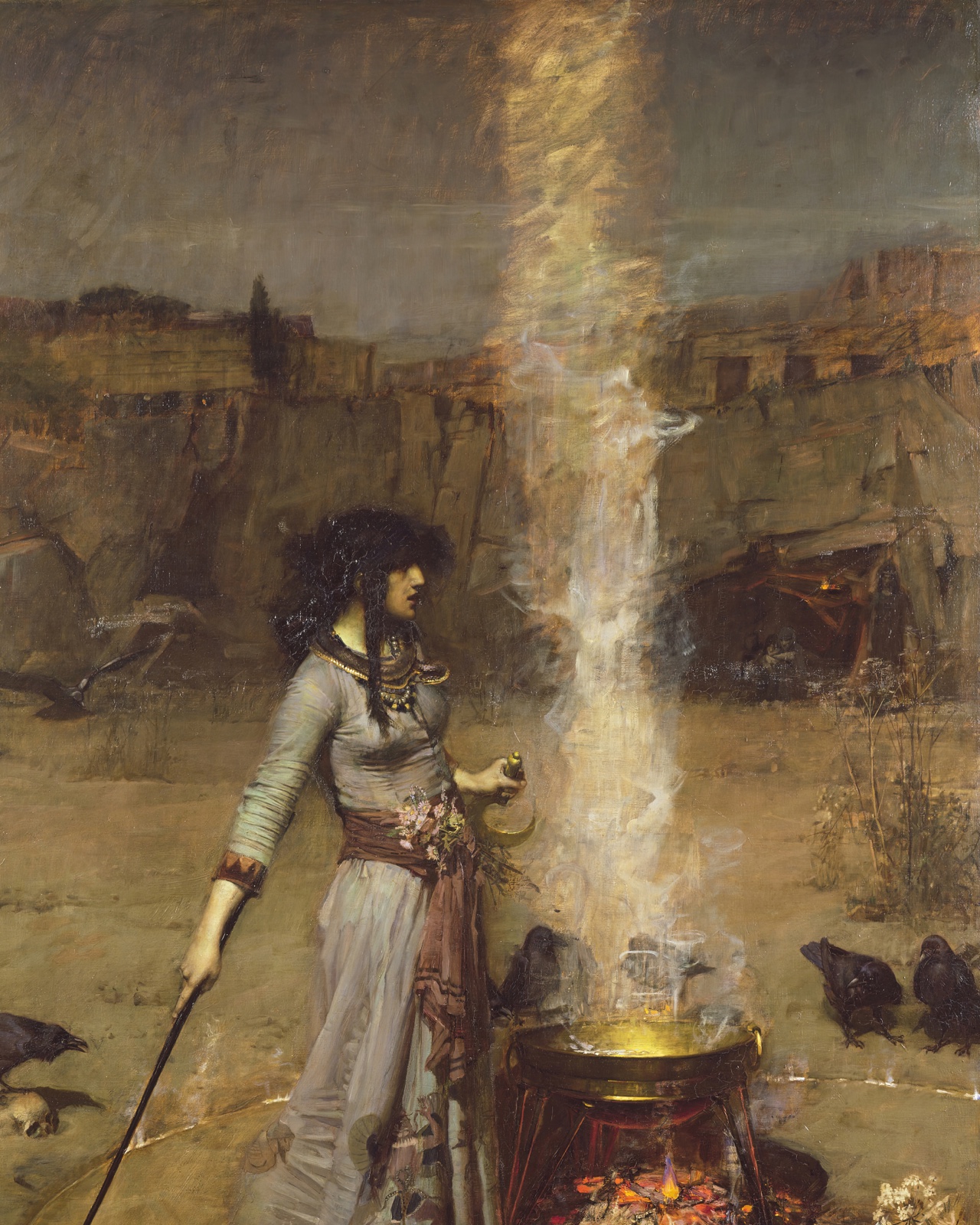
Look at the difference between the fire and the smoke. The fire is concentrated, angular and richly coloured. The smoke spreads into translucent curls that partly conceal what lies behind them. One gives the ritual a physical source of heat; the other makes its effects difficult to grasp.
Christie's offers a spiritualist interpretation of the smoke's ambiguous forms. That is a contextual reading, not proof that Waterhouse painted a particular spirit. Catalogue discussion
The smoke is compelling because it remains unstable. Our eyes try to resolve its changing shapes while the sorceress's profile stays comparatively clear. It gives the scene movement without showing the outcome of the spell.
The curved blade is held close to the woman's body, contrasting with the wand extended toward the earth. The two tools create different gestures: one reaches outward, while the other remains gathered near her waist.
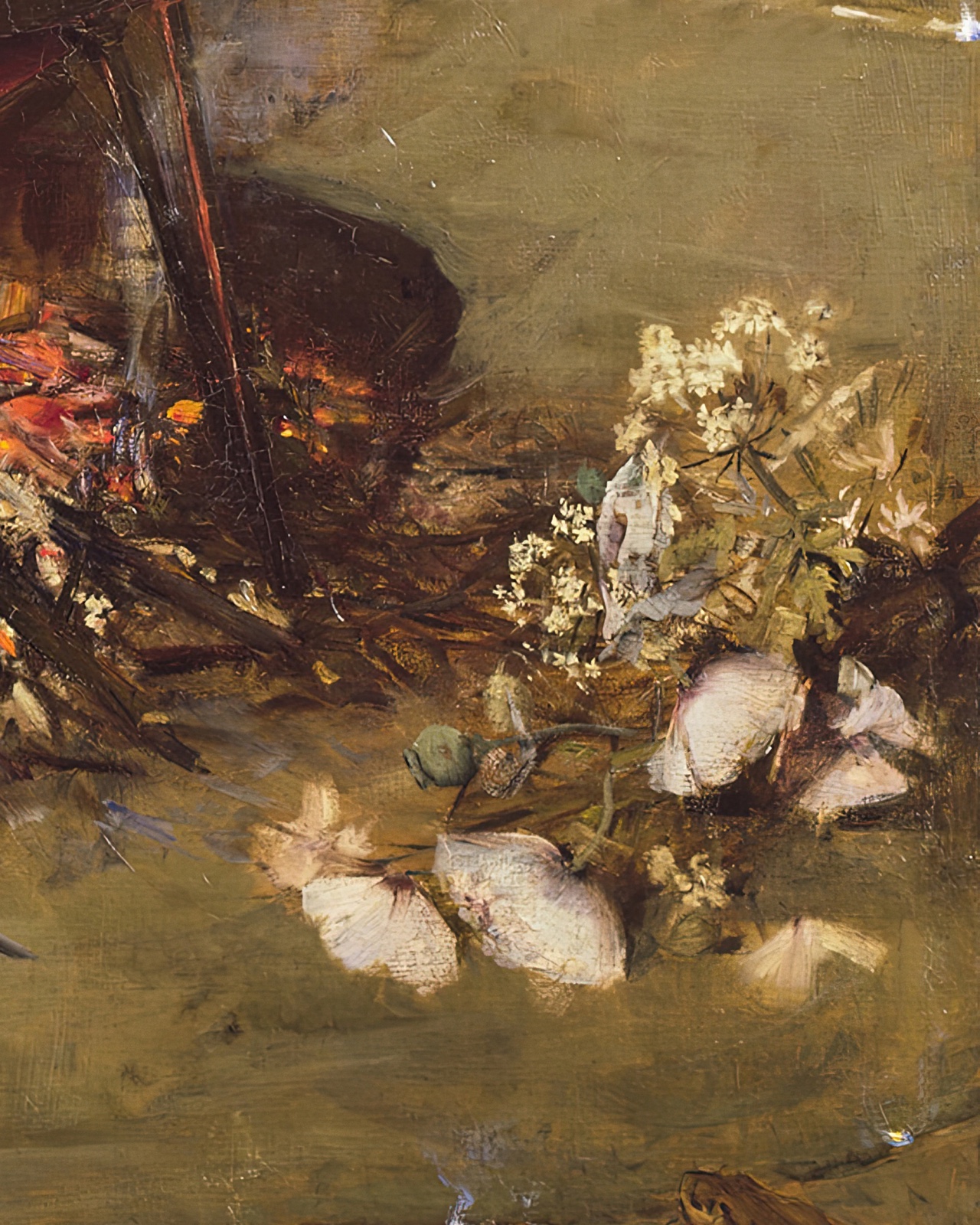
Flowers and foliage interrupt the sombre scene with small areas of colour. They appear at her waist and beside the fire, connecting her clothing with the materials arranged on the ground. Their presence complicates a reading based entirely on menace: the ritual includes delicate plants as well as a skull, birds and flame.
Her skirt also deserves attention. It carries a small figurative design, almost a picture inside the picture. The decoration strengthens the sense of an imagined ancient setting, but its exact subject should not be treated as settled simply because a mythological explanation seems plausible.
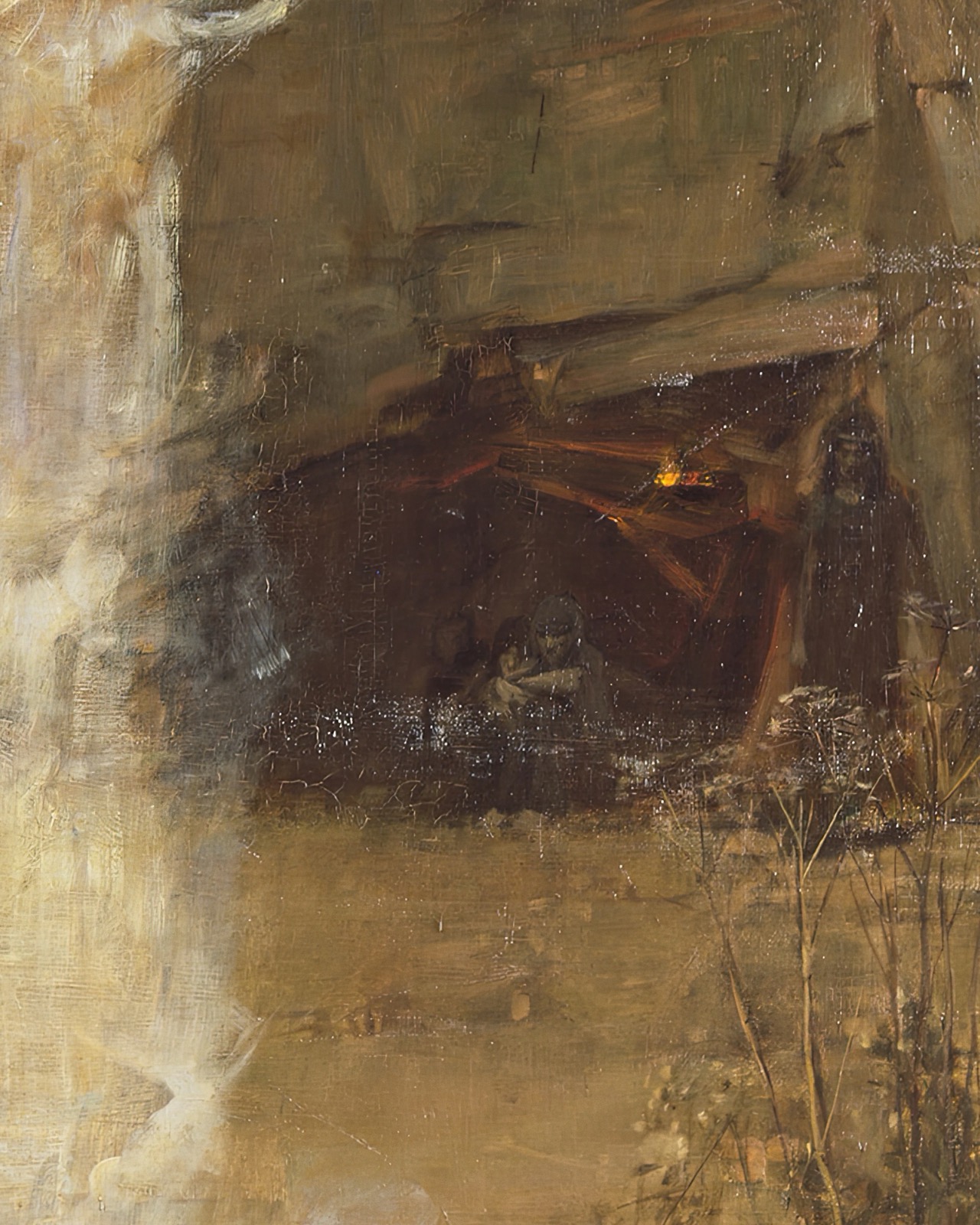
Behind the ritual, small human forms appear near a dark opening in the rocks. The brightly lit foreground initially makes them easy to overlook. Once noticed, they extend the scene beyond the sorceress's immediate surroundings.
Christie's describes three observers in its account of the composition. Their identities remain uncertain, and the tiny forms can be difficult to distinguish in reproductions. Catalogue discussion
The visual effect is more secure than any invented story about them. We look toward the woman from the foreground; the distant figures appear oriented toward her from another position. Their presence makes the ritual feel observed, without establishing whether they are companions, spectators or participants.
The painting's title names an action and a shape rather than a person. It does not identify the woman as Circe, Medea or Hecate.
A 2023 interpretation published through Waterhouse Revealed connects the painting with Theocritus's Second Idyll, in which Simaetha performs a love spell. Their proposal offers a specific literary possibility rather than an established identification. Research explanation
Readers can appreciate that possibility while keeping the visible evidence in view. The woman is engaged in a ritual; its intended result is less certain. That gap between visible action and uncertain purpose leaves room for different readings.
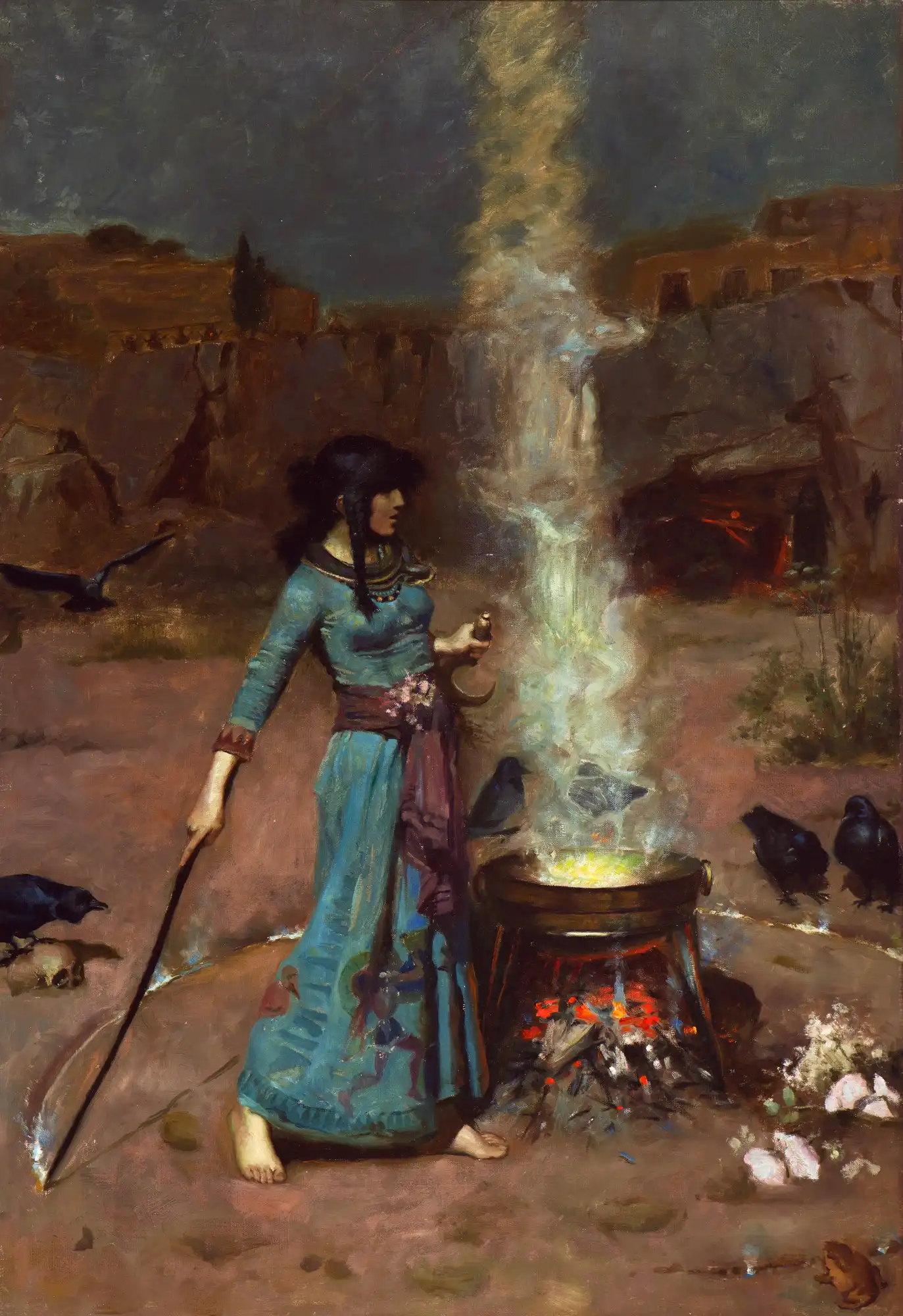
The smaller finished version gives the gown a more pronounced blue appearance in this reproduction. Compare the woman's silhouette, the breadth of the smoke and the space around the cauldron. Colour differences between digital reproductions can also reflect photography and processing, so screen colour alone cannot establish the paintings' original palettes. Smaller-version record
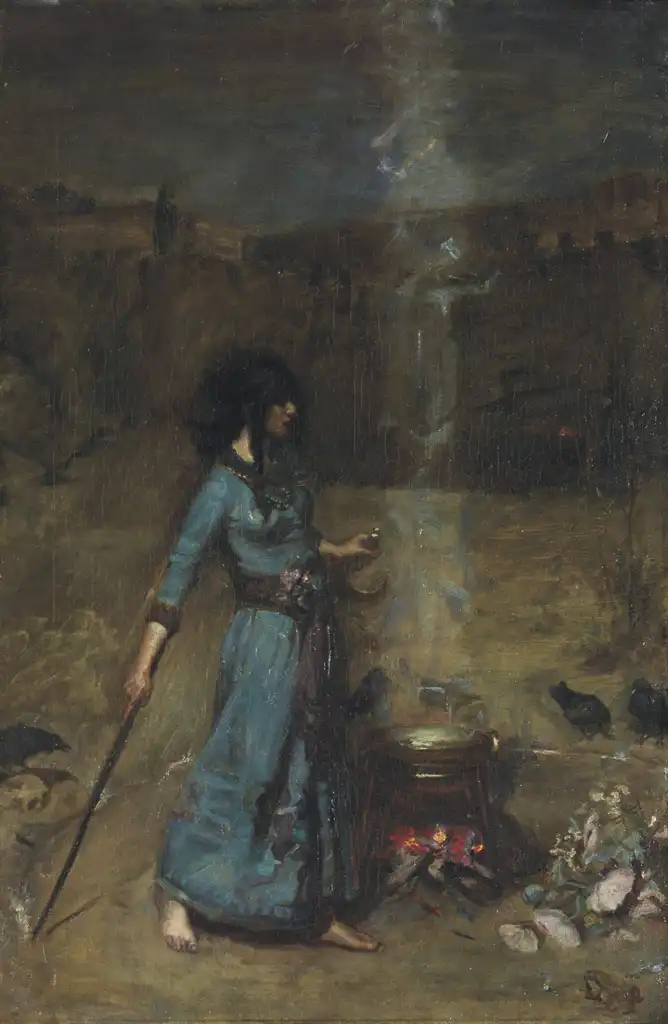
Christie's identifies this work as a compositional study. Its darker setting and loose brushwork make the relationship between the figure, vessel and rising smoke especially apparent. This preparatory work is distinct from the highly finished smaller blue version. Study record
Return to the full composition after examining the details. The snake curves around the woman's neck, the birds gather around her activity, and the drawn line defines the space in which she works. Above these enclosing shapes, smoke travels upward and escapes their boundaries.
That tension gives the scene much of its force. The sorceress appears intent on directing an action, while the painting leaves its consequences beyond our view. Its mystery grows from the arrangement of visible things: a line, a flame, a living creature and a face turned toward rising smoke.
Explore related witches, enchantresses, oracles and supernatural subjects in the curated Magic and Witchcraft Paintings collection.